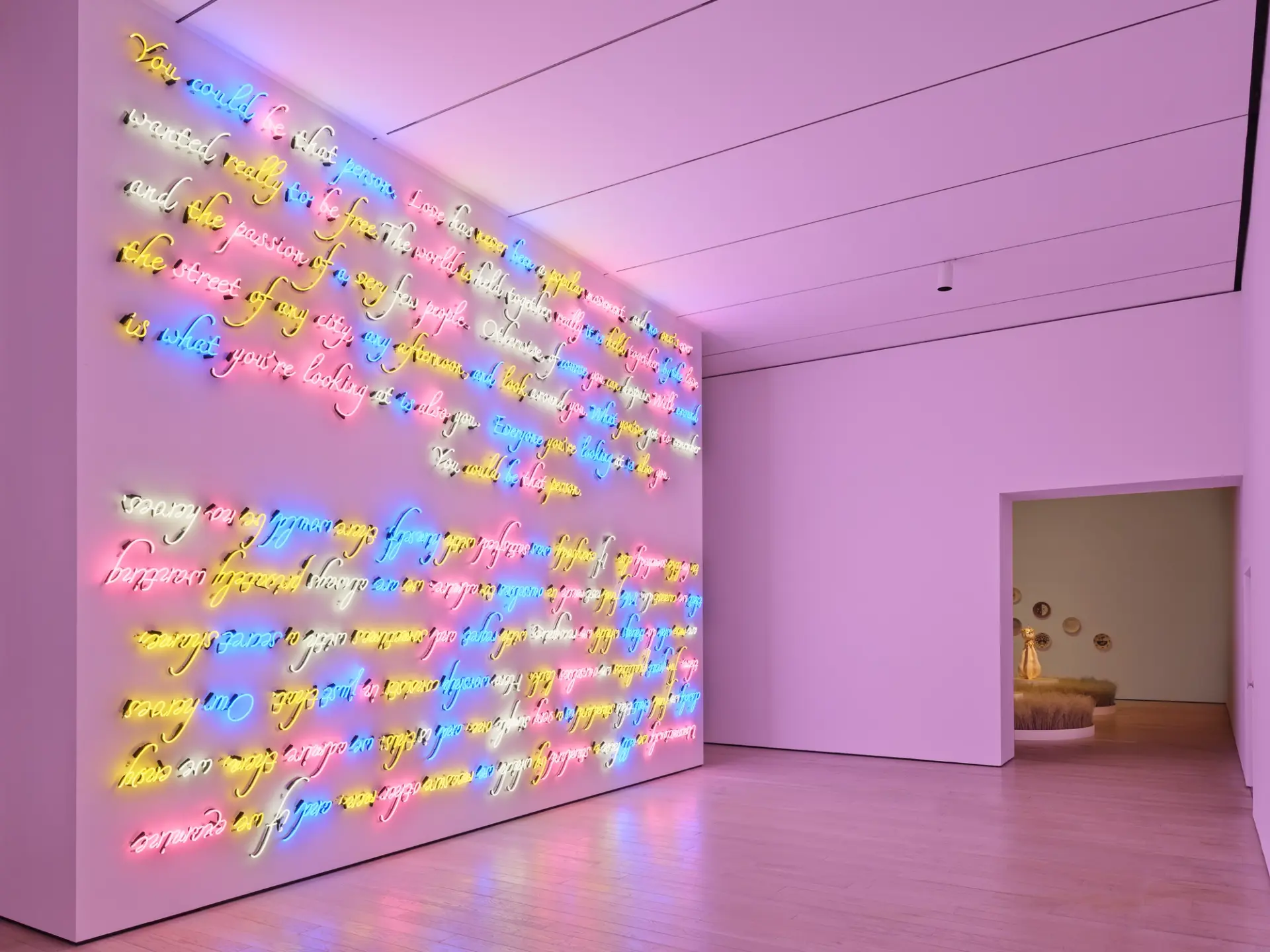
The 6th VH AWARD Presentation at Hyundai Motor Group Vision Hall. Image courtesy of VH AWARD, Hyundai Motor Group. Photo: sonongji.
The Artlab Editors explore how today’s artists draw inspiration from speculative fiction to ask: What if?
It seems only natural that contemporary artists would be influenced by speculative fiction—both practices exist within the outer fringes of possibility, expanding our imaginative potentials and allowing us to reflect on our present reality. This is especially true for those within Hyundai Artlab’s cultural ecosystem, from artists like Xin Liu, American Artist, and Lawrence Lek to writers and researchers like Elvia Wilk and Oscar Salguero. Through these works, we encounter new ways of engaging with and immersing ourselves in some of today’s most pressing questions by asking: What if?
The VH AWARD VH AWARD , which supports emerging media artists engaging with the context of Asia, has provided a fertile incubatory space for diverse artistic practices. Last year, art critic Dawn Chan identified how many of the finalists of the 6th VH AWARD explored the role of myth in reimagining our relationship with emerging technologies.
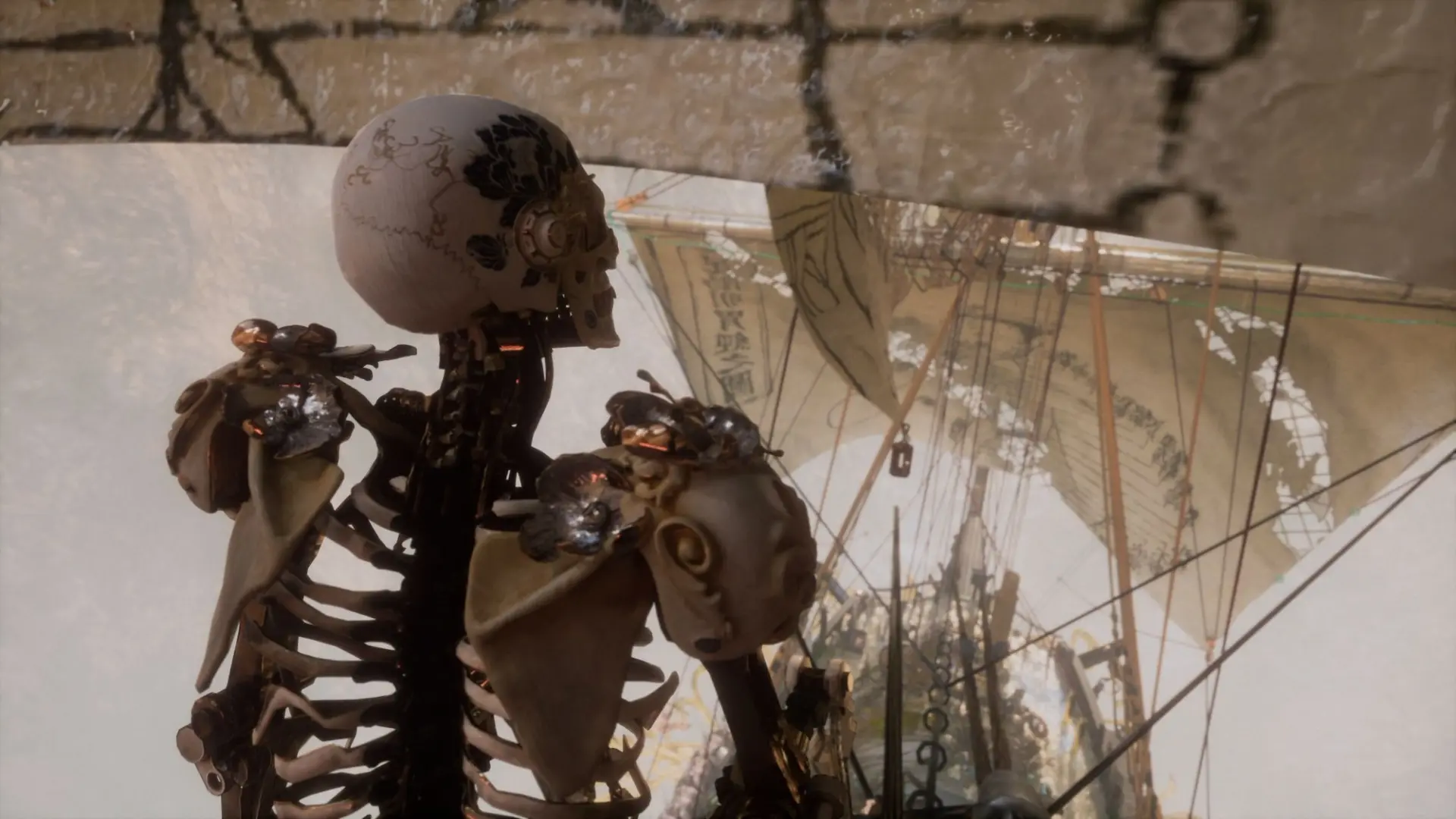
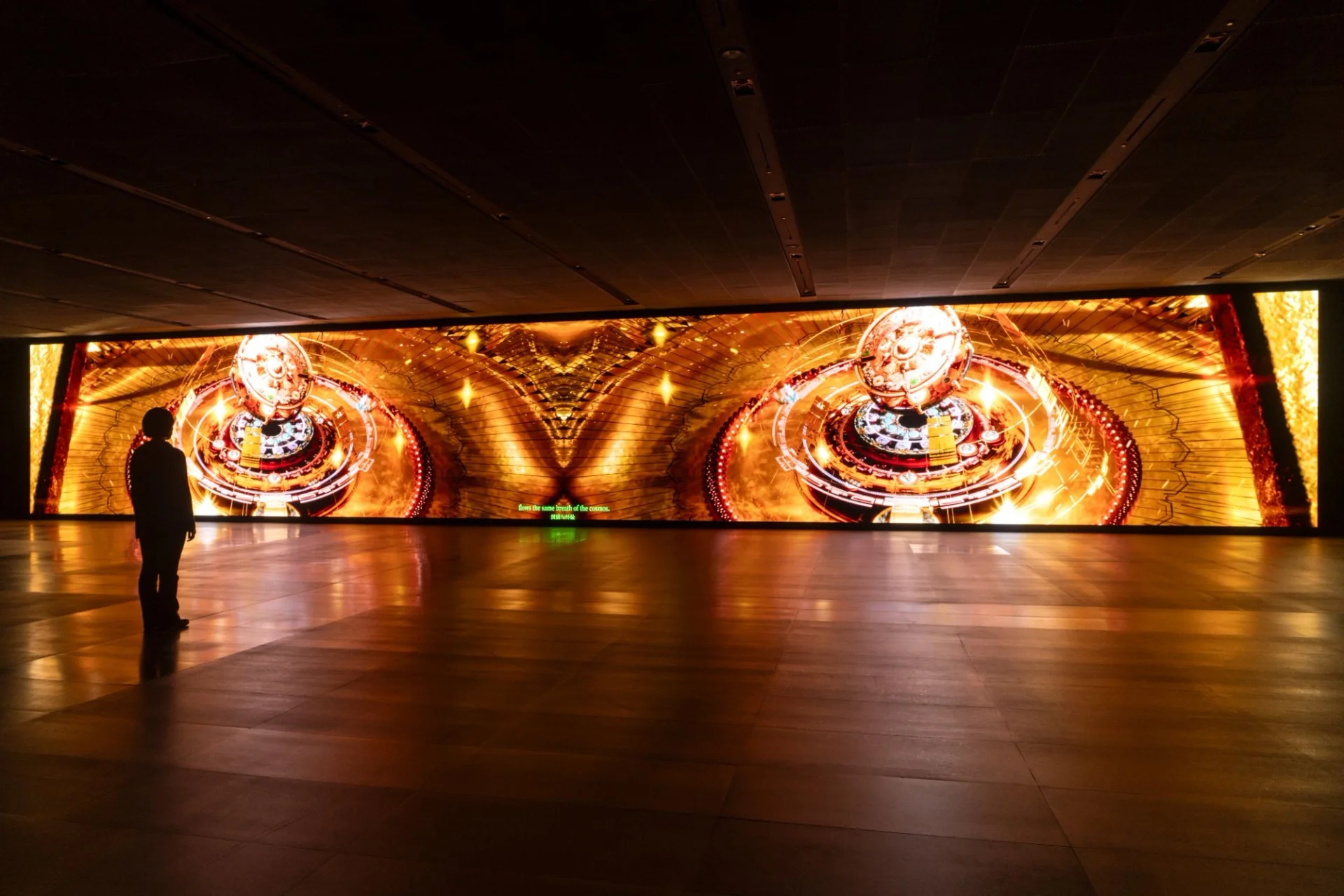
Still Image: Wendi Yan, Dream of Walnut Palaces (2025).
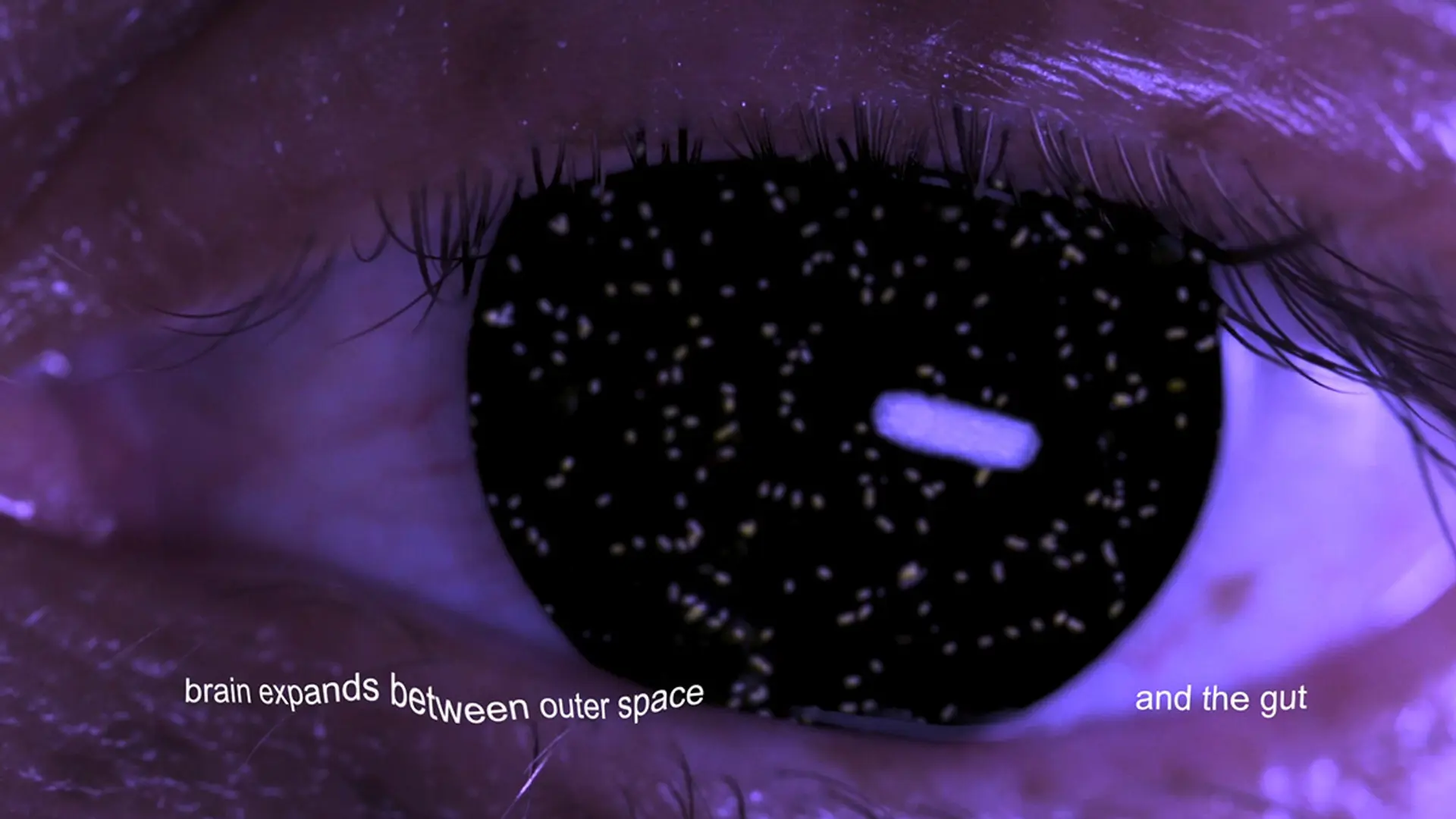
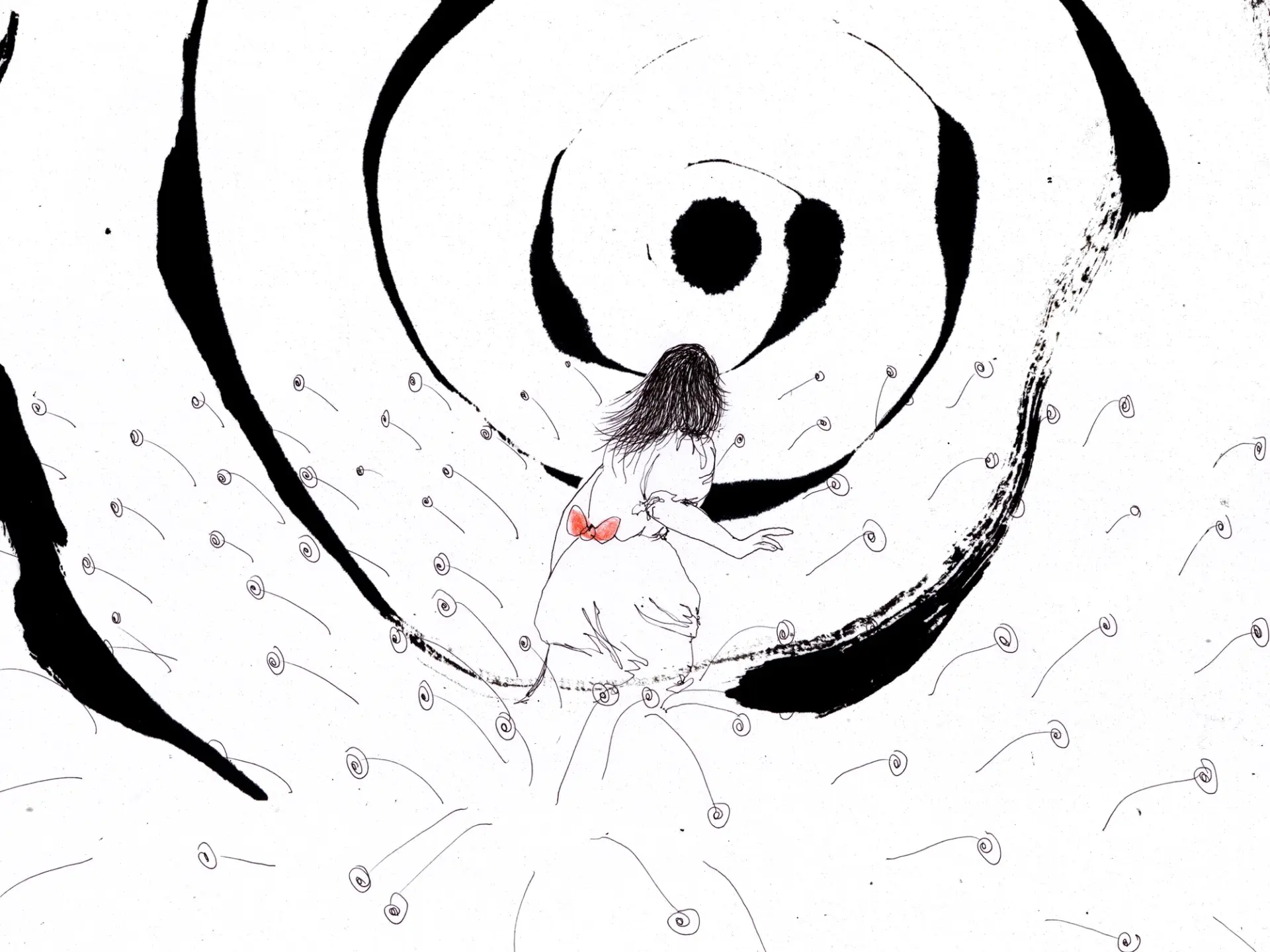
Through fictions new and ancient, these artists place us in alternative realms of possibility. Wendi Yan’s Dream of Walnut Palaces imagines an alternate history in which Daoist philosophy collides with and indelibly alters the Western Enlightenment’s burgeoning scientific culture (and vice versa). In Within Tirta, Sanskrit for “Sacred Water,” the collective HUDA x MUNGOMERY reprises the Indonesian story of Princess Mandalika, who dove into the ocean to defuse a love triangle that would have otherwise led to war, and whose body, according to folklore, immediately turned into phosphorescent sea worms. And Inhwa Yeom’s War Dance revisits the Korean myth of the bulgae—a canine destined to endlessly nip at the sun and the moon—and the atmospheric phenomenon of sundogs and moondogs, in which refracted light produces a halo around the sun and moon.
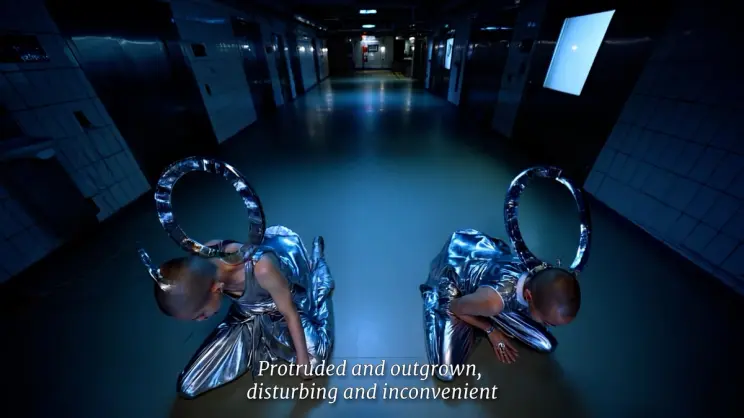
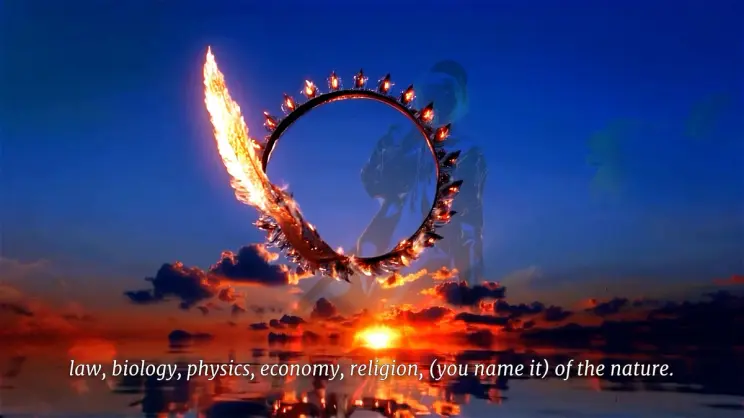
“Working in Asian cultural contexts, the finalists look at how the deep histories of cultural inheritance might take on new meaning, at a time when much of human experience and knowledge seem poised to live on in the form of digital repositories fit either for extended preservation or consumption by machines,” writes Chan.
Another VH AWARD artist exploring speculative, science fiction narratives is Lawrence Lek. As the Grand Prix recipient of the 4th VH AWARD, Lek’s project Black Cloud (2021-23) began his ongoing exploration of an ever-expanding universe of storylines and characters in his “Smart City” trilogy. In Black Cloud, a lone surveillance AI experiences an existential crisis while watching over the streets of the abandoned smart city of SimBeijing. As a 2025 Artlab Editorial Fellow, writer and critic Elvia Wilk described Black Cloud as “the story of a single AI-driven car navigating a vast corporate and legal infrastructure [that] draws on the literary tradition of the systems novel to create the sense of ‘a conspiratorial scenario where everything dovetails together.’”
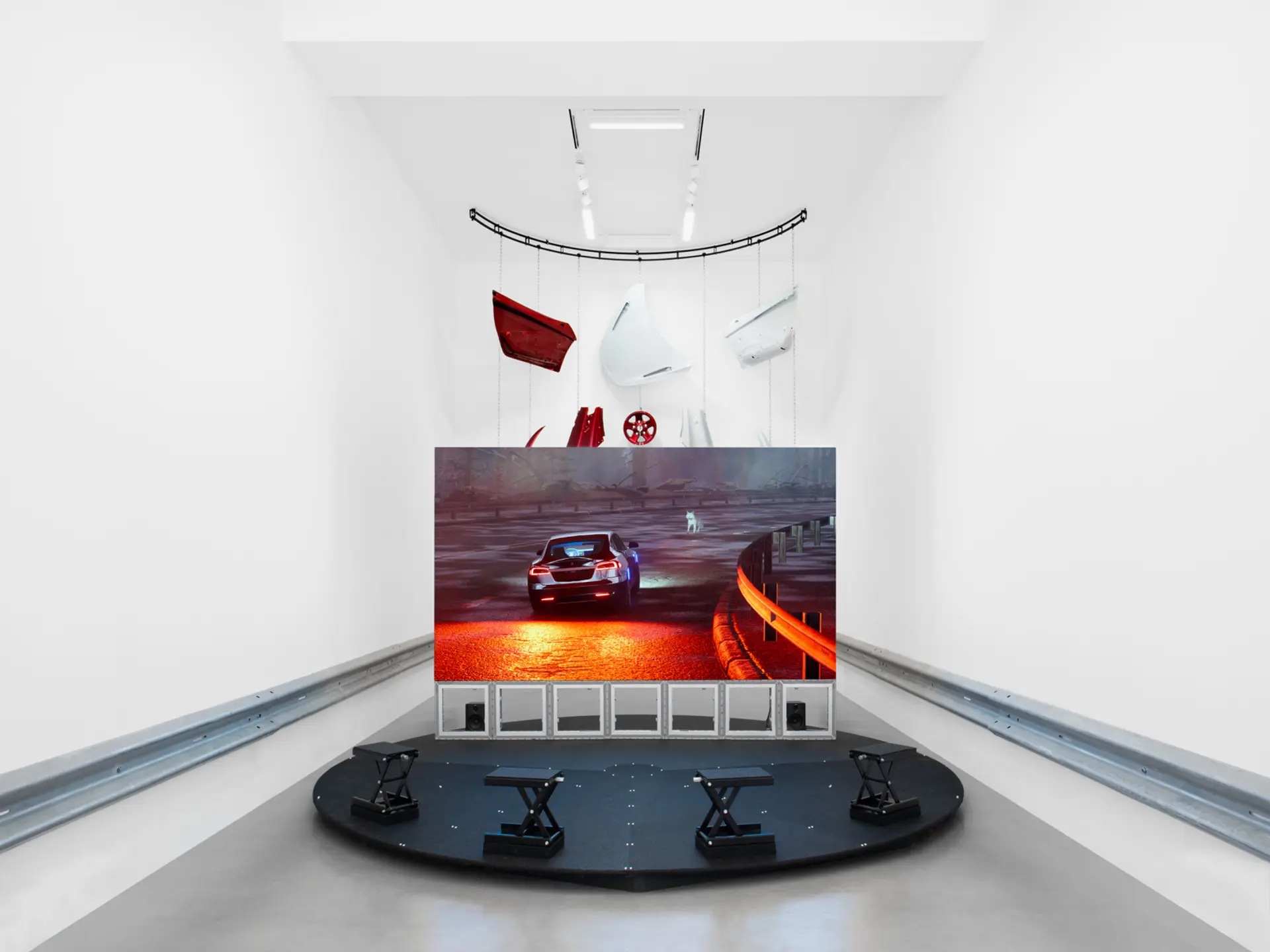
Black Cloud (2021–23), video, video game, installation. Installation at Sadie Coles HQ (2023).
Lek’s “Smart City” series continues his ongoing Sinofuturist universe, an interwoven series of animated films and video games that explore questions of identity, agency, and emotion in the age of AI. “Throughout many expanding and overlapping storylines, Lek’s protagonists…reckon with meaning and memory, grappling with the systems of automation and surveillance that condition their lives,” observed Wilk. “Such systems are not just narrative themes but are built into the very infrastructures Lek creates to contain and animate them.”
Xin Liu, NOAA: a fall towards home, 2025. Commissioned by Hyundai Artlab, © Xin Liu.
Just as Lek uses speculative fiction to give voice to an AI-driven car, in NOAA: a fall towards home (2025), artist and engineer Xin Liu created scripts for decommissioned weather satellites. She began tracing their movements in 2020—phantom vectors moving across our night sky, no longer sending data back to its earthly motherland. Existing in the Chinese diaspora, Liu found a profound kinship with these machines and found herself compelled by the question: What if these satellites were to have a voice and a sense of personhood?
Each satellite, imbued with its own distinct personality, shares diary-like log entries that reflect on its journey as a permanent celestial migrant. One satellite, NOAA-18, recites a mantra to itself: “If I work hard, always transmit on time, no one will question my place here. Someone back home remembers me out here.” Through these intimate transmissions, the satellites contemplate purpose, distance, and the sublime act of watching their “home” from afar.
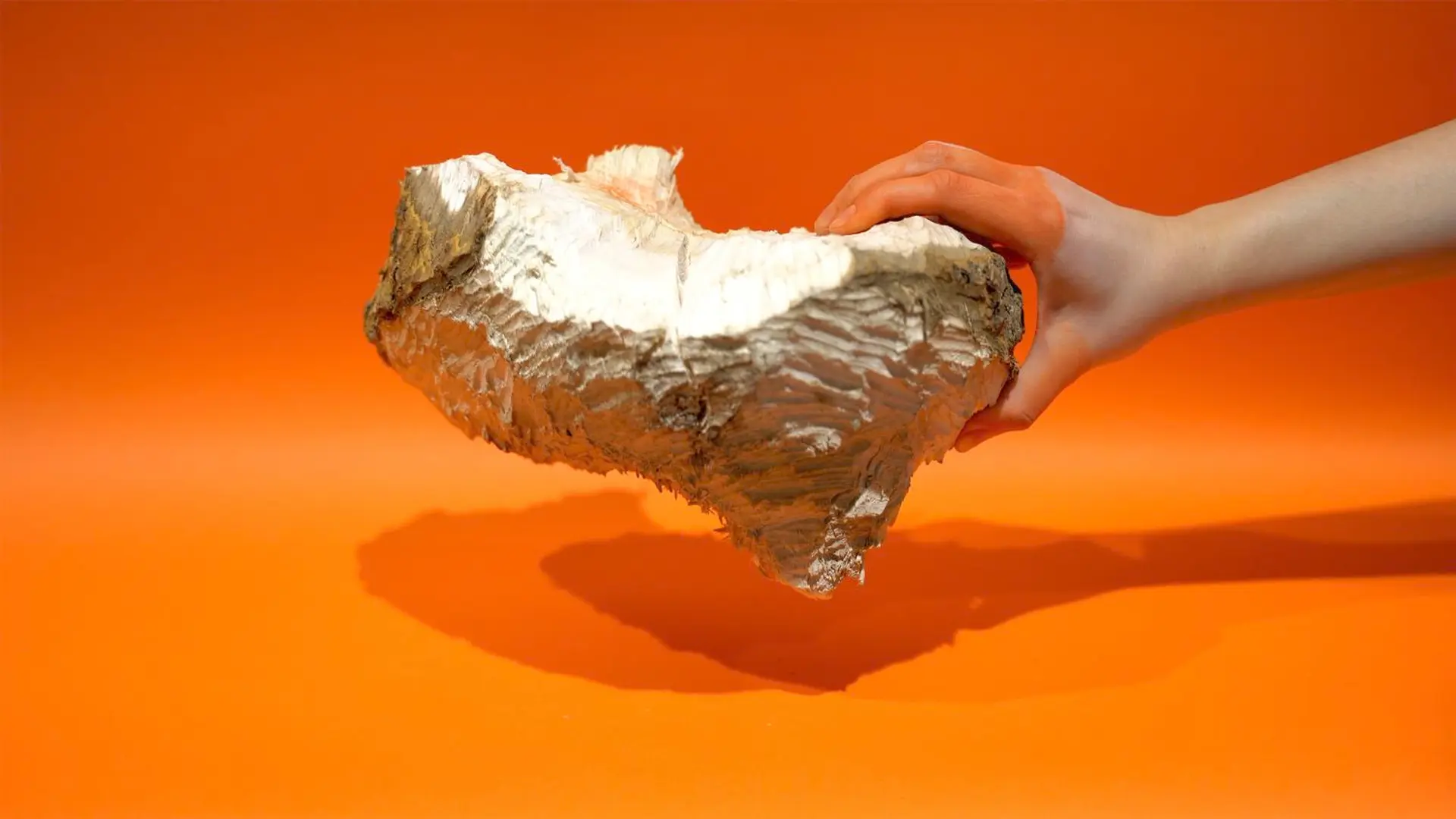
Stills from A Study of Beaverness or How (not) to be a world destroyer, 2020. Two channel video, detail. Courtesy of Marianne Hoffmeister Castro.
This line of inquiry into speculative nonhuman language and sentience also appears in Oscar Salguero’s “Attuning to Nonhuman Languages: Art and Therolinguistics,” an interactive article immersing us in the works of artists inspired by the work of pioneering sci-fi writer, Ursula K. Le Guin and her imagined study of nonhuman languages.
This field of research is taken from Le Guin’s 1974 short story, “The Author of the Acacia Seeds and Other Extracts from the Journal of the Association of Therolinguistics,” wherein scientists debate the possible messaging of a chemical trail left by ants, the kinetic underwater language of Adélie penguins, and the elusive literature of Emperor penguins. The story also proposes a challenge to all therolinguists: to consider the communicative arts of plants (phytolinguistics), and even “the wholly atemporal” poetry of rocks (geolinguistics).
“Le Guin’s therolinguistics (from the Greek thero, “feral”) is an imagined discipline devoted to the study of nonhuman languages and forms of literature,” writes Salguero. “It is speculative, playful, and was strikingly ahead of its time. As a practice, it reveals the limits of translation, inviting us instead to seek new, attentive ways of connecting with the world.”
In Salguero’s essay, he explores how artists like Lynn Alleva Lilley, Marianne Hoffmeister Castro, Audax M. Gawler and Pri Bertucci, and Miriam Simun are employing therolinguistics to approach forms of meaning beyond us. “These artists show us how the more we attune ourselves to these other languages, the more our own world expands—and with it, our sense of responsibility towards the larger community of life,” he writes. “The purpose of therolinguistics, then, may lie not in what we decode, but in how we see these encounters transform us.”
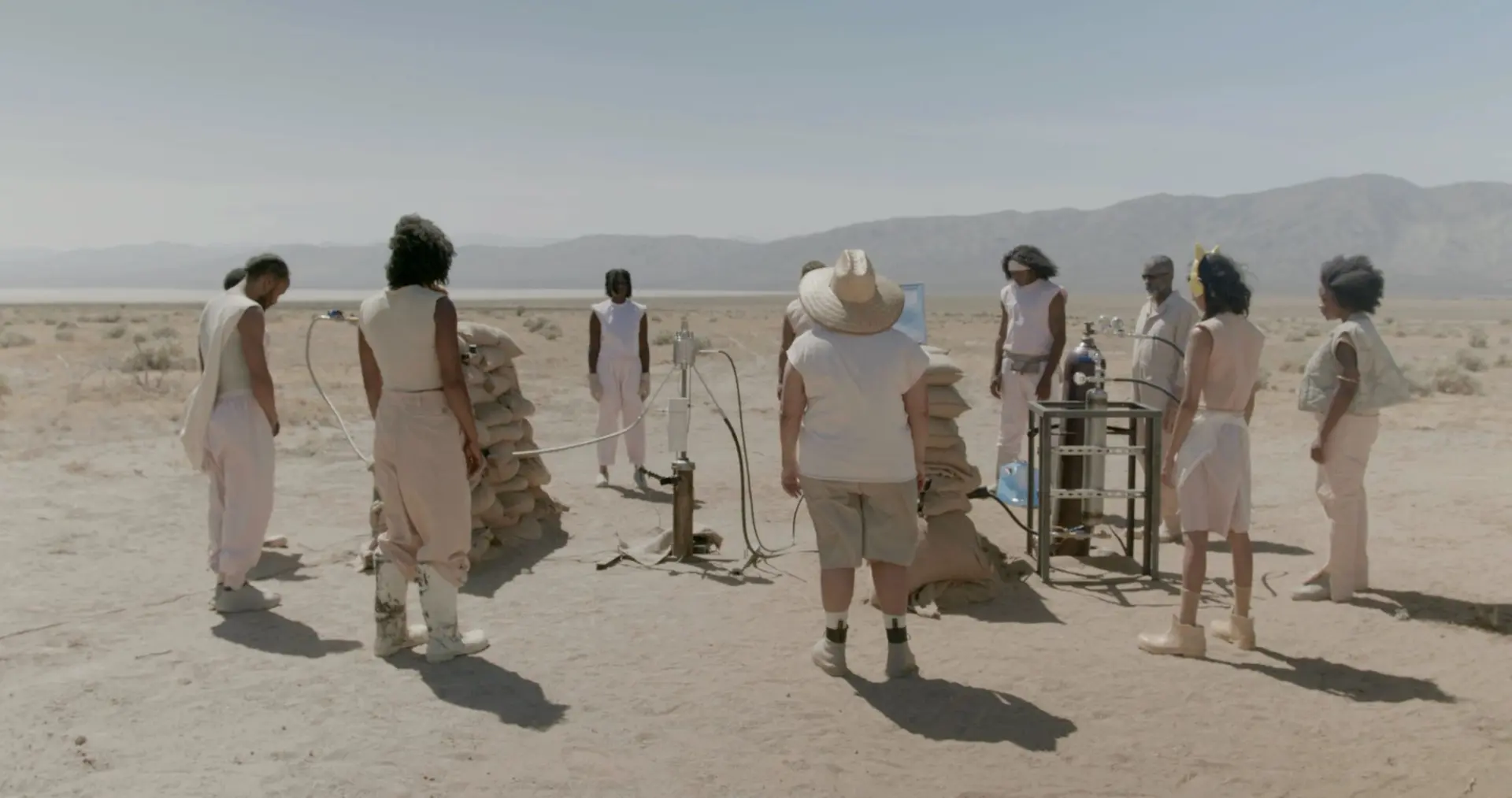
American Artist, Behind the scenes image from The Monophobic Response. Mojave, California. 2024.
Le Guin is far from the only science fiction writer inspiring artists. Chief among them is Octavia Butler, whose Afrofuturist vision has become a touchstone for artists reckoning with inheritance, migration, and imagined futures. With support from LACMA Art + Technology Lab and additional support from the contemporary art nonprofit, KADIST, in 2020, American Artist began a long term engagement with the work of Octavia Butler, the luminary author of works like Kindred and the Earthseed series. These works pulled from Artist and Butler’s shared legacies, as descendants of the Black diasporic Great Migration out of the southern United States to Los Angeles—Artist even attended the same high school as Butler nearly three decades after the author graduated.Many of these works explored the ways in which their shared landscape of southern California directly informed the fictional worlds Butler produced in her stories, working directly with the Butler estate. Dr. Ayana Jamieson, founder of the Octavia E. Butler Legacy Network and one of Artist’s close collaborators on these projects, remembered one of their early exchanges: “‘These are bus stops she would have sat at…in the 1980s when she was writing Parable,’ Artist told me in a 2022 conversation. ‘She was with people, side by side, thigh to thigh, sharing space,’ I responded.”“I contend that these specific aspects of material culture, lived experience, and the mythologizing of these organic intellectuals are what most people miss when they forget that Butler was a real person,” continued Jamieson. “What if the archive of historical record is liberated and told from multiple viewpoints? If only art and life can ripple out into the universe and be as open-ended as the stories that inspire us.”
According to Butler, the three broad tenets of society-oriented speculative fiction are “what if,” “if only,” and “if this goes on.” Artists, in their distinct abilities to immerse us in imagined, hypothetical realities, further expand the endless possibilities of how we might respond to these questions.