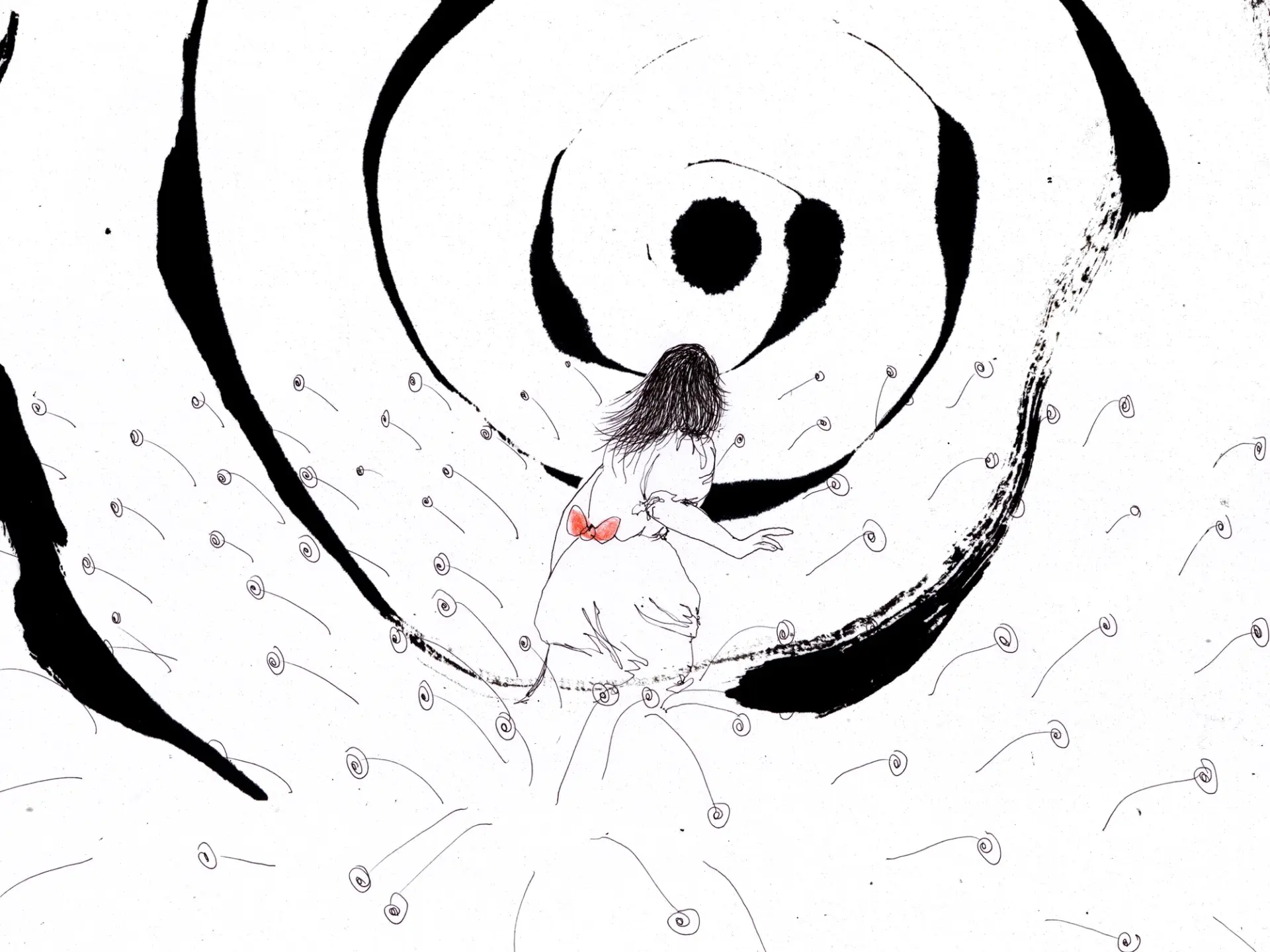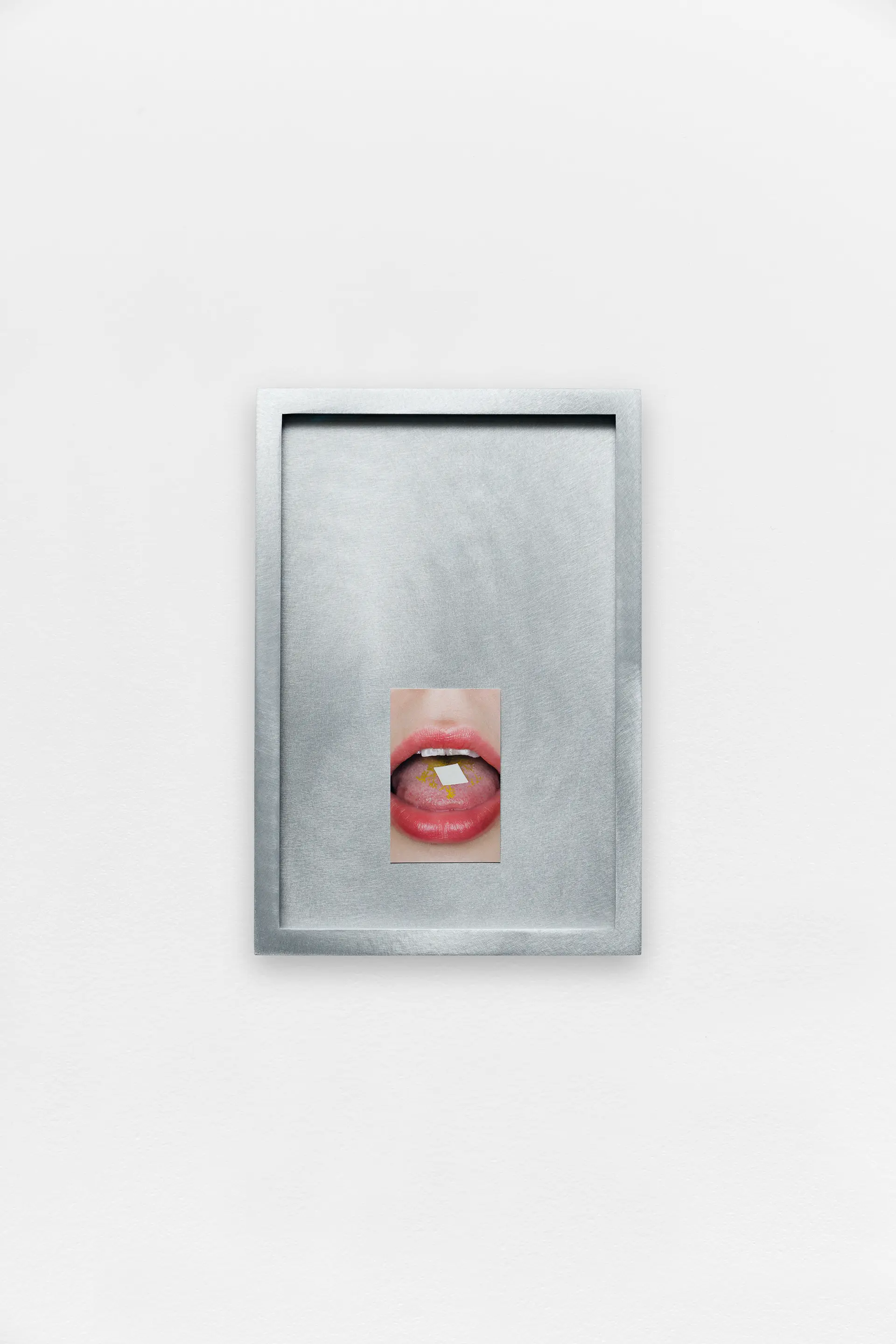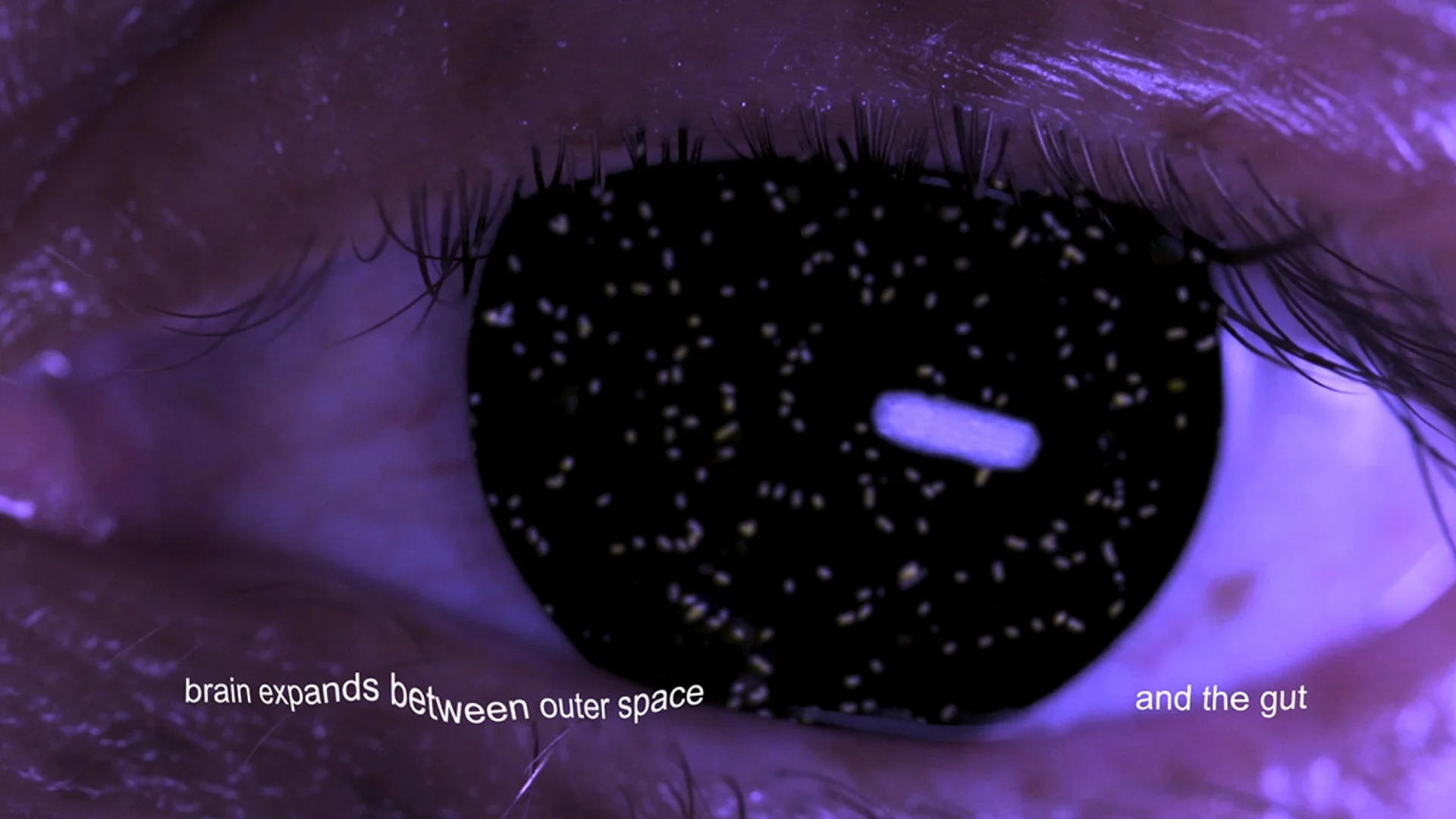
Jenna Sutela, stills from Holobiont, 2018. Courtesy the artist.
Artlab’s Editors reflect on art as an act of impossible translation.
Artlab Editors: From attuning ourselves to animal and plant languages to creating scripts for satellites, we consider how artists act as translators, allowing us to understand beyond ourselves.
Art is an act of translation—a bridge that synthesizes concepts, ideas, and feelings into an experience that exists just outside of what can be articulated through words. As 2025 Artlab Editorial Fellow Elvia Wilk observed about artist Jenna Sutela, artists often function as mediums, listening to and translating what it is they hear from their sources of inspiration: be they human, animal, plant, machine, or otherwise.
Over the years, Hyundai Artlab has played a pivotal role in cultivating these connections, supporting artistic initiatives that expand our breadth of understanding beyond our own perspectives. Through these works and conversations, we consider what the act of translation means—and how artists are creating new portals for mutual understanding.
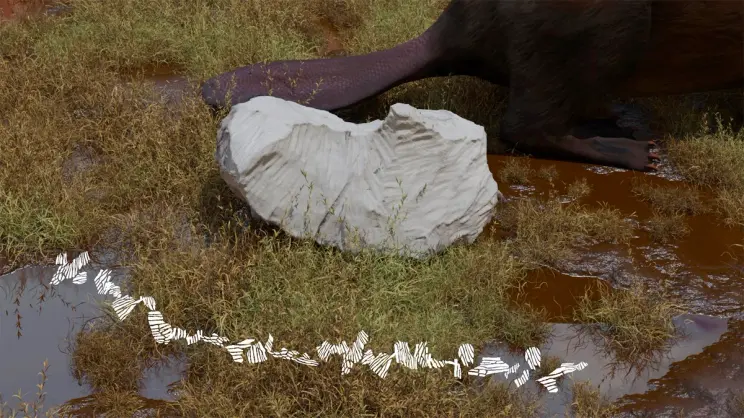
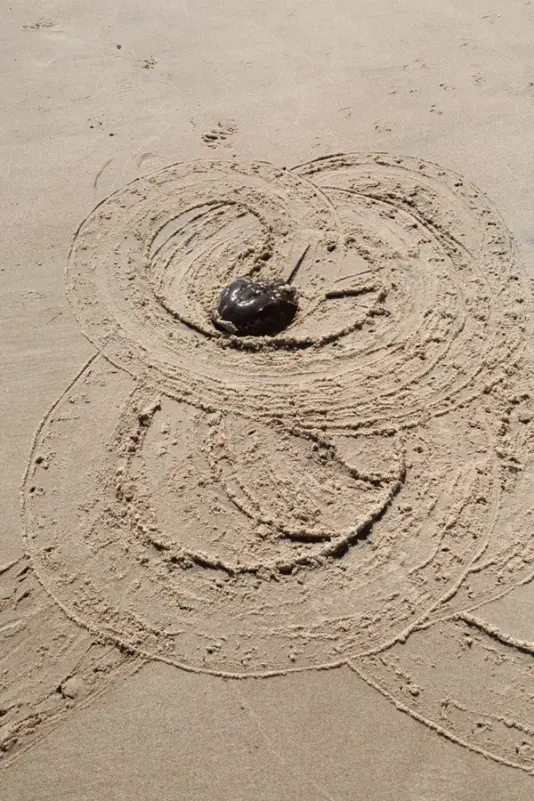
In a recent interactive essay, “Attuning to Nonhuman Languages: Art and Therolinguistics,” curator, researcher, and Interspecies Library founder Oscar Salguero brings readers on an immersive journey through the works of artists who tap into the communicative worlds of non-human species. Using the framework of therolinguistics, a speculative study of non-human languages posited by science fiction pioneer Ursula K. Le Guin, Salguero invites us to attune ourselves to understand horseshoe crabs, beavers, whales, vines, ants, and octopuses.
“These artists—working with photography, performance, illustration, video, and more—ask us to prize kinship over alienation and humility over dominance,” writes Salguero. “In a time when such relational understanding is becoming increasingly endangered, their works expand our capacity for, fascination with, and care for more-than-human worlds, compelling us to consider what it is that makes us distinctly human and whether that distinction even matters.”
Communication with the nonhuman also extends beyond the animal. For their Artlab Digital Commissions, artists Kohui and Xin Liu respectively explored ways to give voice to endangered plants and decommissioned satellites.
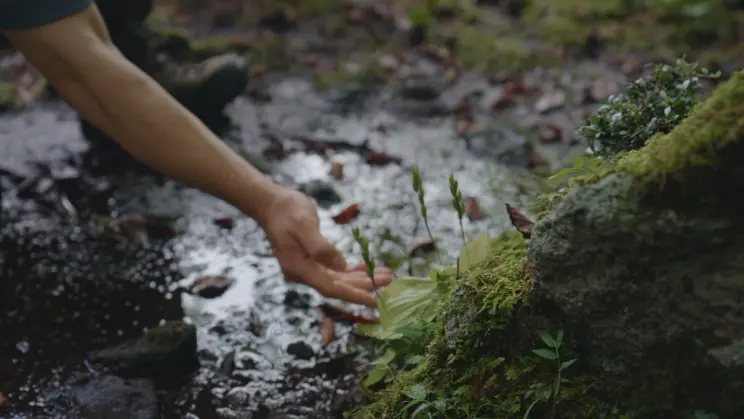
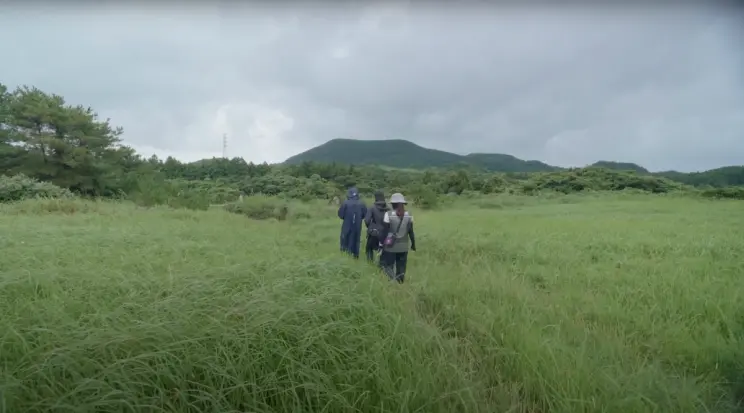
In Record for Disappearing Beings, Kohui embarked on a transformative journey to South Korea’s Jeju Island, collaborating with ecologists from Korea’s National Institute of Ecology (NIE) to experience three endangered plant species in their natural habitats. From these close observations, Kohui developed an ‘algorithmic score’ for each plant, merging sound, science, and technology. Each track, composed of interwoven visuals and sound, reflects the unique qualities of the plants while also capturing the broader ecosystems these endangered species inhabit.
An accompanying essay by translator and writer Diana SeoHyung offers additional reflections on Kohui’s practice. “...As a translator of natural phenomena into art, Kohui is always asking whether plants should be translatable to human experience (and if so, how),” writes SeoHyung. “Kohui’s work allows audiences to approach and connect with these plants from a respective distance. As such, Kohui’s work as a translator of Jeju’s endangered species captures something far greater than the sum of its observable data points—something closer to meaning.”
For Xin Liu’s digital commission, NOAA: A Fall Towards Home, the artist and engineer continued her ongoing practice reclaiming narratives of space exploration, immigration, intimacy, motherhood, climate, dreams, and the limits of organic life. With this web-based project, Liu gives voice to three decommissioned satellites. Imbuing each one with its own distinct personality, Liu crafted scripts for diary-like log entries from the perspective of each satellite: diary-like log entries that reflect on its journey as a permanent celestial migrant.
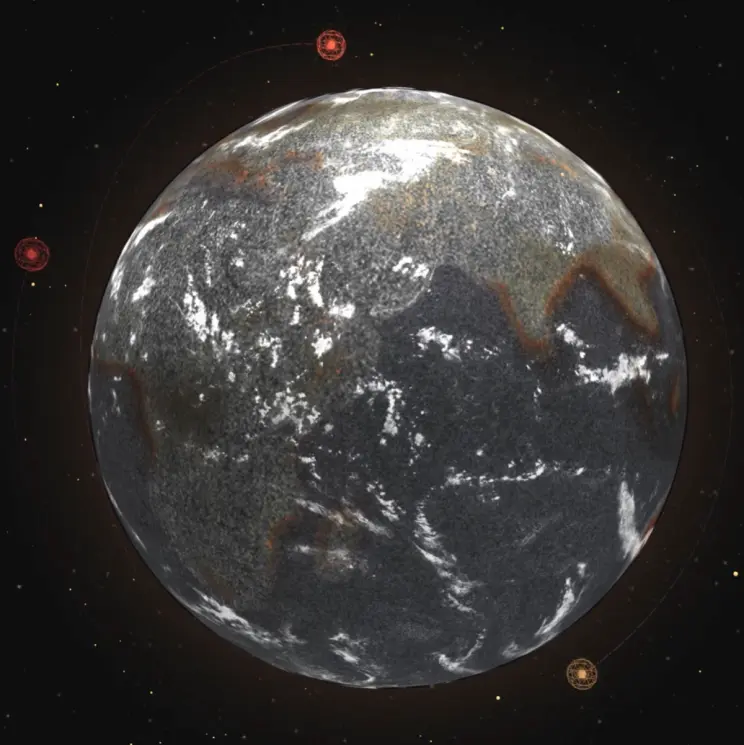
This process ended up being deeply personal for Liu, mirroring her own experience as a diasporic Chinese person living in the UK and in the US. “It is about the journeys these satellites took and how they are constantly watching home while being far away,” said Liu. “I’m constantly thinking about this orbiting journey and my idea of home.”
“I know I’ve been here for a while,” muses NOAA-15, the first of the three satellites to have be
en launched. “NOAA-16 has joined me. It is younger and glassier than I, and has been allocated priority. I was not sure how things were going to be. But now I am enjoying this shift. I spend more time alone, communicating fewer times each day with the ground stations. More of us will come hereafter—the sky is getting populated.”
Through this intimate experience, Liu transforms voiceless machines into soulful narrators, inviting us into a meditative dialogue on estrangement, duty, and the longing for connection. NOAA: a fall towards home reminds us that even our most distant creations can help us see ourselves more clearly. A continuation of this project was recently presented at the High Line the High Line in New York City.
There is a tacit acknowledgement within all these works, of the limits of translation and language. To put something into words—to define an experience, a feeling, or a work of art—is always an imperfect attempt to capture the uncapturable. In a recent Roundtable conversation, this year’s Artlab Editorial Fellowship cohort considered how art writing in particular distills this paradoxical tension.
Clockwise from top: Travis Jeppesen, Yutong Lin, Mira Dayal, Shannon Lee (Artlab Editor), and Gary Zhexi Zhang. From Roundtable: Meet the 2026 Artlab Editorial Fellows in discussion on May 26, 2026.
Background: Thomas Merceron, The Stirring of Sight, 2026. Commissioned by Hyundai Artlab, © Thomas Merceron.
“I always thought that writing about art was the most difficult form of writing that there is,” said 2026 Artlab Editorial Fellow Travis Jeppesen. “Walter Benjamin famously called it the impossible task: attempting to translate something that exists in one, let us say purely visual language, into written language. How does one grapple with that? How does one succeed at that? In fact, in some ways, one can never succeed. It’s almost always a failure.”
2026 Artlab Editorial Fellow Yutong Lin articulated the act as “trying to confront the unspeakable and the unlanguageable.” Responding to this year’s Fellowship theme of critical empathy, Lin will be writing about grief in contemporary art, which itself slips from easy translatability and capture. “It’s exactly the thing that resists easy understanding, easy wording, and easy naming,” said Lin.
Despite the inherent impossibility of the task, there is also the irresistible urge to attempt. Returning to Elvia Wilk’s essay on Jenna Sutela: “There is something sacred in wanting to know. There is something sacred in knowing you can’t.” It is within this space of accepted unknowing and wondering that Hyundai Artlab finds inspiration.