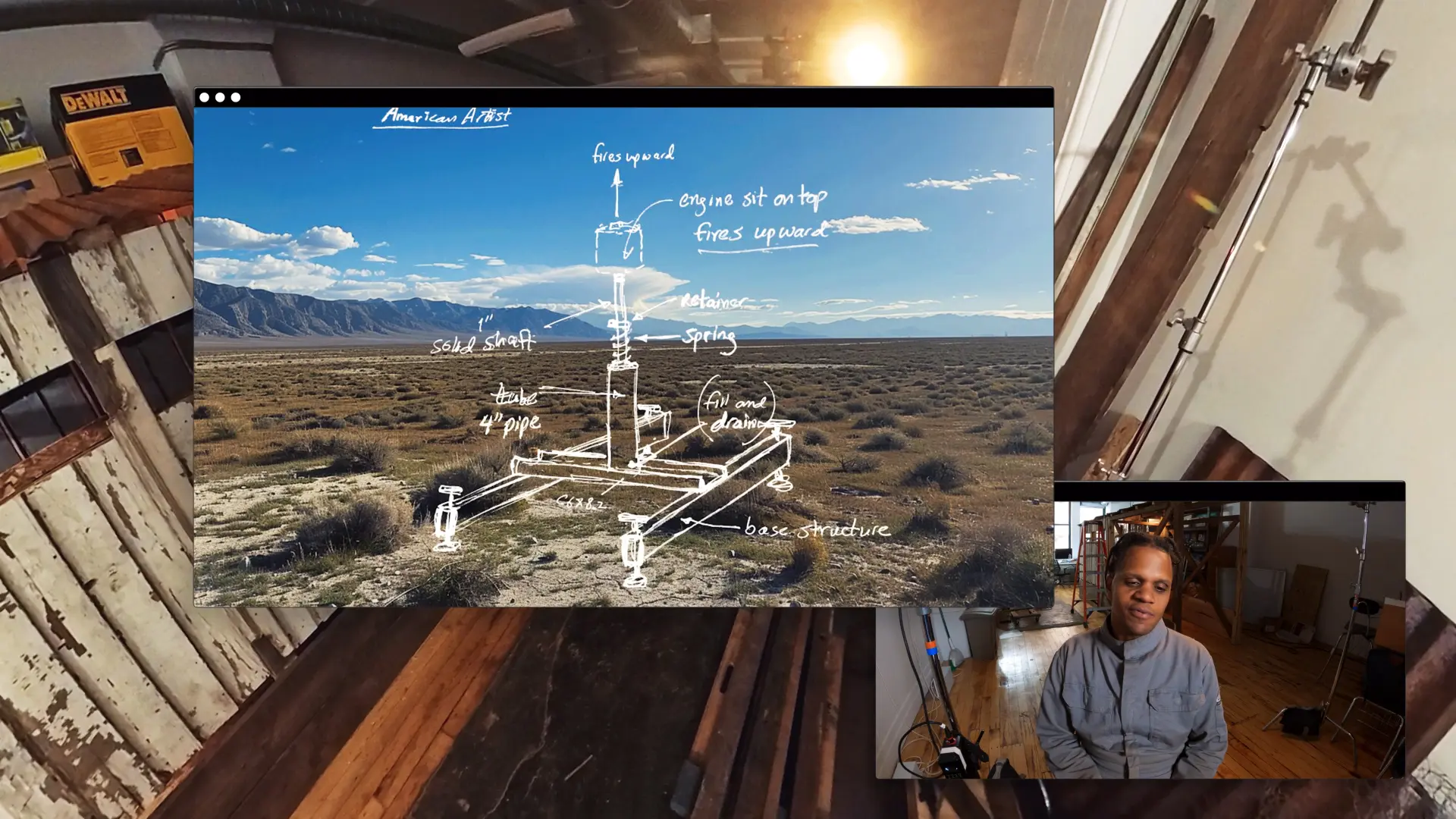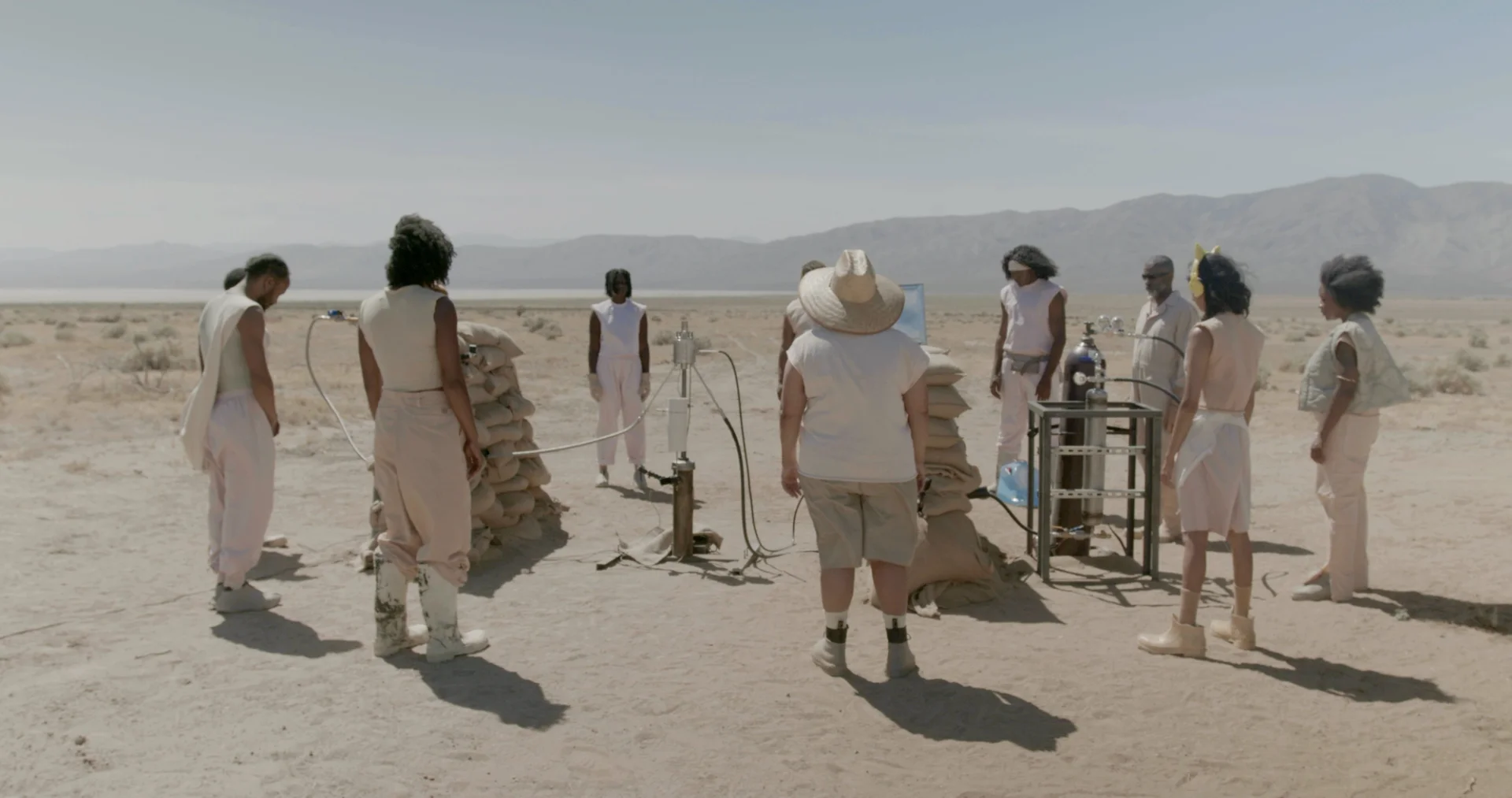
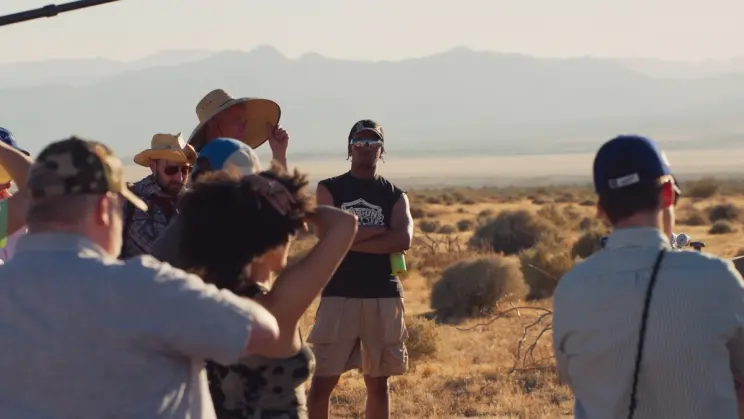
American Artist, Behind the scenes image from The Monophobic Response. Mojave, California. 2024.
From Pasadena to the Mojave Desert, follow Dr. Ayana Jamieson as she uncovers the blurred boundaries between fiction and lived experience within the works of American Artist and author Octavia E. Butler.
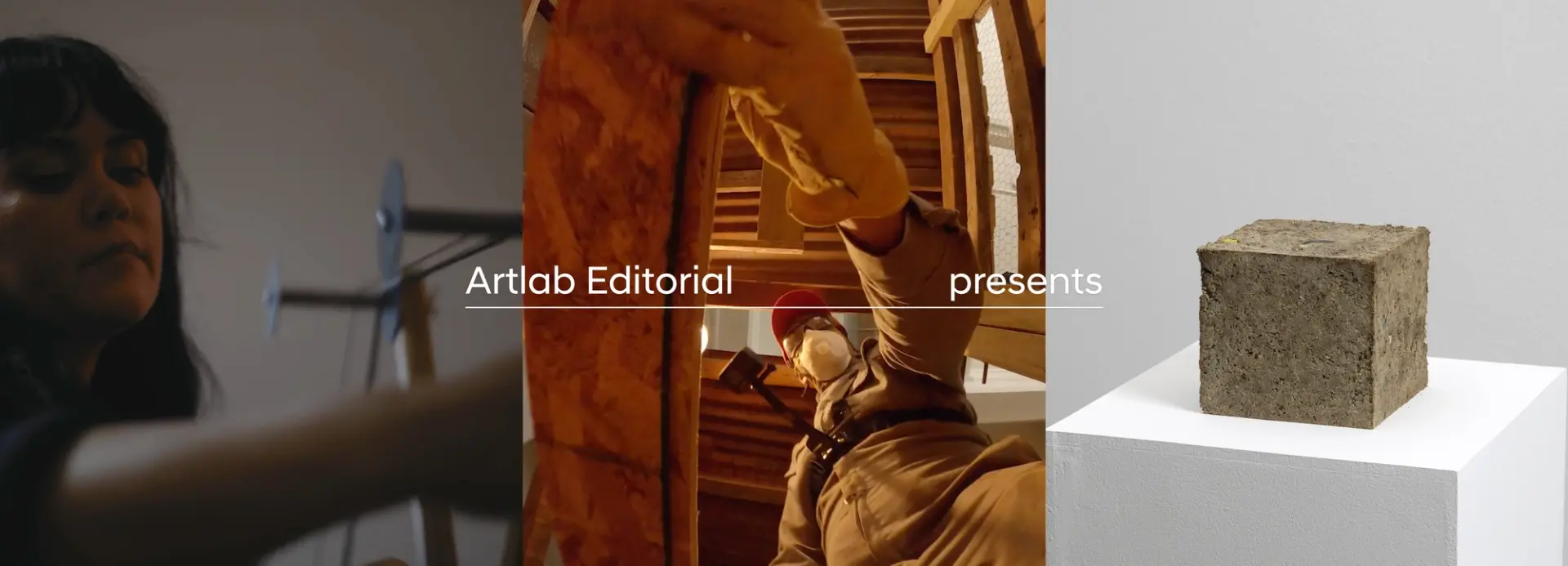
Artlab Editors: Accompanying the Artlab Editorial presents film, American Artist: Earthseed, Dr. Ayana Jamieson shares her personal experiences and insights as both a close collaborator of the artist and a preeminent scholar of speculative fiction author Octavia E. Butler. As the founder of the Octavia E. Butler Legacy Network, Dr. Jamieson has been building a global community committed to highlighting and expanding on Butler’s life and work since 2011.
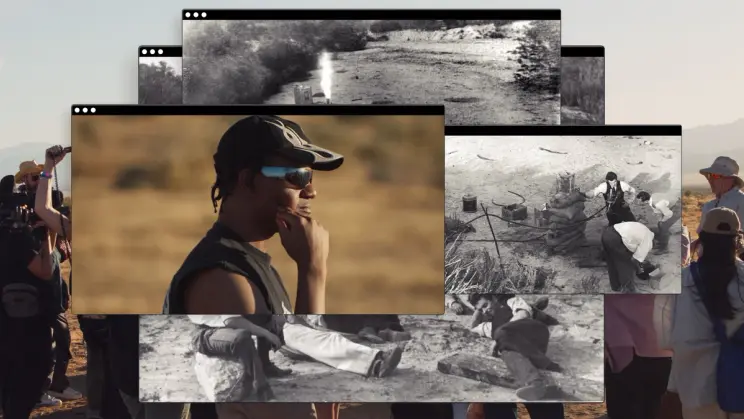
The Mojave Desert is as harsh and unfamiliar to me as the surface of Mars, but when I was on site as an improvisational performer in the 100-plus degree heat of early June for the recording of American Artist’s Earthseed rocket test, it was also breathtaking. Recent drought-dampening rains had left a mirage-like pool of water in the nearby ghost town of Garlock’s lakebed. In the film, the arid dust of the Mojave appears as a place outside of time under crisp azure skies dotted by decadent clouds sluicing through the heavens. Isolation is palpable, and the heat is bone-deep.
“We are all that we have. We are the only thing that we have to go forward with. We need each other. We need each other to go forward,” said a performer before our group convened in a circle of faith, dressed in layers of sepia, light umbers, and sandy pastels; a multigenerational and multiethnic band of community members. The desert breezes felt like the landscape was breathing. Flames ignited toward the sky in a loud invigorating blaze.
Titled “The Monophobic Response” after an essay by the renowned speculative fiction writer Octavia E. Butler in the anthology Dark Matter: A Century of Speculative Fiction from the African Diaspora (2000), Artist’s live static rocket launch is part of their ongoing practice exploring the life, work, and archives of the late pioneering author—particularly Butler’s groundbreaking 1993 novel, Parable of the Sower.
Sponsored by the LACMA Art + Technology Lab in addition to the Getty Foundation and Hyundai Motor as part of Getty’s PST: Art + Science Collide, The Monophobic Response was co-curated by and co-shaped with Adam Kleinman, filmmaker Chester Toye, and myself in collaboration with Artist.
Written as a series of diary entries penned by 15-year-old Lauren Oya Olamina, Parable of the Sower is the first text in Butler’s seminal Earthseed duology, a cautionary tale that traces the unfolding continual societal collapse in a (then) future California—it pointedly begins on July 20, 2024. The novel was informed by Butler’s meticulous research beginning in the late ‘60s on climate change and its disproportionate impacts on marginalized communities and the decades following—from utilities deregulation legislation, to the rolling back of environmental protections, wildfires, oil spills, and proposed cuts to social programs for undocumented Californians.
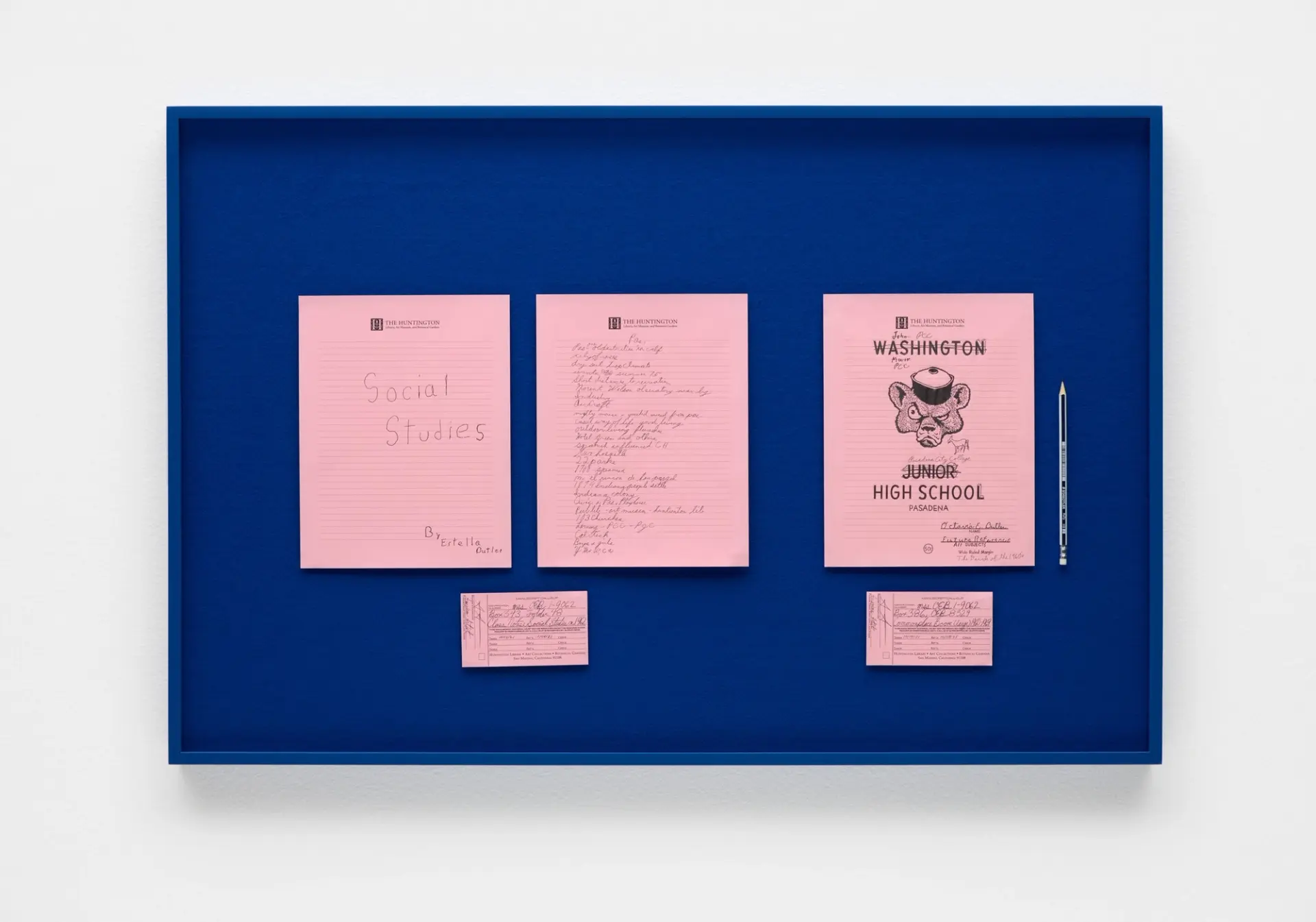
American Artist, Octavia E. Butler Papers: mssOEB 1-9062 I (Social Studies), 2022. The Huntington stationary, graphite, pencil, felt.
As Olamina observes what is happening around her—climate catastrophe, embattled bodily autonomy, religious fundamentalism, growing fascism—she finds herself yearning for a new way forward that is not based on the capitalist hellscape that engendered the novel’s increasingly apocalyptic reality. The path she ultimately discovers is not rooted in the God of her Baptist father, but instead, the found belief system she calls Earthseed, whose key gospel is simply the archetype of Change. “All that you touch, you Change / All that you Change changes you,” writes Olamina. “The Destiny of Earthseed is to take root among the stars.”
According to Butler, the three broad tenets of society-oriented speculative fiction are “what if,” “if only,” and “if this goes on.” Parable of the Sower can be categorized as the latter. Although the book was not supposed to be an instruction manual, over thirty years after its publication, it seems that we have arrived uncomfortably close to Butler’s speculative predictions and warnings.
If Parable of the Sower embodies the “if this goes on” function of speculative fiction, Artist’s practice embodies the “what if” and “if only.” Their internationally acclaimed career has largely been inspired by their upbringing in Altadena, California—not far from Butler’s fictional suburb of Robledo and the future-minded institutions of Jet Propulsion Laboratory and Caltech. As descendants of the Black diasporic Great Migration out of the southern United States, both Butler and Artist’s ancestors re-established themselves in Los Angeles in the early 20th century. Artist even attended the same high school as Butler nearly three decades after the author graduated.
Seeded with financial support from the LACMA Art + Technology Lab and additional support from the contemporary art nonprofit, KADIST, Artist decided to grow their work out of these shared histories with Butler. The first iteration of this was a digital research engine that mapped Butler’s family migration out of rural Louisiana to Los Angeles. Artist reached out to me in an email in early 2021. We were connected via the archivist Natalie Russell, the former assistant curator of literary collections at the Huntington Library, who had cataloged Butler’s collection, and also through Adam Kleinman, who was then working at KADIST. Artist said they were interested in my work and a possible future collaboration. I was wary and even skeptical at first, being unfamiliar with Artist’s work, but after my initial conversations with Kleinman, I was intrigued. From my first meeting with Artist, they felt familiar to me. We had a natural affinity that developed into a symbiotic thought partnership that my work at the Octavia E. Butler Legacy Network strives to cultivate.
This early research culminated in the installation, Shaper of God (2022), which premiered at CalArts’s REDCAT. In it, a series of large-scale screens play the video work “The Arroyo Seco” (2022), narrated by Artist’s paternal aunt, Gail Irby, a former Pasadena Unified School District teacher and classmate of Butler’s. Part of an ongoing series titled “Yannis Window,” the film is scripted in the fashion of an informational video presented by “City of Robledo Historical Society,” supplanting and cross pollinating the real city of Pasadena with the fictional town of Robledo in Butler’s novel. Irby narrates: “Today the lustrous Watershed is a gathering point for San Gabriel Valley’s most prestigious, academic, ambitious and thoughtful pedestrians, who claim this as their own backyard for clarifying hikes, transcendent horseback rides, and some of today’s most impressive adventures.”
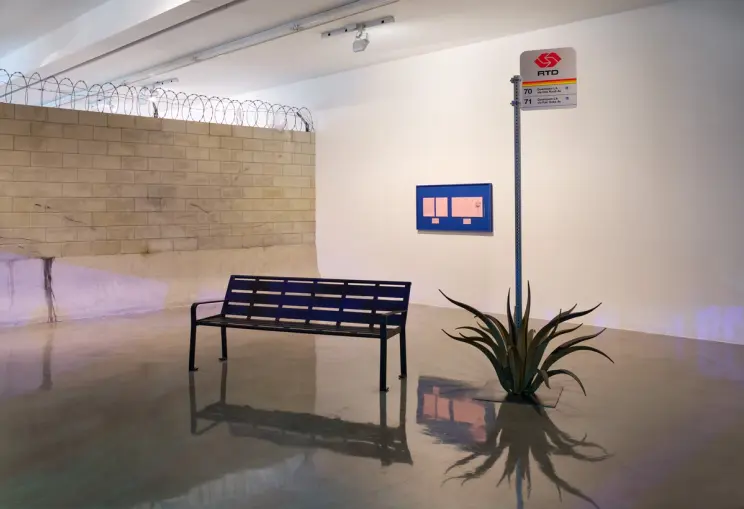
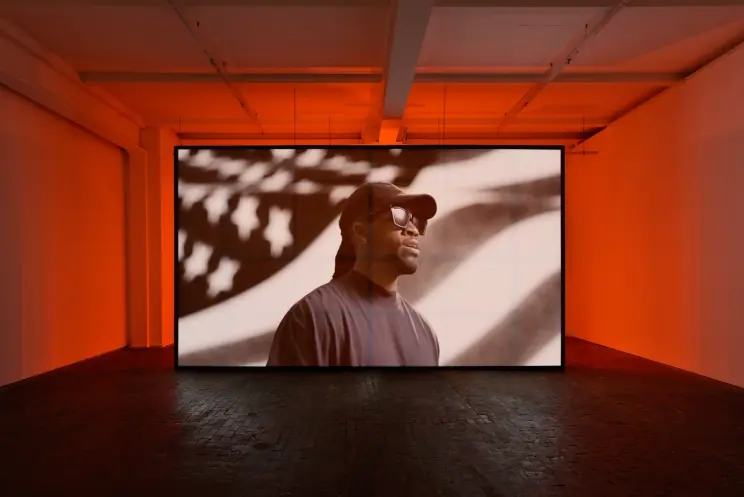
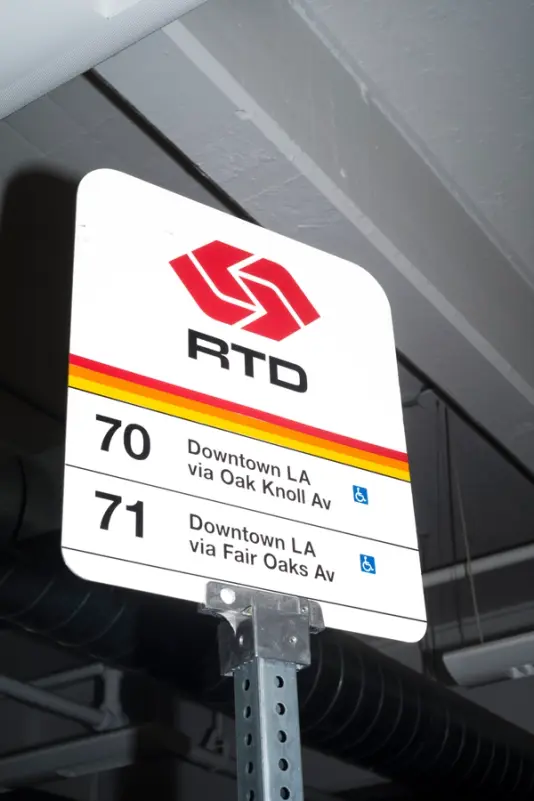
For the installation component, Artist constructed a full-scale enclosure that takes the form of a walled-in cul-de-sac. Pencil drawings on pink paper depicting various noteworthy moments in Butler’s life as interpreted by Artist and inspired by Butler’s archives line the exterior gallery walls adjacent to of the gated walls of the installation. “The Arroyo Seco” plays on a large screen across from an RTD (Rapid Transit District) public bus stop bench, complete with a bus schedule and route numbers that Butler herself utilized regularly. “These are bus stops she would have sat at…in the 1980s when she was writing Parable,” Artist told me in a 2022 conversation. “She was with people, side by side, thigh to thigh, sharing space,” I responded.
By merging these quotidian signifiers of life in Pasadena as observed by both Butler and Artist with references to Parable’s Robledo, Artist reveals the ways in which Butler’s speculative fictions were rooted directly in the world around her. The markers in Shaper of God traverse time and bridge the gap between fiction, the archive, public knowledge, and lived experience.
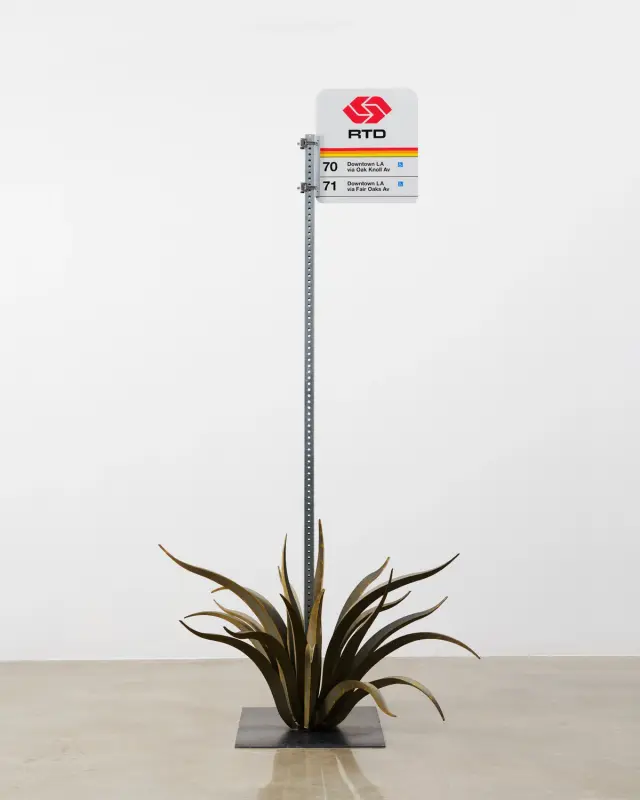
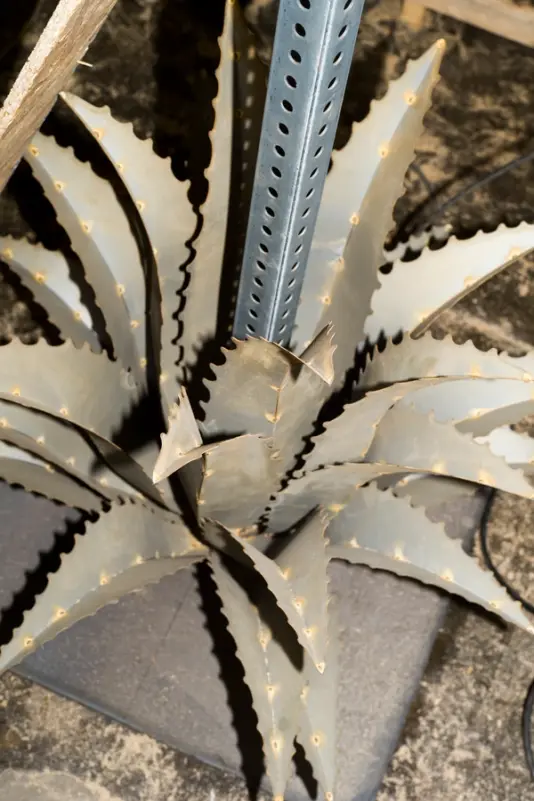
Whereas Shaper of God plumbs the material depths of Butler’s life, The Monophobic Response asks a more critical dystopian question about what it would take for a group of climate refugees to entrust themselves, experiment, theorize, and test the literal path of Olamina’s Destiny among the stars. Fittingly, the work was planned and constructed over the course of the COVID-19 pandemic and the years following.
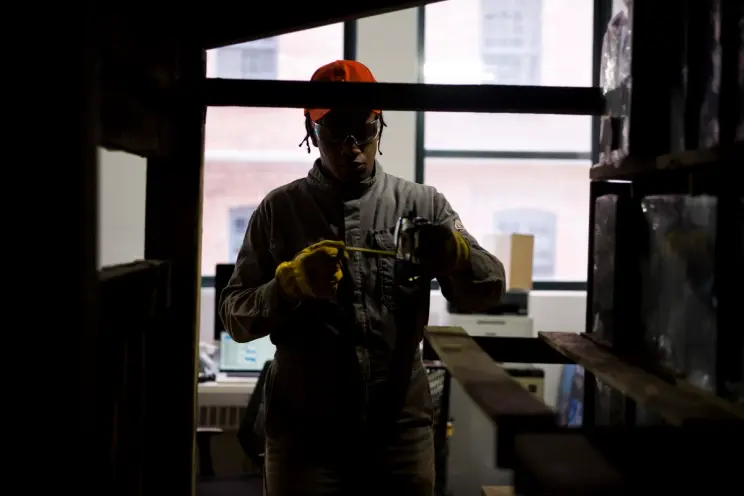
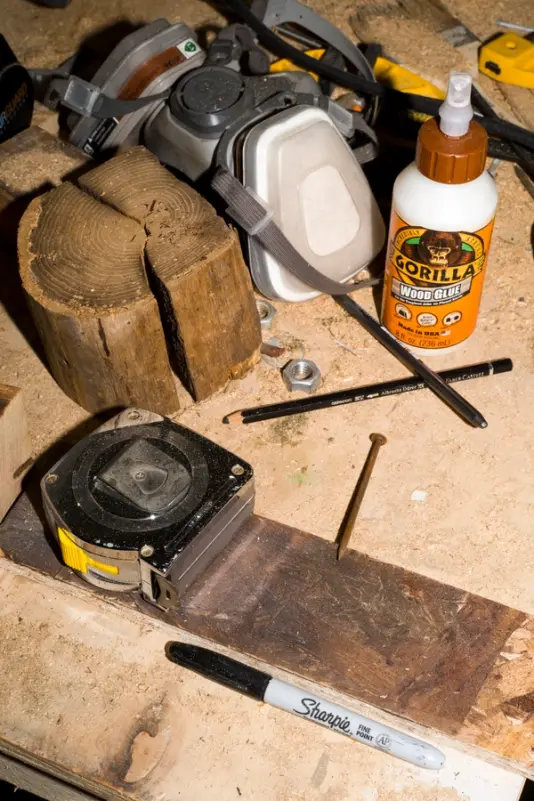
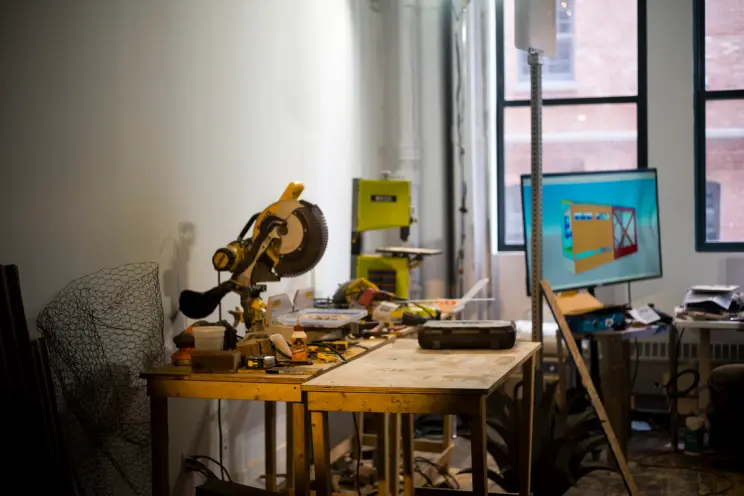
The task of firing up a working rocket engine would not have been possible without the combined knowledge and expertise of Reaction Research Society (RRS), the oldest continuously operating amateur rocket group in the United States, founded in 1943. RRS members overlapped with the participants in the project to purchase, construct, and ignite the rocket engine during tests. In June, we assembled for the day-long Mojave Desert filming session, followed by a performance of the live rocket test the next day. Parts of the spent engine will be exhibited along with a screening of the resulting film as part of LACMA’s PST from November 1-4, 2024.
It is fitting that Artist’s work, while critiquing the dominant order and calling attention to the surveillance of marginalized bodies, is also a love letter to Pasadena/Altadena and the Los Angeles, California our ancestors migrated to. This love letter points to how the local and personal are also political and global. Indeed, Butler didn’t so much predict the future as observe what was happening around her over time and extrapolate from what she knew to what might be if we were not careful.
Artist’s objectives are always pointed toward including Butler within a broader image of Black womanhood, placing her in direct conversation with figures like their aunt Gail in order to “add more depth to what we understand about Butler’s life.” I contend that these specific aspects of material culture, lived experience, and the mythologizing of these organic intellectuals are what most people miss when they forget that Butler was a real person. What if the archive of historical record is liberated and told from multiple viewpoints? If only art and life can ripple out into the universe and be as open-ended as the stories that inspire us.
In The Monophobic Response’s nominal essay, Butler muses that human beings are both afraid of and longing for the other. According to her, we are engaged in inventing and projecting aliens out into the cosmos, and alienation onto their fellow human beings. She writes: “How strange: In our ongoing eagerness to create aliens, we express our need for them, and we express our deep fear of being alone in a universe that cares no more for us than it does for stones or suns or any other fragments of itself…We’re on our own, the focus of no interest except our consuming interest in ourselves.” The Mojave Desert evokes this same feeling of stark wonder and abandonment. Artist, Earthseeders, and Butler, however, have seen something beyond the yawning void of isolation. Refusing this, we affirm that we are essential to one another if we are to survive such unknowable (or perhaps, all too predictable) futures.
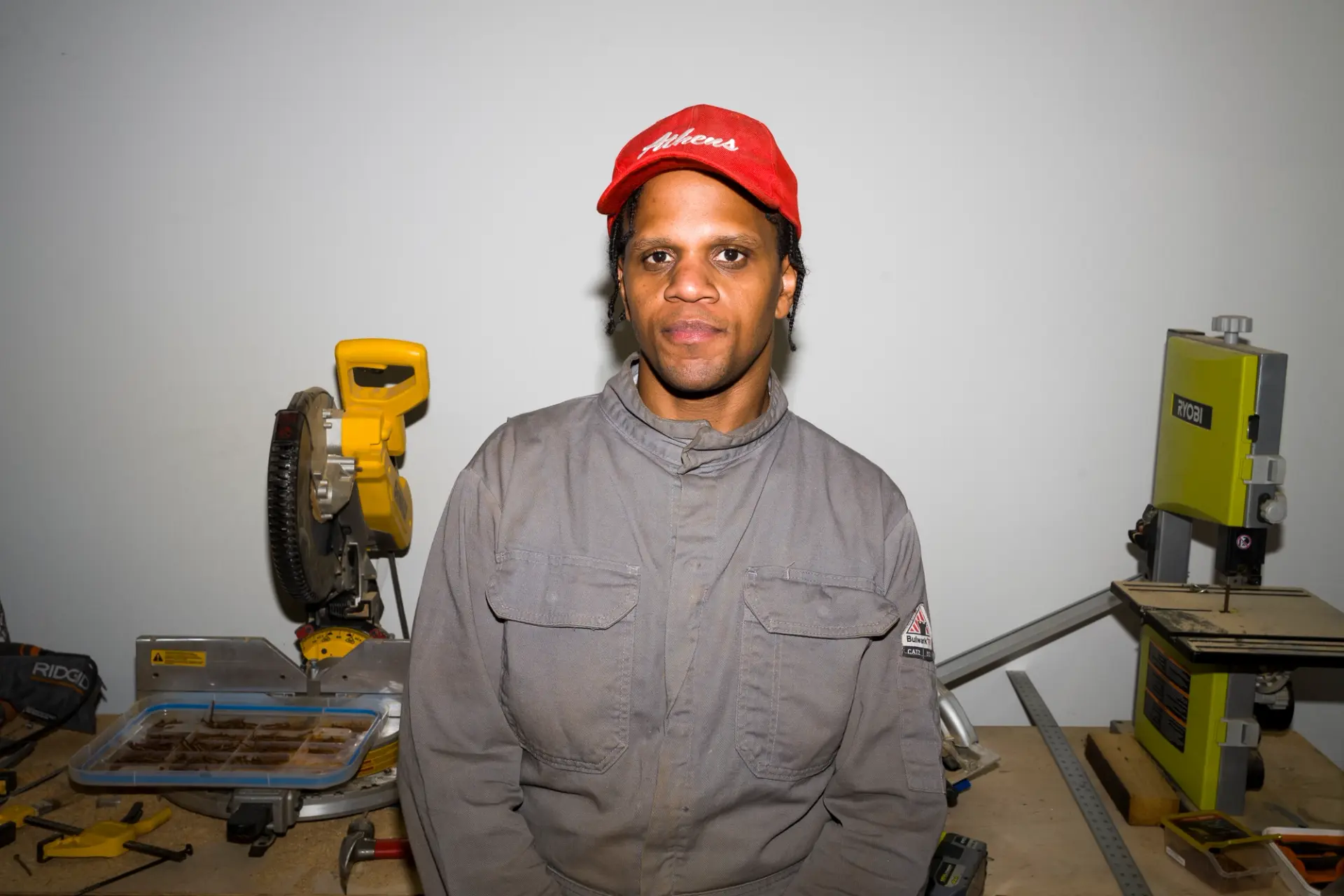
American Artist, Portrait of the Artist.
Photo: Mike Vitelli.