Artists are finding ways to immerse themselves in the communicative worlds of the nonhuman, from horseshoe crabs, beavers, whales, vines, ants, and octopuses. Are we ready to listen?
Artlab Editors: Curator, researcher, and Interspecies Library founder Oscar Salguero brings us on an immersive journey through therolinguistics, exploring how artists are using Ursula K. Le Guin’s speculative study of nonhuman languages to expand how we understand our place in the universe.
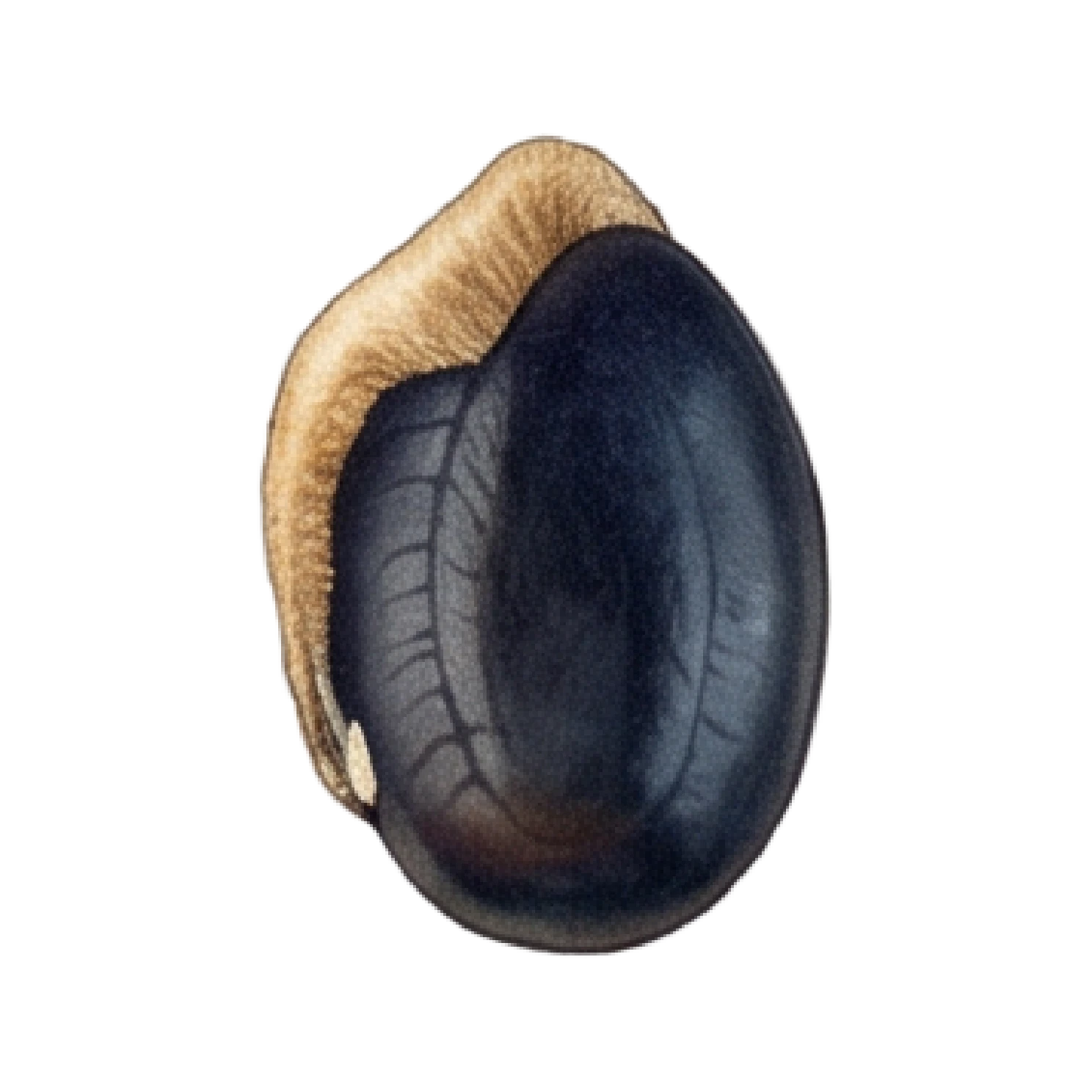
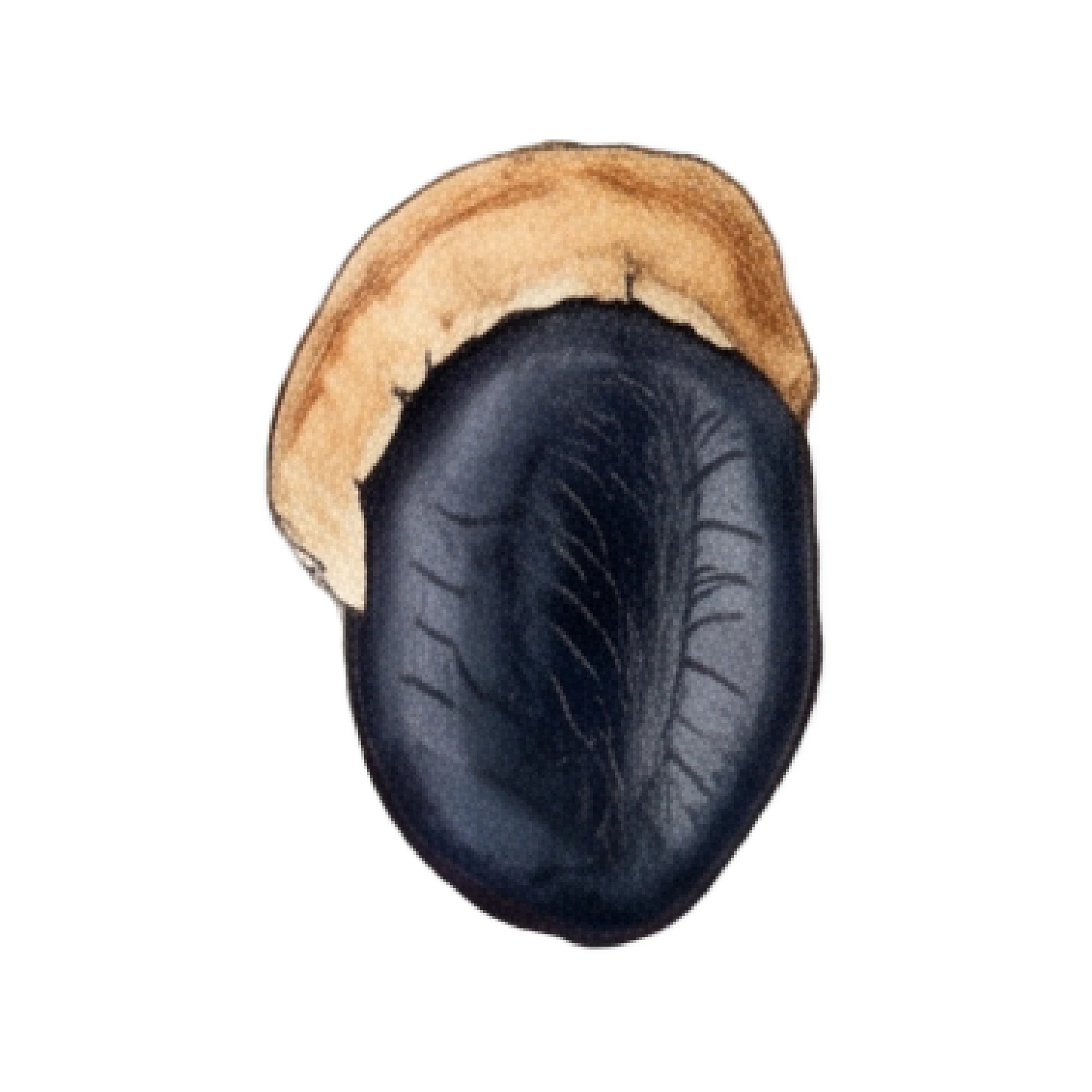
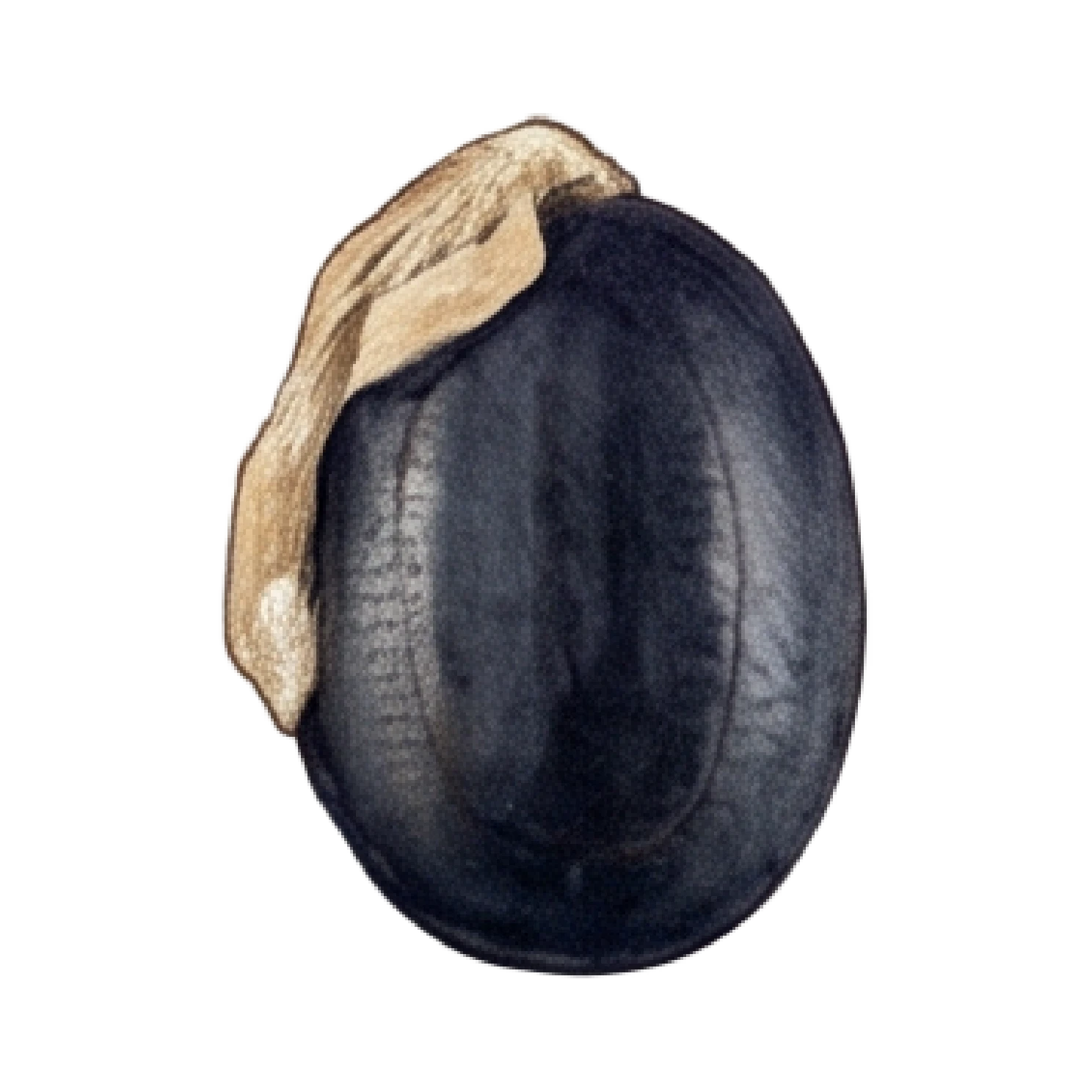
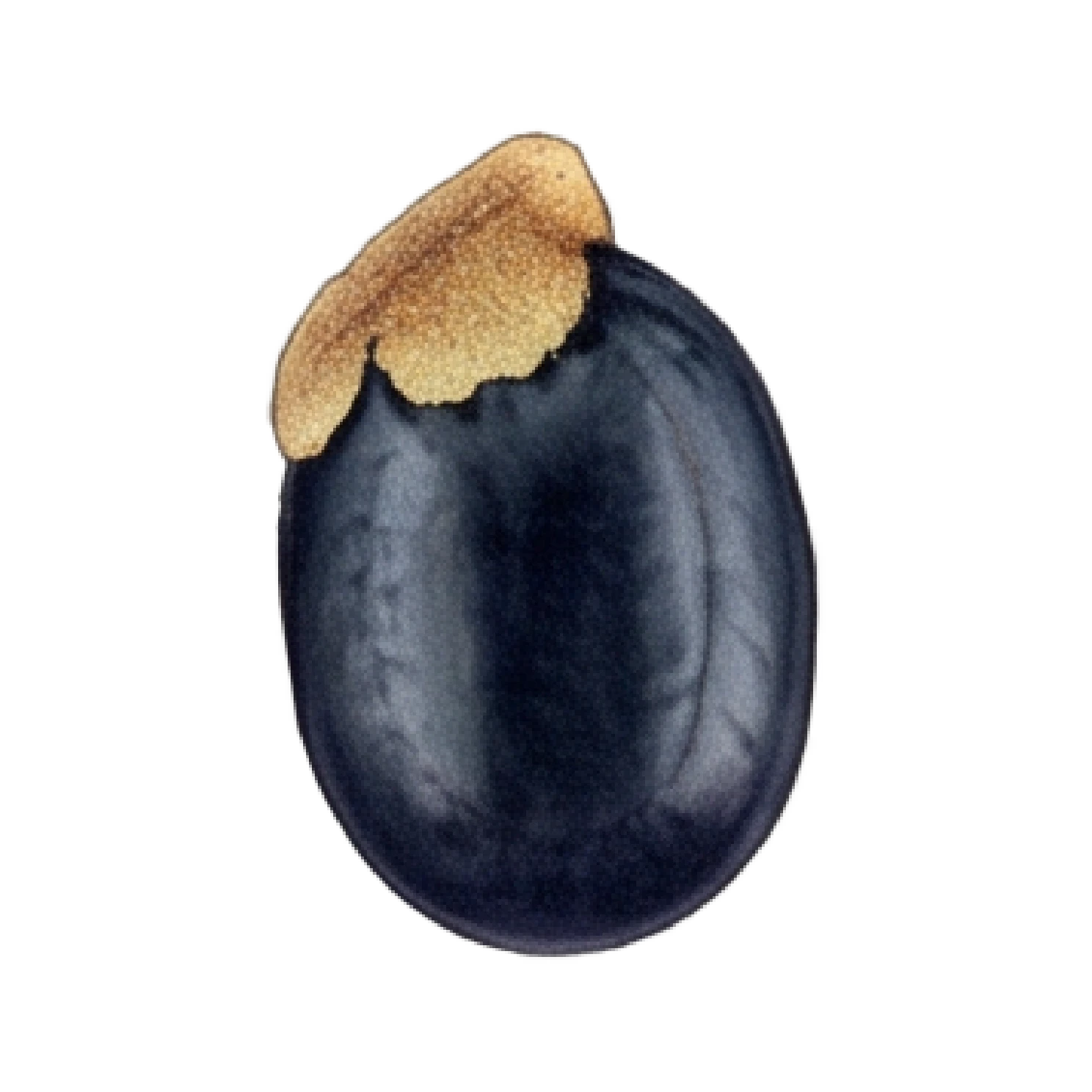
A single ant leaves a trail of touch-gland exudations on 31 carefully arranged, degerminated acacia seeds. The ant “writes” by leaving behind a trail of communicative chemicals (not unlike pheromones). Translated into English, the first part of seeds 14 to 22 read: “Long are the tunnels. Longer is the untunneled.” And on seeds 30 and 31 (the final two): “Eat the eggs! Up with the Queen!” Was this ant’s message autobiographical? Was it a manifesto?
These and other findings are shared in the Journal of the Association of Therolinguistics, a fictional academic publication at the core of Ursula K. Le Guin’s 1974 short story, “The Author of the Acacia Seeds and Other Extracts from the Journal of the Association of Therolinguistics.” In the story, researchers debate the contents of the ant’s message and its dissident call against authority: According to the story’s scholars, the word “up” in ant connotes danger and exile, the opposite of home and safety in ant culture.
The journal also proposes an Antarctic expedition to study the kinetic underwater language of Adélie penguins and the elusive literature of Emperor penguins, concluding with a challenge to all therolinguists: to consider the communicative arts of plants (phytolinguistics), and even “the wholly atemporal” poetry of rocks (geolinguistics).
Le Guin’s therolinguistics (from the Greek thero, “feral”) is an imagined discipline devoted to the study of nonhuman languages and forms of literature. It is speculative, playful, and was strikingly ahead of its time. As a practice, it reveals the limits of translation, inviting us instead to seek new, attentive ways of connecting with the world.
Long before human languages emerged, the planet already teemed with complex systems of communication: chemical, vibrational, infrared, ultrasonic, and bioluminescent forms of signaling and exchange. Nature writes in multiple modes and temporalities and a scientist might find himself resorting to the language of art to describe what he sees: Ecologist and philosopher David Abram writes of the scrawls and traces left by other species as “the sinuous calligraphy of rivers winding across the land,” referring to “the swooping flight of birds [as] a kind of cursive script written on the wind” and bringing attention to how “leaf-miner insects make strange hieroglyphic tabloids of the leaves they consume.”
Today, therolinguistics has inspired a rich variety of artistic practices, all grown from the acacia seed Le Guin’s imagination planted over 50 years ago. These artists—working with photography, performance, illustration, video, and more—ask us to prize kinship over alienation and humility over dominance. In a time when such relational understanding is becoming increasingly endangered, their works expand our capacity for, fascination with, and care for more-than-human worlds, compelling us to consider what it is that makes us distinctly human and whether that distinction even matters.


The horseshoe crab predates dinosaurs and the earliest trees. It has endured more than 450 million years of mass extinctions, including “The Great Dying,” a Permian event that wiped out about 90% of marine species. With ten eyes—some equipped with ultraviolet-sensitive receptors—distributed across its shell and tail, its perceptual world is finely attuned to moonlight, tides, and the shifting coastal conditions through which it finds its mates.
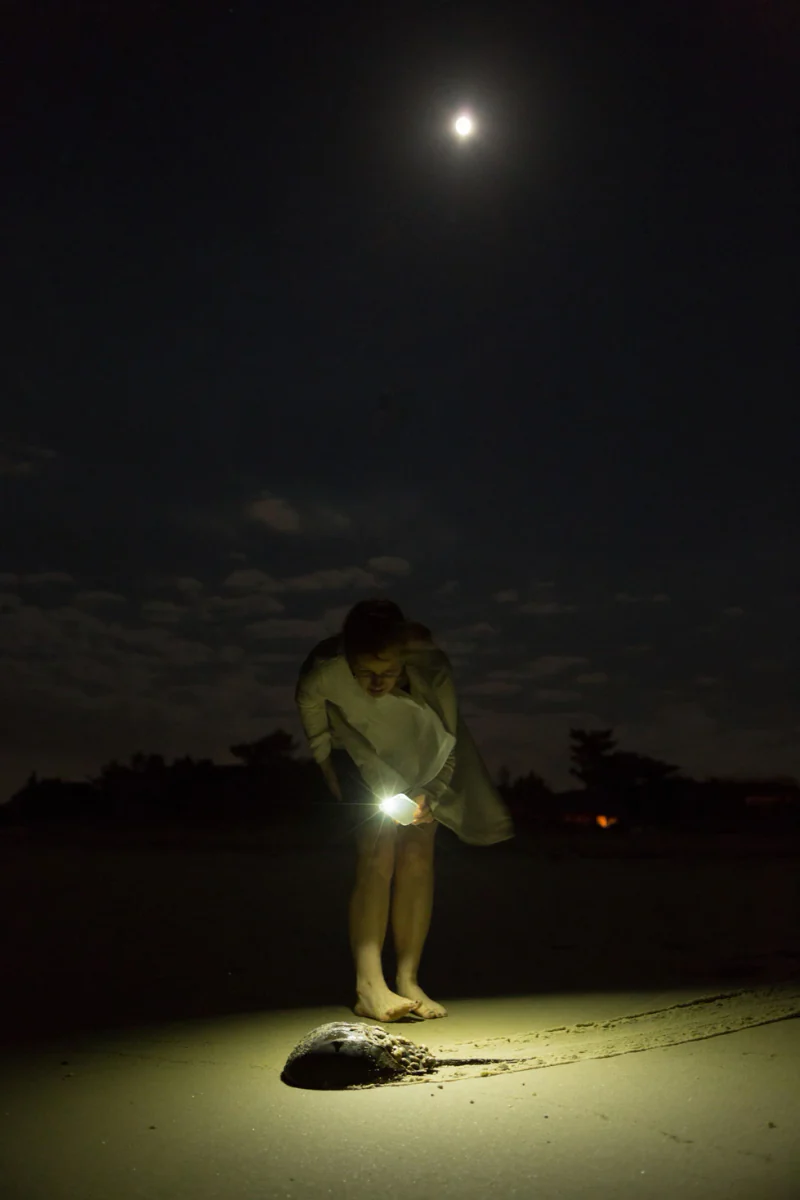
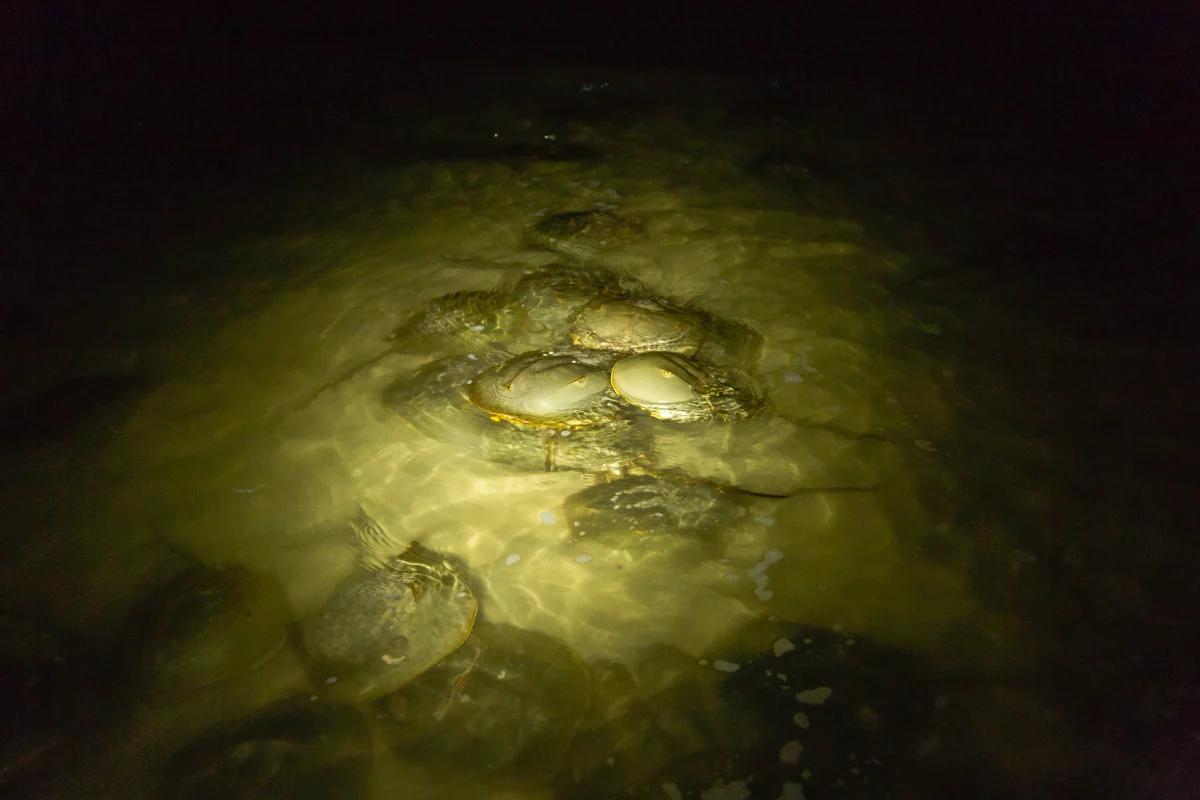
Responding to the pull of the new and full moons, every spring, thousands of them gather along the shores of Lewes, Delaware, one of the world’s largest horseshoe crab spawning grounds. Viewed through a therolinguistic lens, the trails they leave across the wet sand become a form of vibrant calligraphy that registers movement, struggle, and the search for mates.Photographer Lynn Alleva Lilley grew up visiting nearby shores and documents these traces in the sand as gesture and performance in her 2019 photobook, Deep Time. In the photobook, Lilley found a slow and cinematic format that allowed her to immerse herself in the lifecycles of the horseshoe crab, creating an ideal space “to experience and contemplate time, evolution, creation, interconnectedness, transience and human existence.”
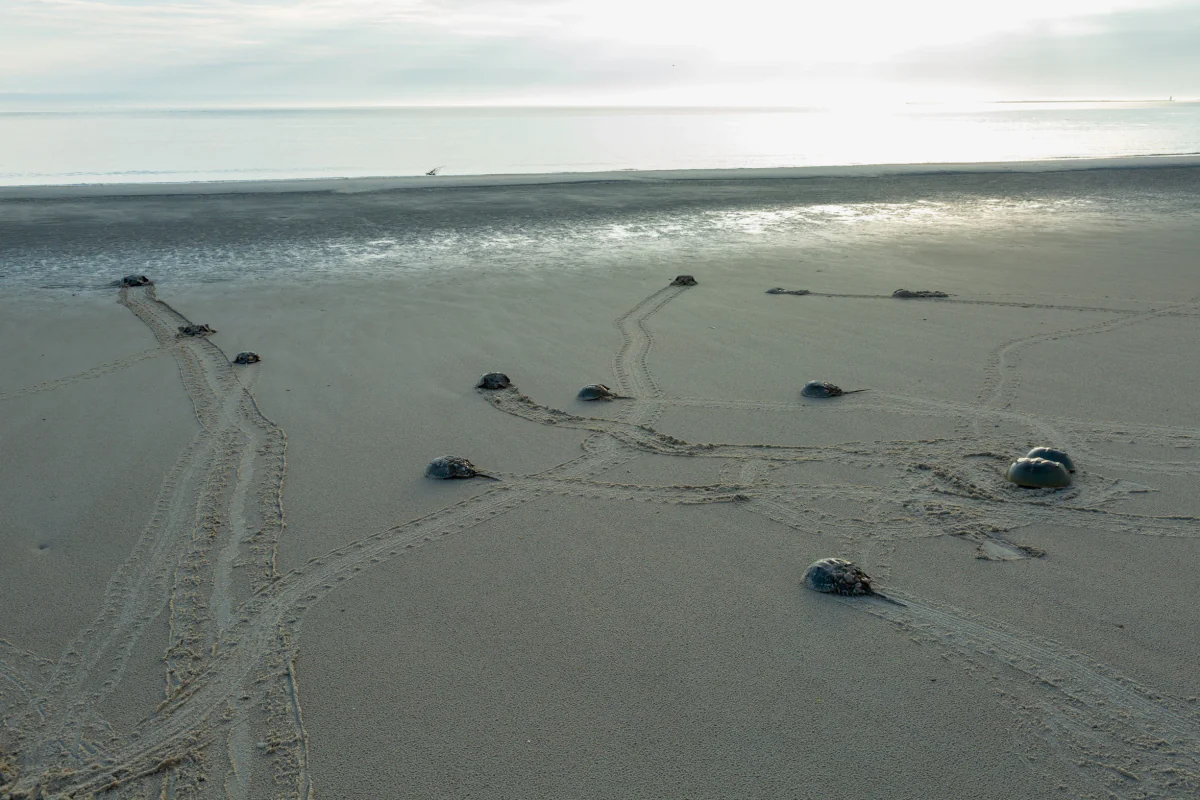
In a contribution to the book, poet Jane Hirshfield describes these traces as “long ribbons [that] wind across the sand, like rows of suture scars” that hold meaning and know “secrets we could never ask.” Lilley encourages close observation of these traces, a kind of deep attunement that beautifully embodies what anthropologist Anna Lowenhaupt Tsing refers to as the “arts of noticing,” a call for curiosity and close attention to our fragile, shared entanglements.When news of precarity abounds, and the Earth seems to undergo such frequent and radical changes, artists like Lilley model how we can turn to beings that know another version of time. And as our relationships with the land remain deeply fractured—shaped by extractivism, pollution, and climate crisis—therolinguistics offers a means of amplifying nonhuman voices and challenging labels humans impose upon other species.

We live in an intensely linguistic moment. The rapid rise of large language models and artificial intelligence has unlocked our ability to map, analyze, and potentially decode new languages. In the first quarter of the 21st century, scientific focus has shifted toward leveraging machine learning to bridge the communication gap between humans and other species. These ambitions are leading efforts to decode the profound language complexities of the world’s largest mammals: whales.
Sperm whale audio clip. Courtesy of Project CETI
This section has an interactive sound element that could be played or muted.
Project CETI (Cetacean Translation Initiative), a non-profit founded in 2020 by marine biologist David Gruber, suggests that sperm whale communication may be far more structurally sophisticated than previously assumed. Supported by a team of roboticists, linguists, biologists, and AI experts, CETI’s latest findings reveal that sperm whale’s rapid click patterns, or “codas,” function similarly to human vowels. Gruber notes that this hints at a structured “sperm whale phonetic alphabet” through which whales “could be passing information along generation to generation, to generation for over 20 million years.” Humans, he suggests, may only now possess “the right tools and desire” to recognize a rich social and expressive complexity “that has been there all along.”
In order to explore how this evidence might grant whales legal recognition as more-than-human persons, CETI collaborates with New York University Law’s More-Than-Human Life Program (MOTH), an initiative that consults with Indigenous stewards active in the Rights of Nature movement. Yet, while these well-intentioned translation projects point toward a more ethical future, they also raise a profound paradox: The very technologies designed to grant nonhuman beings a voice may also render them legible to the systems that have historically exploited and manipulated them.
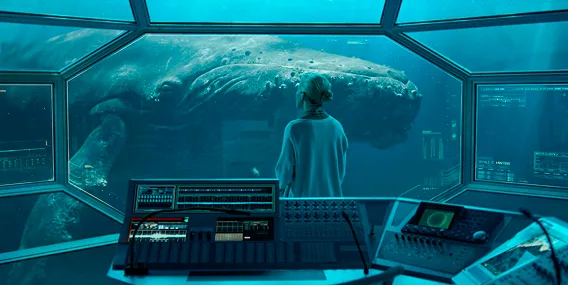
This darker possibility emerges in the 2023 sci-fi series “Extrapolations.” In the episode “2046: Whale Fall,” an archivist discovers her employer, Menagerie 2100, is broadcasting fabricated mating calls to deceive the world’s last female humpback whale into producing linguistic data in service of a tech-funded project called “Tomorrow Zoo.” Defying corporate protocol, the archivist repurposes the technology to guide the whale away from her employer’s broadcast and toward vital feeding grounds.
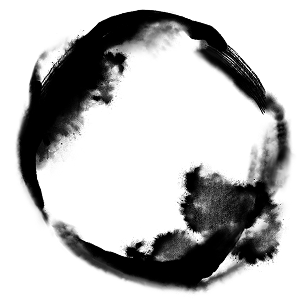
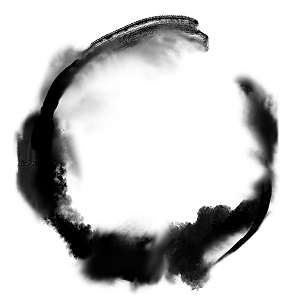
Intuiting these future conditions of endangerment and retreat, Belgian philosopher of science Vinciane Despret offers an alternative path. In her 2021 book, Autobiographie d’un Poulpe et Autres Récits d’Anticipation (“Autobiography of an Octopus and Other Tales of Anticipation”), Despret imagines a sequel to Le Guin’s story. Set in an undefined future, the narrative follows Sarah, a therolinguist sent to investigate a newly discovered octopus message consisting of eleven fragments of ink left on broken ceramic pot traps. In the novel, this elusive language leads humans to realize that octopuses have withdrawn entirely from contact with them. She receives the help from a member of the “Ulysses”—a human collective that has spent generations attuning to octopus modes of being to cultivate survival and coexistence among fragile, threatened species.
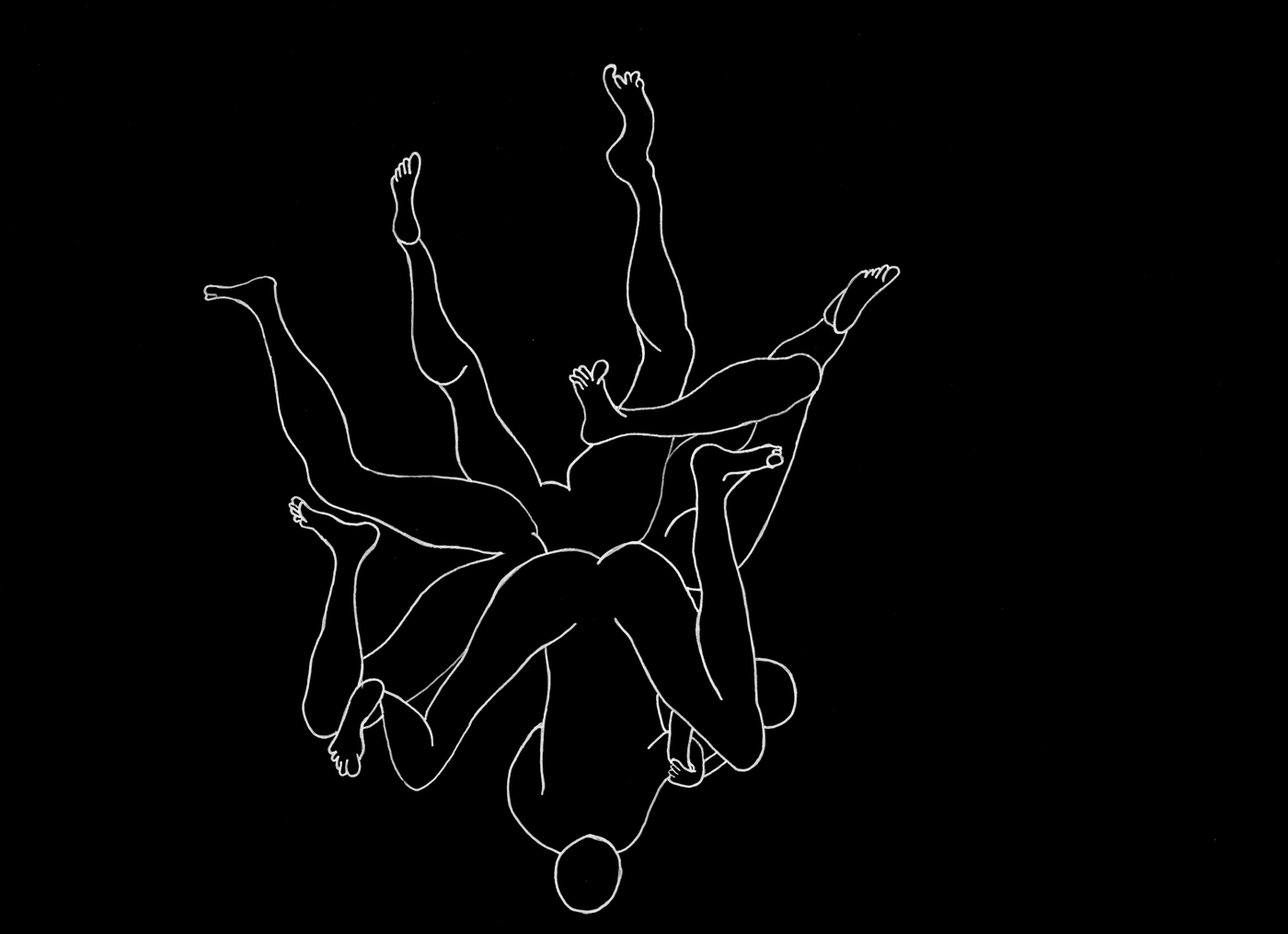
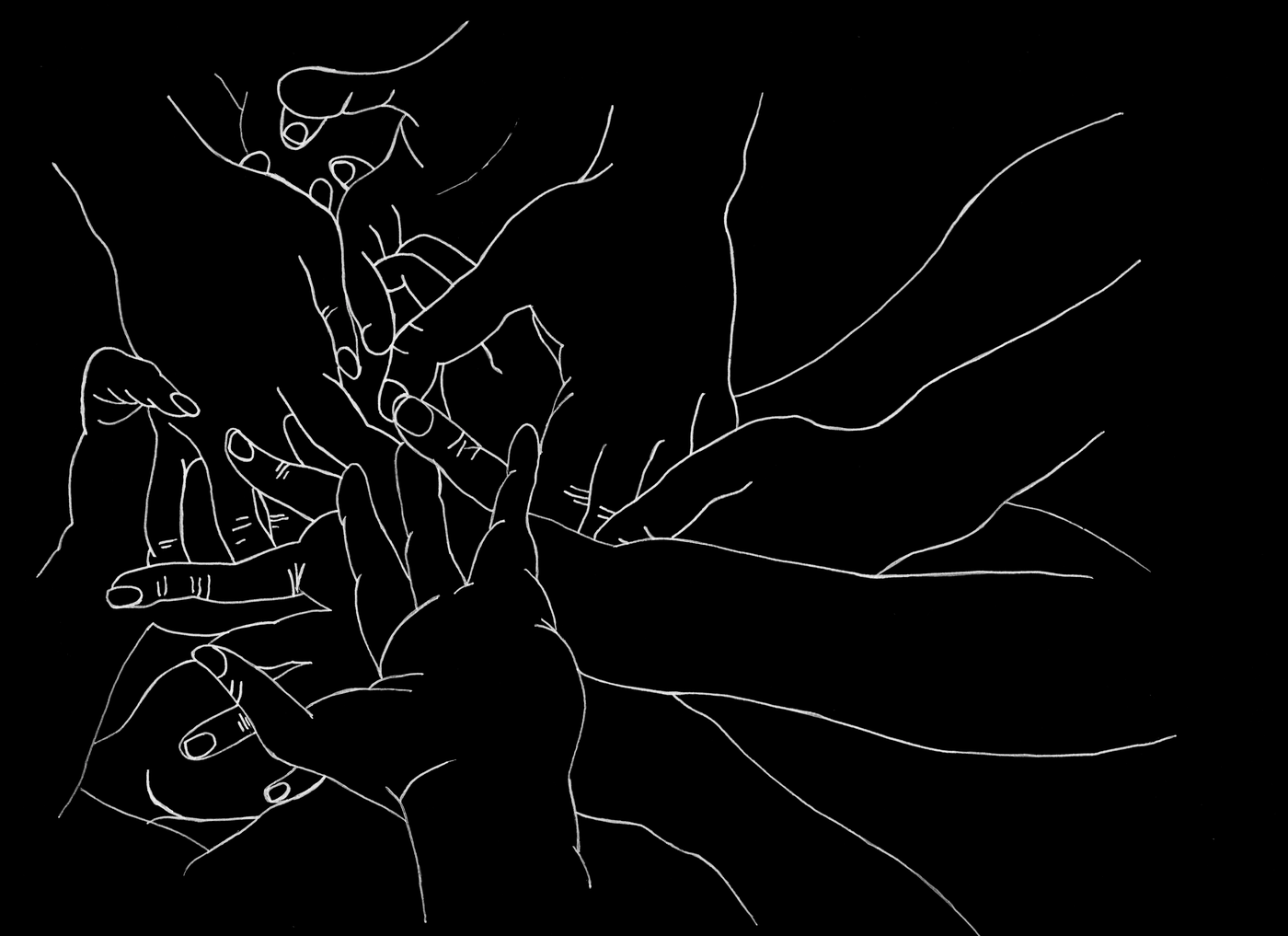
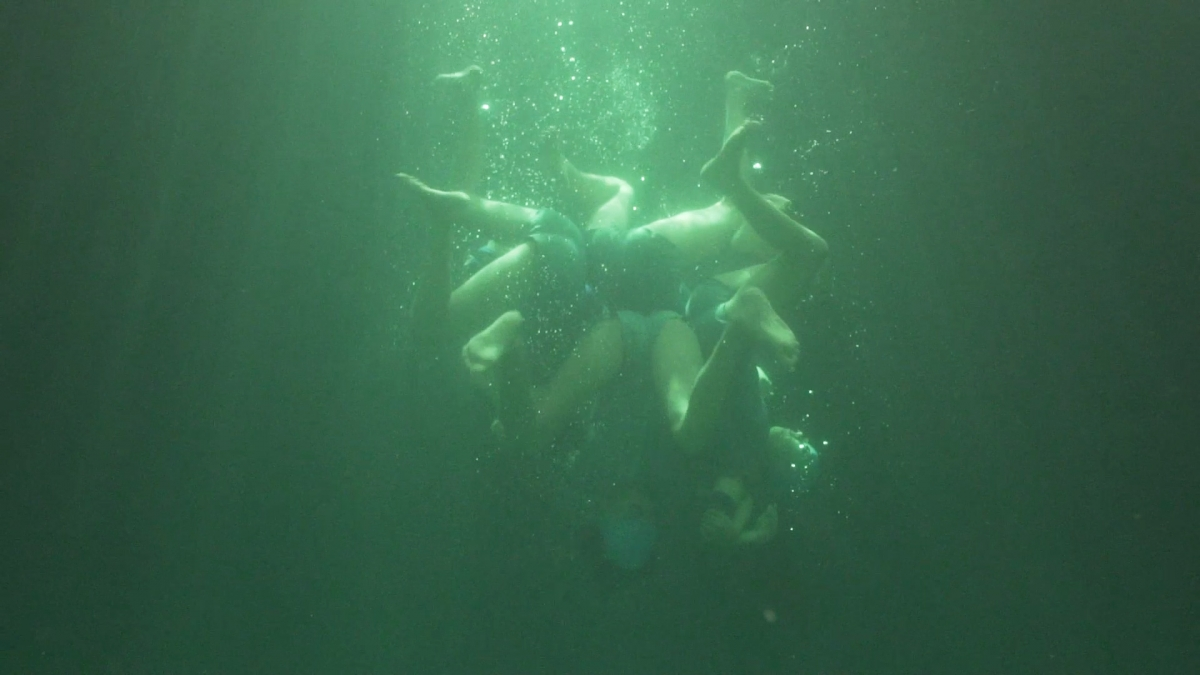
This immersive approach finds a contemporary parallel in the work of multidisciplinary artist Miriam Simun. In her Institute for Transhumanist Cephalopod Evolution project (2017–ongoing), Simun develops participatory performance, somatic exercises, video, and installation that engage play and trust to probe what it might mean for humans to inhabit cephalopod modes of perception.
This immersive approach finds a contemporary parallel in the work of multidisciplinary artist Miriam Simun. In her Institute for Transhumanist Cephalopod Evolution project (2017–ongoing), Simun develops participatory performance, somatic exercises, video, and installation that engage play and trust to probe what it might mean for humans to inhabit cephalopod modes of perception. Initiated at the MIT Media Lab in 2017, the project imagines human evolution guided by one of the planet’s oldest and most resilient animal lineages.
By cultivating what the artist describes as “adaptability, embodied relationality, and distributed intelligence,” her participants—like Despret’s Ulysses community—rehearse forms of sensing and relating that may prove essential in an increasingly unstable, “ever-more-wetting” world.
Initiated at the MIT Media Lab in 2017, the project imagines human evolution guided by one of the planet’s oldest and most resilient animal lineages.
By cultivating what the artist describes as “adaptability, embodied relationality, and distributed intelligence,” her participants—like Despret’s Ulysses community—rehearse forms of sensing and relating that may prove essential in an increasingly unstable, “ever-more-wetting” world.
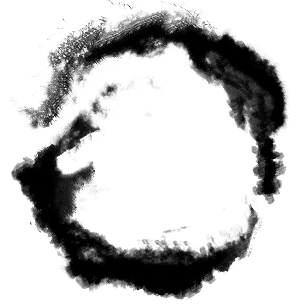
But the octopus in Despret’s story does not write for humans; its language is decentered and transversal, resisting traditional translational means. When interpreted in French, the first fragmentary message simply reads: souviens-toi / moi or “Remember / Remember me.” Researchers in the novel believe the phrase functions as an internal reminder directed toward the octopus itself, an attempt to narrate its own story within oceans shaped by noise, pollution and loss.
From the chemical traces of Le Guin’s ants to the ancient tracks of horseshoe crabs, the gnawed typographies of beavers, the legal declarations of trees, the acoustic worlds of whales, and the ink fragments of future octopuses, therolinguistics departs from the fantasy of perfect translation. They enact what Le Guin beautifully termed “noble failures:” sincere attempts to approach, imaginatively, forms of meaning that remain, and perhaps must remain, partly beyond us. These artists show us how the more we attune ourselves to these other languages, the more our own world expands—and with it, our sense of responsibility towards the larger community of life. The purpose of therolinguistics, then, may lie not in what we decode, but in how we see these encounters transform us, revealing, as the grandmother of one of the Ulysses in Despret’s story reflects, a way of becoming ourselves by becoming others.
From the chemical traces of Le Guin’s ants to the ancient tracks of horseshoe crabs, the gnawed typographies of beavers, the legal declarations of trees, the acoustic worlds of whales, and the ink fragments of future octopuses, therolinguistics departs from the fantasy of perfect translation. They enact what Le Guin beautifully termed “noble failures:” sincere attempts to approach, imaginatively, forms of meaning that remain, and perhaps must remain, partly beyond us.
These artists show us how the more we attune ourselves to these other languages, the more our own world expands—and with it, our sense of responsibility towards the larger community of life. The purpose of therolinguistics, then, may lie not in what we decode, but in how we see these encounters transform us, revealing, as the grandmother of one of the Ulysses in Despret’s story reflects, a way of becoming ourselves by becoming others.
Related Content
Editorial Article
The Artist as Medium: Jenna Sutela Channels a Chorus of Voices
Editorial Article
Ecological Horizons: Wet and Wild Mutualisms