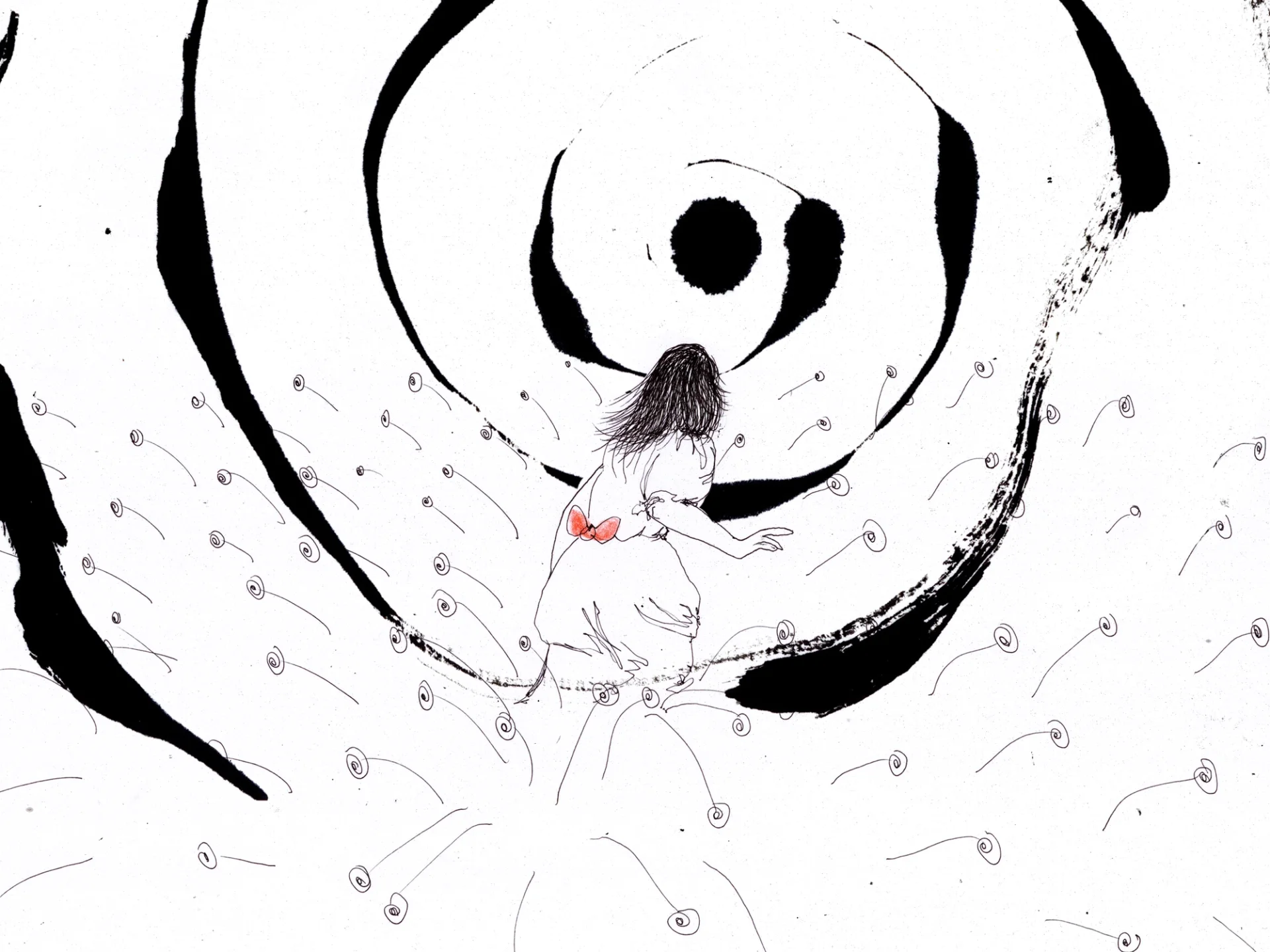
Kyung-Me, The Labyrinth, 2026.
Commissioned by Hyundai Artlab © Kyung-Me.
Throughout our programs and partnerships, critical empathy is the guiding framework for how we engage with our collaborators in order to nurture deeper understanding, awareness, and connection through art and dialogue.
On the surface, the words “critical” and “empathy” may seem in contradiction to one another, critical implying a cutting inquisition and empathy connoting connective sensitivity. At Artlab, these terms together produce a generative friction and a recognition that understanding is not passive—it is cultivated through the rigorous, reflective work of engaging with complexity, diversity, and sometimes the unfamiliar. Through our programs and partnerships, we seek to exist within this energetic field in order to nurture deeper understanding, awareness, and connection through art and dialogue.
Thomas Merceron, The Stirring of Sight, 2026.
Commissioned by Hyundai Artlab, © Thomas Merceron.
This year’s Artlab Editorial Fellowship reflects this aspect of Artlab’s mission explicitly, selecting two writers from a global open call to expand on critical empathy within contemporary art. Working in close collaboration with this year’s Fellowship Advisors Gary Zhexi Zhang and Mira Dayal, Fellows will be encouraged to question, analyze, and challenge systems while remaining attuned to the human experiences within them. In doing so, they will expand empathy beyond sentiment, transforming it into a method of inquiry.
“When I think about critical empathy, I think of how I try to sit across all of the different contradictions, conflicts, varying perspectives, and ideologies that come through when a particular cultural discourse is happening,” said Zheng in a recent discussion on the State of Art Criticism. “That process involves going and spending time with different kinds of people, artists, or practitioners, and seeing from where they’re sitting, observing how that materializes as an object or a narrative.”
Clockwise from top: Shannon Lee, Gary Zhexi Zhang, and Mira Dayal. From Roundtable: The State of Art Criticism in 2026 discussion on January 23, 2026.
Background: Thomas Merceron, The Stirring of Sight, 2026. Commissioned by Hyundai Artlab, © Thomas Merceron.
Dayal, meanwhile, explained how critical empathy is essential to the relationship between editor and writer—and by extension, between writer and artist: “When I was learning how to edit from the editors above me, it was often framed as a very psychological kind of work that tries to understand what a writer was trying to do, and anticipate how they might respond to you.”
The practice of critical empathy is also demonstrated through Hyundai Blue Prize+, where the branching effects described by Dayal can be seen extended across curators, mentors, artists, and audiences. For example, 2025 Awardees Yifeng Wei and Dr. Penny Dan Xu described how the program’s mentorship sessions gave them a more critical understanding of exhibition design from an audience perspective. “As writers and scholars, our initial curatorial text was perhaps too polished and conceptually dense, and in doing so, we risked unintentionally excluding audiences with diverse levels of literacy and knowledge backgrounds,” they said. “This feedback prompted us to rethink not only how we write, but how we communicate ideas spatially and sensorially. It has ultimately pushed us to develop a proposal that is more open, attentive, and generous in its approach to audience engagement.” By being receptive to critique based in audience-oriented empathy, Wei and Xu were able to curate more inclusively. Their exhibition will debut at Hyundai Motorstudio Beijing later this year.

Hyundai Blue Prize+ 2025, Final Awardees, From Left to Right: Yoonyoung Park & Hyejin Park, Yifeng Wei & Penny Dan Xu.
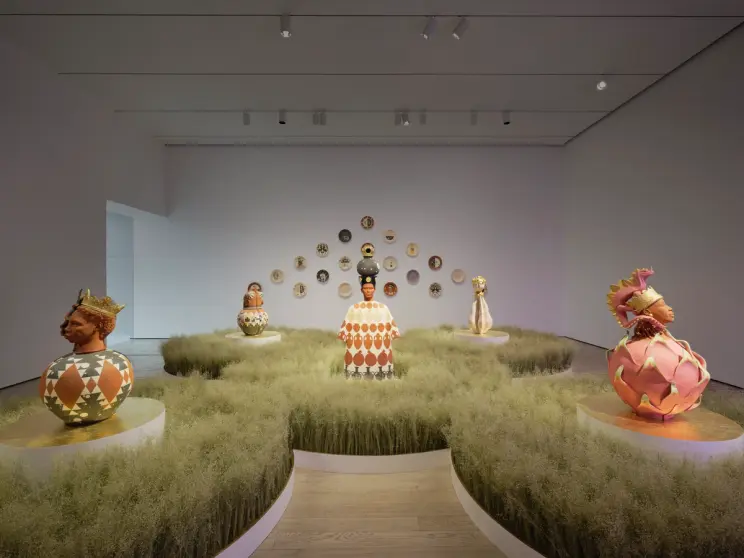
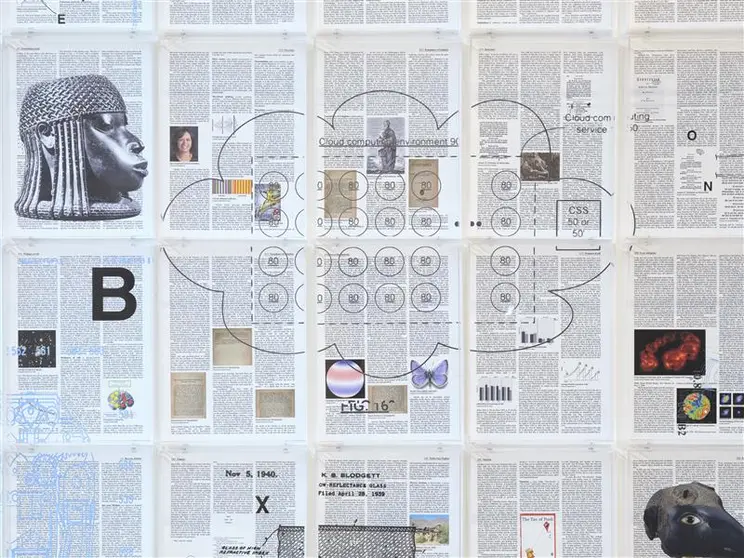
Critical empathy can also be employed as artistic practice, as seen in Tavares Strachan’s current Los Angeles County Museum of Art (LACMA) exhibition, The Day Tomorrow Began. Part of the Hyundai Project at LACMA, Strachan’s show is a critique of the archive, recognizing its omissions by repurposing, remixing, reinterpreting, and refilling the vacuums left by a marginalizing historical record. In Allison Noelle Conner’s essay on the exhibition, she cites Haitian scholar Michel-Rolph Trouillot’s observation that history is created; therefore, so are its omissions. “Though it may seem like history precedes us, it is, in fact, produced,” writes Conner. “The absences tell their own stories.”
“The Day Tomorrow Began contends with this push-and-pull between what we choose to amplify and what we minimize by trying to reimagine history as a participatory action, encouraging visitors to place themselves within this roving and infinitely mutable constellation of disparate phenomena, people, locations, and theories,” Conner continues. Within the critique proposed by the exhibition, audiences are left to fill in the gaps, becoming conduits for embodied empathy.
While Strachan’s critical empathy is deployed externally, artists like Kyung-Me bring such inquiries inward. In her digital commission, The Labyrinth, the artist created a metatextual visual journey that explores what it takes to change. “Everyone has this fantasy of wanting to change, but it doesn’t just happen,” said Kyung-Me. “You have to do things in order to change. It requires action and struggle, sometimes failing.”
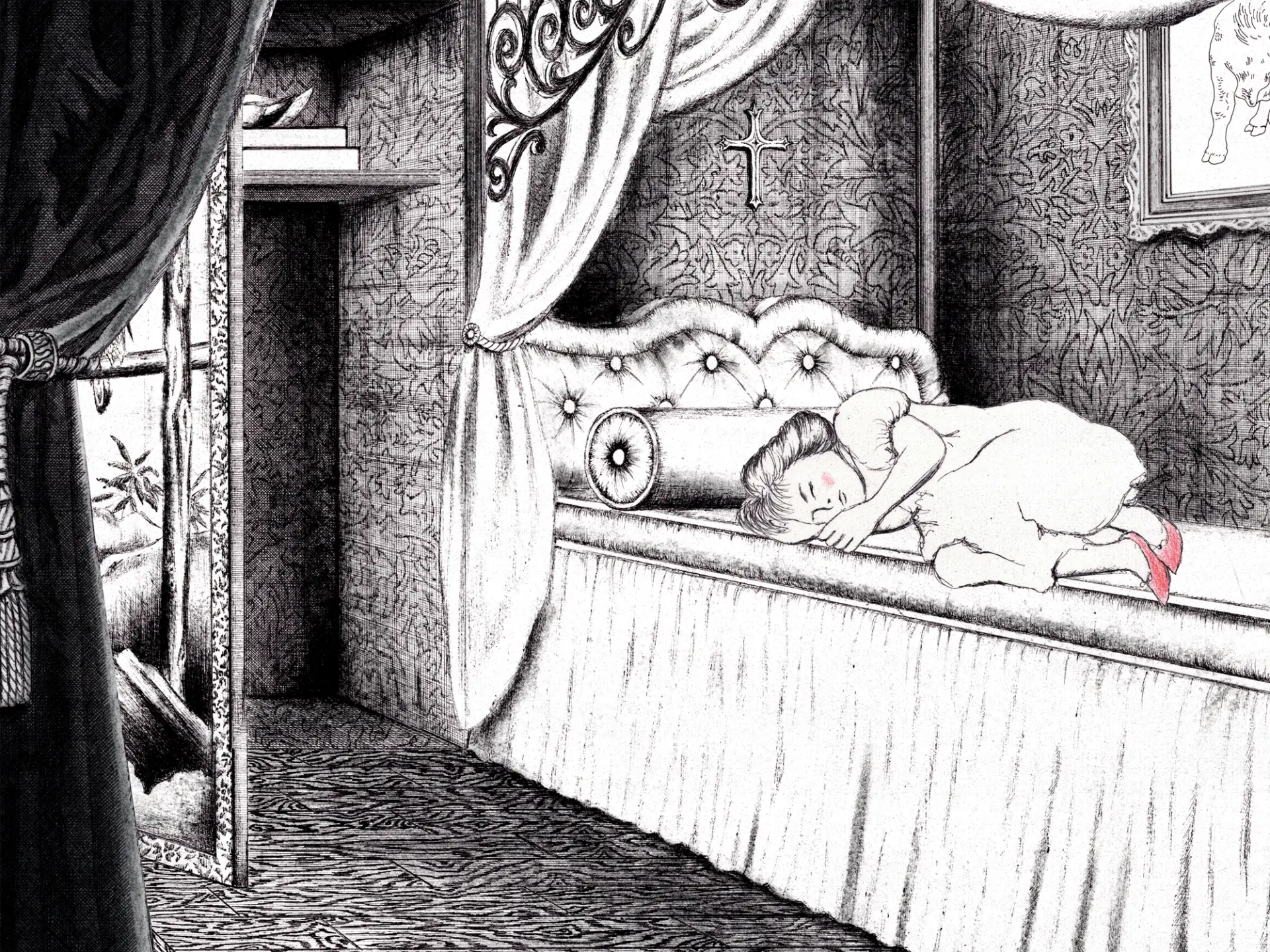
Kyung-Me, The Labyrinth, 2026. Commissioned by Hyundai Artlab © Kyung-Me.
Viewers are invited to scroll through an ouroboros of images that follow a young girl as she tumbles through rooms, spider webs, and forests. There is no certainty to be found in our heroine’s journey. In creating this work, Kyung-Me describes how drawing became a form of critical empathy between herself, this avatar, and her own practice. “Anytime there is chaos or turmoil in my outside life, I have to sort it out on a piece of paper,” she said. “Drawing is my way to expel manic energy, spiral, sort out my feelings, and hopefully come back with a more expanded view. Each drawing captures some phase of life. In this way, my work is autobiographical.”
“What I hope viewers take away isn’t a specific story, but a feeling—that moving through confusion, uncertainty, and repetition is part of the process of becoming something new,” she continued. Grounded in compassion, it is this relentless curiosity that guides our ongoing commitment to critical empathy as a practice.