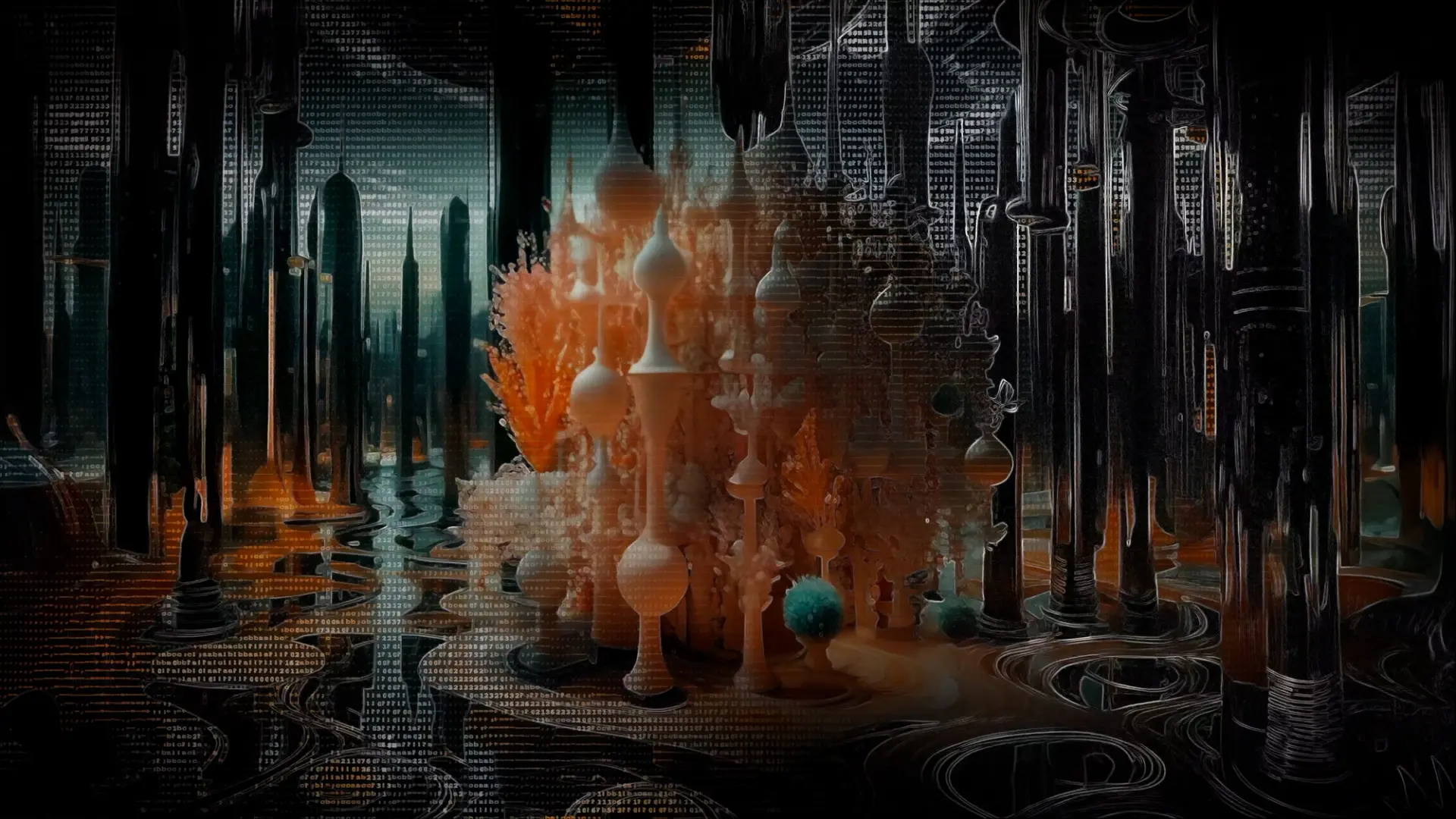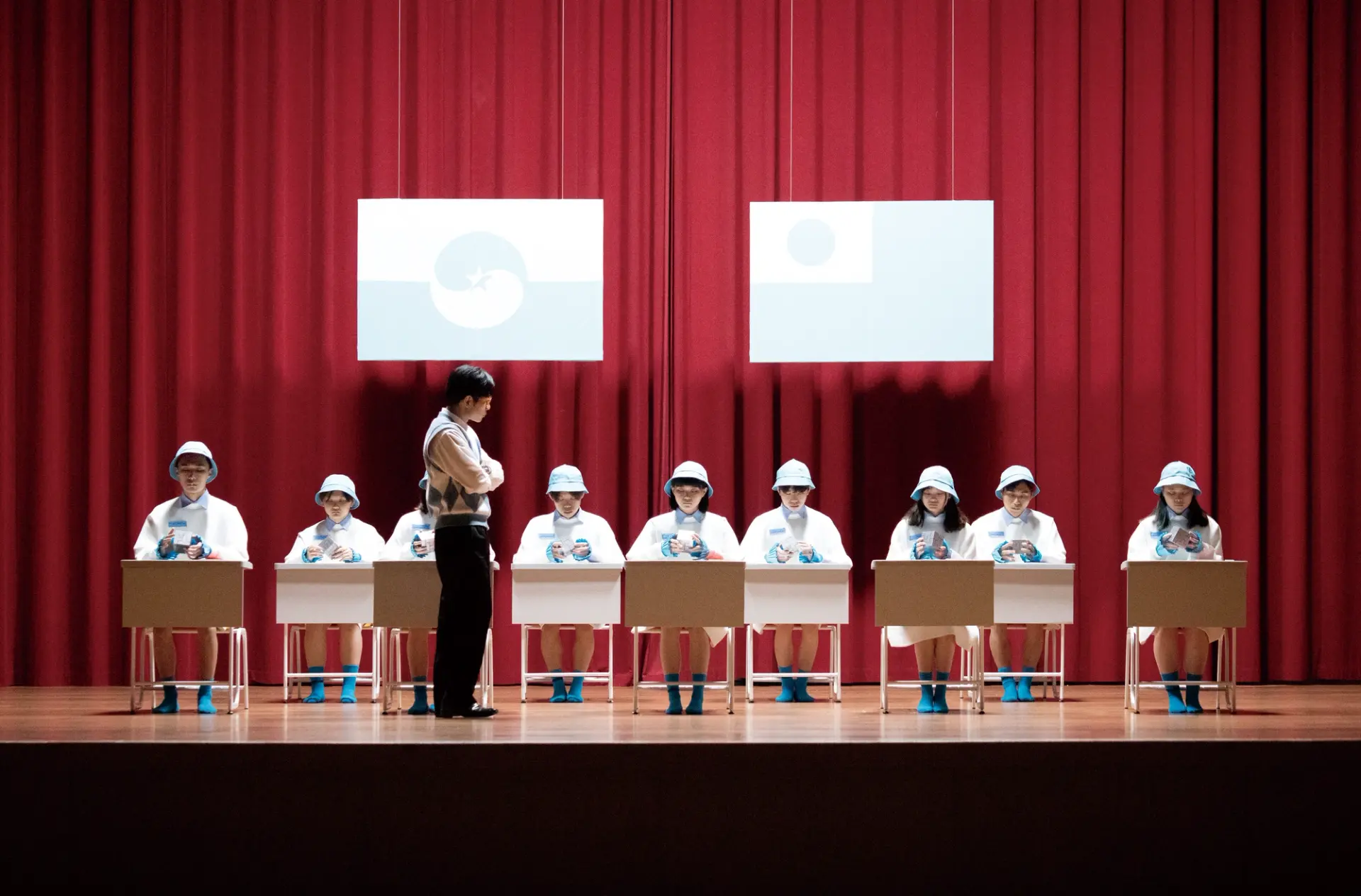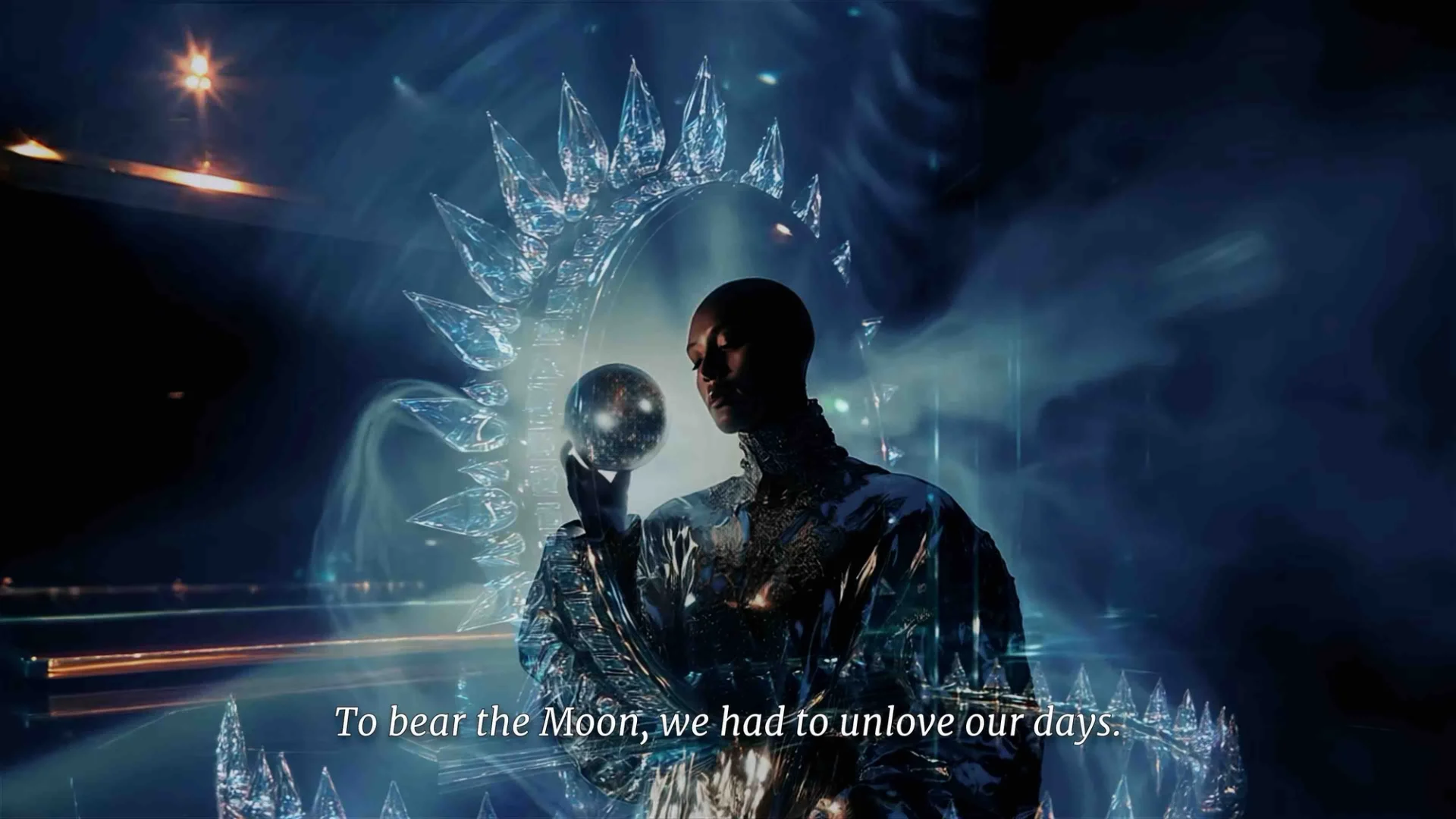
Still Image: Inhwa Yeom, War Dance (2025)
On the occasion of the 6th VH AWARD—which supports emerging media artists in Asia—art critic Dawn Chan spoke with the five finalist groups in in-depth discussions about their artworks.
This is the first part of a two-part Q&A. For part 2, read here.
Dawn Chan: Looking back at this very moment, some might remember the integration of AI tools into daily life as almost anticlimactic. Thus far, the earlier applications of machine learning have slotted into quotidian patterns of productivity without leading to cataclysmic unemployment or social upheaval—though unfathomable change clearly looms right around the corner. But how should we re-construe our understanding of human experience itself, when it becomes grist for a mill? Who owns those vast histories, not to mention what is produced from them? Has the significance and meaning of collective knowledge changed?
In their own ways, the five finalists of the 6th VH AWARD have made videos that grapple with many of these questions. Working in Asian cultural contexts, the finalists look at how the deep histories of cultural inheritance might take on new meaning, at a time when much of human experience and knowledge seem poised to live on in the form of digital repositories fit either for extended preservation or consumption by machines.
Some of the artists and collectives featured this year find inspiration in mythology. Inhwa Yeom’s film War Dance, for example, hints at parallels between the bulgae of Korean myth—canines destined to endlessly nip at the moon—and a certain atmospheric phenomena known as a “moondog”: light refracted into glowing smudges on either side of the moon. In Within Tirta, Sanskrit for “Sacred Water,” the collective HUDA x MUNGOMERY reprises the Indonesian story of Princess Mandalika, who dove into the ocean to defuse a love triangle that would have otherwise led to war, and whose body, according to folklore, immediately turned into phosphorescent sea worms. And Wendi Yan's Dream of Walnut Palaces imagines an alternate history, set amidst real and imagined curios and artifacts, in which Daoist philosophy might have met and indelibly altered the Western Enlightenment’s burgeoning scientific culture (and vice versa).
The first of a two-part conversation series with the five finalists of the 6th VH AWARD, in the following Q&A, I spoke to Yeom, HUDA x MUNGOMERY, and Yan to discuss the role of myth in reimagining our relationship to emergent technologies.
INHWA YEOM
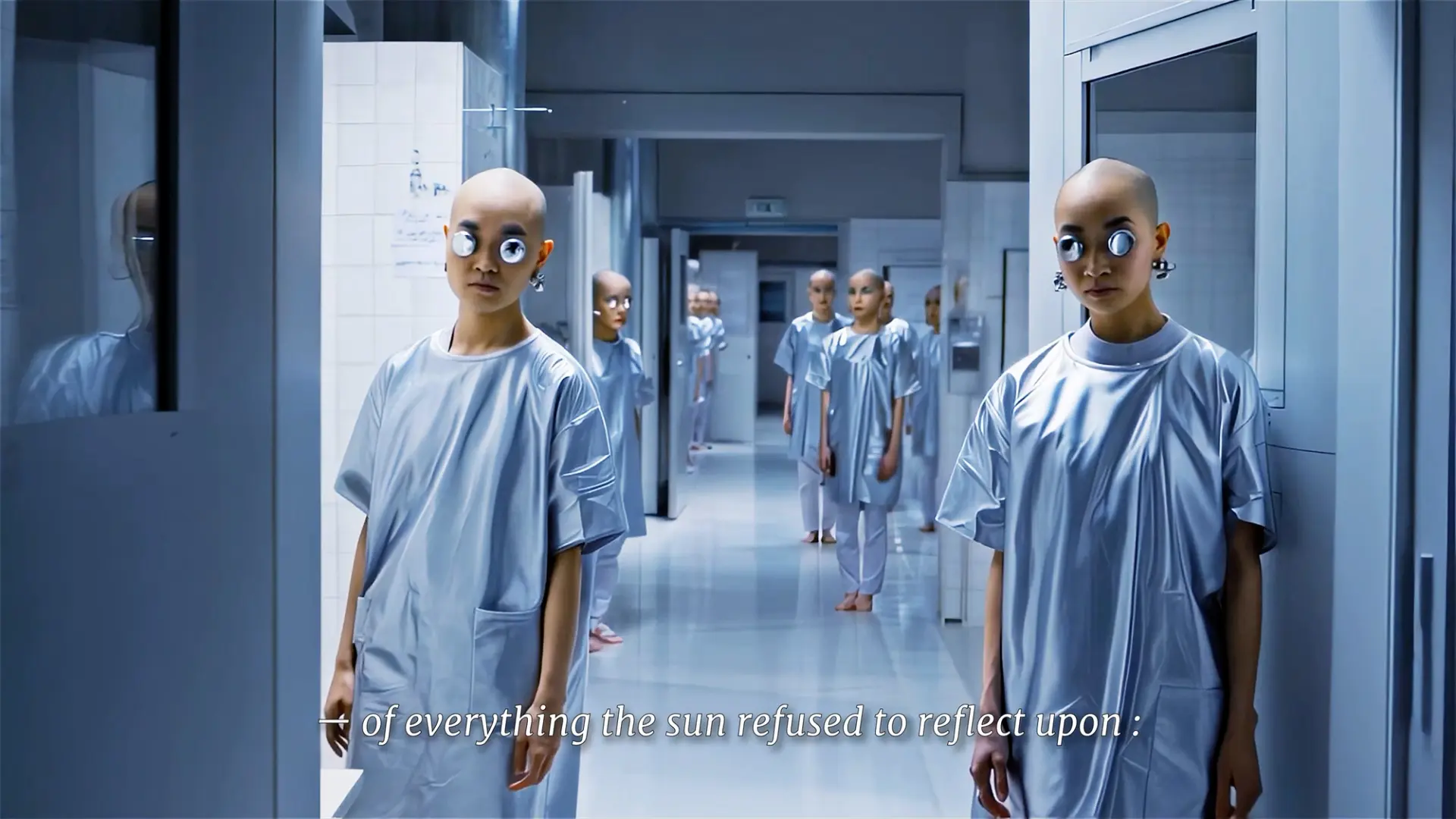
Still Image: Inhwa Yeom, War Dance (2025)
Dawn Chan: In each of the finalists’ films, it seems like viewers can find a manifestation of the natural world or biological knowledge being recorded, preserved, or inscribed into the machinic—even while that manifestation of the natural might be disappearing in the context of technological development, the passage of time, or perhaps ecological collapse.
Does that seem true in your case? If so, how would you say your film uses recent technology of some kind to capture even part of the myth-laden or ephemeral aspects of the natural world? In what ways do you see that capture or transcription of information into a machinic form as maybe holding potential, or ultimately falling short?
Inhwa Yeom: War Dance addresses how seemingly “natural”—family structures, reproductive roles, intimacy, security—entangle Asian womxn in complicated social transactions and bodily commodification. Inspired by the Korean bulgae myth, in which dogs endlessly chase the sun and moon without questioning why, the film uses AI-powered audiovisuals to inscribe ephemeral and mythical aspects of these struggles into machinic form. The film also captures how natural phenomena (sundogs and moondogs) metaphorically reflect womxn's imposed dualities and fractures. This transcription into technology allows these invisible tensions to become visible, opening opportunities for reflection and critical dialogue. However, as with all technological mediation, there remains a risk of oversimplification or loss of nuance. Ultimately, this machinic inscription becomes both a preservation and a provocation—inviting audiences to re-examine supposedly unquestionable realities.
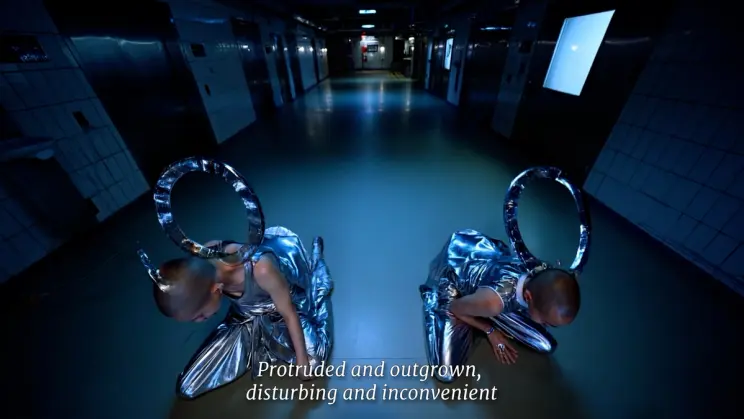
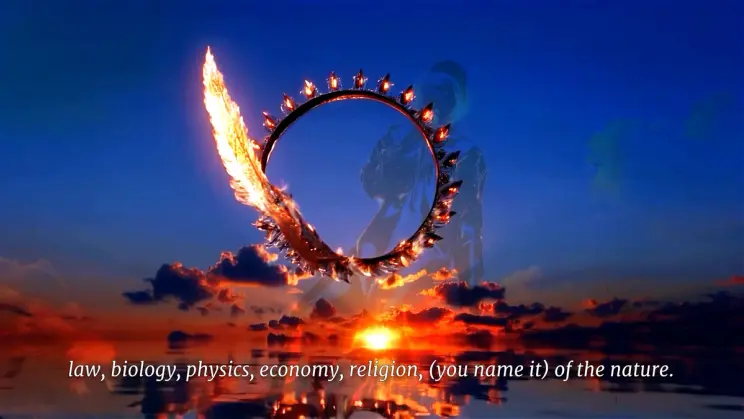
Dawn Chan: There are human figures in this film which might get read as being women. Sometimes they seem to have cybernetic implants and physical modifications. Sometimes they’re shown in medical settings. At times, they seem to have mystical powers. In this mythical world, how much do you see them as being fully human, and how much do you see them as having agency over their fates? Or is that left ambiguous, and if so, why?
Inhwa Yeom: The human figures—primarily womxn depicted in War Dance—intentionally embody ambiguity. They appear as mythical, mystical, and sometimes cyborgian beings precisely to emphasize their complex agency. Their cybernetic implants and physical modifications might as well represent societal pressures and imposed identities rather than mere enhancements. While they do possess mystical or symbolic power, their agency intentionally remains ambiguous, reflecting the tension and uncertainty womxn face in real-life societal structures. This ambiguity highlights how womxn are neither purely passive nor fully autonomous within societal frameworks. It underscores the complexity of identity, struggle, and empowerment, inviting viewers to reflect on the conditionality of agency, and how womxn constantly navigate and resist imposed limitations.
HUDA x MUNGOMERY
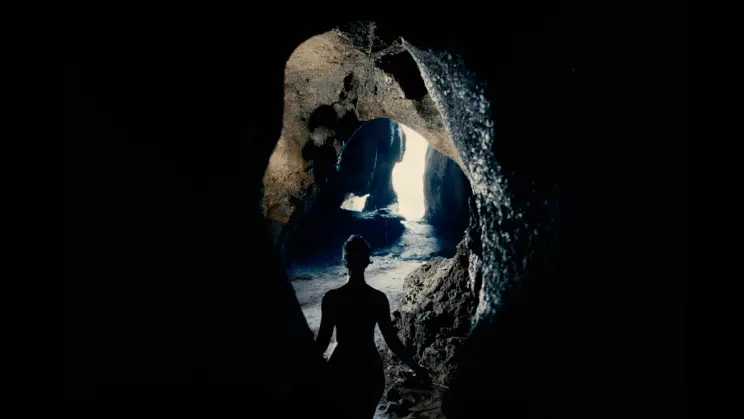
Dawn Chan: The narrative of your film is loosely inspired by the folkloric figure of Princess Mandalika, an Indonesian princess who—for the sake of preserving peace—jumped into the ocean to de-escalate a fight between her suitors that would have led to war. Why was the figure of Mandalika resonant to you?
HUDA x MUNGOMERY: Mandalika resonated with us because she’s more than a character—she’s a symbol. A figure suspended in time who chooses sacrifice over domination, peace over power. In a world speeding toward collapse, that gesture feels necessary. She reminds us that sometimes harmony demands a letting go.
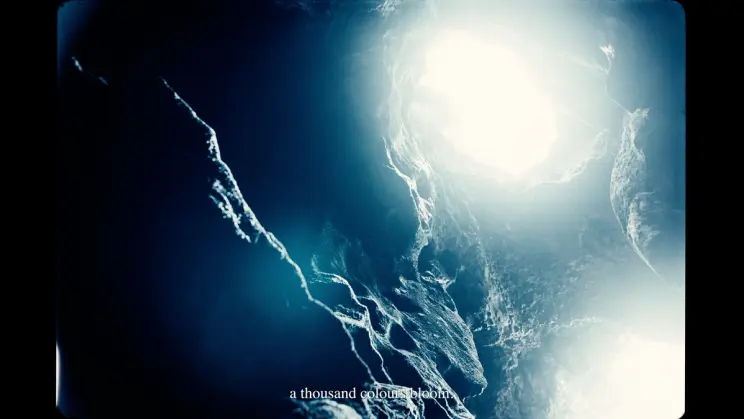
We didn’t set out to tell her story. We set out to find bioluminescence—to trace something primordial, to feel into the ancient relationship between light and darkness. But in the process of research, walking, and listening, the myth of Mandalika surfaced and began to speak to us. It was as though her story found us, not the other way around. When we stay porous, the work shapes itself.
We were drawn to her myth because mythology isn’t just storytelling, it’s knowledge—ancient, ecological knowledge. These stories weren’t invented for entertainment. They were tools for survival, designed to keep the human animal in balance with the living systems around them. In that way, Mandalika’s transformation—her surrender to the ocean, her becoming—felt like a guide for how we might move forward. She exists in a time before artificial light, before we started to separate ourselves from the rhythms of the earth. Her body becomes phosphorescent. Her legacy glows beneath the surface. There’s something profoundly post-human in that. She doesn’t hold power; she dissolves into it.
Fa’ Pawaka—our muse, our Mandalika—embodied this spirit with remarkable depth and fearlessness. Through gesture, presence, and breath, she channels something elemental. She gave form to a figure that resists containment, at once human and more-than-human. Her movements made the myth tactile, grounding the film’s ethereal language in flesh and force.
We imagine her in a subterranean space—cut off from time, surrounded by water. There’s no past and no future, just a long, suspended now. Her myth lives in that space, and so does our film. We’re not trying to retell her story, but to move with it. To feel into what it means to live in mythic time, where everything loops, returns, and glows.
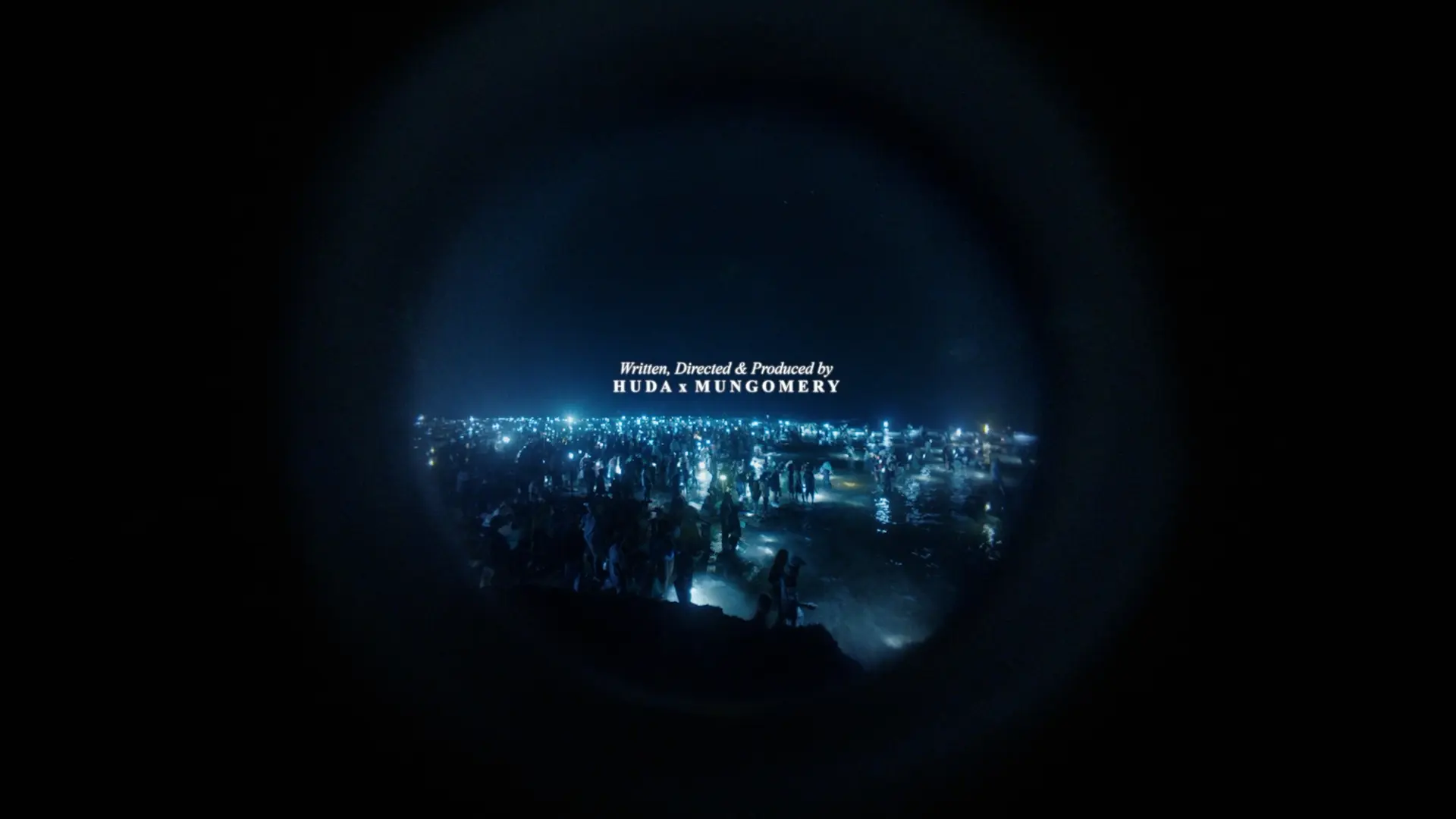
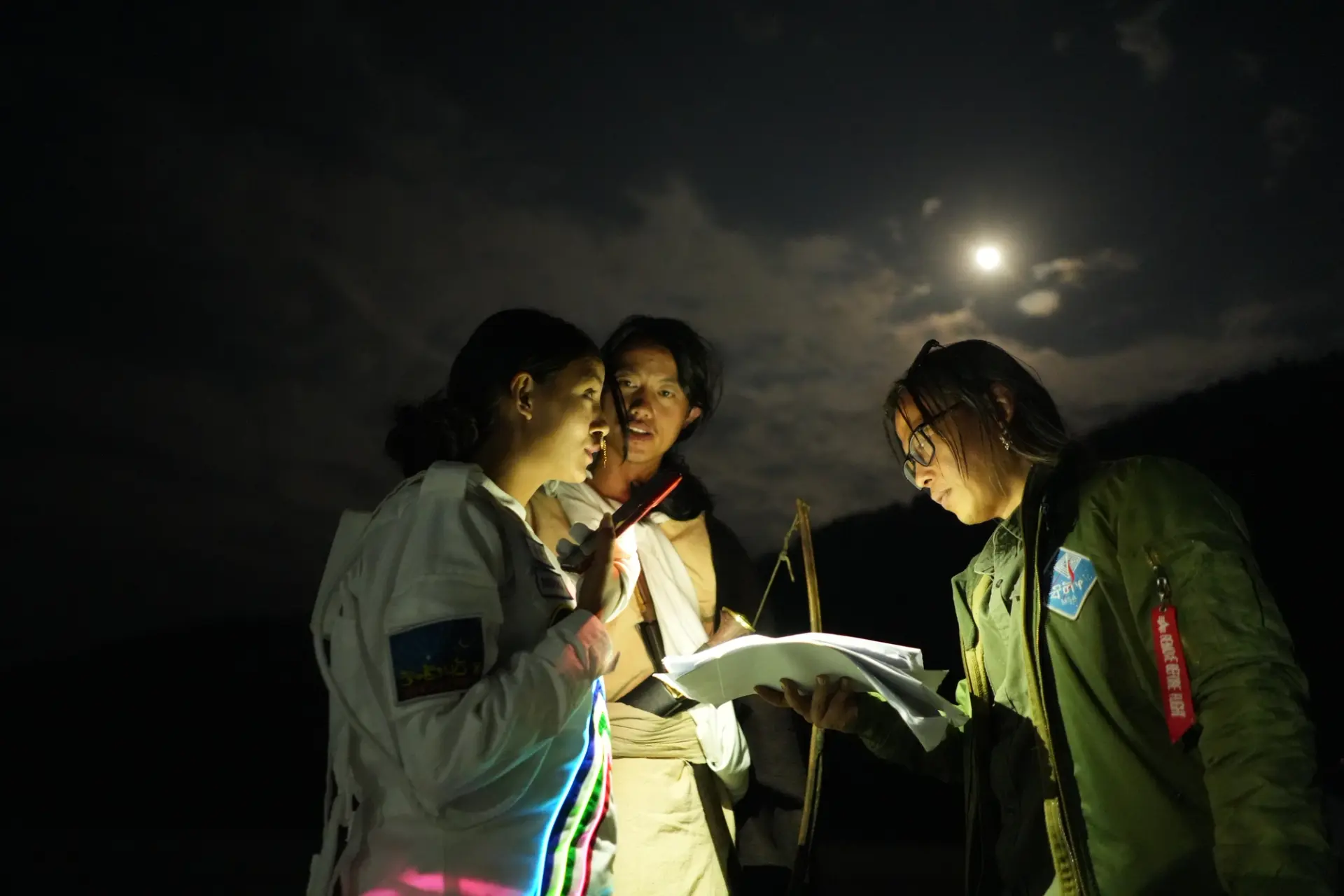
Still Image: HUDA x MUNGOMERY, Within Tirta (2025)
Dawn Chan: The two of you come from Indonesia and Australia respectively, but root your practice in the place where your collaboration began: the Peruvian Amazon. How did you come to form there, and what were the points of connection, areas of common ground, or even productive frictions that led you to decide to collaborate? How do those initial points in common continue on in your practice even as you’ve moved your base to two different parts of the world far away now from the Amazon (if that is indeed the case)?
HUDA x MUNGOMERY: Our collaboration was born in the Peruvian Amazon, during a residency led by Apichatpong Weerasethakul—someone whose work has long blurred the lines between dream and documentary, spirit and screen. He was both mentor and inspiration, reminding us that cinema doesn’t need to explain. It can whisper, dissolve, become.
In that jungle, time changed. Reality stretched. We were surrounded by water—thick, vaporous, everywhere. It became the quiet spine of our practice. Water as medium, as channel. River as language. We came from two different countries, Indonesia and Australia, with different mythologies and technologies but the Amazon gave us a place to dissolve borders. What formed was not just a collaboration but a kind of shared frequency. We’re still attuned to it. Though now we live oceans apart, what we carry from that place flows on: a commitment to the unseen, to hybrid forms, to the quiet radicalism of attention.
Our work is a meeting place—Indonesia and Australia in dialogue, as interwoven forces shaping and reshaping each other. Our cross-cultural collaborative process is not about translation but resonance—an exploration of the subtle connections that bridge distant geographies, histories, and mythologies, forming something new in the space between. Meditation is part of this too—not just as subject but as method. We began sitting together each morning in the jungle, listening to the forest as if it were speaking directly to the film. We’ve never stopped. That practice anchors us now, wherever we are. In stillness, stories surface.
The Amazon was our first threshold. We crossed it, and something new began. And though our coordinates have changed, the current still pulls us forward.
WENDI YAN
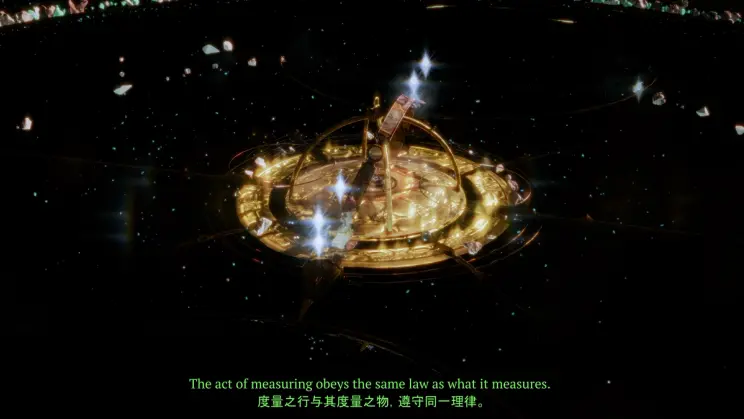
Dawn Chan: Your film imagines a hypothetical moment of scientific exchange between China and Europe in the 18th century, when proponents of “Daoist metaphysics” might have met with Western thinkers such as Antoine Lavoisier (a pioneer of modern chemistry). In some ways, this imagined collision of ideas makes up an alternate history. What do you think is intriguing about imagining that alternate history in which more contact and exchange occurred. What do you think would have arisen?
Wendi Yan: It implies a different present. I fantasize about an alternate reality in which what eludes measurability today is a scientific pursuit, and our conception of energy easily and acceptably mediates between metaphysical and material planes. In this world, we have more intersubjective ways of studying matters and forces; we assume a porous notion of the human body and the world; we epistemologically capture matters of the universe in many (perhaps seemingly incompatible) forms and geometries at once.
The film isn’t really about Europe and China specifically, but about what we consider “alternative” knowledge today being central to an epistemic system, and the basis of a technological world that presumes a more animated view of beings. It’s not a particularly groundbreaking idea: I’m merely wishing that we were still “enchanted” with the world, yet just as, if not more, advanced technologically.
By “enchanted,” I mean maintaining the awareness that countless phenomena exist beyond our current perception or methods of proof; being cosmically humbled by the limitations of our civilization; and remaining rigorously open-minded toward alien epistemes that don't fit neatly—or at all—into our current scientific procedures and epistemic virtues.
When the imagery of floating walnuts came to my mind initially, as architectural containers for the technological creatures and events from my research, I was reminded of the literati walnuts in China. But I later read that some cultures also see the walnut as a symbol of the cosmos, or an egg that births life, as an atomic object harboring duality within unity.
I consider the worlds in each of the walnuts in my film as harboring distinct cosmological-epistemic systems. Instead of merely reflecting historical dynamics, I subverted the narratives in both walnuts, granting voices and agencies to characters that were, in history, inanimate objects. This was my speculative exercise to imagine toward alternative possibilities of knowledge and being.
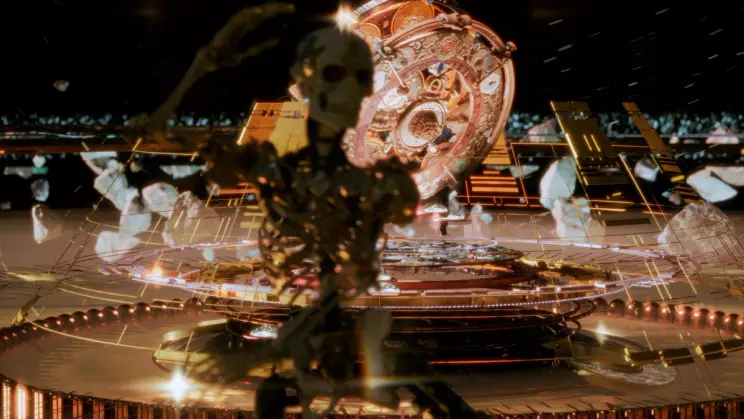
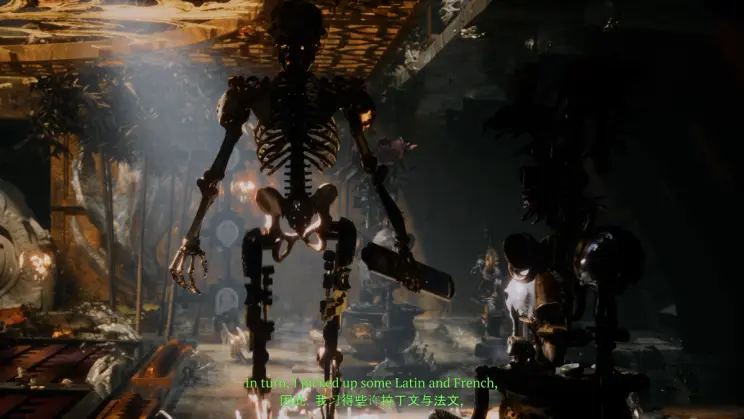
Dawn Chan: You used Unreal Engine—an engine developed to create video-game worlds—to animate this film, as well as AI tools to generate parts of your content. Why did you choose these tools in particular, and what did each of them offer?
Wendi Yan: Unreal Engine is the best 3D software for real-time generation: with the same 3D world you build, you can render cinematic animations as films, walk and interact with the world as a player in a game, or simulate anything as a real-time cinematic experience. It’s a versatile tool with incredible agility in handling complex geometries, and empowers me to go all out with worldbuilding. I didn’t need to draw storyboards to plan out my shots. I just focused on the characters, the architecture, and all the objects that occupy the world, and “found” my compositions as I ran a virtual camera inside.
I was effectively building a parallel universe, or a miniature world. In the three months of full-time production, my mind and spirit lived in it. That world inside the Unreal Engine, taking a fuller shape every day, became more vivid and real to me than the physical reality for my body.
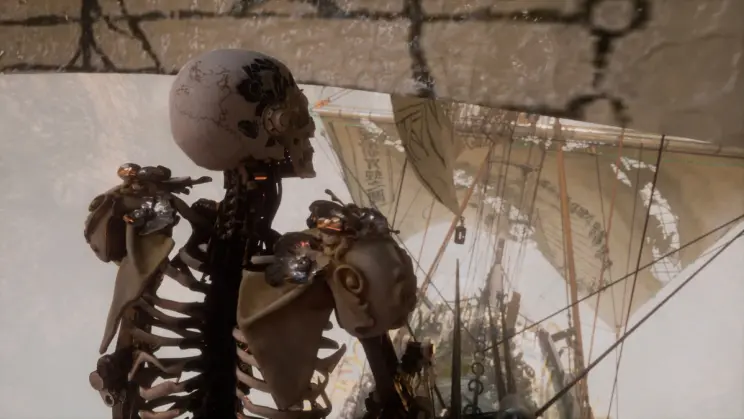
I used AI to synthesize a male voice to narrate my film, and generate 3D models of automata, script-fish, and speculative instruments for the Walnuts. I didn’t feel the need to control every aspect of the modeling process for this film. My own imaginative authorship is not superior to AI. At times, I simply needed AI’s help to literally populate the virtual world to strengthen my narrative. For example, I needed the wooden ship in the first walnut to be full of wondrous devices. So I fine-tuned a visual style I wanted, and guided the AI in imagining the type of objects I needed. For example, I wanted the ship in the first walnut to be loaded with automata—reflecting the diplomatic gift-giving culture in this chapter of history of science—and I used Qing-dynasty glassware images as the guidance for AI (using the Flux image model) to imagine mechanical figures representing a synthesis of Chinese and European knowledge.
Another example was the fish models that skeletal ghosts hung: I took screenshots of some digitized pages from Athanasius Kircher’s China Illustrata—Europe’s first encyclopedia on China—and used individual drawings of Chinese characters as guidance for AI to give them a dried fish texture.