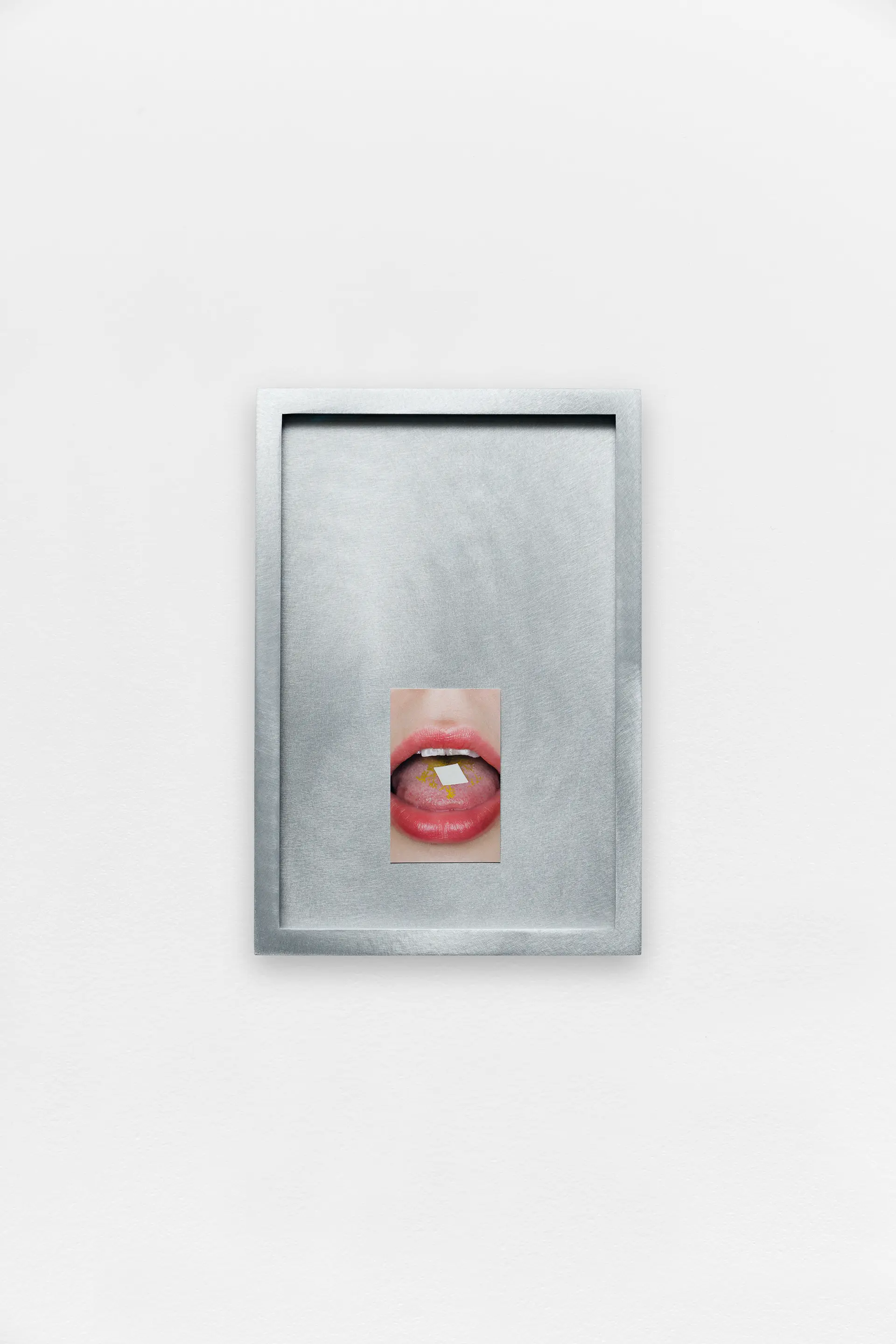
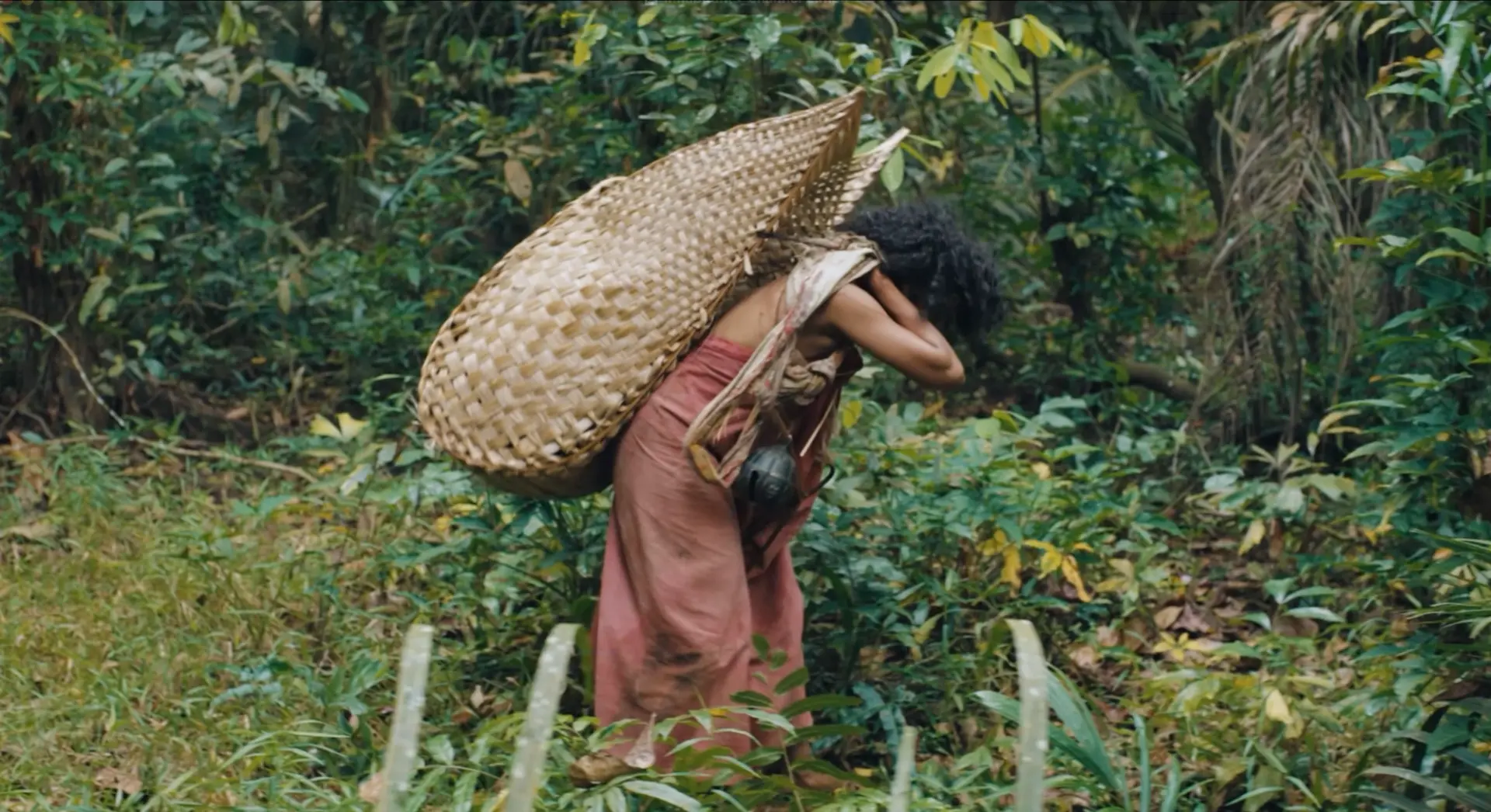
Thomas Merceron, The Stirring of Sight, 2026.
Commissioned by Hyundai Artlab, © Thomas Merceron.
We are looking for two writers at any career stage and from anywhere in the world whose texts on contemporary art exercise critical empathy, navigating the balance between care and critique, the interrogative and intuitive, the perceptive and imaginative, and engaging through dialogue to deepen understanding.
The open call is now closed. The Fellows will be announced once all the applicants have been reviewed. We thank everyone who submitted an application.
Art writers today are compelled to attend to the range of human experiences, navigating the familiar and unfamiliar, idiosyncratic and interconnected, coherent and contradictory. Within our contemporary cultural landscape, it is imperative that critics value nuance and interpersonal understanding in equal measure with intellectual precision.
Established in 2022, Artlab Editorial, an initiative by Hyundai Artlab, has witnessed firsthand how platforms for critical art writing are essential to a thriving global art ecosystem. As part of our ambition to spark meaningful dialogue, cultivate empathy, and facilitate collaborations, we are looking to support two art writers whose texts on contemporary art exercise critical empathy. These writers should navigate the balance between care and critique, the interrogative and intuitive, the perceptive and imaginative, and engage through dialogue to deepen understanding.
The application is open now through March 9, 2026, 11:59pm EST. Apply here [object Object] .
Eligibility requirements and FAQs can be found here [object Object] .
This Fellowship is open to art writers from anywhere in the world and at any career stage. The two selected Fellows will each receive $10,000 to produce three pieces of writing every other month for Artlab Editorial in 2026 and will be paired with one of this year’s Fellowship Advisors, Mira Dayal and Gary Zhexi Zhang, for regular one-on-one guidance and mentorship throughout the program.
Fellowship Structure
The Fellowship is designed to produce a vibrant body of new contemporary art writing and foster global connections between writers, readers, and artists. With guidance from Artlab’s Editors and Advisors, Fellows will write three pieces of web-based editorial content for publication on Artlab Editorial.
Fellows will be committing to writing one 800-word article in English every other month, for publication on Artlab Editorial from May through December of 2026. They will be expected to develop each article over the course of eight weeks, meeting with their Advisor for in-depth development sessions, and working closely with Artlab Editorial’s Editor via monthly touch-bases.
Fellowship Advisors
To enrich the experience of the Fellows and strengthen Artlab’s community of writers, Fellows will be paired with one of this year’s Fellowship Advisors, Mira Dayal and Gary Zhexi Zhang, to receive regular mentorship, create article outlines, and get guidance on the production of their articles during the course of the program.
They will also work closely with Artlab Editorial’s Editor, Shannon Lee, via monthly check-ins for additional guidance and to ensure timely publication.
Mira Dayal is an artist, writer, editor, and educator based in New York. She is currently Senior Editor at Triple Canopy and recently co-edited Track Changes: A Handbook for Art Criticism, published by Paper Monument with support from Critical Minded. The book was informed by Dayal's prior work as Ideas Editor at Art in America, Associate Editor at Artforum, and Founding Editor of the Journal of Art Criticism, as well as her writing over the past decade for numerous magazines, exhibition catalogues, and other publications. As a freelance editor, Dayal has additionally worked with institutions, publications, and publishers including Fortunately Magazine, the MIT List Visual Arts Center, Mousse Magazine, and Sternberg Press. Dayal also publishes the collaborative artist book series prompt: with Nicole Kaack. She is on the faculty at Barnard College and the School of Visual Arts, where she teaches courses on studio art and writing for artists. She holds a BA in Visual Arts – Economics from Barnard College and an MA in Visual and Critical Studies from the School of the Art Institute of Chicago. In 2024, Dayal wrote “Unanchoring the Collection: Gala Porras-Kim’s Expansive Data Fields Unanchoring the Collection: Gala Porras-Kim’s Expansive Data Fields ,” a feature on how how LACMA Art + Technology Grant Recipient Gala Porras-Kim reimagines museum collections in works ranging from climate-controlled vitrines to institutional databases, an accompanying feature to Artlab Editorial presents: Expansive Data Fields Artlab Editorial presents: Expansive Data Fields .
Gary Zhexi Zhang is an artist and writer based in London. His work explores systemic connections between cosmology, technology, and economy. He is a tutor at the Royal College of Art, where he teaches in the Contemporary Art Practice program. He edited Catastrophe Time! (Strange Attractor Press, 2023) and is currently working on a book under contract about multipolar technoculture. His writing on art, technology and economy has appeared in Frieze, ArtReview, Verge Journal of Global Asias, Serpentine Reader, Combinations, Are.na Annual, Journal of Cultural Economy, MIT Journal of Design and Science, amongst others. Books and chapters include “Against Reduction” (chapter, MIT Press, 2021), “Incomputable Earth” (chapter, Bloomsbury, forthcoming), Platforms: Around, In Between and Through (Singapore Biennale, 2023); Future Art Ecosystems III & IV (co-author; Serpentine, 2022 & 2024). He recently wrote catalogue essays for New Humans (New Museum), Forever Tomorrow (Auckland Art Gallery), Anicka Yi and Comrade Sun (HMKV). In 2025, he led a report for the British Council on art and technology in China. In 2024, Zhexi Zhang wrote “An Architecture of Scent: KOO JEONG A’s ODORAMA CITIES,” a feature on the Korean Pavilion at the 2024 Venice Biennale uses scent to deconstruct concrete notions of identity.
Shannon Lee is a writer and editor based in New York. She is the current Editor of Artlab Editorial in addition to The Amp at Asian American Arts Alliance. Previously, she was an Associate Editor at Artsy and Editor and Senior Producer at Silica Mag. For her first piece for us, Lee reflected upon Choe U-Ram’s “Little Ark” Choe U-Ram’s “Little Ark” at MMCA Seoul, questioning how we define progress—both cultural and personal.
Past Artlab Editorial Fellows
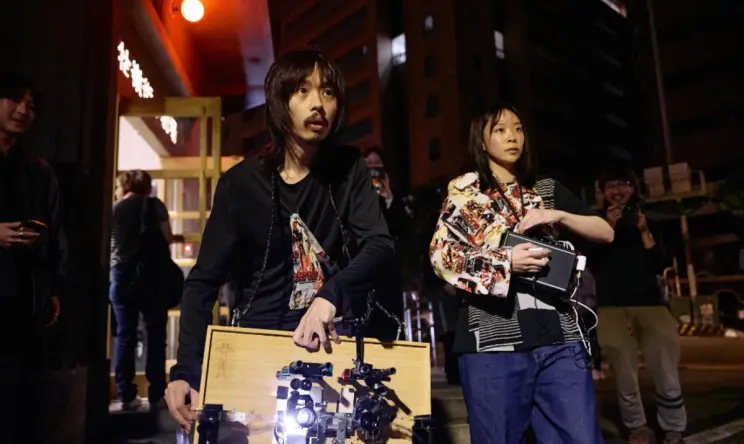
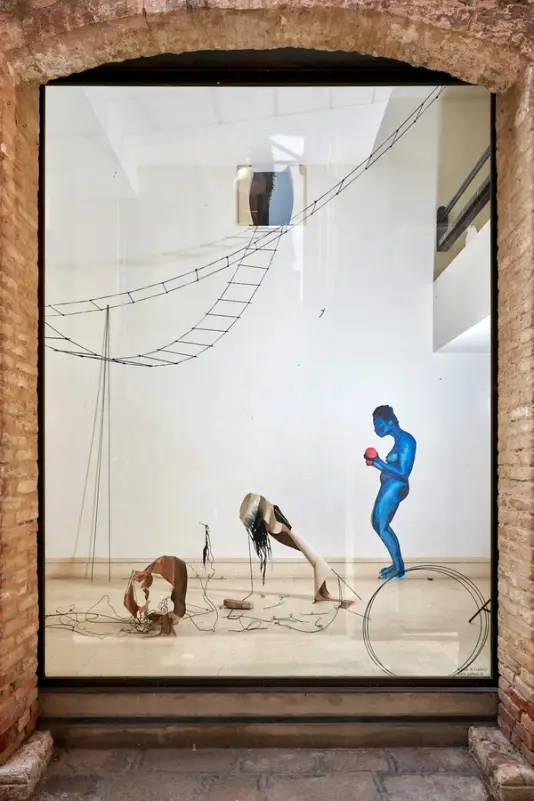
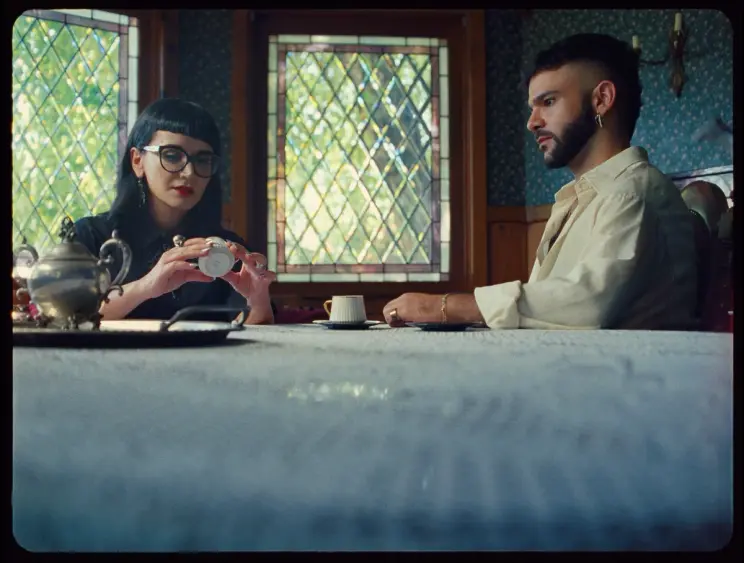
In 2025, Artlab Editorial Fellows Jiaying Sim and Elvia Wilk utilized their forward-thinking insights to connect across boundaries. For Sim, this manifested in a series of inquiries unpacking the hidden infrastructures of contemporary art. With guidance from Fellowship Advisor Rahel Aima, Sim examined how artists like Charmaine Poh, Yanyun Chen, and Mark Chua and Lam Li Shuen in her home country of Singapore navigate labor, materiality, audience participation, and digital exhibitions to create new modes of engagement. Wilk, who is based in New York, took a more thematic approach. Supported by Fellowship Advisor Orit Gat, Wilk surveyed the ways in which scripts function in the practices of contemporary artists like Meriem Bennani, Lawrence Lek, and Jenna Sutela.
In 2024, Artlab Editorial Fellows Olamiju Fajemisin and Kira Xonorika surveyed the ways in which contemporary art marks and can even precipitate change. Fajemisin’s triad of essays explored the relationship between Nigerian diasporic identity and cultural production, attending to the complementary dualisms of artist and musician Olukemi Lijadu’s practice, artist Monilola Olayemi Ilupeju’s use of the body as medium, and the inter-diasporic exchanges staged at Lagos Art Week. Meanwhile, Xonorika’s suite of essays addressed how Indigenous artists including Edgar Fabián Frias, Maya Chacaby, and Violeta Ayala fashion technology in their mappings of pluralistic Indigenous future, and how diasporic artists including Behnaz Farahi, Eddie Wong, and Mashinka Hakopian harness postcolonial thought and speculative storytelling as vehicles for reclamation.
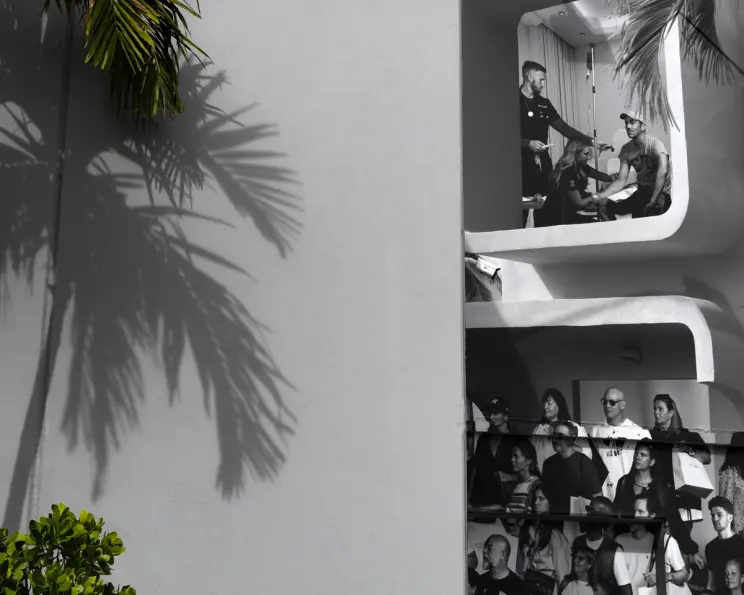
In 2023, inaugural Artlab Editorial Fellows Laurie Rojas and Skye Arundhati Thomas looked at how their respective local artists and artistic communities in Miami and the Indian subcontinent are addressing socioeconomic, political, and technology-abetted issues specific to their geographic regions. Through their intimate observations, Rojas and Thomas highlighted the ways in which these highly localized issues resonate with the fraught narratives faced by the greater global community.