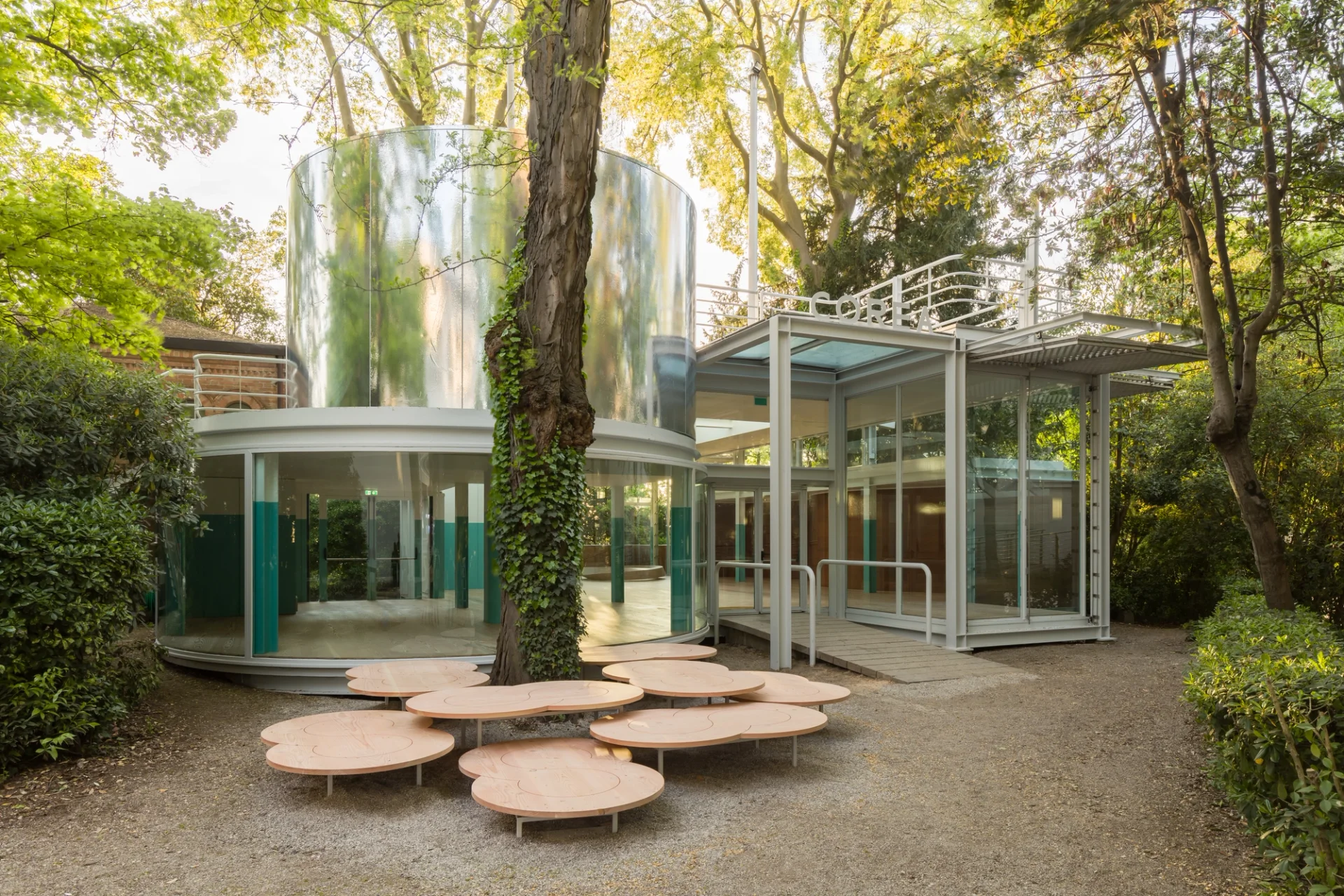
KOO JEONG A - ODORAMA CITIES, 2024. Korean Pavilion 2024, La Biennale di Venezia. Installation view.
Courtesy of Pilar Corrias, London, and PKM Gallery, Seoul. Photo: Mark Blower
Writer and artist Gary Zhexi Zhang explores how the Korean Pavilion at the 2024 Venice Biennale uses scent to deconstruct concrete notions of identity.
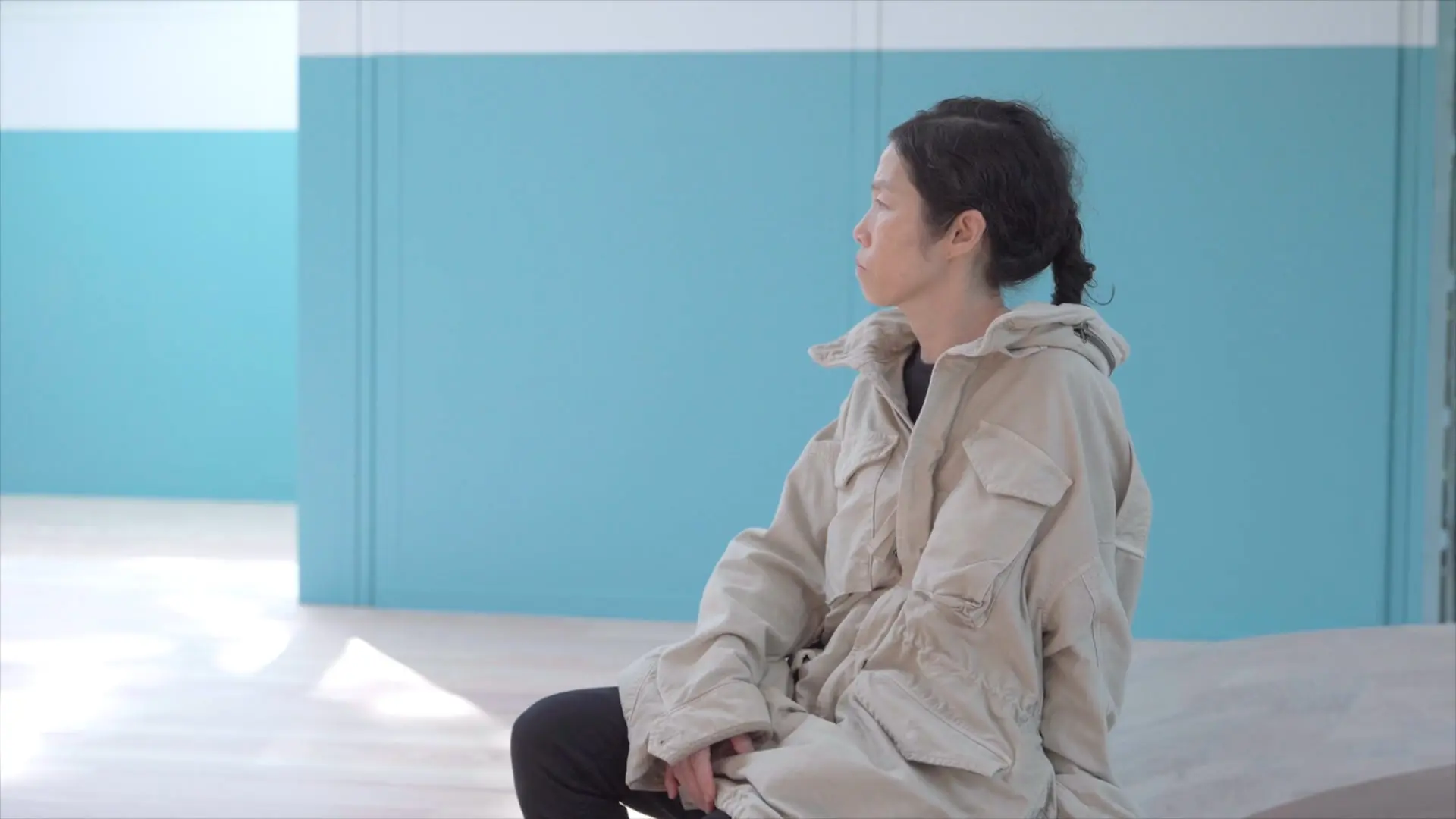
Artlab Editors: Artist KOO JEONG A’s ODORAMA CITIES for Hyundai Art Node is a collective survey of the Korean peninsula via scent. Born in South Korea but “living and working everywhere,” KOO is known for their ostensibly simple, understated gestures toward an expanded imaginary between people and place.
We asked Gary Zhexi Zhang—a visual artist and writer exploring connections between cosmology, technology and economy—to reflect on what KOO’s olfactory architecture suggests about the way our senses inform memory, history, and identity.
Scent is invisible and intangible, yet conjures affective worlds like no other sense. ODORAMA CITIES, artist KOO JEONG A’s exhibition for Hyundai Art Node at the Korean Pavilion at the 2024 Venice Biennale, uses olfaction to evoke a collective notion of Korea. Described as a “scent portrait of the Korean peninsula,” the 17 scents wafting through the exhibition space have been concocted by the artist with the perfumers based on the olfactory memories of over 600 participants.
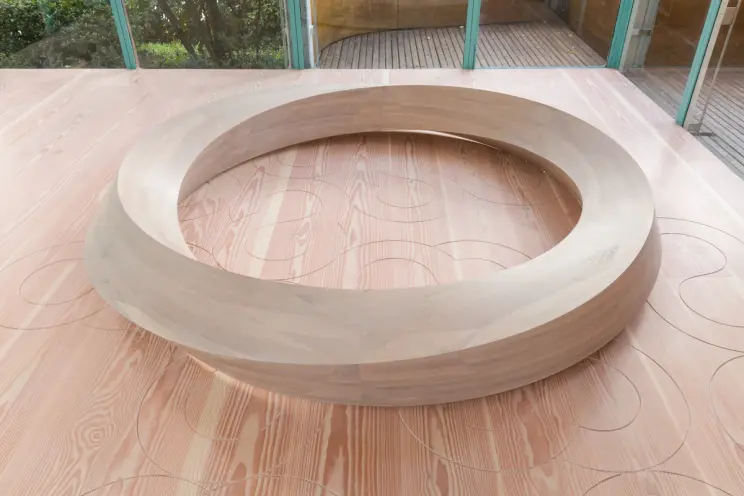
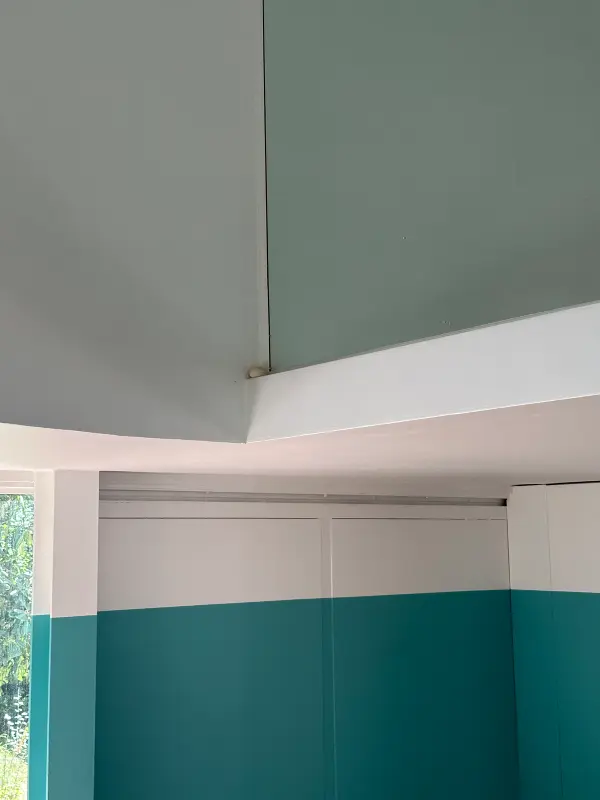
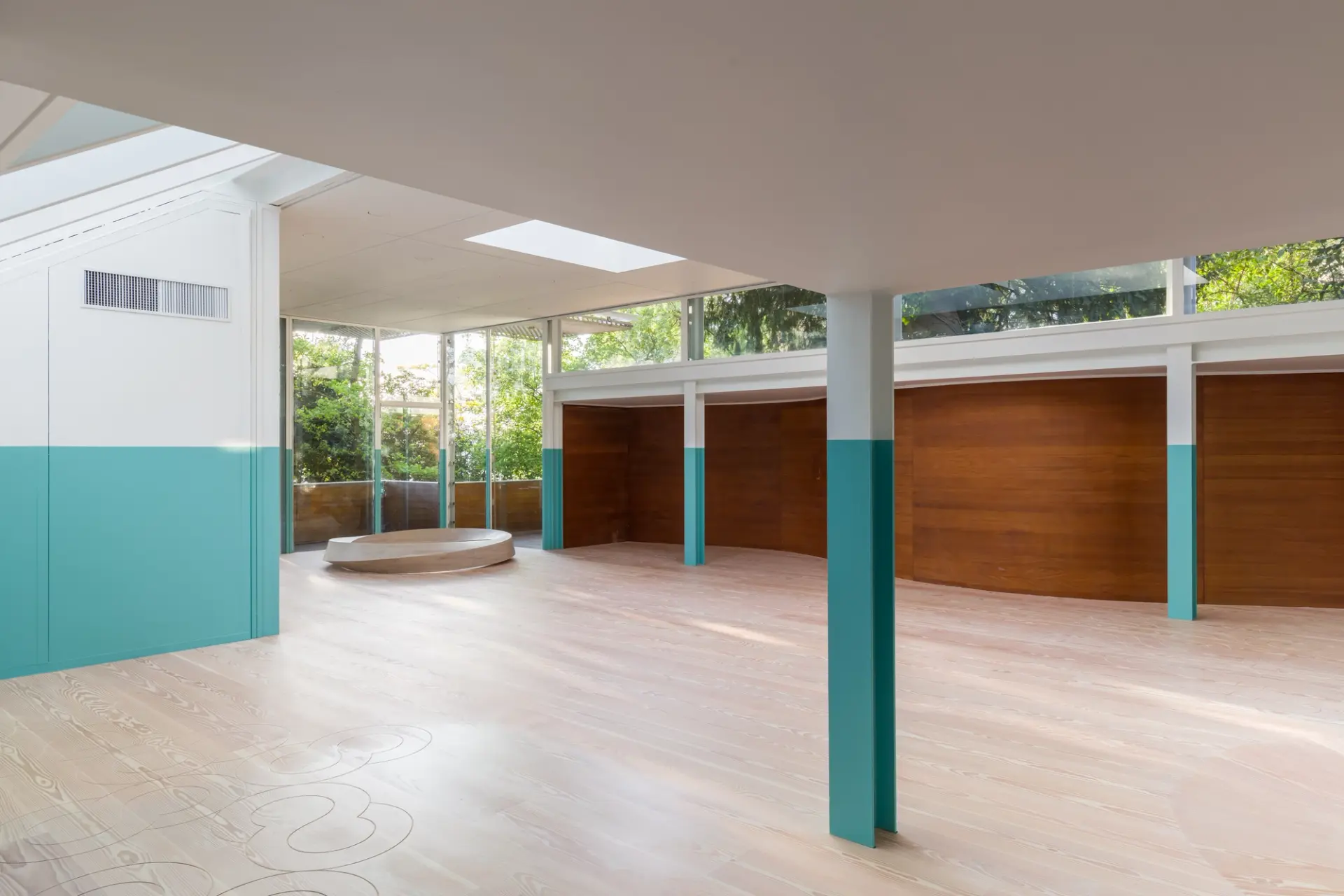
Appropriately, the viewer is initially confronted with almost nothing. A wooden möbius strip sculpture doubles as a bench in the empty space of the pavilion, surrounded by walls painted to half-height in an institutional shade of teal. A wooden floor, CNC’d with blocky infinity symbols, completes the sparse, philosophical staging.

I visited ODORAMA CITIES in the swelteringly hot Venetian summer. Leaf-dappled sunlight streamed through the pavilion’s glass walls, heightening an awareness of the heat. With the air conditioner on full blast, it was only when the attendants turned off the pavilion’s ventilation system that ODORAMA CITIES took on a new life.
Previously intermingled or dispersed aromas settled into an architecture of scents that filled the pavilion. The “smell of people” formed a soapy cloud next to the unmistakable waft of steam rising from a rice cooker. The scent of a fish market occupied a corner space, near stacked boxes of exhibition pamphlets: salty and acrid, reminiscent of the fog of garbage smells that settles immovable on London’s Old Kent Road on windless days. In another corner, blossoms of magnolia.
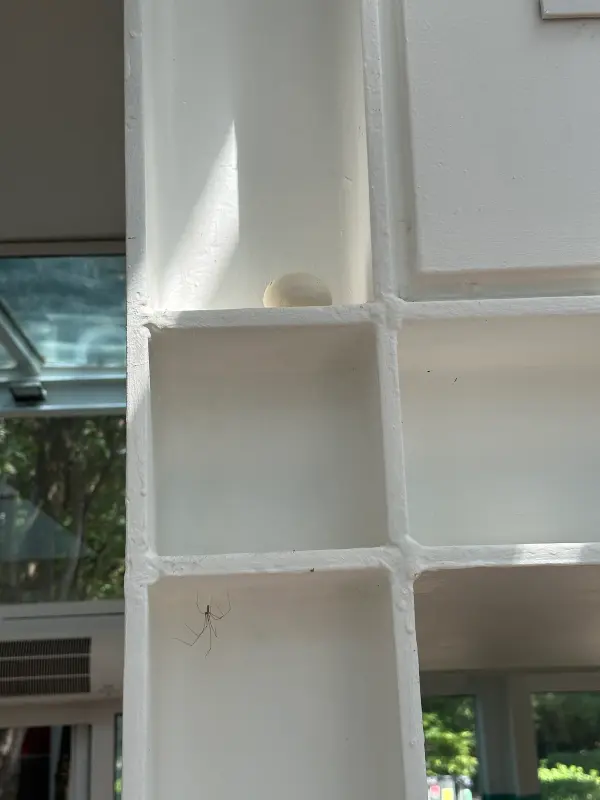
Hidden throughout the exhibition are 16 ceramic balls, soaked in essential oils, which sit surreptitiously in the ceiling beams, crevices and other corners of the pavilion as scent diffusers. Each, curiously, is guarded by a spider, as if drawn to the aroma.
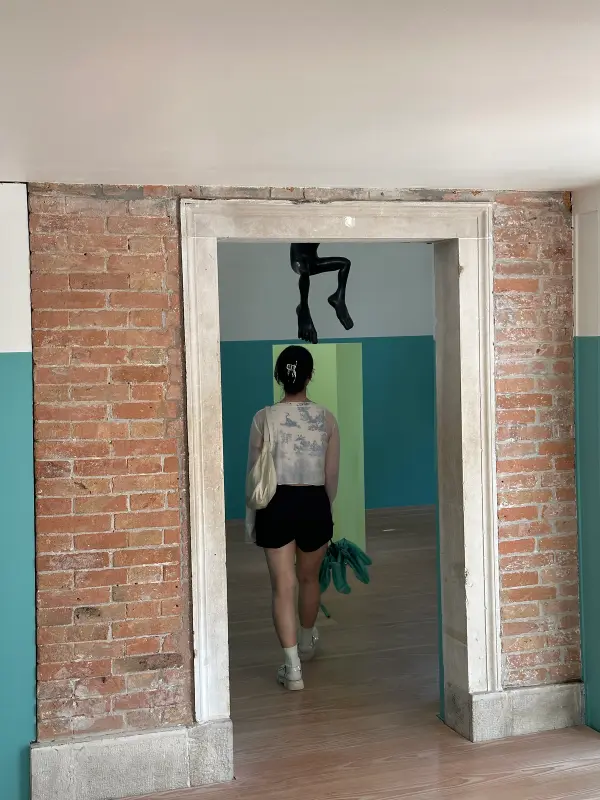
In the smaller second room, a slender bronze figure reminiscent of an anime character levitates with its arms outstretched atop a pale green plinth, head down in meditative focus amidst what looks like an acrobatic mid-air kick. Aromatic plumes of steam—a commercial perfume the artist also devised—burst periodically from its nostrils.
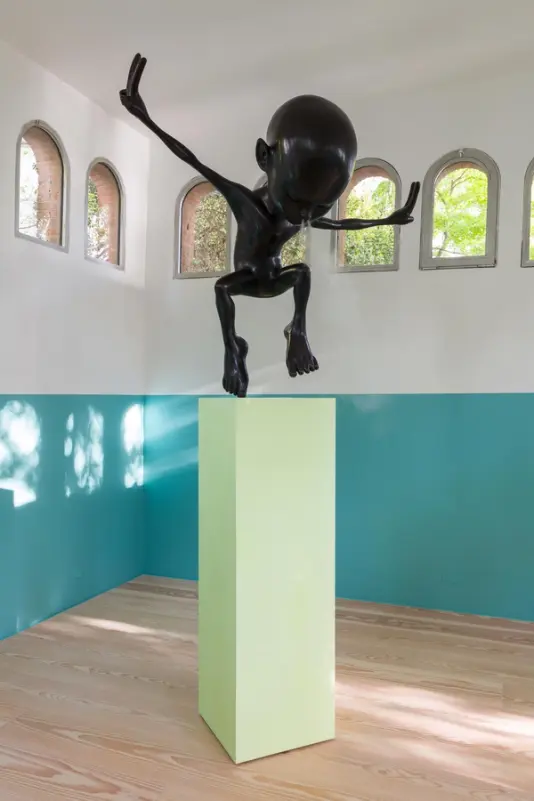
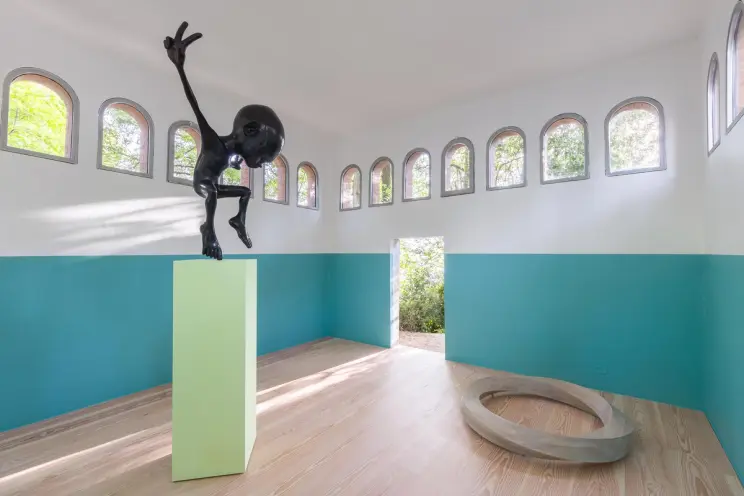
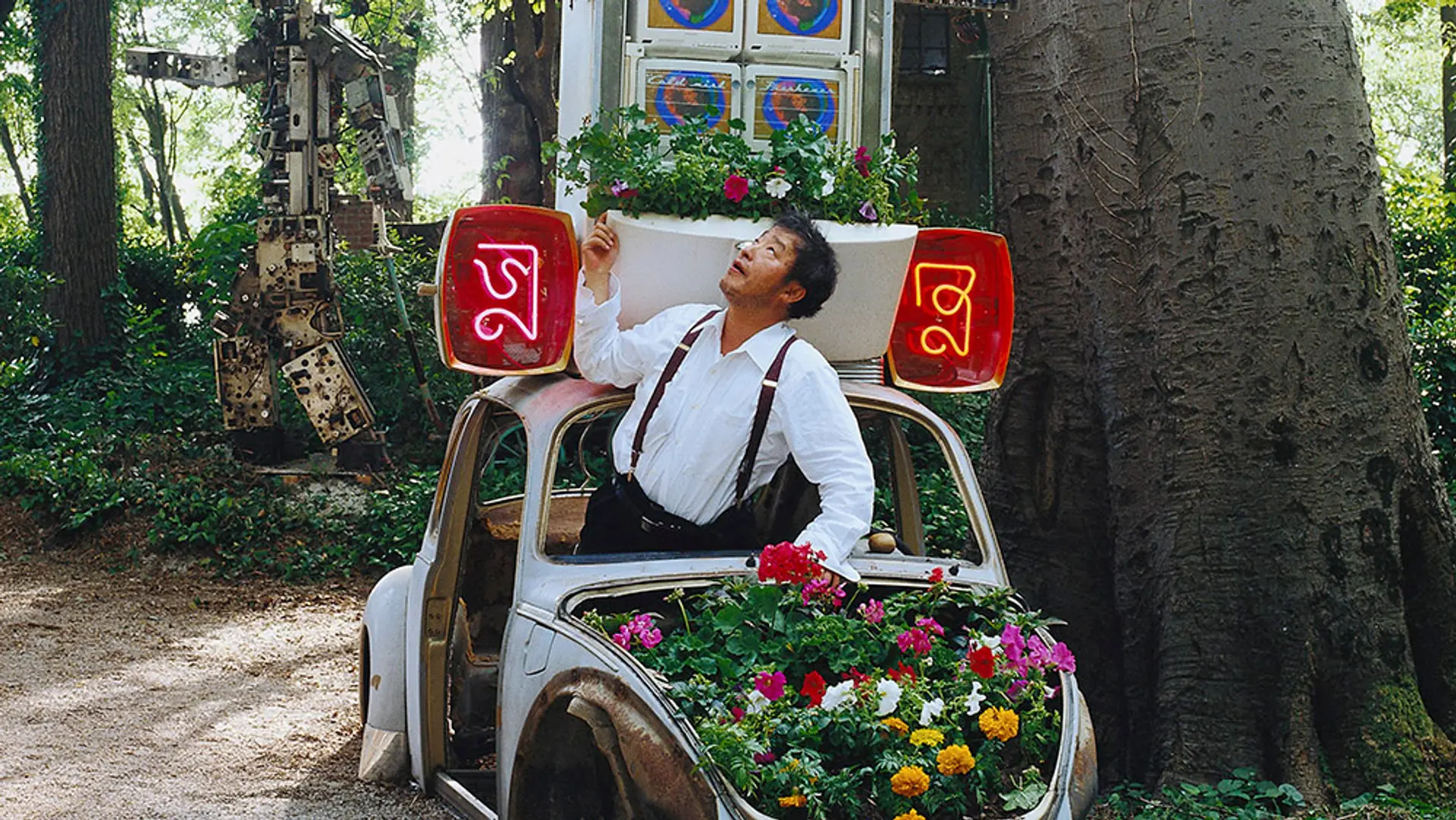
The figure, named “KANGSE SpSt,” hails from the world of OUSSS, an eclectic, dreamlike extended universe which has permeated KOO’s oeuvre since the 1990s. “KANGSE SpSt”—at once heavy and afloat—recently appeared in a lenticular print series called “CURIOUSSSA” (2018), and a pair of animations “MYSTERIOUSSS” and “CHAMNAWANA (true me & i)” (both 2017).
Tactile and amorphous, OUSSS functions as an onomatopoeia—for what? In their 2006 text, FLAMARIOUSSS, KOO playfully defines OUSSS through a garble of punctuation characters, followed by use-case examples: maison de ousss, pain de ousss, back to the ousss. Reflecting KOO’s ongoing interest in the spiritual and the immaterial, particularly as explored in Taoist philosophy and the concept of Qi, OUSSS is an untranslatable morpheme that persists as a token of the artist’s philosophical realm.
As a portrait of Korea, ODORAMA CITIES is inevitably sentimental in content yet almost clinical in form. With its survey of scent notes gathered from tourists, migrant workers, soldiers, and native Koreans, its fluidity gently undermines the Giardini’s microcosm of nationalistic zeal, gesturing towards more porous and nomadic modes of existence.
KOO has emphasised the nature of the Korean Pavilion as a “constitutional transnational entity” and the artist—Korea-born, Paris-trained, and living and working everywhere—might be considered the same. Now in its 30th year, the Korean Pavilion—an elegant combination of glass primitives (a cuboid, a cylinder) set in a functionalist steel armature—was the last to be installed in the Giardini Biennale.
KOO JEONG A - ODORAMA CITIES, 2024. Korean Pavilion 2024, La Biennale di Venezia. Installation view.
Courtesy of Pilar Corrias, London, and PKM Gallery, Seoul. Photo: Mark Blower
The terse poetry of KOO’s oeuvre often dwells in the uncannily mundane, the playful, and the contingent: phosphorescent skate parks, a giant mothball, their ongoing engagement with olfaction.
The Mexican American philosopher Manuel DeLanda speculates that for senses to have evolved, the world had to have already been populated by signs, of which there are two kinds—indices and icons. The former is a trace of a cause (e.g. a still-smoking stub in the ashtray), while the latter is a representation standing in for an object (e.g. a portrait).
Scent remains defiantly liminal, sitting between material and idea, immediacy and memory, index and icon. Perhaps for this reason, the French philosopher Étienne Bonnot de Condillac considered it the most primitive and profound of all the senses, and the least “cognitive.” Working in this blur between the sensing body and the wandering, collective mind, ODORAMA CITIES is an inquiry into a common imaginary—toward a common sense—guided from experience to language and back again by KOO’s olfactory worlding.