Nam June Paik Art Center & Pinacoteca de São Paulo
Hyundai Translocal Series: Via Satellite
Hyundai Translocal Series: Via Satellite
Nam June Paik Art Center & Pinacoteca de São Paulo
About the Exhibition
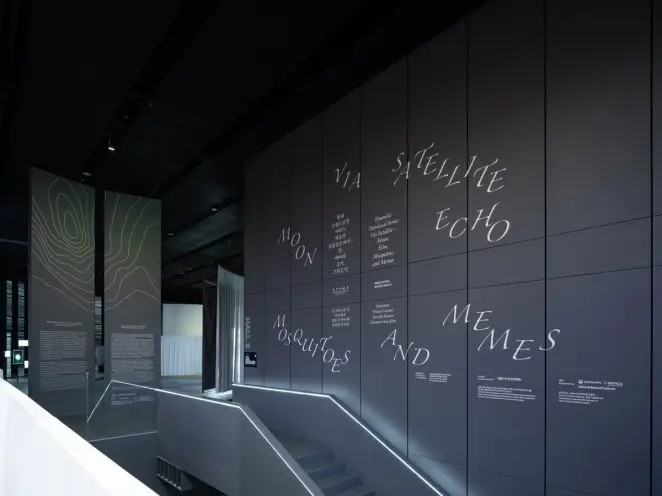
The Nam June Paik Art Center in Yongin, Korea and the Pinacoteca de São Paulo in Brazil have come together to present Hyundai Translocal Series: Via Satellite. Co-organized by the two institutions, the exhibition opens its first presentation at Nam June Paik Art Center on November 5, 2026, under the subtitle Moon, Echo, Mosquitoes, and Memes. The presentation at the Pinacoteca de São Paulo, subtitled Dialogues with Nam June Paik, opens on November 28, 2026, and runs through April 18, 2027.
The exhibition builds on a multiyear collaboration between the Nam June Paik Art Center and the Pinacoteca de São Paulo. Curators from both museums and participating artists visited each other’s cities to explore their respective cultures, languages, and histories including histories of migration and movement, alongside a joint forum which offered an opportunity to carry their research further.
Drawing on Nam June Paik’s pioneering experiments in connecting different places and cultures, the exhibition follows the practices of four contemporary artists based in different cities: Christine Sun Kim, biarritzzz, Jane Jin Kaisen, and Vivian Caccuri. Through their works, the artists examine the potential for new connections and relationships to emerge where distinctive regional and cultural contexts intersect.
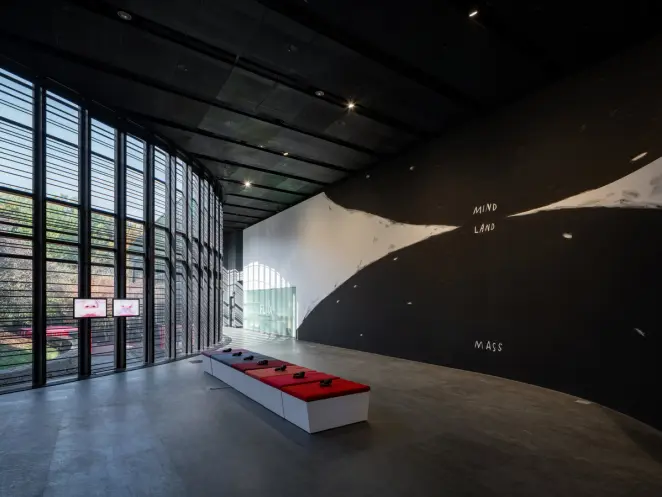
Christine Sun Kim continues her mind series and unveils two large-scale murals: Mind Land Mass (2026) at the Nam June Paik Art Center and Land Mind (2026) at the Pinacoteca de São Paulo. The works engage in a dialogue across the two institutions. Kim imagines her own mind as forming a single, real entity that is immediately visible. It is represented as a black mass, with another mind descending over it. For the artist, the idea of the mind touching something signifies a state that is persistent and somewhat obsessive. The relationship between different masses evokes the distance and perceptions that the mind forms with respect to past memories and particular objects. It also signifies the feelings of weight, pressure, and obligation that arise.
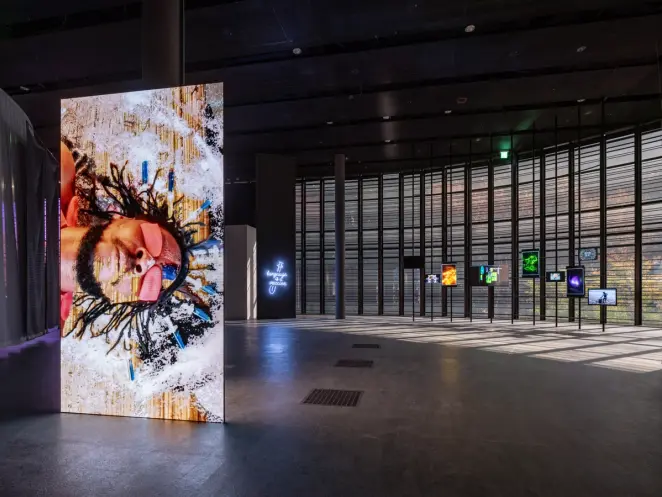
biarritzzz, in collaboration with Mozambican dancer and choreographer Tsumbe Mussundza, explores the historical traces and origins of “samba” as both a word and a style of dance in Three Origins of the Word Samba: Jump, Bath, Prayer (2026). In another new work, Language is a Vaccine (2026), the artist shows, through the ambiguities of language, how it can serve not only as a way of describing reality but also as a medium for creating new possibilities.
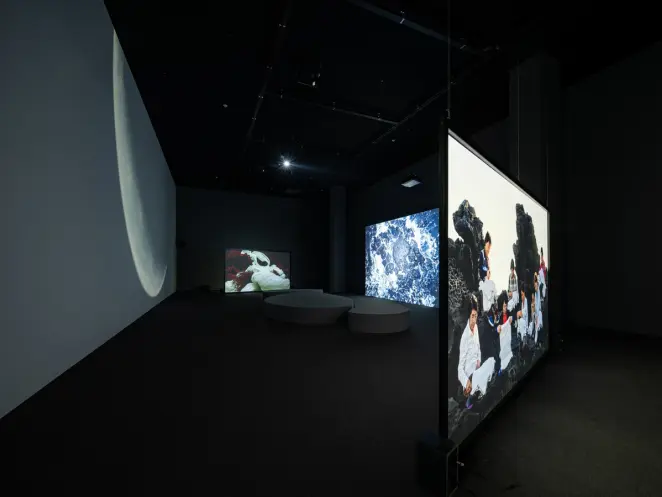
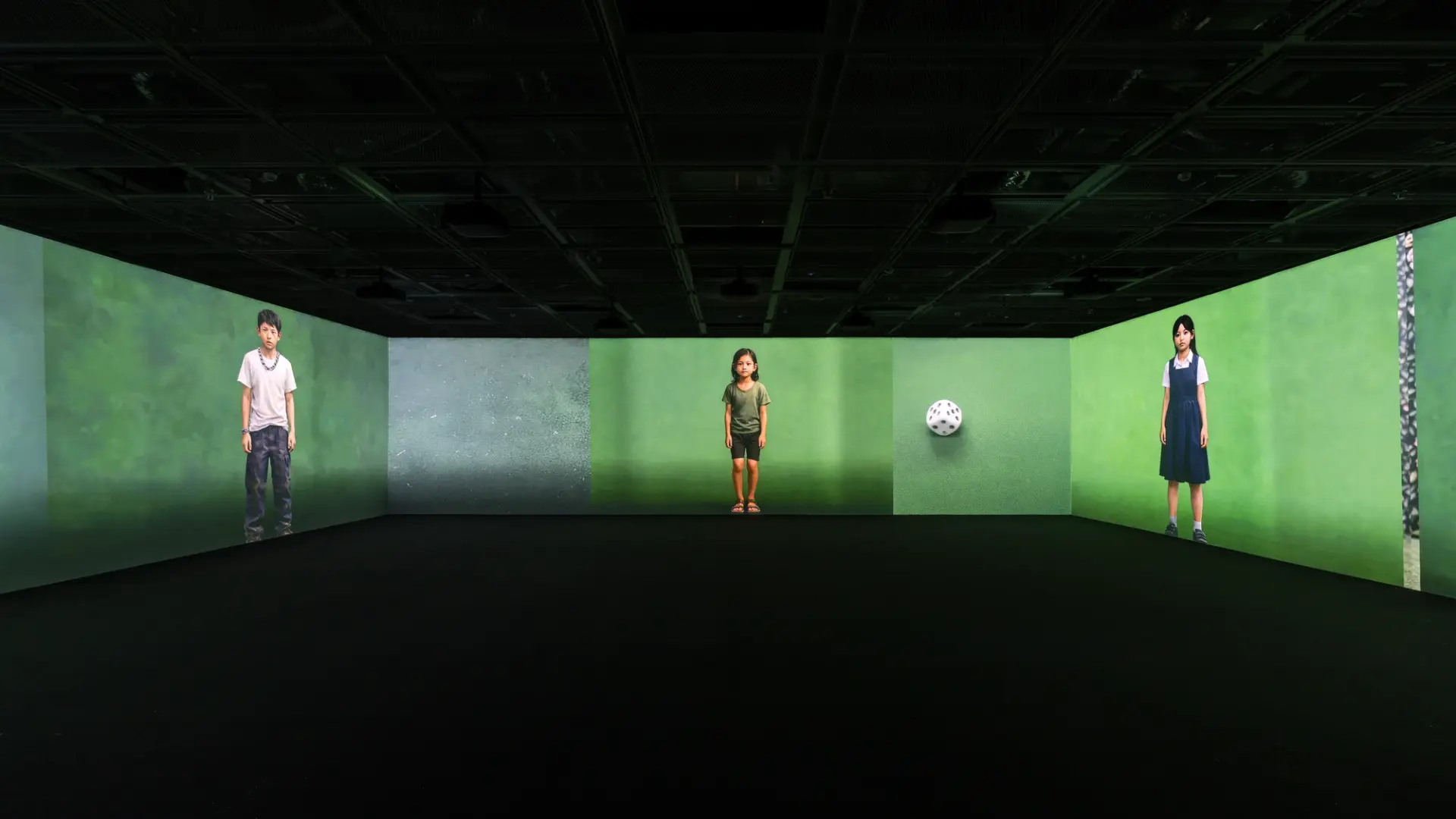
Jane Jin Kaisen presents Old Moon – New Moon (2026), a film recorded from Rundetårn in Copenhagen, the oldest functioning observatory building in Europe, alongside Current (2026), which uses slow-motion aerial filming to show volcanic rock islands, waves, and the vast flowing expanse of the sea off Jeju Island. Positioned opposite one another to form a visual dialogue, the works remind us of how natural forces such as the moon, currents, and tides served as media for people on opposite sides of the world to form relationships even before the development of today’s technology.
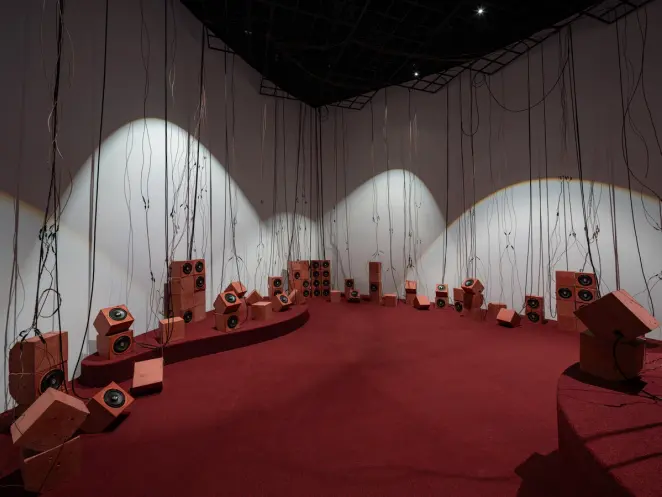
Vivian Caccuri presents Clepsydra (2026), a sound sculpture installation comprising concrete block speakers and audio cables that form a vine-like tangle across the space. In place of the familiar, easily recognized pulse of the heartbeat, the artist focuses on the sounds of veins. Sounds recorded from the veins of multiple people resonate throughout the space, echoing the continuous dripping of an ancient water clock—the meaning of the work’s Greek-derived title—and inviting us to reimagine our lost perception of time as something continuous.
Through their works, the artists bring a sense of translocality to the fore, forging relationships that transcend boundaries. The two institutions will present artist talks and performances at the opening, as well as guided tours with sign language interpretation and workshops throughout the exhibition period. These programs invite audiences to engage more deeply with the artists’ practices and the themes of the exhibition.
About the Artists
Christine Sun Kim (b. 1980, Orange County) is currently based in Berlin. She explores the power that sound possesses in society and the ways in which it operates, translating sound into a language that can be seen and read. Her practice of investigating language spans a wide range of media, including drawing, performance, video, installation, large-scale murals, and public projects. Musical notation, written language, infographics, American Sign Language (ASL), the body, and strategically deployed humor are recurring elements in her work. Both within and outside the exhibition setting, Kim continually questions the rules of communication and the discussions of accessibility that hearing-centered society has long taken for granted.
Having worked primarily in the United States and Europe, Kim recently presented a comprehensive view of her practice in major solo exhibitions at the Walker Art Center in Minneapolis (2026) and the Whitney Museum of American Art in New York (2025). Kim has exhibited and performed internationally, including at the National Museum of Modern and Contemporary Art, Korea (2026); the Gwangju Biennale (2023); the Queens Museum, New York (2022); the Museum für Moderne Kunst, Frankfurt (2021); the Manchester International Festival, Manchester (2021); and the MIT List Visual Arts Center, Cambridge (2020). Kim’s awards and honors include a MacArthur Fellowship, a United States Artists fellowship, the Ford Foundation and Mellon Foundation’s Disabilities Futures Fellowship, and the Prix International d’Art Contemporain presented by the Fondation Prince Pierre de Monaco.
biarritzzz (b. 1994, Fortaleza) is currently based in Salvador. Working across the realms of language, digital technology, image, sound, and online culture, she has made use of a wide range of media and platforms. Through non-formalized images and language such as memes and GIFs showing brief, repeated movements, she questions the ways in which knowledge is produced and circulated in Western systems and the authority and legitimacy ascribed to writing. Rather than viewing the material and spiritual as separate, she embraces mythology and magic, incorporating diverse worldviews that have been excluded by Western rationalism. Her use of blurred and incomplete images that diverge from technological and visual standards presents alternative narratives that open up cracks in familiar orders.
She has participated in exhibitions at the Museu de Arte do Rio (2026, 2023); Mercosul Biennial (2025); Museu de Arte de São Paulo Assis Chateaubriand (2025); State of Concept Athens (2024); Delfina Foundation (2024); Museu do Amanhã (2023); Kunsthall Trondheim (2023); Pivô Arte e Pesquisa (2022); A.I.R. Gallery (2021); Centro Cultural São Paulo (2021); The Wrong Biennale (2019); and Festival Internacional de Linguagem Eletrônica (2017), among others. Her works are held in the collections of Rhizome Artbase, KADIST Foundation, Museu Nacional da República, and Instituto Moreira Salles. She was nominated for the PIPA Prize in 2023 and 2024 and for the K21 Global Art Award in 2026.
Jane Jin Kaisen (b. 1980, Jeju) was transnationally adopted to a family in Denmark and has, over the past two decades, developed a distinctive body of work concerning memory, migration, borders, and translation at the intersection of embodied knowledge and larger social, cultural, and political histories. Another recurring focus revolves around nature and island spaces, cosmologies, re-framings of myths, and engagement with ritual and spiritual practices. Working with video installation, experimental film, photography, installation, and performance, her artistic practice is informed by extensive interdisciplinary research, artistic collaborations, and engagement with various communities.
Kaisen represented Korea at the 58th Venice Biennale with the film installation Community of Parting (2019) and participated in Korea Artist Prize 2024 at the National Museum of Modern and Contemporary Art, Korea. Her solo exhibition Community of Parting at Kunsthal Charlottenborg in Copenhagen was awarded Exhibition of the Year 2020 by the International Association of Art Critics, Denmark. She is the recipient of the 2023 Beckett Prize, the 2023 New Carlsberg Foundation Artist Grant, and a three-year work grant from the Danish Arts Foundation in 2022. Recently, she participated in the Medina Triennial (2026); K-Now at MASI Lugano (2026); the 13th Seoul MediaCity Biennale (2025); the 13th Berlin Biennale for Contemporary Art (2025); the Hawaii Triennial (2025); and the 36th Ljubljana Biennale of Graphic Arts (2025).
Vivian Caccuri (b. 1986, São Paulo) is currently based in Rio de Janeiro. Working with sound as her primary material, she reconfigures traditional narratives regarding the body in an individual and communal sense. Based on her investigations into myths surrounding insects, Caccuri has gained recognition for work that places the mosquito at the center of its narratives as it explores the relations between human and nonhuman species. Her approach of mixing scientific data and fiction into contemporary reinterpretations extends to a series of embroidery panels made from mosquito netting. Her sound installations, made primarily with materials such as nets, loudspeakers, microphones, cables, chains, and candles, serve as a medium that illuminates the space between the visible and the invisible, the audible and the inaudible.
From her base in Brazil, Caccuri has built an international career, holding solo exhibitions at venues including the Centro Cultural Banco do Brasil in São Paulo (2026) and Galeria Municipal do Porto in Porto, Portugal (2024), and presenting a two-person exhibition at the New Museum (2022–2023) and a commissioned work for High Line Art (2021–2022), both in New York. Her work has also been shown at the 58th Venice Biennale (2019) and the 32nd Bienal de São Paulo (2016), among other events. She received the Sergio Motta Art and Technology Award (2011) and the Funarte Prize for Critical Production in Music (2013) and was shortlisted for the PIPA Prize (2018) and the Future Generation Art Prize (2017).
About the Program
Hyundai Translocal Series
Hyundai Translocal Series by Hyundai Motor supports art institutions worldwide in multiyear collaborations that encompass joint research, artwork commissions, exhibitions, public programming, and publications. Conceived as a platform for sustained collaboration, the initiative fosters deep artistic exchanges that explore and reflect the complexities of global interconnectedness.
Related Content
Project
Hyundai Translocal Series
Editorial Video
Hyundai Translocal Series: Entangled and Woven, Exhibition Film