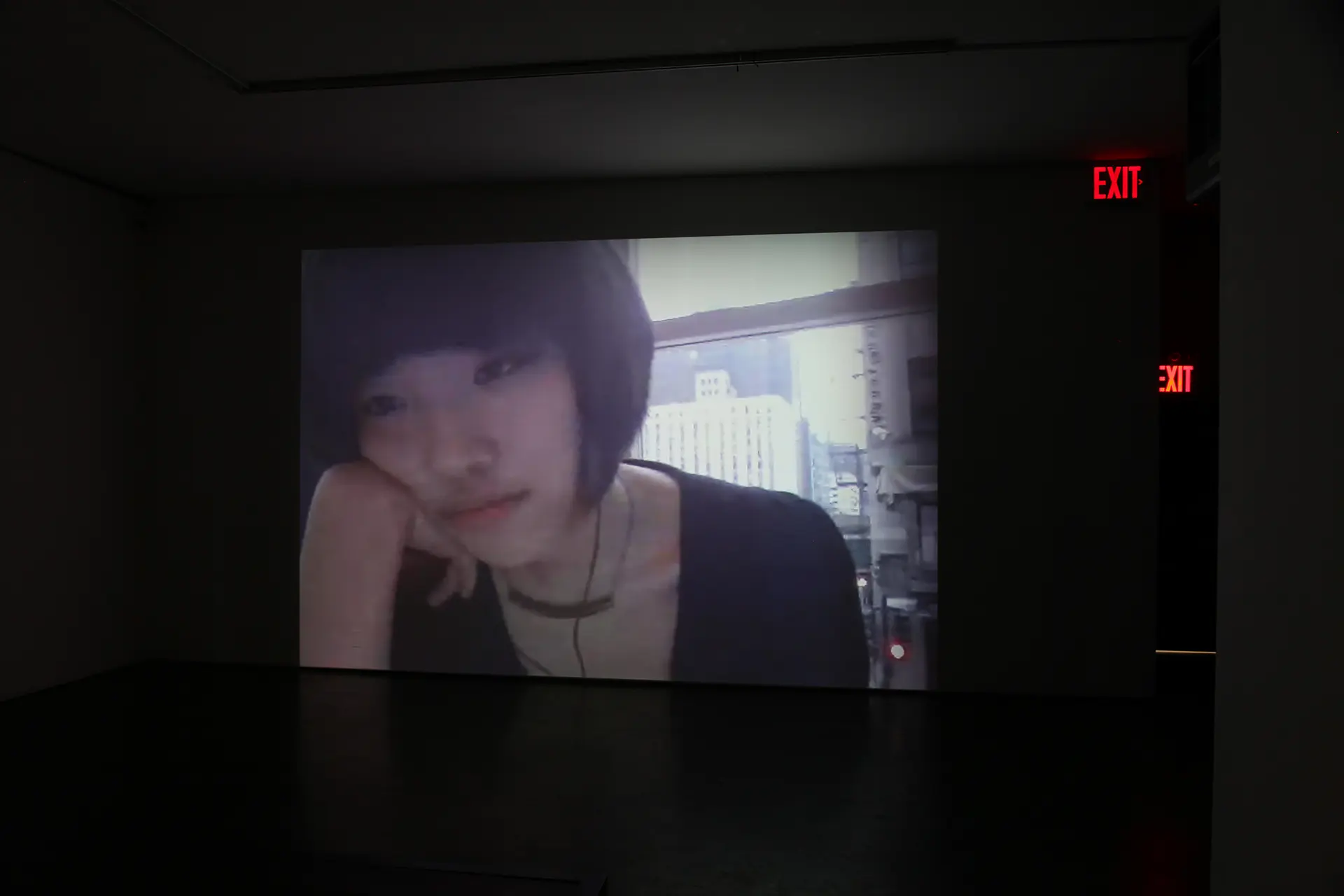
In his final Artlab Editorial Fellowship essay, Travis Jeppesen unravels what it means to create intentionally bad art through Albert Oehlen’s unsettling films.
If you attended the last two editions of the International Film Festival Rotterdam, you might have stumbled upon a curiosity in the program: 2025’s Bad Painter and this year’s The End. Both films were directed by the artist Albert Oehlen (the latter co-directed with Niklas Weise). While perhaps a household name in the art world, Oehlen is virtually unknown in the realm of cinema. This must have been why the films were so poorly attended; their content certainly didn’t help. As one of the presumably few people who has seen both films more than once—to my knowledge, neither film has been shown outside the festival in Rotterdam and that is unlikely to change—I can assure you that these films are incomprehensible, incoherent, stupid, politically incorrect, and just plain weird in their affectations. They are also masterpieces of their kind.
Oehlen has been cultivating terribility—that is, a weaponized, intentional awfulness—since the 1970s, when he emerged as one of the protagonists of the Neue Wilde movement in Germany. One might say that this urge to deliberately follow all the wrong impulses and create work that goes against all reigning notions of what constitutes good quality and taste in painting is perverse. Indeed, his paintings seem to be acclaimed and denigrated by critics in equal measure.
Oehlen’s films extend this ongoing preoccupation with the decidedly awful into the realm of cinema. In doing so, Oehlen makes himself and the art world the subjects of his abject affects. In Bad Painter, the late Udo Kier plays the titular “bad painter,” named Albert Oehlen. The film also seems to be the arthouse actor’s last major cinematic role. From its grotesque opening close-up shot of an eyeball being wrenched out of its socket with a hook, we get a visceral indication of what is in store: an aesthetic assault via the literalized destruction of an eye (and, perhaps, a sly homage to Luis Buñuel’s 1929 surrealist film, Un Chien Andalou).
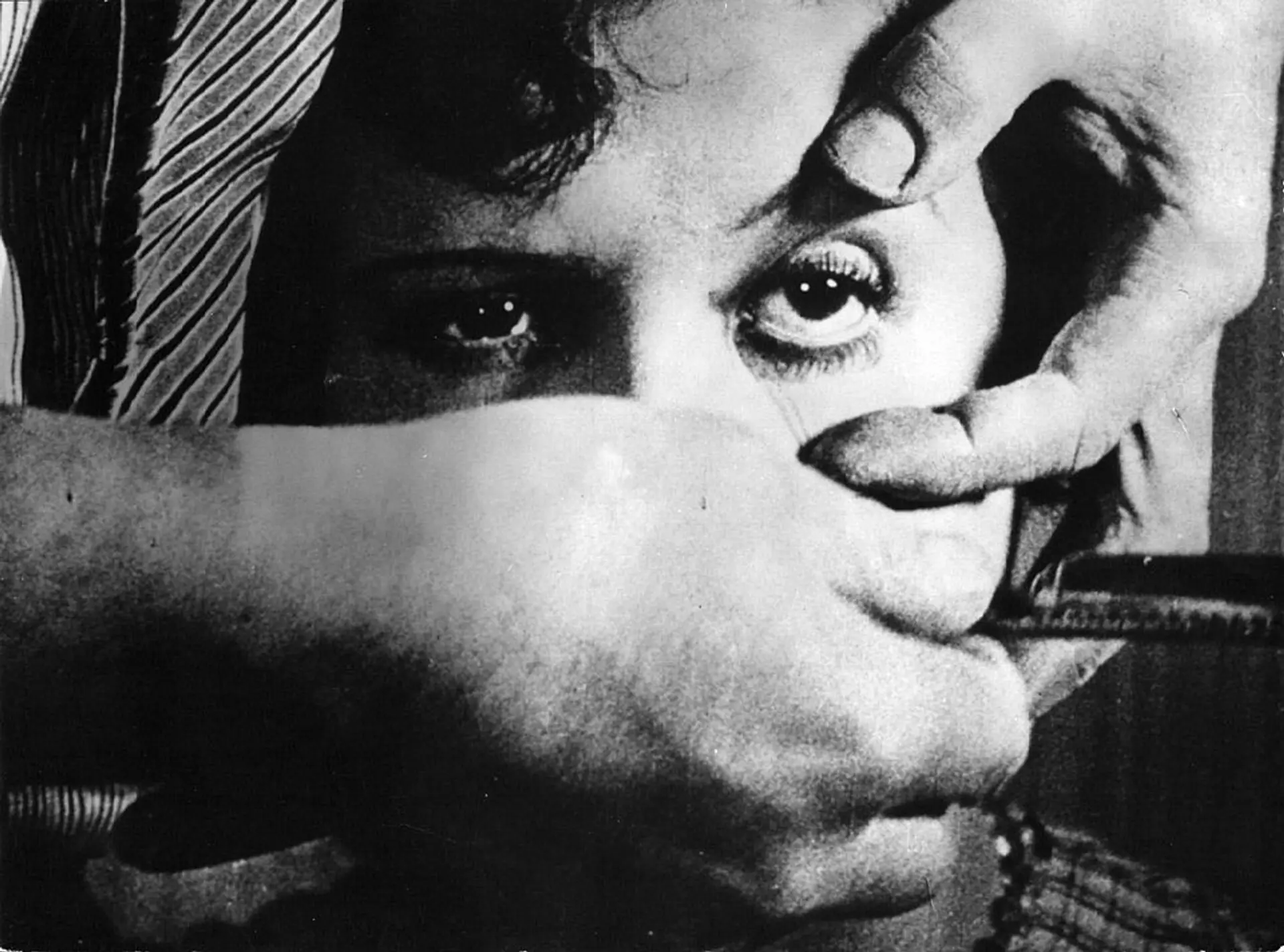
Film Still from Luis Buñuel, Un Chien Andalou, 1929.
We next see Oehlen-qua-Kier in the act of making one of his bad paintings: messy, densely layered abstractions fusing figurative and raw painterly elements that obey no rule, no system of logic. Over this, we hear the voice of musician Kim Gordon, who will appear on screen in a moment in the role of a journalist interlocutor: “Here I am: Albert Oehlen. The only artist who brings his words and actions into harmony.”
Such cringy statements—so over-the-top in their romantic grandiosity they border on pomposity in their language of supposed tortured artistic genius—are woven into the script in the form of voice-overs as well as lines spoken directly by Kier’s invocation of the artist. They are interspersed with more compelling, less frankly absurdist statements that may give a more genuine insight into Oehlen’s conception of the motivating force behind his work: “Stupidity can also be helpful.”
Being frank about this utilized dumbness, the dumbness of raw creation, as we watch Kier-as-Oehlen smearing paint across the canvas, we get something like a mock performance of the artist’s id: a smearing of the self across the cinematic apparatus made to stand in for the canvas being depicted on film. Adding to this confusion is the question of whether these paintings are Oehlen’s own. They look awfully like them, although we are clearly seeing Kier paint them. Was Kier given free rein to improvise or is he being directed, in painstakingly precise detail, what and how to paint by the director, the actual Oehlen, off-screen? In which case, can they still be said to be Oehlen’s “actual” paintings, though rendered by the hand of another, the actor playing him?
The film was shot in Los Angeles, and in the film, Oehlen is portrayed as living in that city, embodying all the stereotypes of a famous and successful LA artist. He lives and works in a fabulous house in the Hollywood Hills. He is constantly swarmed by a gaggle of personal assistants, former students, collectors, journalists, gallerists, personal trainers, and a much younger sycophantic girlfriend (played by Charlotte Taschen), a struggling, far less successful artist.

Hollywood Hills
That the real Albert Oehlen lives in Switzerland is one indication that this Oehlen is an obvious fiction, an object of the director’s self-mockery. This is key for viewing the film as a work of criticism: For criticism to be effective, it must ultimately begin with the self before extending outward. That this Oehlen is living out all the clichés of the tortured artist is not so much the kind of self-mythologization that one expects from such portentous figures, but a satirical vehicle for deconstructing, decimating, and desecrating that very tendency.
Oehlen, of course, is not the first filmmaker to have weaponized intentionality in this fashion. There is the example of John Waters, who has built an entire career out of promoting himself as the “Pope of Trash.” Gaspar Noe has similarly tested his audience’s endurance capacity, with a large portion of the audience walking out in disgust of the premiere of his film Irreversible at the 2002 Cannes Film Festival. Then there is the maverick US underground filmmaker Jon Moritsugu, whose films have undergone accusations of nihilism for their scripts riddled with bad jokes, intentional bad acting, and embrace of punk squalor.
As with these filmmakers’ work, we find implicit in Oehlen’s films the enunciation of a certain aesthetic doctrine. In seeking to pair the vernacular of intentional badness that he has pursued in painting with an equivalent cinematic language, Oehlen simultaneously uses the cinematic apparatus as a mechanism for elaboration and clarification of just what “bad painting” means. It is not merely an inherent “wrongness” in the conception of the painting, and the literal application of paint to canvas (which, we might say, “accidentally” results in quite beautiful paintings of an incoherent, unsummarizable nature), but an amplification of the flaws of the artist-self, the egomaniacality that is often mistaken as a sign of genius.
The act of creation does, for better or worse, require the consumption of a great deal of ego energy as a means of warding off the fears that otherwise threaten to consume you. When one is engaged in the field of creation, everything one does bears the possibility of badness. Rather than allowing angst to eat you alive, why not deliberately embrace badness and failure altogether, putting them at the very center of one’s questing? Still, such an approach requires a further boldness, a metallic armor of steely self-belief and blind confidence in what one is doing—what I’ll call ego energy. The trick is to not allow that ego energy to impede upon one’s activities outside the realm of creation: a challenge that fails Kier-qua-Oehlen throughout the film, as his behavior grows increasingly repellent.
While Bad Painter’s reception was more lukewarm than bad, Rotterdam followed it up by screening The End the following year, which is arguably even more extreme in testing its audience’s capacities and culminated in walkouts. Like Bad Painter, The End is absurdly excessive, an exercise in maniacal insanity. This time, Oehlen is played by the Panamanian actress and model Nichole Galicia; or rather, she is an artist who has stolen Oehlen’s identity. She livestreams the creation of a painting on Instagram as “therealalbertoehlen” to a community of art world fans. Among the commenters are Lydia Lunch, Texte Zur Kunst, and Emily Sundblad, none of whom seem to register the oddity that the older white male German painter has somehow morphed into a young Black woman.
In the opening scene, “Albert Oehlen” enters an art gallery with a male artist, with whom she engages in an exchange about painting that quickly blossoms into an argument. She suddenly and inexplicably produces a glass beer bottle which she breaks over his head. The fight continues outside the gallery, where a security guard holds the male artist so that “Albert Oehlen” can continue beating him until the poor guy eventually ends up defecating in his pants. Finally, “Albert Oehlen” takes out a knife and murders the male artist.
Such scenes take the outrageous and senseless violence often deployed in Bad Painter to a further extreme, as though he is trying to outdo himself. Gratuitous violence, of course, is a clear signifier of badness in cinema, both in terms of aesthetics and morality. The ridiculous, over-the-top stylization of these scenes ensures that no one watching can take them seriously; what is provoked instead is contemplation, not only on the whys behind these particular instances of vulgar stylization, but on the larger issue of representations of violence in cinema as a medium.
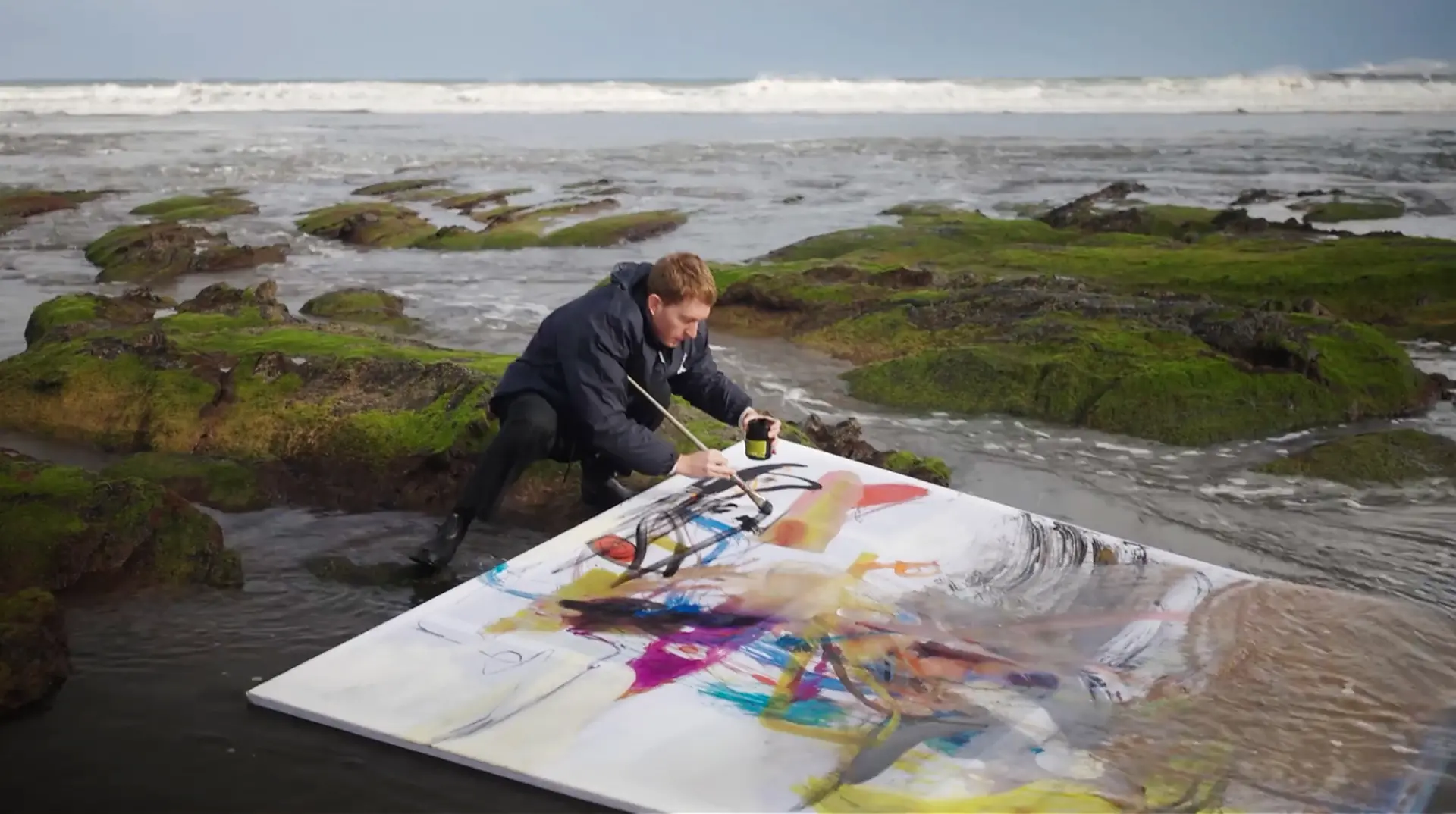
Still from The End (2025), a film by Albert Oehlen and Niklas Weise.
The narrative in The End is a jumble of scenes. The identity of who exactly Albert Oehlen is morphs and jumps as the film progresses—or, more aptly, regresses. Woven in is an incoherent discourse on the ontology of painting: When it can be said that a painting is truly finished, a question constantly asked by various characters who wander in and out of scenes, is never sufficiently answered. Everybody keeps getting skin afflictions, which is meant to somehow serve as a metaphor for the process of “violation” that takes place when paint defaces the purity of a blank canvas. “It’s my stupidity that interferes constantly,” a voice-over intones at a certain point, presumably from the artist’s diary—echoing similar meditations on stupidity woven into Oehlen’s previous film.
If there is a message in either of Oehlen’s films, it is that art should not set out to enlighten, but to deform the human spirit. Alternatively, however, we might speculate that what Oehlen is putting forth is nothing less than an act of critique disguised in cinematic format. Of painting, sure, but also of the art world in general: the romantic cliché of the tortured male artist, normative aesthetics, the hyper-capitalistic herd instincts of the contemporary art market, and, above all, of himself and his own complicity in all these regimes of madness. There is, after all, something true in the manic interiority of his artist figures, that frenzied state often intrinsic to the process of artistic creation, of prolonged isolation both real and metaphorical, that Oehlen arguably is just depicting an extreme version of.
We might theorize that intentional badness is, in fact, the root tendency of the avant-garde: a stylized rupture, bordering on assault, of the normative constraints the artist perceives in the art of the present, with the intent of breaking into untrammeled territory. It is an intrinsically Modernist approach (“make it new,” as Ezra Pound once rallied). This, then, begs another important question for aesthetic thinking: What is the role of pleasure in art of this sort? That it is so difficult to locate, save for those gifted with a truly nuanced, critical sensibility, inevitably means that the audience for this type of work, when it exists at all, will likely be hostile. This is where the “avant-garde” takes on its original militaristic meaning, returning to a battleground formation: It is always those on the frontlines who are first to fall.
When the aforementioned Un Chien Andalou was premiered in Paris, Buñuel showed up with rocks in his pocket, anticipating the crowd’s violent reaction; he was allegedly disappointed when he didn’t have a chance to use them. This tendency, this originary avant-garde impulse, should never be confused with “edgelording,” an aimless and juvenile making of deliberately offensive work for the sole purpose of provoking a negative reaction. Rather, Buñuel and Oehlen’s expectations speak to an awareness that one is most likely to be misunderstood and rejected when putting something out there that doesn’t look like anything that has been done before. Which, according to some, is what all art should strive to do.
When will the picture be finished? Of course it won’t be. It can’t be. Because art itself is endless and, in its endlessness, it is inherently tortuous, particularly for those burdened with creating it, those blemished by both an ecstatic conscience and a tendency toward criticality. These portraits of the artist as pure flaw are the sort of truly radical art I have long missed. Oehlen’s is an art that is intrinsically divisive in its marred coatings, its ambivalence—I think all art should achieve this, lest it be reduced to the status of mere sloganeering, of propaganda. His films are as terrible as they want to be, steering into excess as though to mirror the perceived waste of our infrequently civilized world. Punishing for all but a minority of spectators, they posit a critical art that challenges us as viewers to attain a position of enlightened discernment; in the end, our reward is our revulsion.