In his second essay, 2026 Artlab Editorial Fellow Travis Jeppesen takes stock of the disappearing role of judgment in contemporary art criticism.
Just as form and imagination in twenty-first century art writing has been stalled, as suggested by my previous essay, judgment in art criticism has also largely evaporated. For the historically-minded, this may come as something of a shock—pronouncing an evaluation of some sort has arguably always been the central task of criticism. Yet when reading reviews of art exhibitions today, particularly in specialist art publications, it can be difficult to gauge any unique subjective position vis-a-vis the writer’s stance on the work under scrutiny.
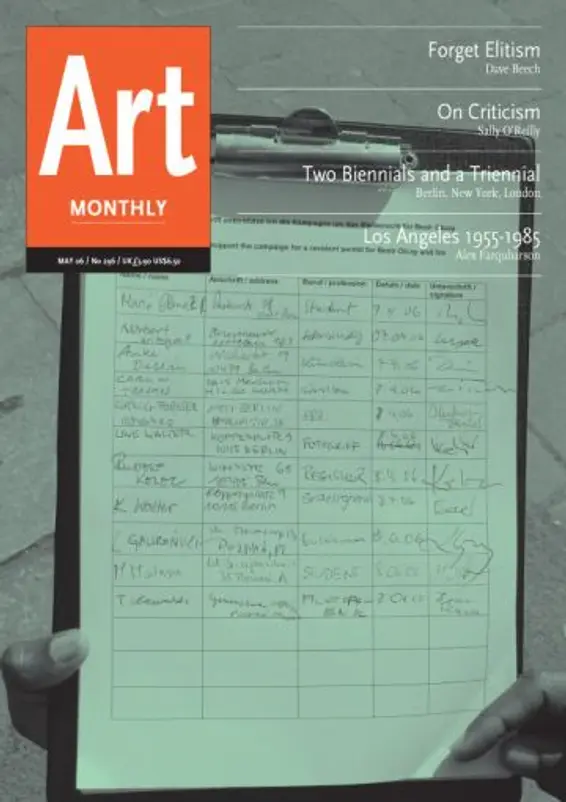
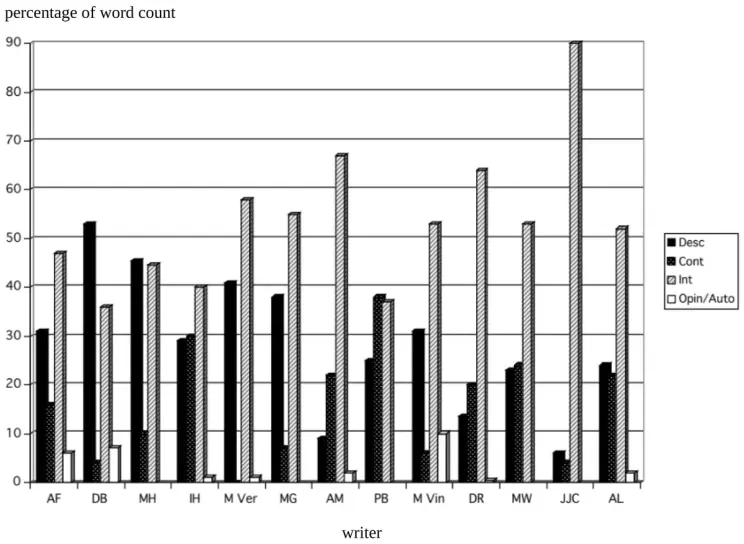
Far from being a new phenomenon, this problem was first identified twenty years ago by Sally O’Reilly, with her 2006 essay “On Criticism” published by Art Monthly. In that essay, O’Reilly broke down the review into four essential modes: description, contextualization, interpretation, and judgment. The statistics she pulled showed that the art writing produced during that time overwhelmingly privileged descriptive writing above all else, with very little space for judgment—in fact, none, in the vast majority of cases. To bolster her claims, O’Reilly points to a 2002 survey conducted by the Columbia University National Arts Journalism Program of the top 230 art critics in the U.S., which concluded that the most popular function of art writing was description. The least popular? Judgment.
Some two decades later, as I found myself editing reviews for a major art publication, I found that there had been a dramatic shift in this tendency identified in O’Reilly’s piece—but not towards the return to judgment she advocated for. Instead of description, much of the prose submitted by writers was rooted heavily in contextualization, occupied by the real world referents and “issues” in which the art work was either embedded or else (ostensibly) addressing. In this way, the review had come to increasingly resemble the press release; in more extreme cases, our fact-checkers could identify contextual bits that were actually cribbed from, or were a loose paraphrase of, passages from the exhibition’s press release. In our editorial feedback, my fellow editors and I often found ourselves asking writers what the artwork actually looked like—pushing them, in other words, towards description. This overreliance on contextualization, thus, moved us one step further away from arriving at any sense of judgment on the qualitative aspects of the work—for without some description of the object, the process of assessing it cannot even begin.
It might be said that this trend in art criticism is a response to how art itself has changed in the last couple of decades—and, in my opinion, not for the better. Much of art today has shifted away from prioritizing aesthetic or artistic innovation, instead favoring wider sociopolitical contexts. One might argue it is a shift away from the art object, the artwork, altogether. In the recent viral essay “The Painted Protest,” writer Dean Kissick argued that much of this work is “progressive in content but conservative in form.” “Once, we had painters of modern life; now we have painters of contemporary identities,” he writes. “And it is the fact of those identities—not the way they are expressed—that is understood to give value to our art.” In other words, if one is fully in agreement with the political aims of the work being represented, then that qualifies the work as “good,” regardless of its formal qualities.
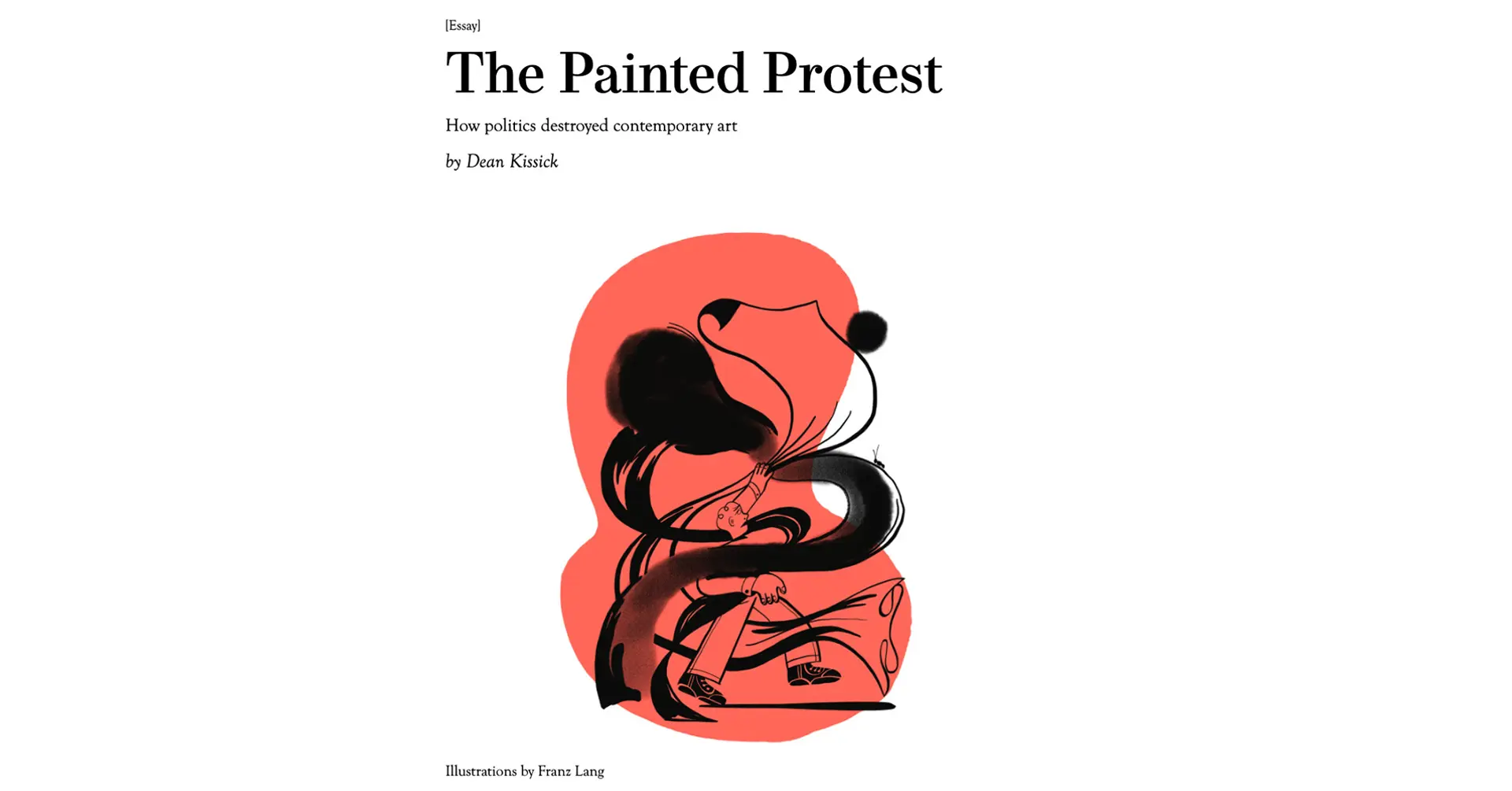
Dean Kissick, “The Painted Protest,” Harper’s Magazine.
Dissent from the promoted consensus—whether that consensus be promoted from within (i.e. the institution or gallery showing the work) or from without (by the public)—was once fundamental to art criticism’s ontology as a discipline. As distinct from art historical writing, wherein judgment is often implicit through a veneer of impartiality (the mere fact of an artist/artwork's inclusion in an art historical treatise infers its importance, if not its quality), art criticism ought to distinguish itself by its lack of objectivity. Further, one might say this kind of criticism played an essential gateway role into an artist/artwork's entry into the annals of art history. Whether that is by blowing the B.S. trumpet when an artwork is showered with undeserved praise, bravely calling attention to work that has otherwise been ignored, or defending a work that has been unfairly castigated, critics were often writing in dialogue, with or against, other critics, forming a chorus of dissension, a palace of intrigue. Without the evaluative rhetoric exercised by the dominion of criticism, then other forces—for example, in a hyper-capitalistic global commons, the market—are left to determine what artwork is truly important.
Two forces that both began their ascendancy in the mid-to-late twentieth century can be attributed as the main culprits for this loss of judgment. The first would be the commercialization of the art world. As the art market gained increasing influence, it began to usurp the role of the critic as the arbiter of taste, prompting a reversal of values. Gradually, as the language of art criticism became more obtuse, more directed at a specialized audience, it became the critic’s role to serve the market rather than the art—and judgment carries little currency in the pursuit of selling work. A second complicating factor was the rise of the curator, whose role within the art ecosystem in many ways has displaced the authority once held by the art critic. In the last few decades, the curator’s role transitioned from that of a primarily anonymous museum bureaucrat to celebrity powerbroker—a transition that worked effectively hand-in-hand with the marketization of art. This “curatorial turn” has played no small role in the current state of hypercontextualized art writing. Curatorial practice often emphasizes framing, research, and contextualization rather than explicit evaluative judgment.
That criticism must resist these conditions of corruption and usurpation in order to sustain and then re-invent itself is much easier said than done. Given the overreach of market forces, one seemingly risks putting an entire career on the line by airing a dissenting opinion in writing—especially when one is playing a multi-hyphenate role (e.g. critic/curator), as is commonly the case in today’s art world. And yet this fear, I believe, is misguided—any artist who is really worth their weight in gold will admit that it is better to be divisive than it is to be universally loved. Critique, even when it’s offering something much less than two thumbs up, need not issue forth from a place of hatred; a negative judgment can also come from the impulse to nurture, from a place of love. And yet in order to even begin passing judgment, one needs some semblance of what so much art criticism today seems to lack: a set of aesthetic criteria.
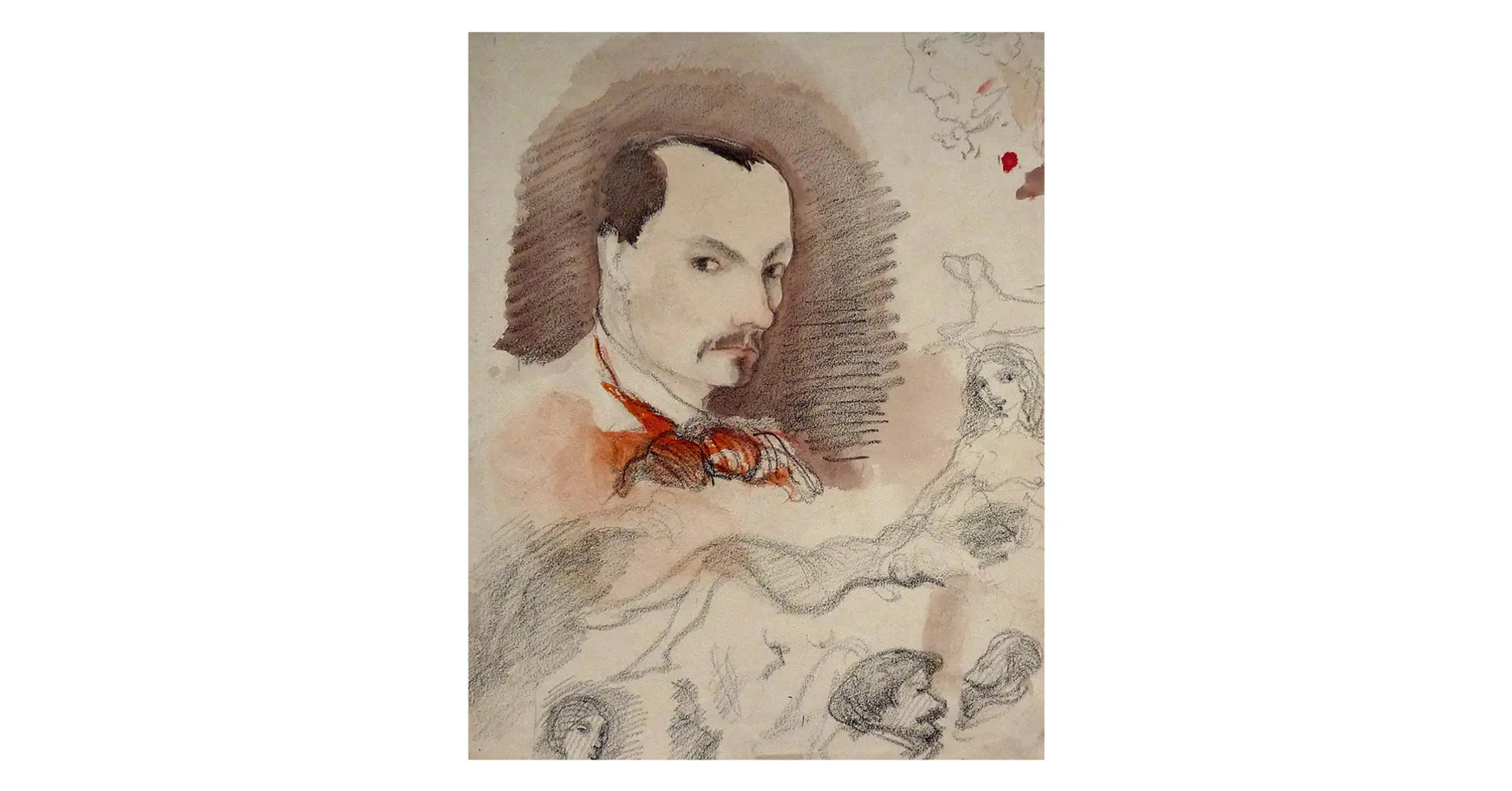
Charles Baudelaire, Autoportrait et croquis, (1844–1847) (Fonds Geoffroy-Dechaume, Cité de l’Architecture et du patrimoine, Musée des Monuments Français © CAPA MMF Fonds Geoffroy-Dechaume).
It need not be all that complex; in fact, better if not—the simplest, most basic criteria often yields the most profound insights. One is offered by Charles Baudelaire in his review of the Salon of 1859, a cornerstone of modern art criticism. In it, he argues that there are two types of artwork: those dealing with the real, and those rooted in the imaginative. I use this as an example because I find it particularly compelling: A century and a half later, we might say that nothing has changed. How one departs (or diverges) from Baudelaire’s criteria origin-point enables an entire range of potential critical vantage points. For while there are certain artists whose work is rooted almost wholly in either the real or imaginative camp, most represent a fluid admixture of the two. And while it is possible for one to be a wholly imaginative artist, fully engulfed in one’s processes of world-creation, I would argue that one whose work falls solely in the domain of the real can’t truly be said to be much of an artist: The infusion of some minimum of imaginative pathos is necessary in order for any work to be successful qua art. This would be a determining factor of how I assess a work of art—you might argue something completely different. For the sake of criticism’s flourishing, I wish you would.
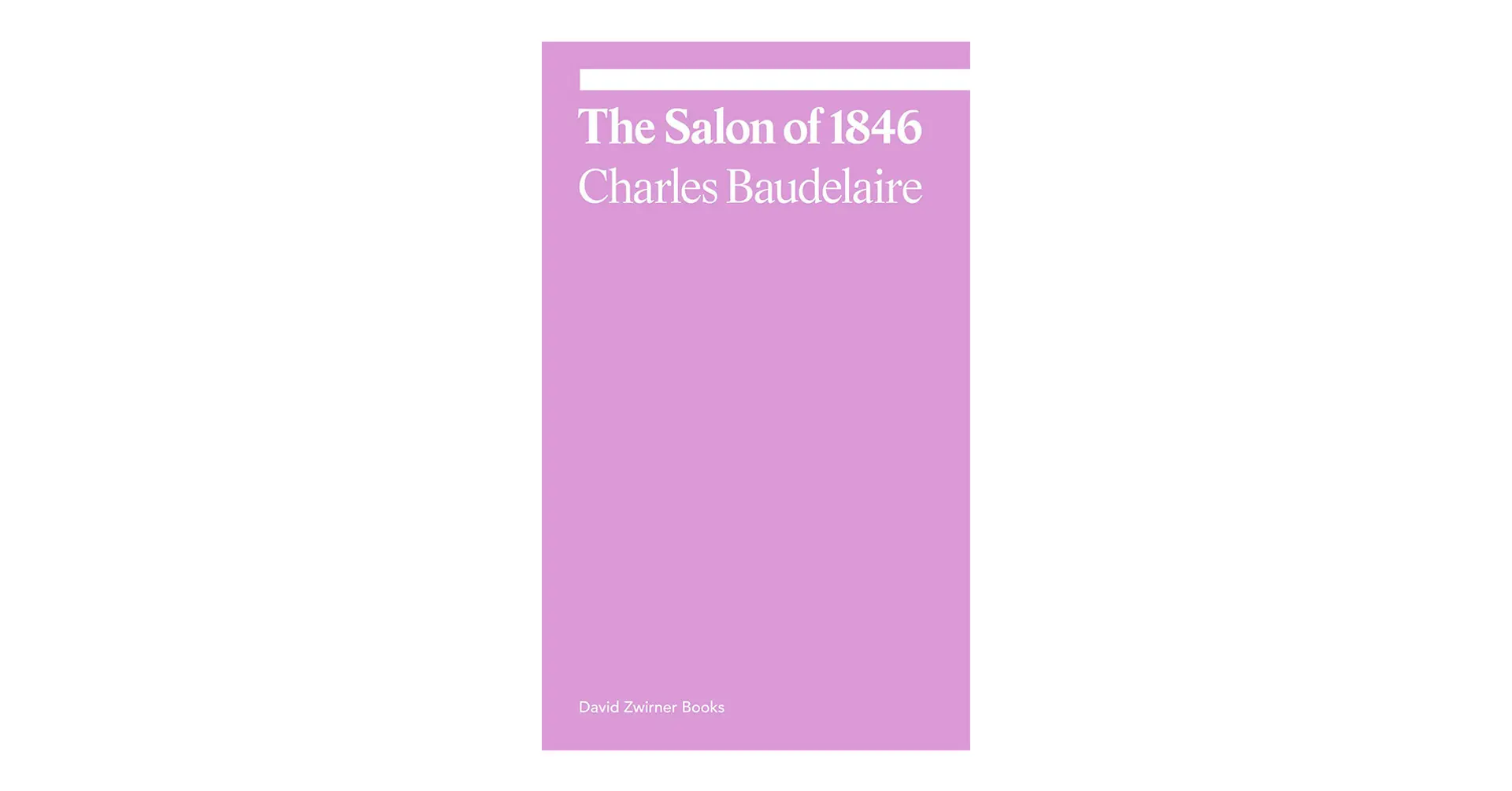
Charles Baudelaire, The Salon of 1846, Re-published by David Zwirner Books for the ekphrasis series, 2021.
Good criticism, too, ought to possess a similar balance of imagination and the real. This is why so many gifted critics are often (but not always), like Baudelaire, artists themselves. Baudelaire’s criteria, in fact, seems to be making something of a comeback; good ideas often do. Most recently, a re-hashing, in different language, of such a position appears in JF Martel’s essay in Aeon JF Martel’s essay in Aeon on what he calls artifice art (examples of which he provides: “propaganda, pornography and advertising; sentimental, moralistic or didactic art; the countless works that merely reflect the ambient opinion of their time”) as opposed to ecstatic art, which does not simply represent or reproduce nature, but rather “participates in the mystery of creation itself, the process through which the world emerges anew from the womb of nature at each moment.”
The role of the real and the imagined is just one possible set of criteria. But I think it is a basic, fundamental, and useful departure point, which most criticism today appears to lack. Fundamentally, we cannot have any kind of judgment without it—not any kind of real, lasting judgment, at least. Once it returns, so will the audience for art criticism.