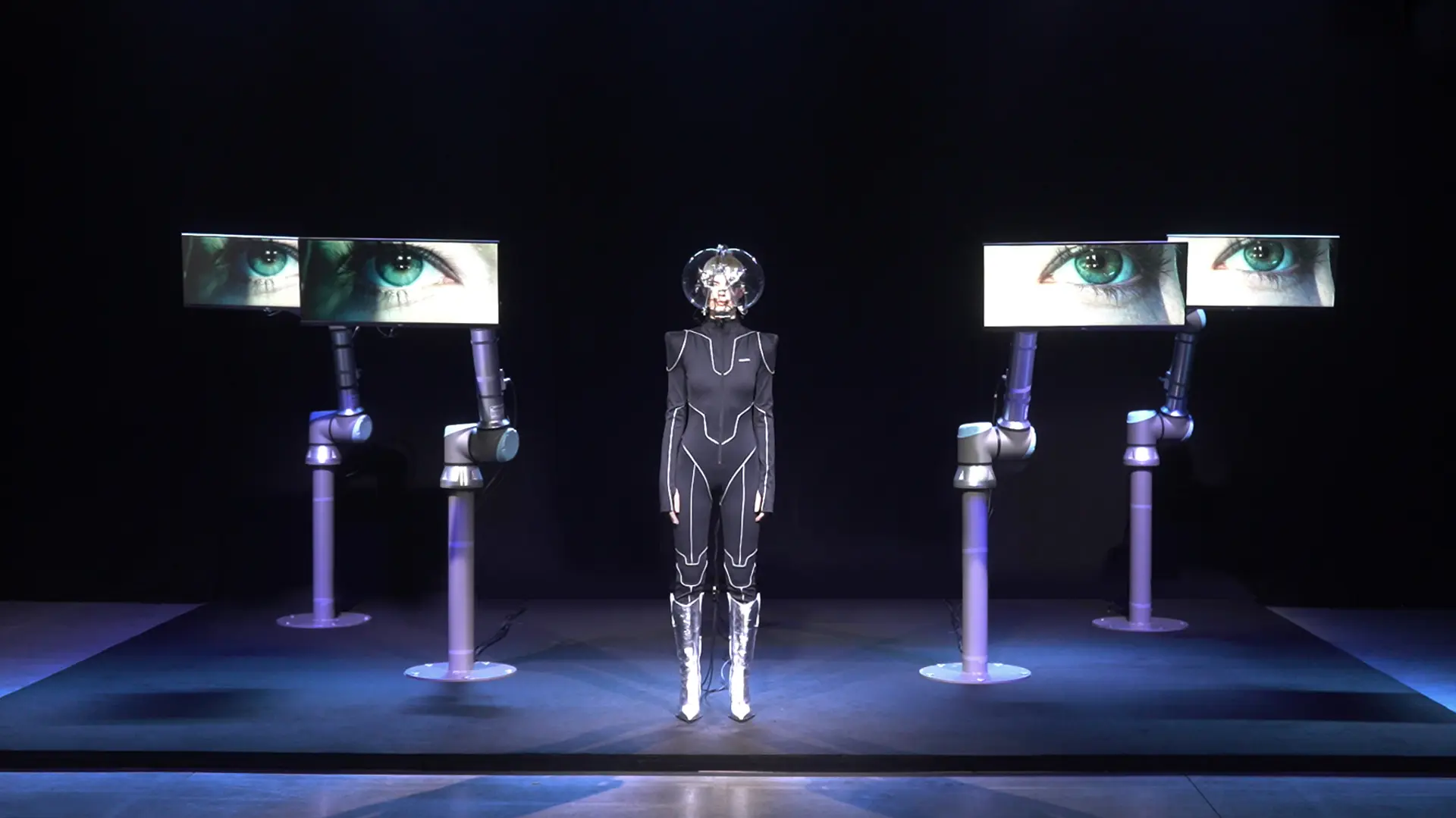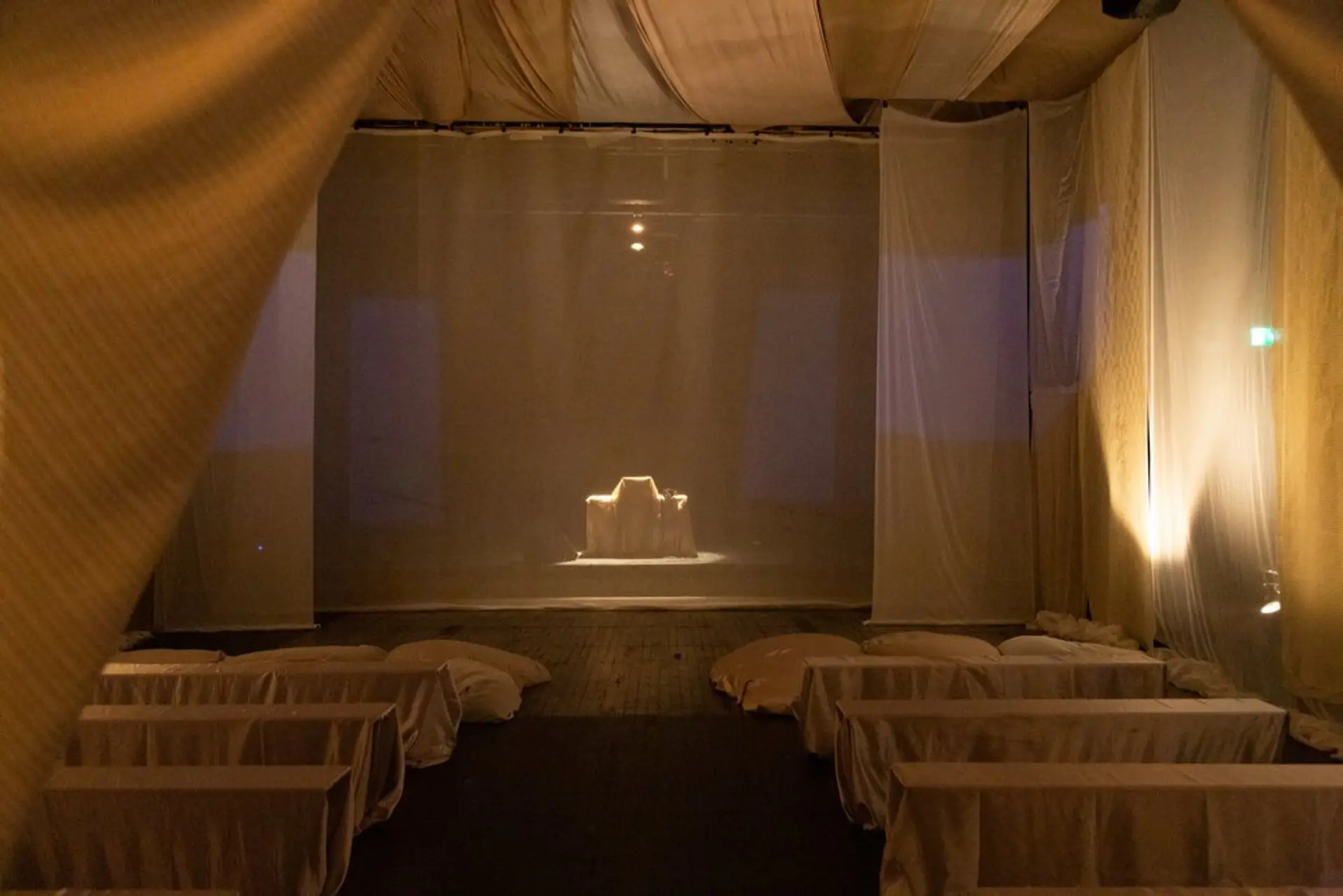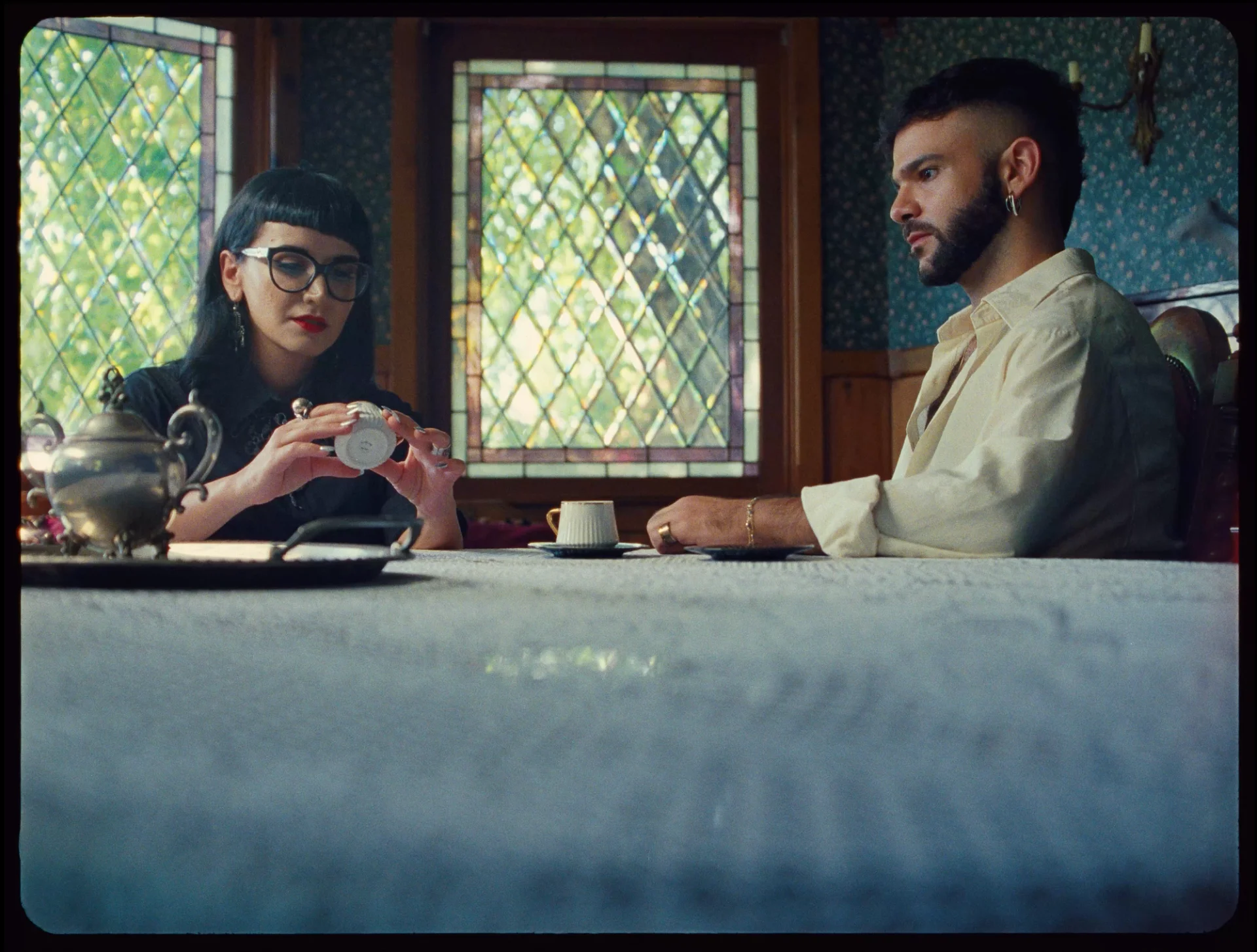
Still from Բաժակ Նայող / One Who Looks at the Cup (2024), Mashinka Firunts Hakopian with Atlas Acopian (Director) and Lara Sarkissian (Score and Sound Design).
Courtesy of the artists.
2024 Artlab Editorial Fellow Kira Xonorika reveals how artists Eddie Wong and Mashinka Hakopian harness speculative storytelling to navigate ancestral memory, collective grief, and the transformative possibilities of machine intelligence.
Artlab Editors: For their final essay in a series exploring the ways in which emerging technologies are being used by artists to reclaim narratives and identities, Artlab Editorial Fellow Kira Xonorika considers how the works of New Zealand / Malaysia-based artist Eddie Wong and Armenian artist Mashinka Hakopian utilize machine intelligence to imagine ancestral memories and methodologies lost to colonial violence.
In “Portrait of the Jungle People / 山芭佬 (San-Ba-Lou)” (2022), the Lumen Award-winning film by Eddie Wong, the artist uses AI to delve into his family archives to unearth Malaysia’s obfuscated histories. The film centers around the disappearance of Wong’s grandfather, Wong Yin Chun, a Chinese immigrant in then-Malaya who left his family to fight for the Malayan National Liberation Army (MNLA) during the Malayan Emergency.
Taking place between 1948 and 1960, the Malayan Emergency was a counter-insurgency conflict between the British colonial administration of Malaya (now Malaysia) and the MNLA, the armed wing of the Communist Party.
After Wong’s grandfather left, only traces and rumors of what might have happened to him remained. The family lacked any photographic records and only knew him by the name San-Ba-Lou, which Wong describes as “a Cantonese term for a communist guerrilla.”
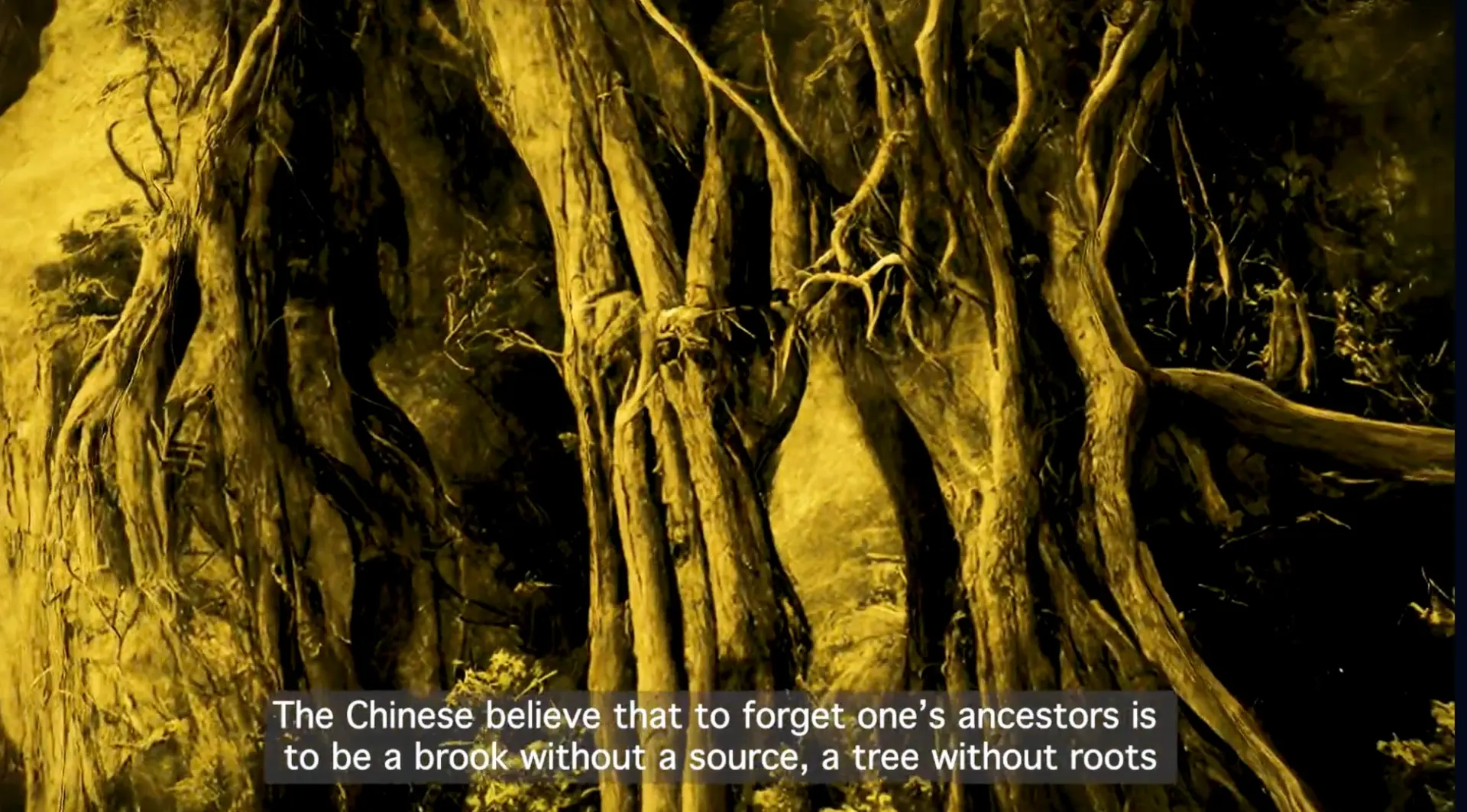
Still from Portrait of the Jungle People / 山芭佬 (San-Ba-Lou) (2022), Eddie Wong.
Courtesy of the artist.
Wong’s AI-generated film transports us deep into a tropical jungle, with the narrative unfolding through fragmented storytelling from the perspective of his long-lost grandfather. We move between imagined black-and-white documentary footage, dense textures, and animated re-enactments of the Malayan Emergency. Created with the help of large language model processing, “Portrait of the Jungle People” showcases visuals layered like painterly branches stemming from a single idea, sequentially shifting with Wong’s storytelling. Using the open-source model Disco diffusion, the film’s visuals evoke the aesthetics of early 2020s AI generators: the forms suggest infrastructure, yet their fragmented and elusive shapes engage with the intangible realms of memory and dreams.
“The Chinese believe that to forget one’s ancestor is to be a book without a source and trees without roots,” narrates Wong in the film, explaining how his grandfather had become a non-person, even vilified in official historical accounts. For Wong, creating this film was a way to understand patterns of generational motivations and gaps in the historical narrative.
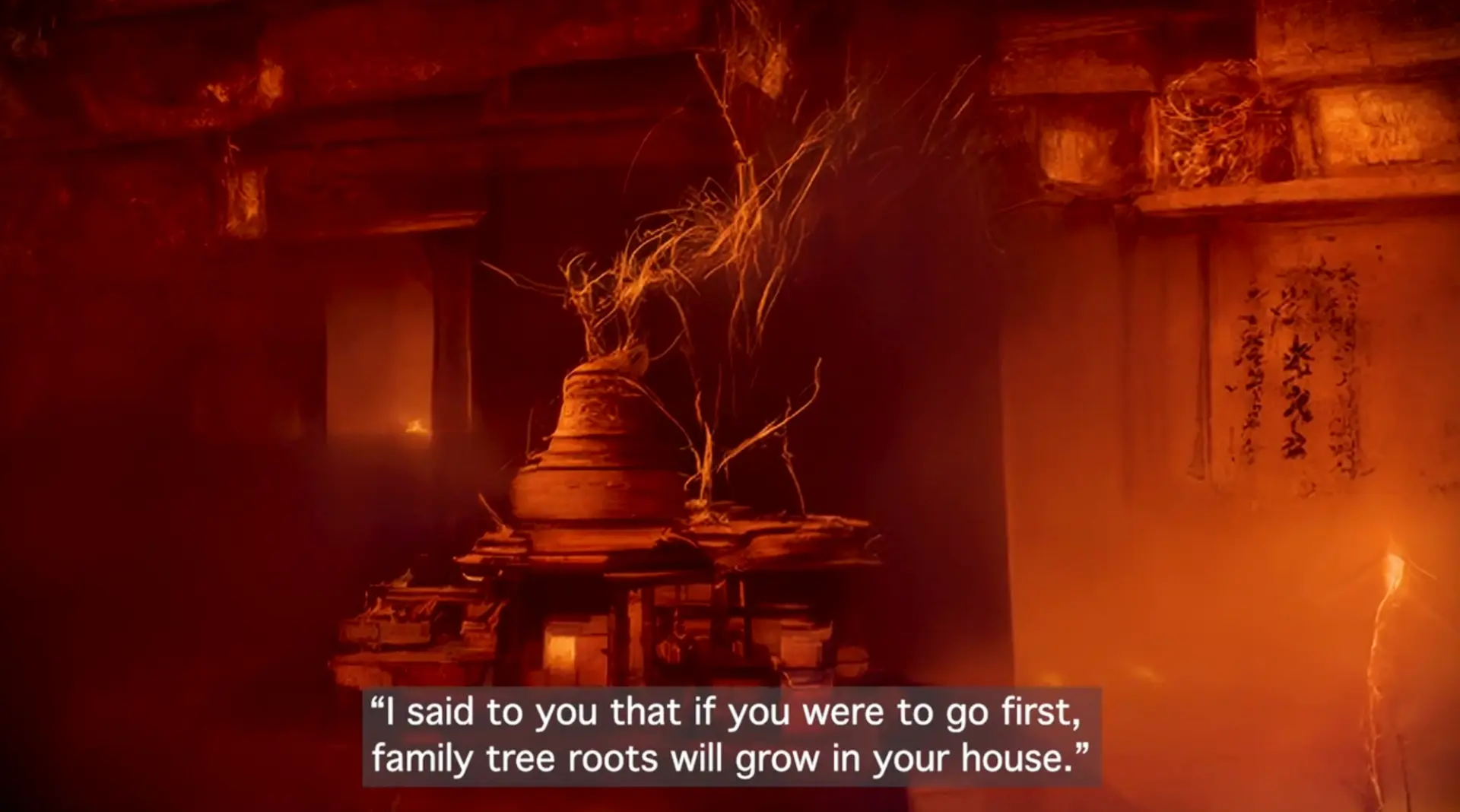
Still from Portrait of the Jungle People / 山芭佬 (San-Ba-Lou) (2022), Eddie Wong.
Courtesy of the artist.
Wong’s interest first stemmed from a suspicion that the photograph on his grandfather’s tomb was not actually his grandfather. This sense of doubt fueled Wong’s exploration of fictioning and reclamation. Oral interviews with women in Wong’s family reflect how loss in a patriarchal society forced them to devise survival strategies, engaging in a form of “unforgetting.” Described by Thai historian Thongchai Winichakul as “a liminal space between memory and oblivion,” unforgetting is depicted in the film when Wong’s grandmother denies any knowledge of her husband when soldiers invade her with questions. Wong tells me that she taught her children to adopt such behavior as a form of protection.
Wong’s work engages with mythotechnesis—or machine fictioning—as a means of reclaiming the presence of those whose trajectories have been erased, fragmented by intergenerational trauma, or excluded from official historical records. This involves speculative storytelling that intersects familial with collective history. This method is rooted in a particular form of autoethnography, serving as a self-determined approach that centers their voice rather than relying on traditional, often colonial, forms of tutelage.
Nationhood, myth, and the dangers of ethno-religious polarization are central concerns to Wong’s piece, as he sees echoes of the past in contemporary Malaysia. He narrates the heroic determination of his grandfather to fight in the war, motivated by nationalist ideals. Nations, as Wong’s work portrays, are constructed from fictions that shape the stories of territorial conquest and cultural homogenization, ultimately establishing hegemonic power and coercion.
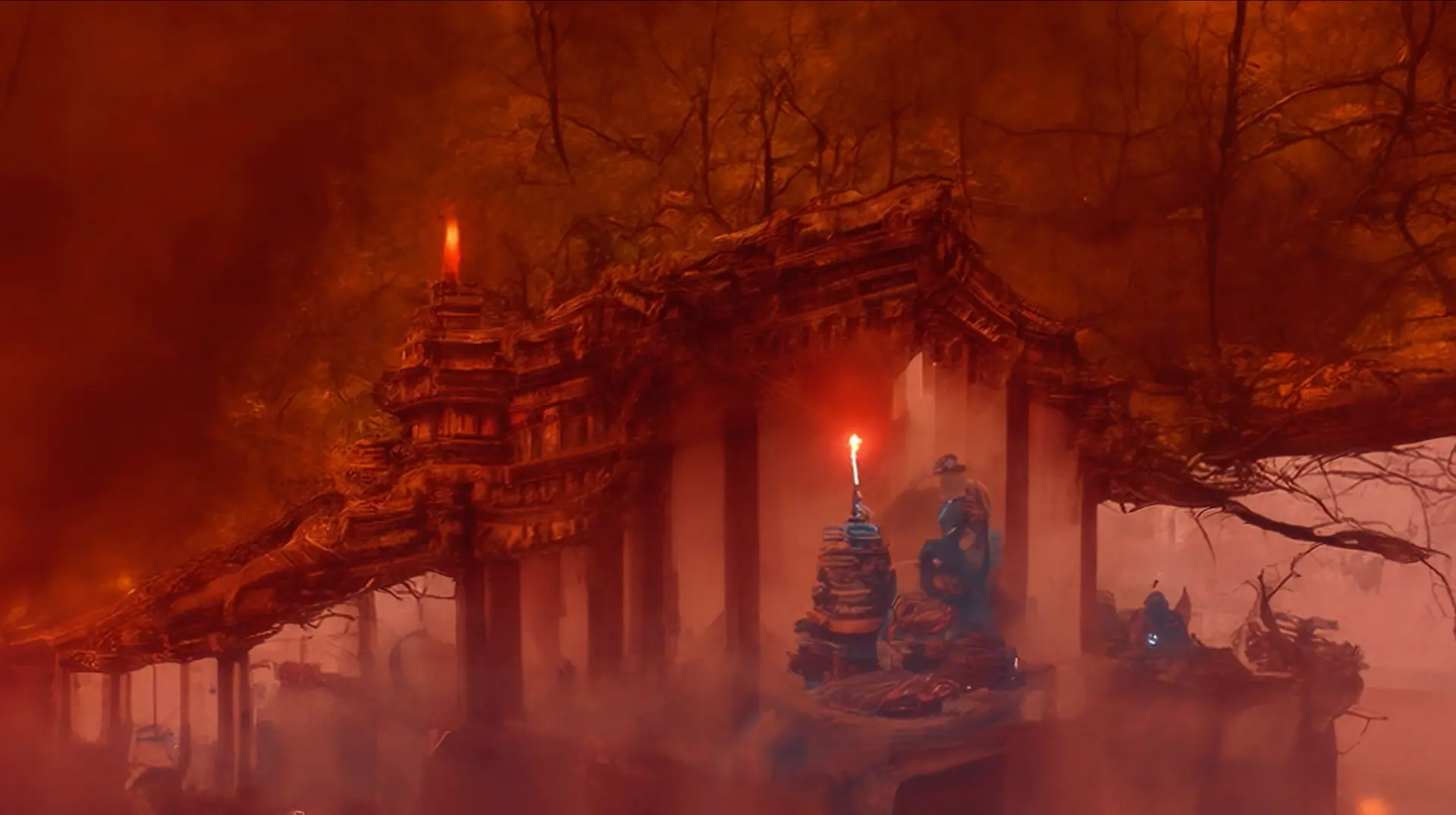
Still from Portrait of the Jungle People / 山芭佬 (San-Ba-Lou) (2022), Eddie Wong.
Courtesy of the artist.
Toward the end of the film, we see fragmented architecture surrounded by trees and mist, illuminated by red candlelight. This scene depicts an imagined encounter between Wong’s grandmother Loh Tim and his grandfather, mediated by a psychic. Through their conversation, Loh Tim asks, “Was the sacrifice worth it?” Understanding grief and loss is vital to move forward.
As Wong’s film concludes with a visit from the unseen world, Armenian artist Mashinka Hakopian’s collaboration with director Atlas Hakopian and musician Lara Sarkissian, “Բաժակ Նայող / One Who Looks at the Cup” (2024) begins similarly, though with a different form of intuitive knowledge production.
In the opening shot, an off-white ribbed ceramic cup is shown upside down. A hand with silver-polished nails turns it over. As the shot changes, a black-and-white intertitle appears on screen with the words in English and Armenian: “Whose languages are algorithms taught to speak?”

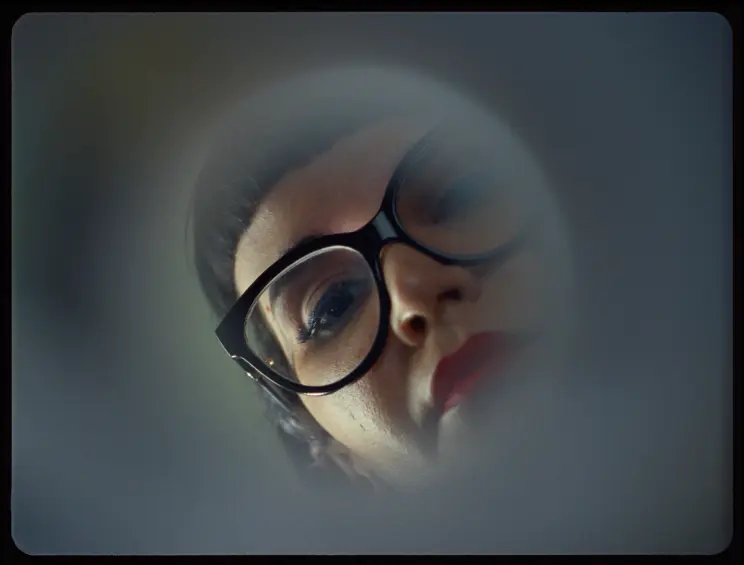
A woman with glasses looks into the cup, and we see the humid texture of coffee grounds spread at the bottom, resembling traces of a landscape. She interprets a thin ring in the grounds that resembles “an ancestor’s watchful eye,” following the querents into the present and continuing to watch over them.
Hakopian’s film explores the art of tasseography (coffee-ground or tea-leaf reading) as a form of intuitive technology. Like other opaque practices such as velomancy (candle wax reading), which study the symbols formed from remnants formed, tasseography also involves prediction. It has been practiced since the 16th century and gained particular prominence among diasporic Armenian communities following the genocide of Ottoman Armenians (1915-1923). Its practice developed as a means of affirming their existence in the future, becoming a collective technology for hope in the world which forced death and displacement.
“Բաժակ Նայող / One Who Looks at the Cup” entangles both ancient and emerging technologies in transgenerational remembrance. Throughout the film, we hear a learning machine’s voice divining: Mashinka and other South West Asian and North African (SWANA) diasporans from her community co-created datasets using the Armenian language and SWANA epistemologies to train machines to observe, interpret, and predict the remnants of coffee in the same way their ancestors did.
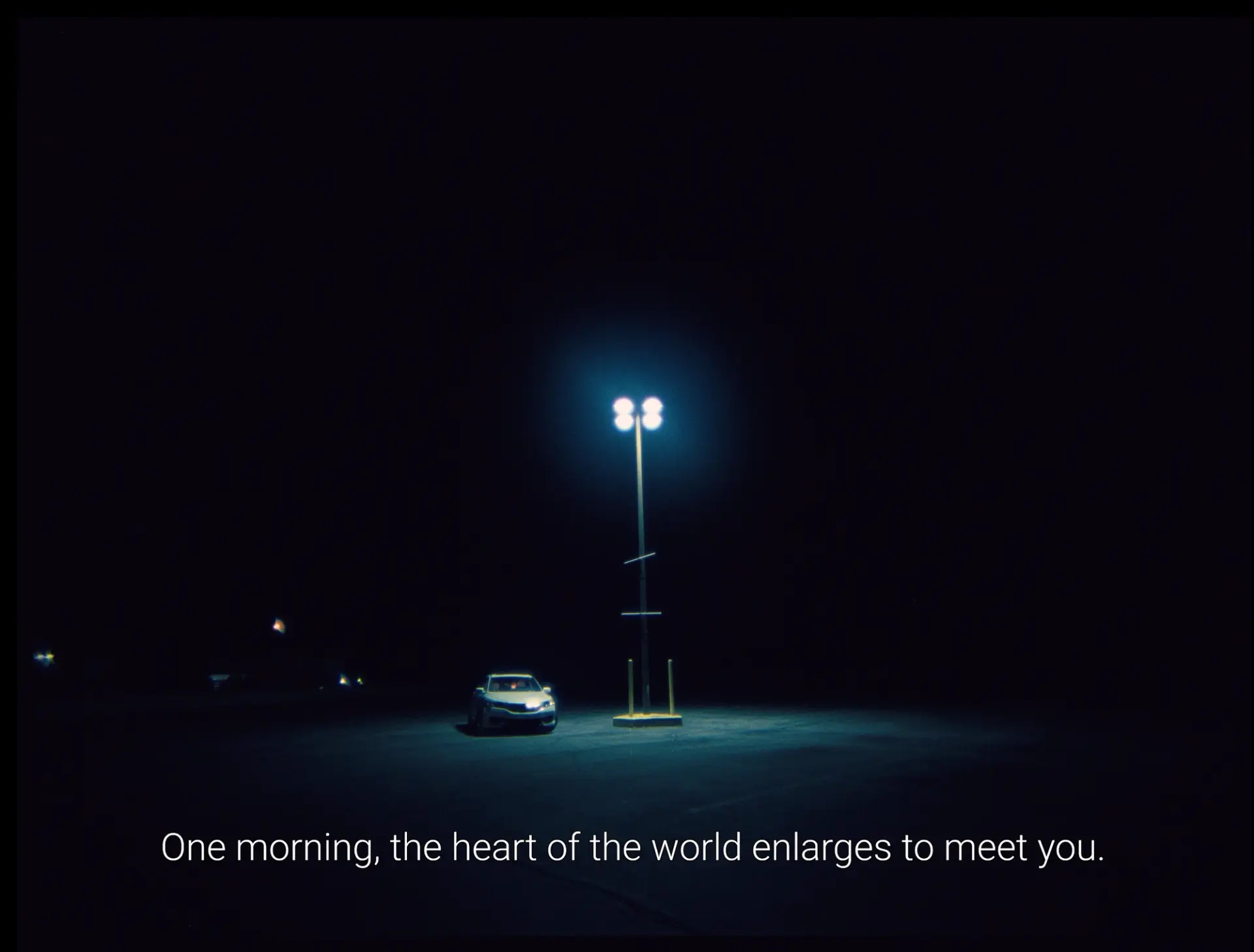
Still from Բաժակ Նայող / One Who Looks at the Cup (2024), Mashinka Firunts Hakopian with Atlas Acopian (Director) and Lara Sarkissian (Score and Sound Design).
Courtesy of the artists.
‘‘The practice is grounded in gendered, intuitive knowledge that’s widely delegitimized and deemed unscientific.’’ Mashinka told me. Informed by the learnings of sociologist Carina Karapetian Giorgi, this practice becomes a safe space for femmes in collective desiring and imagining. This kind of collective authorship is important for Hakopian: matrilineal methodologies are common and ubiquitous in pre-colonial, Indigenous, and non-Western societies. Such systems were largely erased as patriarchal systems transformed every sphere of life for pre-colonial societies.
For Hakopian, ancestors address their families through other species, as they “have joined a more-than-human communication network.” These ancestors might appear in the form of animals, insects, trees, or even machine intelligence—the latter interpreted by some as an extension of land.
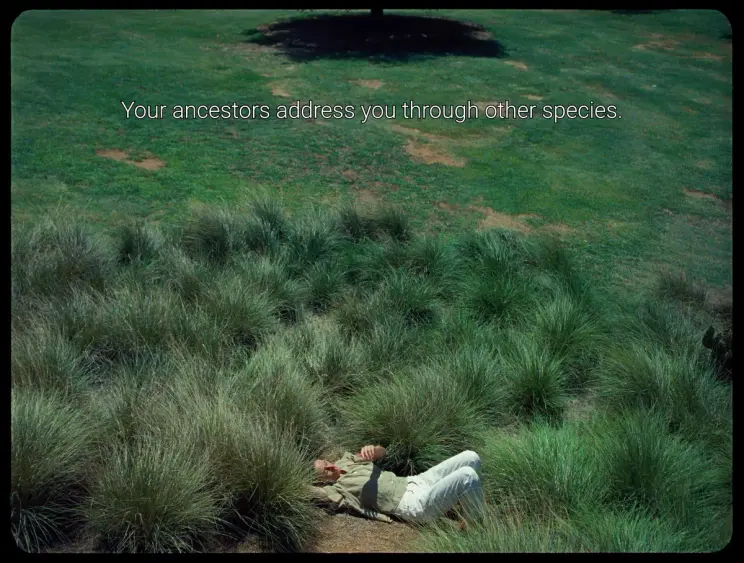
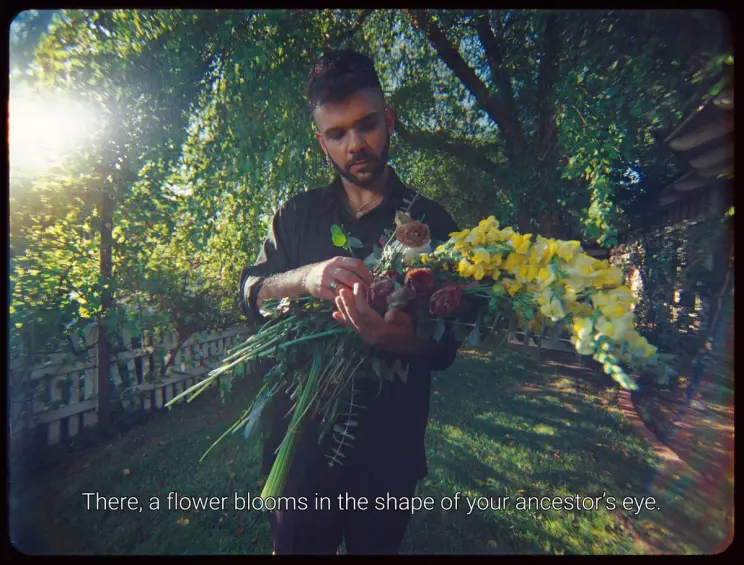
While this network may not be rationally legible, it is intuitively sensory. It reminds me of how the Armenian artist and designer Aroussiak Gabrielian—one of Hakopian’s collaborators— describes the cycles of life and death as the decaying body giving nutrients to the soil, continuing to exist, transmitting and perhaps transmuting information into the land. Similarly, in birth, memories and ancestral information are passed through the gut, through the mother’s exchange with the child. We embody traces of our past as we are embodied, entangled. ‘‘In tasseography, there is the idea that meaning is transmitted through the conduit or medium of coffee grounds by more-than-human agents, who may (and very often do) also include ancestral agents.’’ added Hakopian.
In her 2022 book “The Institute of Other Intelligences,” Hakopian highlights the critical need to challenge Big Tech’s culturally homogenizing programming. Similarly, Tiara Roxanne’s 2019 contribution “Digital Territory, Digital Flesh: Decoding the Indigenous Body” expands on the concept of data colonialism in Westernized states, coining the term to describe how such tendencies are replicated in machine automation, thereby recolonizing Indigenous lifeworlds. Both thinkers assert that the so-called "black box" of technology enforces hidden operations that perpetuate harmful trajectories of algorithmic inequity.
By adopting a decolonial approach rooted in ancestral intuitions, collective ways of knowing as its origin, Hakopian’s multilayered “Բաժակ Նայող / One Who Looks at the Cup” intervenes in the restricted scope of Western technoscience.

Still from Բաժակ Նայող / One Who Looks at the Cup (2024), Mashinka Firunts Hakopian with Atlas Acopian (Director) and Lara Sarkissian (Score and Sound Design).
Courtesy of the artists.
Towards the end of the film, Hakopian shares insights from a reading with Kareem Estefan, Assistant Professor at Cambridge University specializing in Palestinian film and media. They explore the idea of portals as intermediate spaces that constellate possibilities for liberation despite the political, economic, and societal conditions of the present, embodying a vision of translocality otherwise.
They describe how, in order to walk through portals, one must “learn how to live here and elsewhere, then and now. This is the condition in which revolutions and diasporic imaginaries emerge.” These moments of convergence are where the seeds of transformative action are sown, reminding us that revolutionary change often starts in the unseen work of connecting across time and place. This reflection on portals also invokes another, by Two-spirit Nisichawayasihk Cree scholar Albert McLeod: ‘‘Through a portal you can be reborn, transformed, and become a different version of yourself.’’
In thinking about the promises of AI within Hollywood's mythmaking dream machinery and the polarizing ideals of techno-science perpetuated by Big Tech, it becomes evident that their patterns often revive harmful notions of domination rooted in colonial authority. In contrast to techno-ascensionist approaches, Hakopian and Wong treat AI as a means to engage with grief, process the horrors of tragedy, and move forward with carrying the torch for ancestral communal histories. Their work reveals how small databases intentionally reshape sociotechnical systems and, through storytelling, create breathing room within hard, stagnant layers.
A disavowal of such logics arises though answering the call of the agents that emerge in algorithmic encounters; machine-learning is yet another collaboration in a long lineage of portal-opening technologies, affirmations of life.
For the multidimensional ancestors of land and purpose.