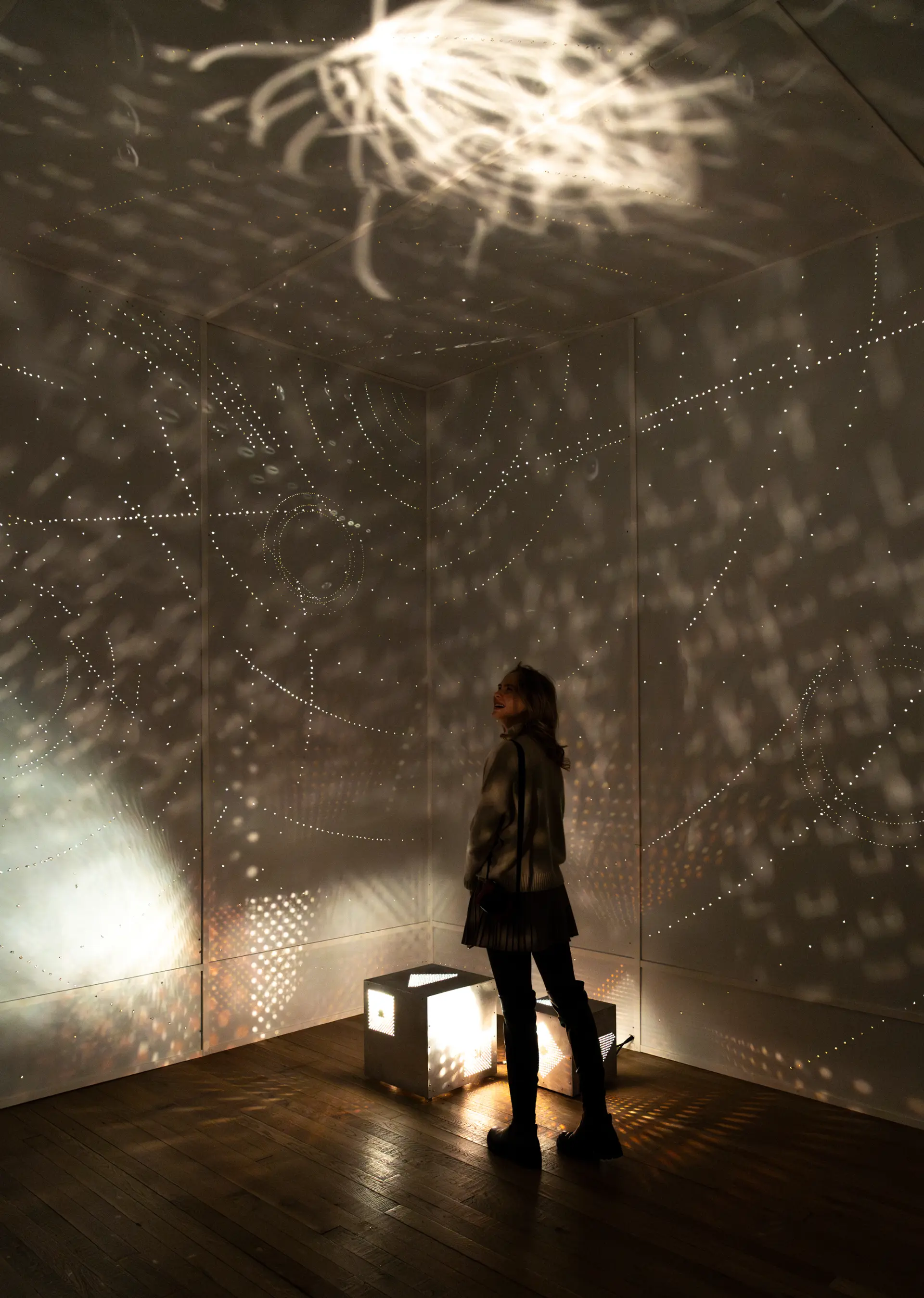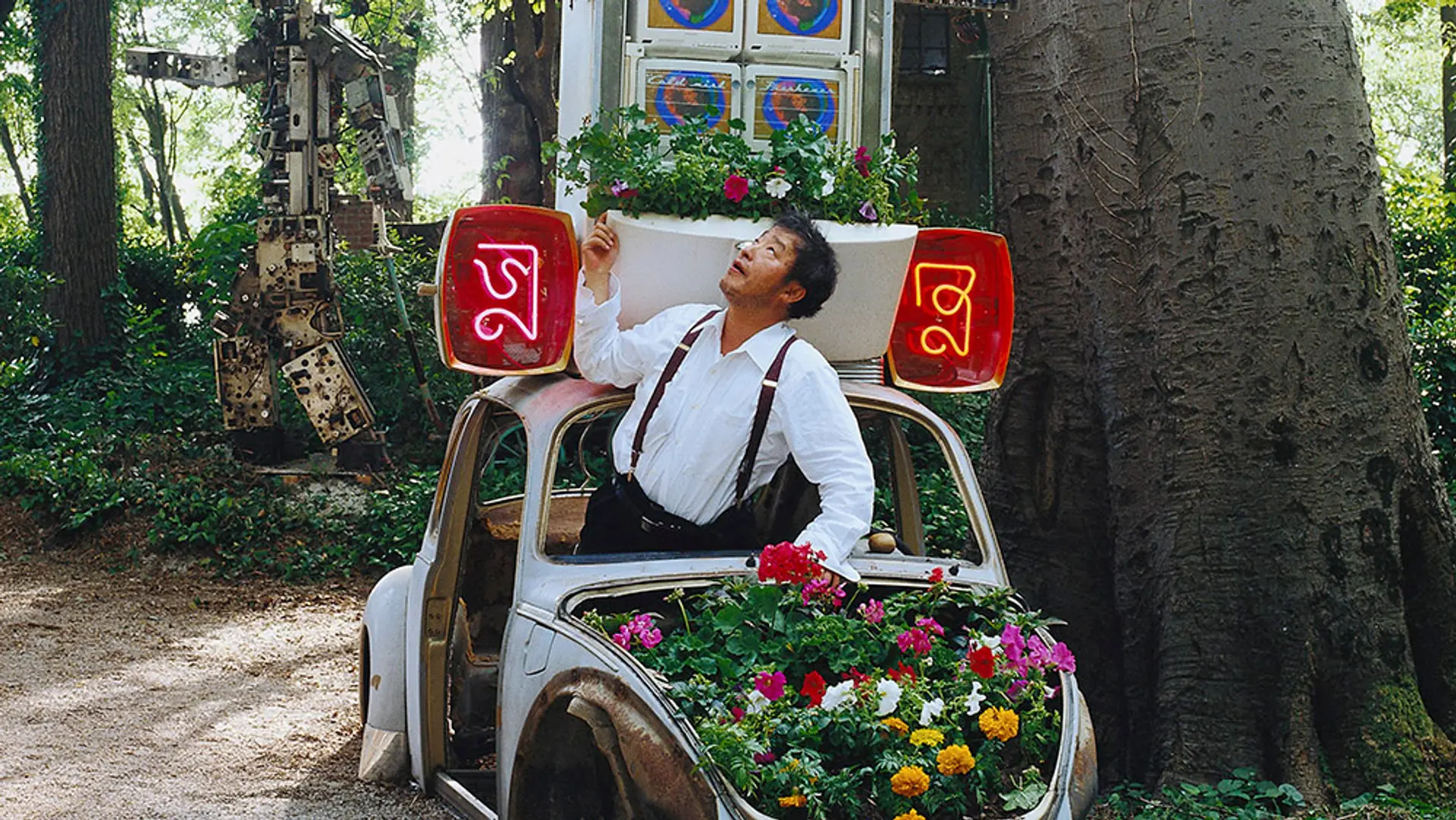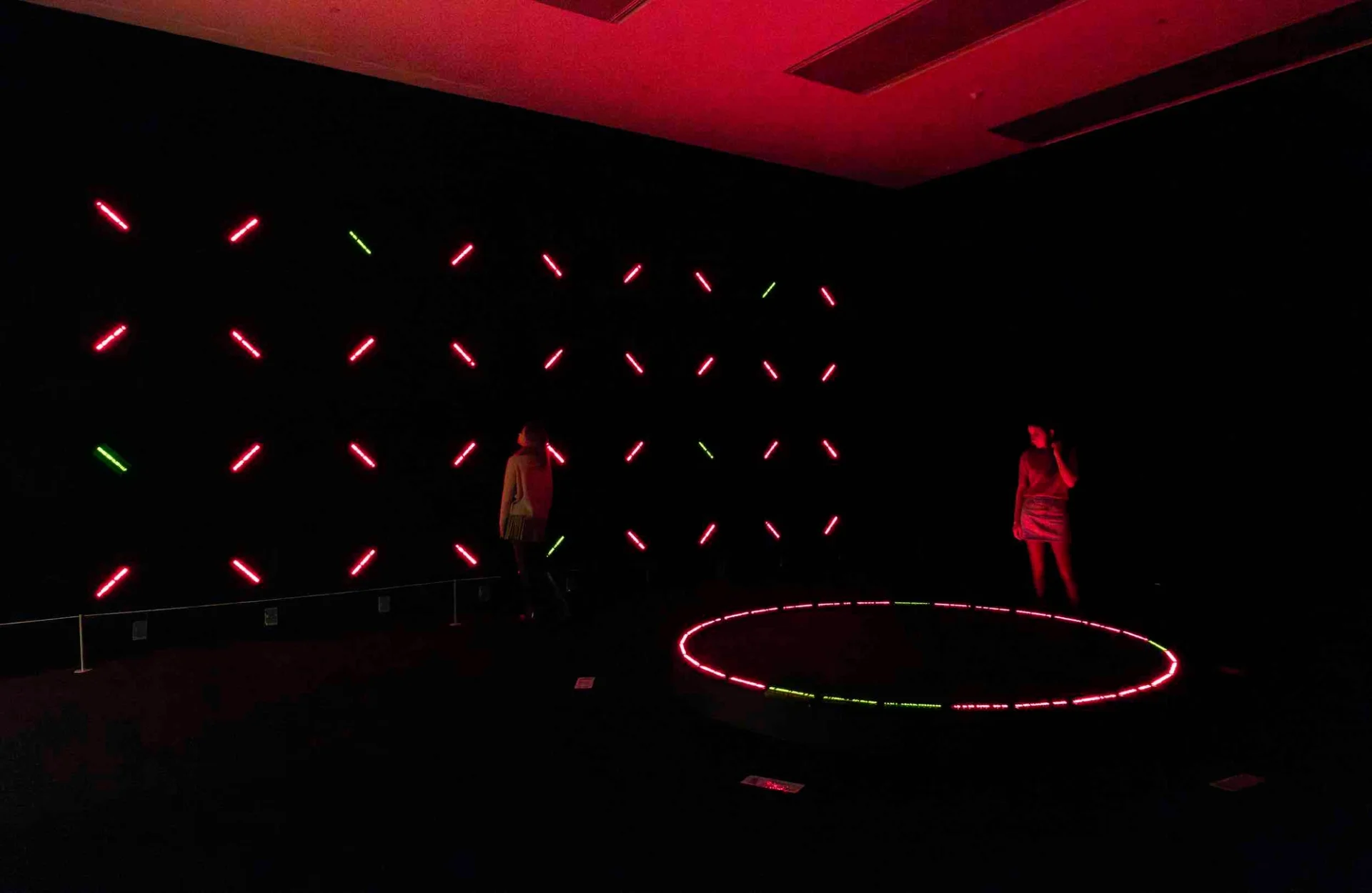
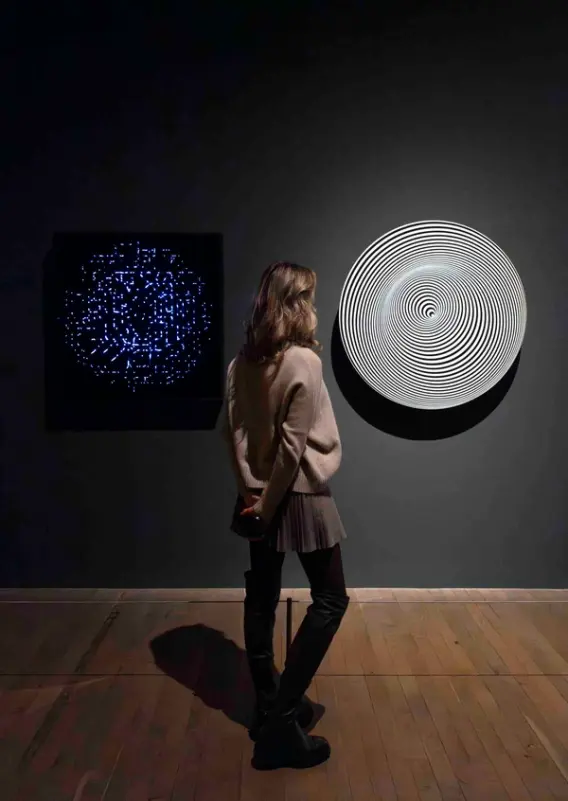
Tatsuo Miyajima, Lattice B, 1990 and Opposite Circle, 1991 installation view in Electric Dreams, Tate Modern, 2024. © Tatsuo Miyajima. Photo © Tate (Lucy Green)
Karen Archey explores Electric Dreams: Art and Technology Before the Internet at Tate Modern, an expansive, transnational exhibition tracing the global pre-Internet roots of media art through kinetic sculpture, cybernetic experiments, and immersive installations shaped by computation, collaboration, and critique.
Artlab Editors: Long before the advent of the internet revolutionized the way we connect across the world, artists throughout the 20th century took it upon themselves to intervene and experiment with emerging technologies in order to develop new transnational avant-gardes.
Electric Dreams: Art and Technology Before the Internet at Tate Modern is an ambitious catalog of such histories. As the former curator of contemporary art at Stedelijk Museum Amsterdam and the newly appointed head of the curatorial department at K20 K21, critic and editor Karen Archey walks us through the exhibition, lending her expert eye and contextualizing the show within the growing bevy of scholarship on the early history of art and technology.
Within this dizzying array, Archey advises visitors to take their time. “Such patience is well worthwhile as we ponder how these pasts reverberate into our present and future,” she writes.
Born from 2024’s The Dynamic Eye, a traveling exhibition first assembled by the Tate Modern on kinetic and op art, Electric Dreams: Art and Technology Before the Internet surveys the early history and evolution of art’s 20th century entanglements with technology. Comprising over 75 artists from around the world and divided into 15 rooms, this ambitious show includes works exploring cybernetic theories, seeking to position the field of art and technology as a transnational avant-garde.
In its charge to define the early history of art and technology, it joins a bevy of exhibitions from the last decade with similar aims. Take, for example Radical Software: Women, Art & Computing 1960–1991, curated by Michelle Cotton at MUDAM, Luxembourg and Kunsthalle Wien (2024-25); Thinking Machines: Art and Design in the Computer Age, 1959–1989, curated by Sean Anderson at the Museum of Modern Art, New York (2018), and Electronic Superhighway (2016-1966), curated by Omar Kholeif at the Whitechapel Gallery, London (2016).
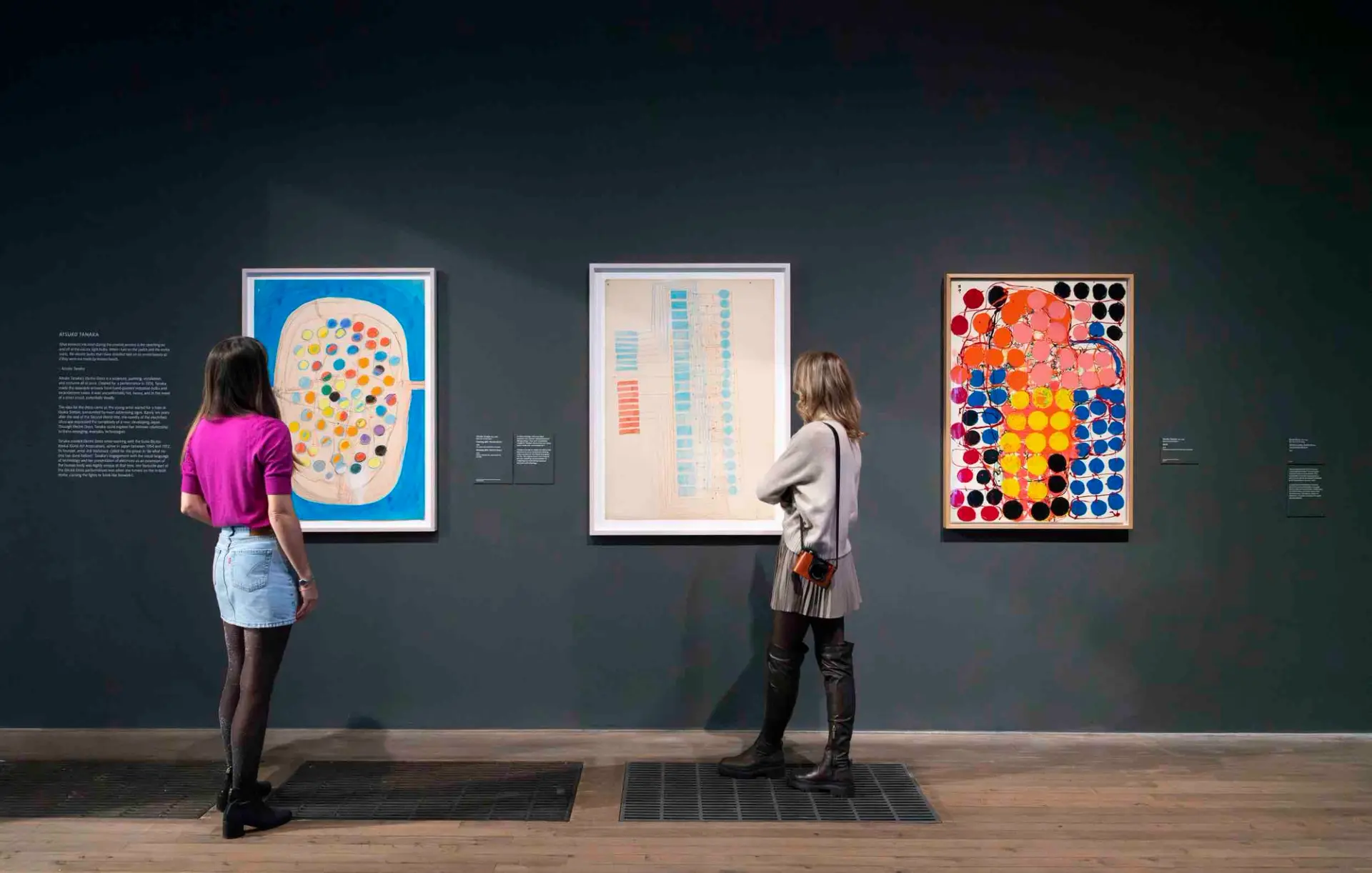
Tanaka Atsuko, Drawings after “Electric Dress”, 1956 and Work, 1957, installation view in Electric Dreams, Tate Modern, 2024. © Kanayama Akira and Tanaka Atsuko Association Photo © Tate (Lucy Green)
While there exists a plurality of such like-minded exhibitions, this shouldn’t suggest that any one of them are redundant. In actuality, pre-Internet-age art and technology is an exceedingly difficult topic to research: naturally its activities occurred before the internet and often amid art-adjacent industries (to include film, photography, engineering, and even military technology). Therefore, only a few of its key players are canonized into the traditional Western history of art.
The physical forms that such artworks take is fascinating to see: while one may expect an exhibition full of computers and screens, Electric Dreams: Art and Technology Before the Internet brings together mostly sculptural and paper-based works, most of which have been marked by a computational process. Some works combine the screen with sculpture, such as Katsuhiro Yamaguchi’s “Image Modulator” (1965), which places refracting glass in front of a cathode-ray-tube monitor. Others picture computation more directly: Desmond Paul Henry’s untitled 1962 ballpoint pen plotter drawing was made using a repurposed military bombsight computer, while Waldemar Cordeiro’s “People Ampli*2” (1972) is an early example of a digitally altered newspaper photograph, depicting a protest in São Paulo, Brazil.
The larger exhibition is organized roughly chronologically into thematic sections. Highlights include an introductory room with a note on Cybernetics (Atsuko Tanaka, Gustav Metzger), Dialogues with the Machines (Edward Ihnatowicz, Ben Laposky, Charles Csuri, Vladimir Bonačić, Lilian F. Schwartz), Electronic DIY (Nam June Paik, Lawrence Paul Yuxweluptun, Radical Software), and solo presentations by artists such as Tatsuo Miyajima, Katsuhiro Yamaguchi, Wen-Ying Tsai, Otto Piene, and Fleischmann and Strauss. The outsize presence of women artists and the reach of the exhibition beyond familiar Western canons and narratives is truly remarkable.

Electric Dreams: Art and Technology Before the Internet, installation view, Tate Modern, 2024. Photo © Tate (Lucy Green)
Thus, setting the Tate Modern exhibition apart is its attempt to define a truly global history of art and technology. Curated by Val Ravaglia, Curator of Displays & International Art with Odessa Warren, Assistant Curator of International Art, Electric Dreams: Art and Technology Before the Internet is marked by the curators’ interest in social and transnational art histories. A themed room focuses on the transnational experiment of the formative group of artists and engineers E.A.T. (Experiments in Art and Technology). The display centers on E.A.T.’s venture to the 1970 World Fair (Expo ‘70) held in Osaka, Japan. This exhibition would connect E.A.T. with the highly experimental Indian National Institute of Design (NID) in Ahmedabad, who later collaborated on the E.A.T.-organized project Utopia: Q&A 1981.
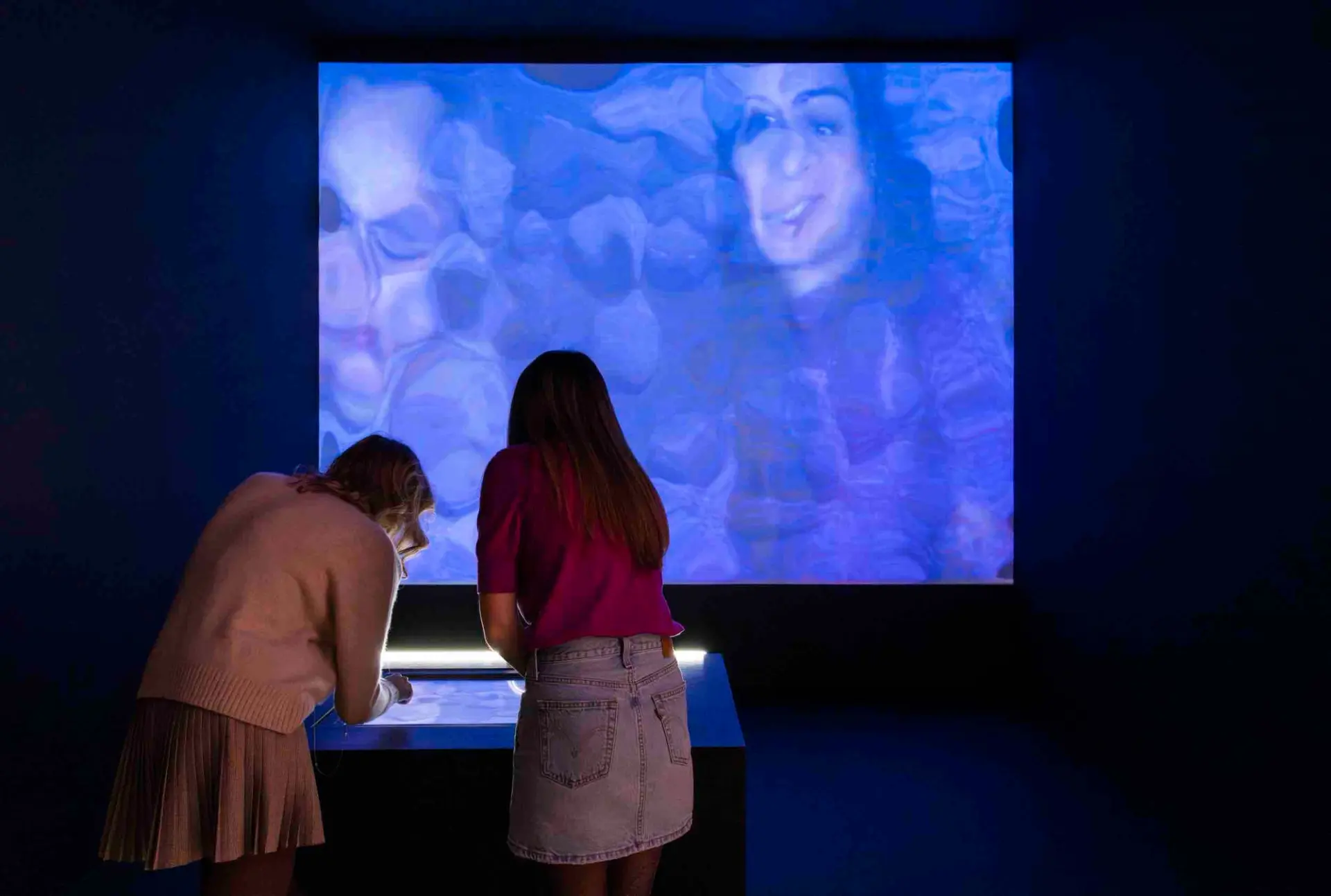
Monika Fleischmann and Wolfgang Strauss, Liquid Views, 1992, installation view in Electric Dreams, Tate Modern, 2024. © Monika Fleischmann and Wolfgang Strauss. Photo © Tate (Lucy Green)
E.A.T. offices in New York, Stockholm, Tokyo and Ahmedabad posed philosophical questions about the future to each other via telex—a pre-fax telecommunication system that sent text-based messages via telephone lines which were printed via teleprinter. The questions posed to respective E.A.T. members ranged from existential and auspicious to practical, and playful. From the artists Chandra and Dashrath Patel in Ahmedabad: “If there was an effort to have a new tele-communication language for the whole world, wouldn’t the human understanding be more direct, especially in view of the satellite broadcasting?” And a perhaps less philosophical question, also posed by the Patels: “Would we be able to think of food from health instead of consumer-product angle? Would it be possible to protect human health from stuff like white-bread, white-sugar, tomato sauce?” Aesthetic experiences such as reading these exchanges help the viewer connect the historical moment—over 50 years ago in Ahmedabad—with our contemporary present. History is not necessarily something we look back upon, but a continuum within which we all exist.
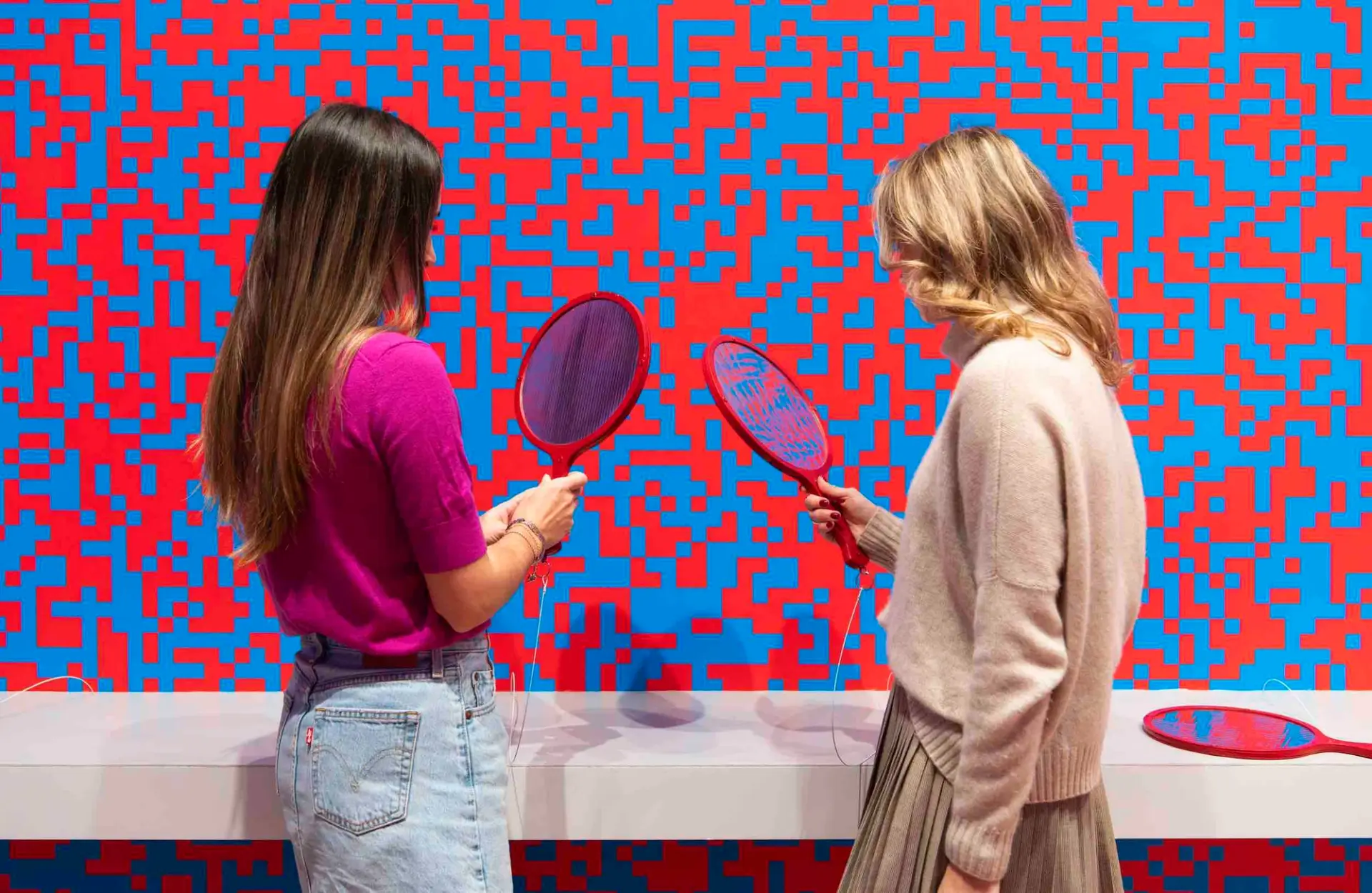
François Morellet, Random distribution of squares, 1963 and Julio Le Parc, Double Mirror, 1966, installation view in Electric Dreams, Tate Modern, 2024. Photo © Tate (Lucy Green)
In addition to the many sculptures and works on paper comprising Electric Dreams: Art and Technology Before the Internet were immersive environments and installations, such as those by the Parisian Groupe de Recherche d’Art Visuel (GRAV) and Carlos Cruz-Diez. A dizzying blue-and-red wallpaper by François Morellet, presented as part of a GRAV labyrinth in the 1963 Paris Biennale, can be viewed through a variety of altered handheld mirrors (“Four Double Mirrors”, (1966)) which were designed by GRAV member, Argentinian artist Julio Le Parc. The subsequent room finds Carlos Cruz-Diez’s “Environnement Chromointerférent”. In this environment multi-colored stripes are projected onto the blank canvas of a completely white room fitted with balloons and large rectangular plinths. This work was originally installed with 35-mm slide projectors in Paris in 1974, and recreated for Tate Modern with contemporary technology, namely computer software and LED video projectors.
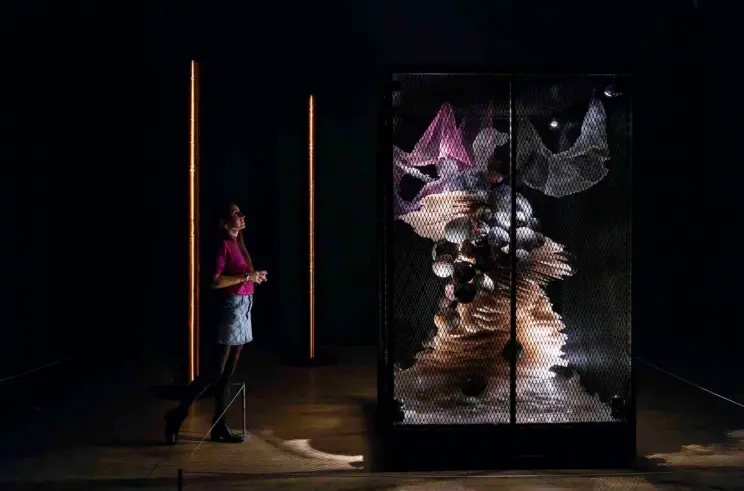
Any art exhibition featuring technology, especially decades-old technology, is difficult to present, contextualize, and maintain—particularly in a heavily trafficked museum serving broad audiences like Tate Modern. This is indeed one of the exhibition’s core challenges: Electric Dreams: Art and Technology Before the Internet vacillates between text-heavy displays and moments of lightness, which often creates a disjointed viewing experience. At best, the installations can be seen as historical precedents for an era of museums besieged by the need for experience-forward installations tasked with attracting the broadest spectrum of viewers: Yayoi Kusama’s “Infinity Rooms” and Olafur Eliasson’s “The Weather Project” are but two outrageously successful versions of this.
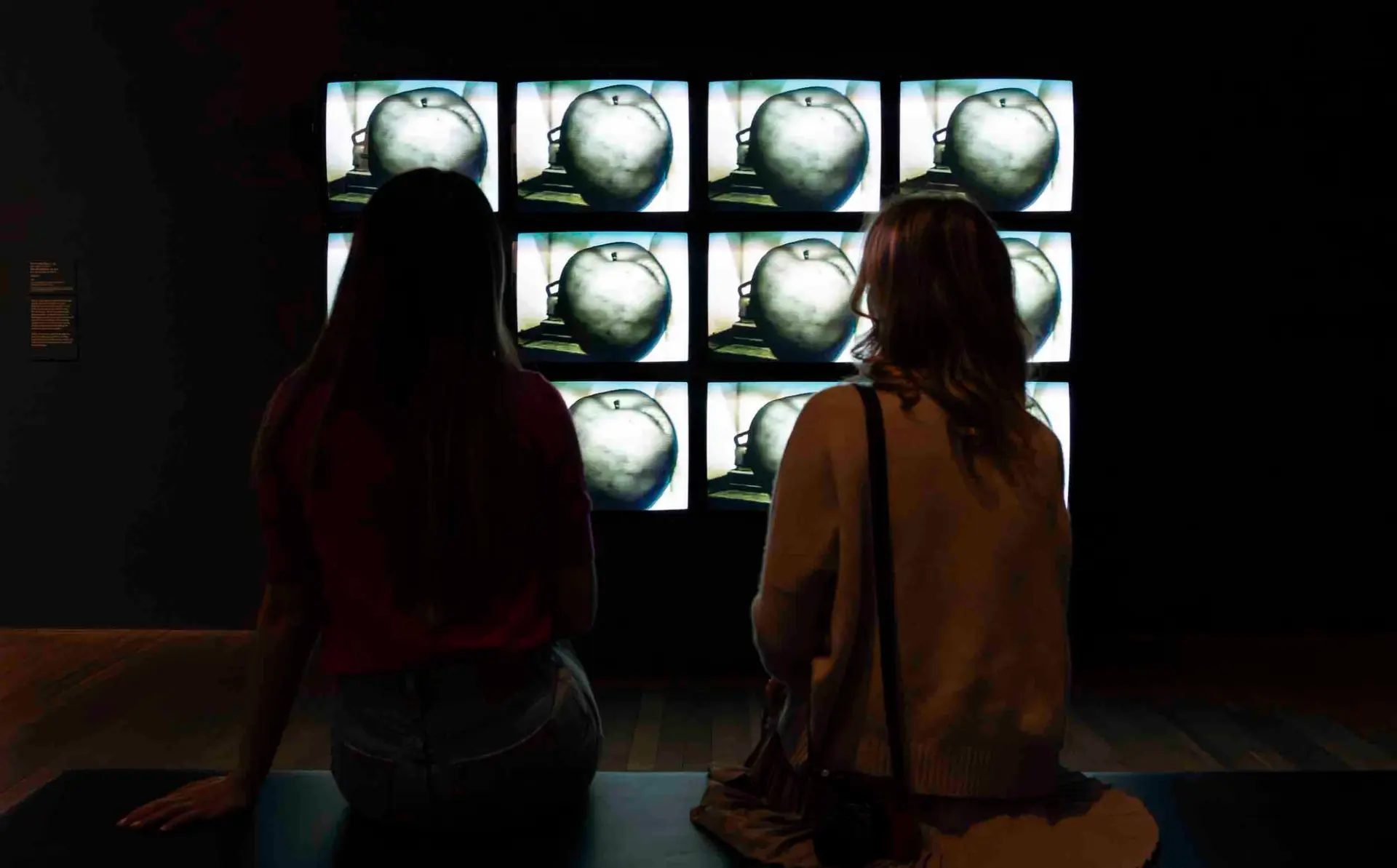
Woody Vasulka and Steina Vasulka, Matrix II, 1974, installation view in Electric Dreams, Tate Modern, 2024. Photo © Tate (Lucy Green)
A more critical perspective would suggest that the GRAV and Cruz-Diez installations invite the viewer to walk through, rather than sit with, the critical discourse underpinning the exhibition: for example, the intertwinement of military history with that of technology, the collective nature of working creatively with complex technologies, the unusual transnational character of this particular art history, and the evolution of the advanced technologies, such as AI, that now play a crucial role in our everyday lives. Within this context, it becomes all the more crucial for audiences to experience the works of Electric Dreams: Art and Technology Before the Internet—to give them the time, space, and consideration they deserve. Such patience is well worthwhile as we ponder how these pasts reverberate into our present and future.