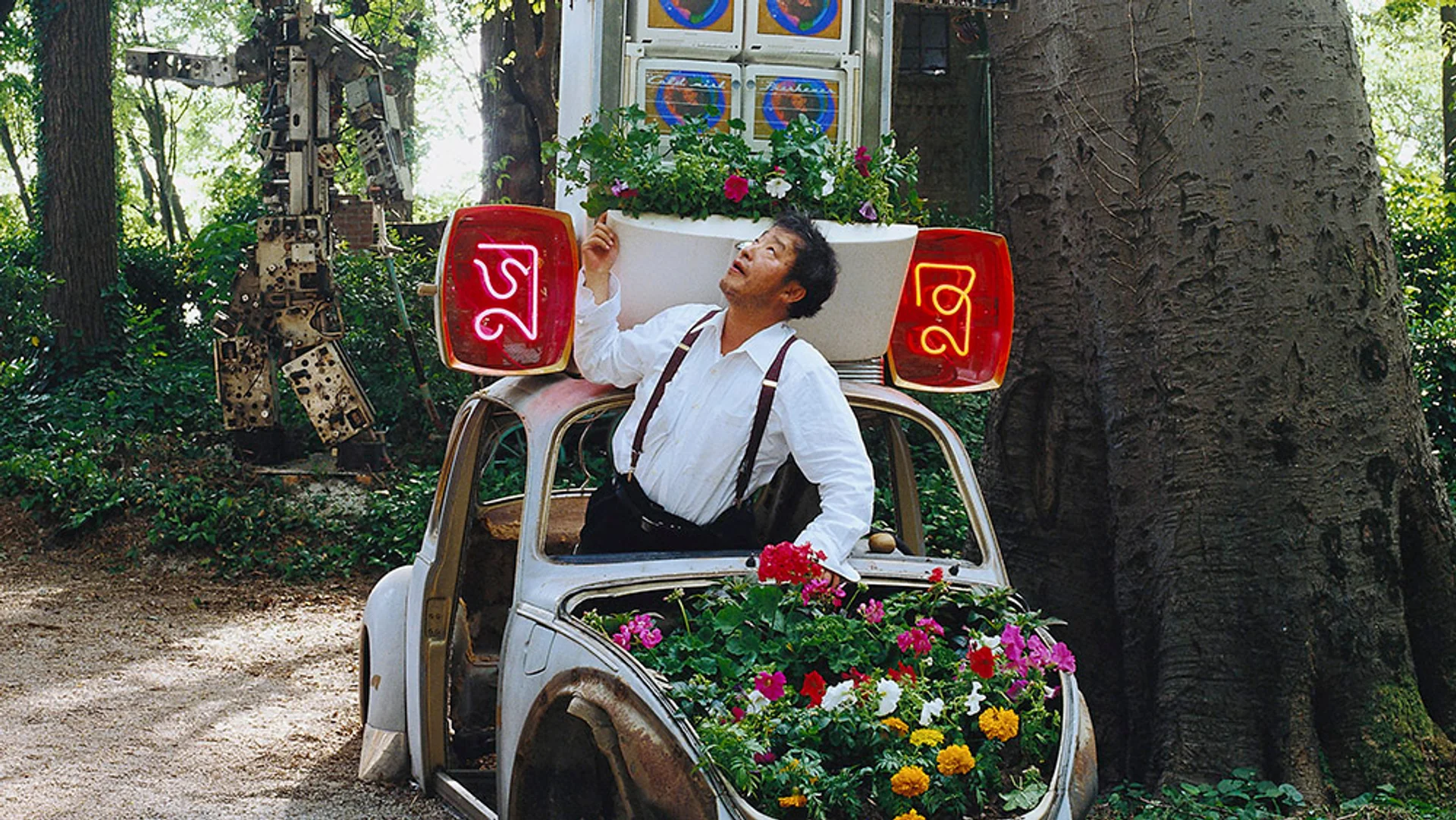
Nam June Paik, German Pavilion: Marco Polo, 1993.
Photograph: Roman Mensing/romanmensing.de © Nam June Paik
Celebrating the 30th anniversary of the Korean Pavilion, “Every Island is a Mountain” at the Palazzo di Malta.
Artlab Editorial explores Every Island is a Mountain at Venice's Palazzo di Malta, which celebrates three decades of the Korean Pavilion at the Venice Biennale. Using the metaphor of an island as the peak of an underwater mountain range, the exhibition showcases the evolution of Korean art on the global stage, sparked by visionary artist Nam June Paik. Featured artworks tackle pressing themes—from technology's double-edged sword to environmental challenges—capturing the dynamic interplay between past, present, and future, while highlighting a path forward through artistic collaboration and global dialogue.
The myth of the island as a singular entity surrounded by water functions to obscure the cumulative efforts of matter, geology, and time working together in collaboration. The truth of an island is that underneath the water’s surface lies a mountain range. This geologic fact forms the metaphorical framework for Every Island is a Mountain in the Palazzo di Malta, a 12th century church situated in the heart of Venice’s old Castello district.
Through this structure of archipelagic interconnectivity, the exhibition explores 30 years of the Korean Pavilion in Venice, excavating the underlying common ground between its artists. Organized in parallel with the opening of this year’s Korean Pavilion exhibition, KOO JEONG A’s ODORAMA CITIES, Every Island is a Mountain is a testament to the enormous growth of Korean art on the global stage in the last three decades and reveals how the artists each operate as their own islands—ostensibly singular but in reality, all connected through space and time.
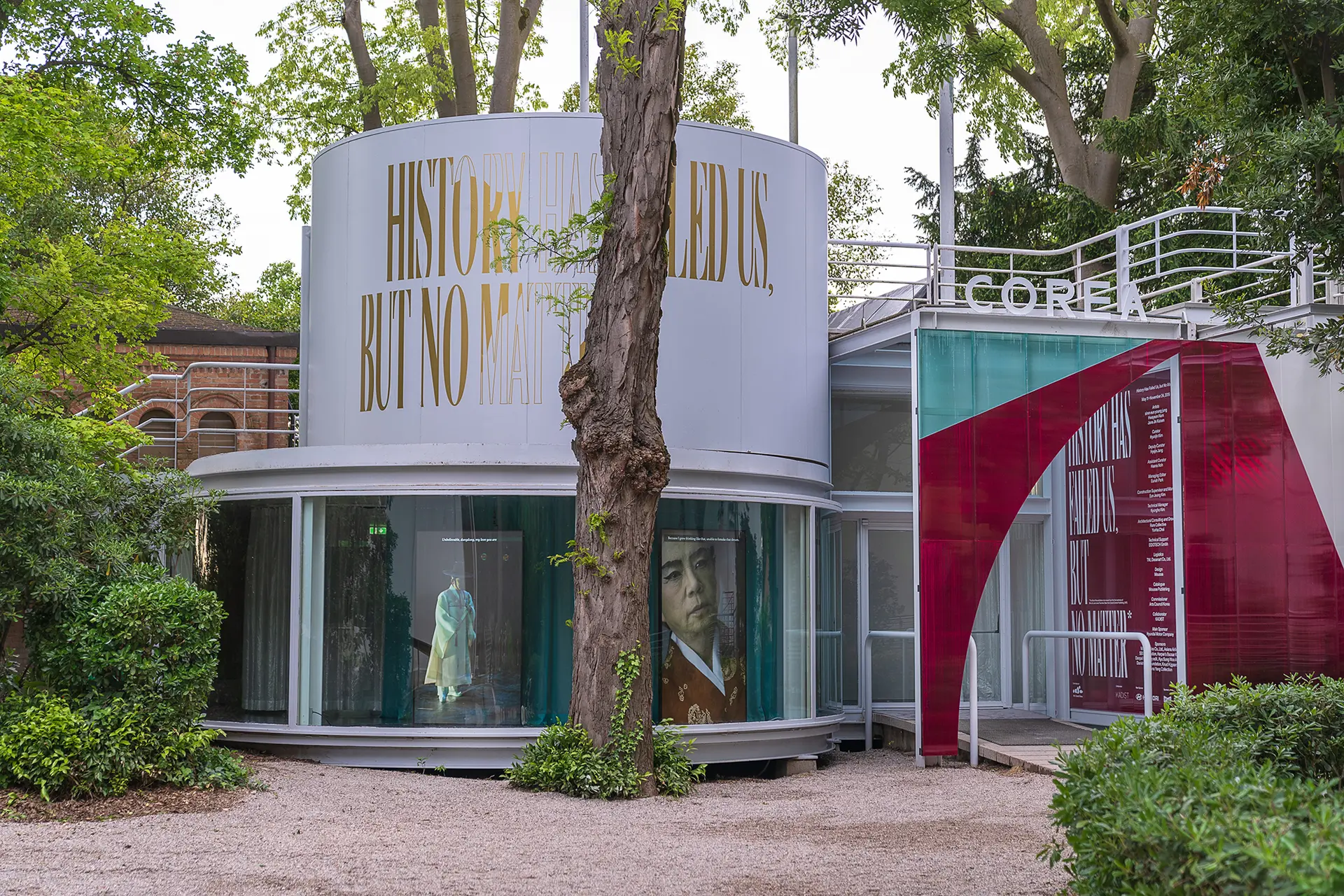
Exhibition view of the Korean Pavilion at the 58th Venice Biennale.
Courtesy of ARKO Arts Council Korea.
Since its inauguration, the Korean Pavilion has had a particularly future-minded ethos, likely owed to the influence of Nam June Paik in the pavilion’s founding. Dismayed at not being able to represent Korea at the 1993 Venice Biennale, Paik began a dogged campaign to establish a distinct place for Korean art on the global stage. He succeeded, and by 1995, Korea became the final pavilion erected in Giardini Park.
Every Island is a Mountain is a reflection of Paik’s vision of art as a unifying force capable of connecting individuals and uniting diverse societies. Whether unpacking histories, engaging with ecology, or pondering the vagaries of technological advancement, the Korean Pavilion and its artists have steadfastly interrogated and imagined possible futures for the past 30 years.
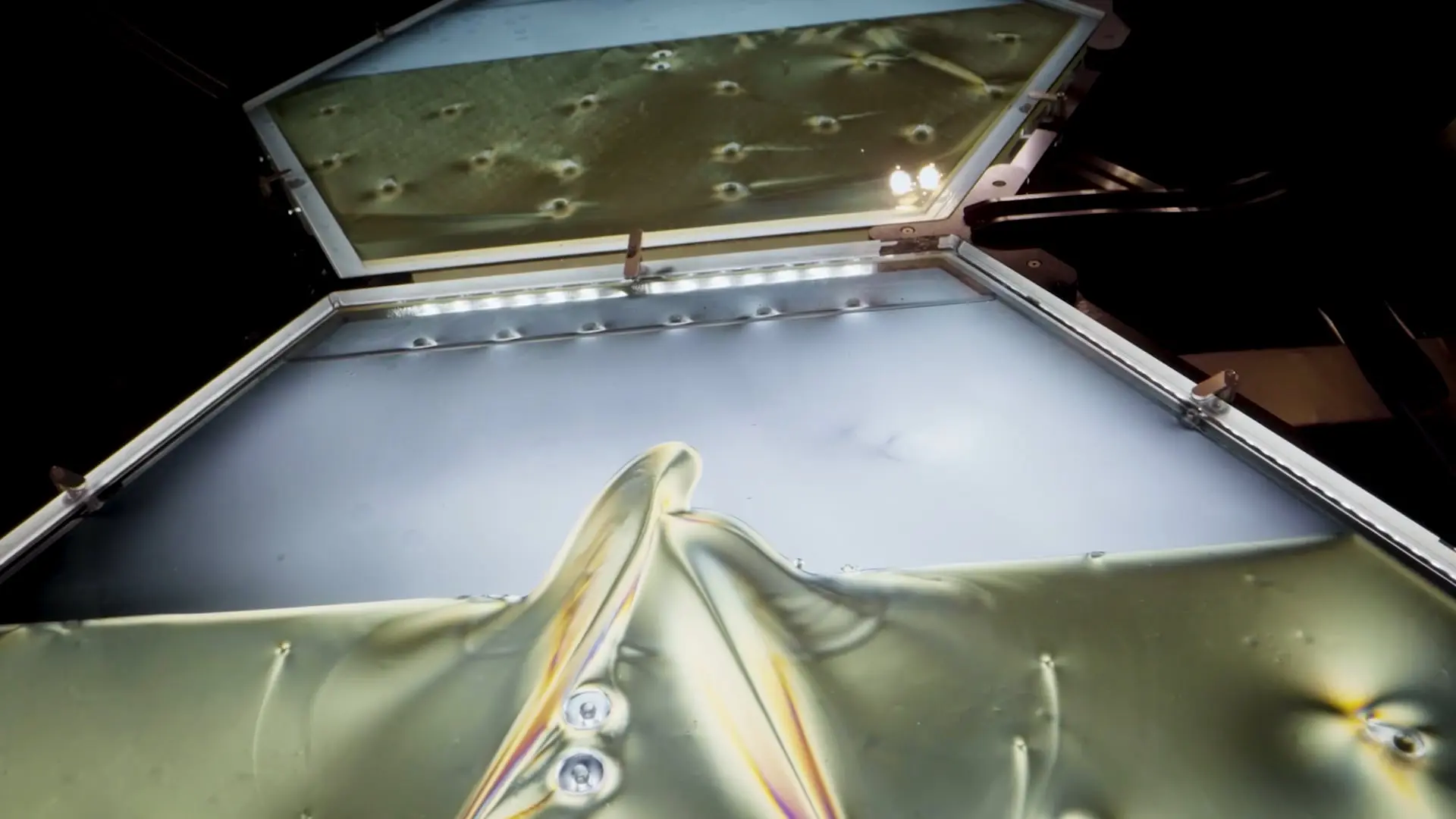
Originally shown at the 1995 Venice Biennale and revisited as part of Every Island is a Mountain, Jheon Soocheon's T’ou Amongst Wandering Planets: Spirit of the Korean People helped set a boundary-breaking, forward-looking, and introspective tone for the Korean Pavilion. Reflecting on the tumult and cultural contradictions in the wake of Korea’s rapid modernization, Jheon placed clay figurines among glowing television monitors on a glass floor covered in industrial debris, wires, and other material cacophony. Through this immersive experience, Jheon expresses the colliding realities of a Korea hurtling towards an uncertain future at an unprecedented pace, offering a moment of stillness amid the buzzing chaos.
Elsewhere, Choi Jeong Hwa’s nATuReNuRture (2024) and Inkie Whang’s Hey, buddy (2023) takes an archaeological position, observing the present as if it were the past. Building on his ongoing engagement with plastic to interrogate the myth of modernity, Choi’s nATuReNuRture adopts styrofoam wreckage as a potential site for spirituality and beauty. These stacked, white, boulder-like forms appear like washed out, post-apocalyptic versions of Ugo Rondine’s Seven Magic Mountains (2016). Made of marine debris foraged by local university students along Korea’s coasts, nATuReNuRture questions the ostensible role of humans as we further enter the anthropocene.
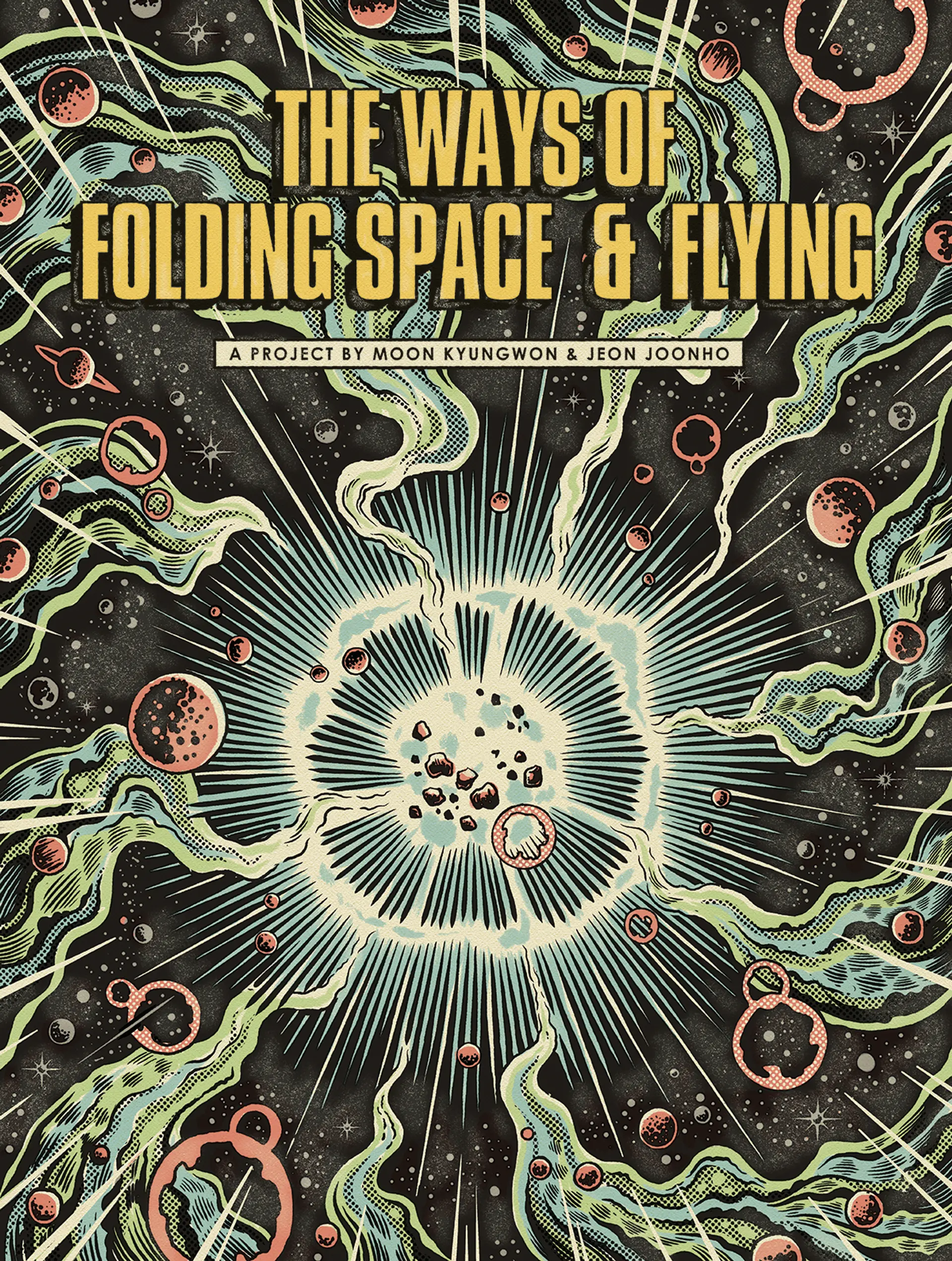
Web-Poster from the Korean Pavilion at the 56th Venice Biennale.
Courtesy of The Korean Pavilion Curatorial Team at the 2015 Venice Biennale.
Similarly, Whang’s digital painting takes the vantage point of our landscape seen 50 and 5,000 years from now. Inspired by Joseon-era literati paintings, Hey, buddy reflects similar conflicting timelines that Jheon's T’ou Amongst Wandering Planets explored.
Other works, meanwhile, provide cautionary critiques for the future. Two artists, in particular, offer sobering analysis of social media and technology. Lee Yongbaek’s videos drape an iconic blue system error screen over some of the most recognizable works of western art (Auguste Rodin’s The Thinker, Alexandros of Antioch’s Venus de Milo, and Michelangelo’s La Pietà), rendering them invisible. Created in the midst of the COVID-19 pandemic and the sudden speculative frenzy around the NFT market, Yongbaek’s series underscores the obfuscating effects of technology and the system errors made clearer and exacerbated by the pandemic.
Meanwhile, Nakyoung Sung’s Raving (2022) takes inspiration from social media, mood boards, and internet subcultures to demonstrate the paradoxical effects of the internet as an instigator of both connection and isolation. Featuring a jolting soundtrack, Sung’s work humorously examines the whiplashing extremities and chaos of contemporary internet culture.
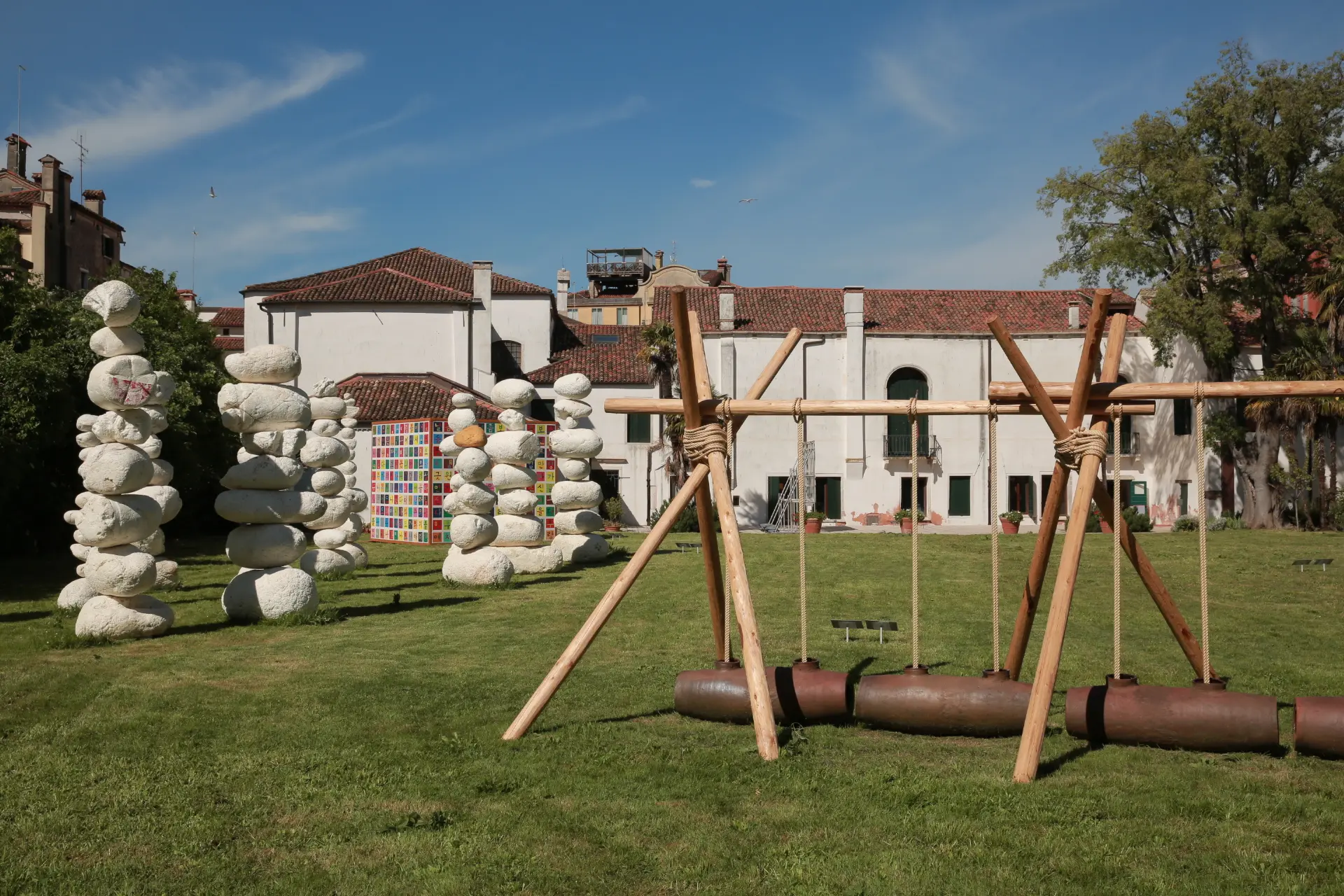
Every Island is a Mountain, 2024. Installation view.
Courtesy of Arts Council Korea. Photo: Park Jimin.
Through these works, the artists of the Korean Pavilion have allowed us to think about all the nuanced possibilities for the future, that we might imagine something greater than the present for Korea and beyond. As Every Island is a Mountain explores the last 30 years of the Korean Pavilion, it is impossible to not also consider the ways in which Korean art and culture has developed on the global stage since 1995.
Narrated by AI-generated and animated docents, Lee Wan’s uncanny film KonneXus (2024) reaches into a very near future to reflect on exactly this. Presented as a didactic video introduction to Every Island is a Mountain, KonneXus interviews Professor Kyoo Lee—a philosopher, poet, and critic at the City University of New York—on the history of the Korean Pavilion and the works on view. “The founding of the Korean Pavilion at the Venice Biennale in 1995 could, in a way, be seen as the leap and development of Korean contemporary art,” explains Lee, green screened over virtual architectural renderings and walkthroughs of the Korean Pavilion.
“As the 1990s began, the art world cried out for globalization, with each nation seeking to integrate and advance its art on the global stage.”
As we look towards an ever-uncertain future, the past forms waves on our shores; evidence of the tectonic movements that connect us all. Every Island is a Mountain is a compelling reminder of these entanglements and how the past ripples into the present, as does the local into the transnational. As an AI-generated avatar of Professor Lee in KonneXus articulates:
“[These artists] demonstrate how art can still function as a compass-in-the-making in these increasingly complicated, blended reality we are currently navigating together."