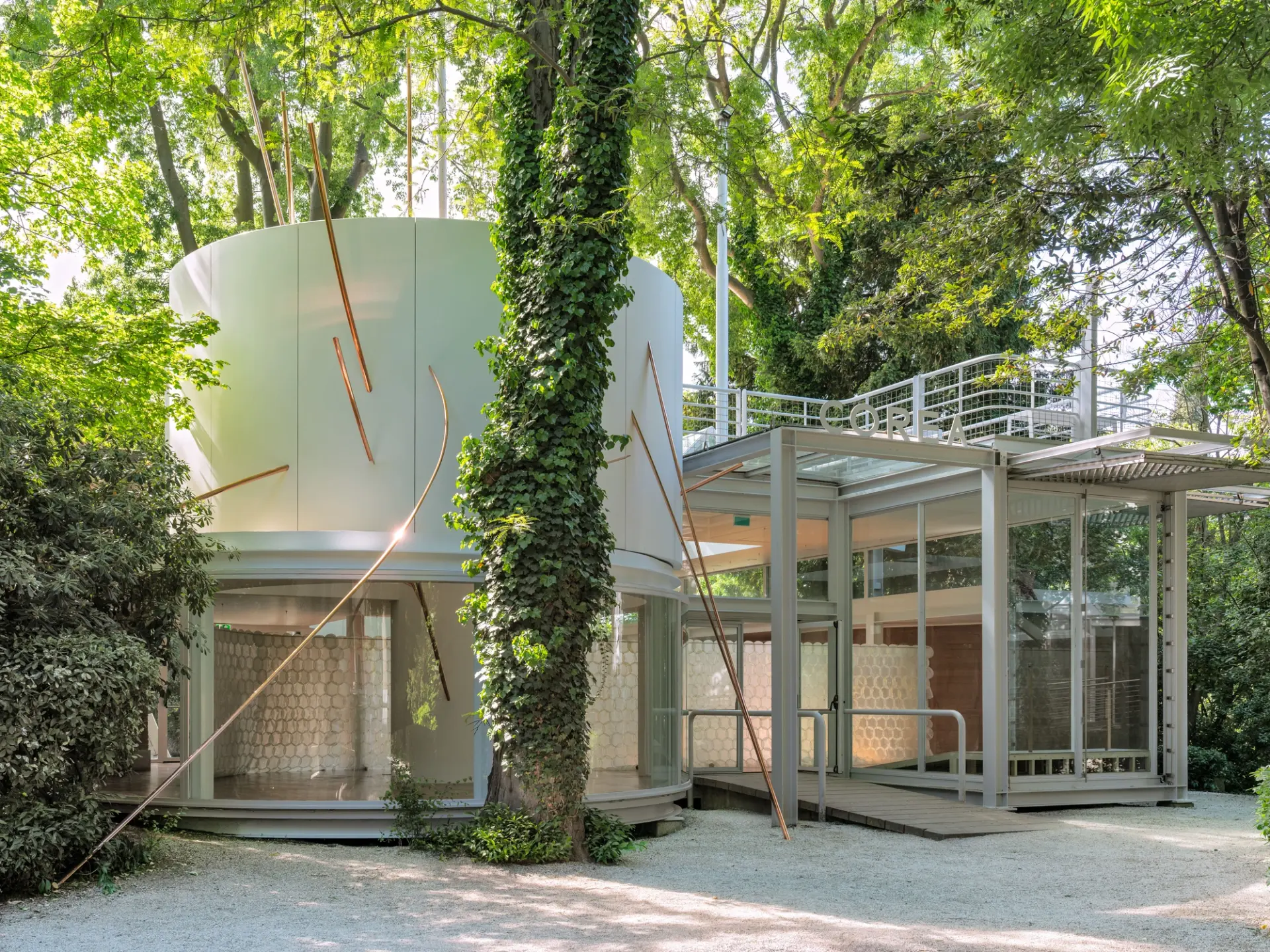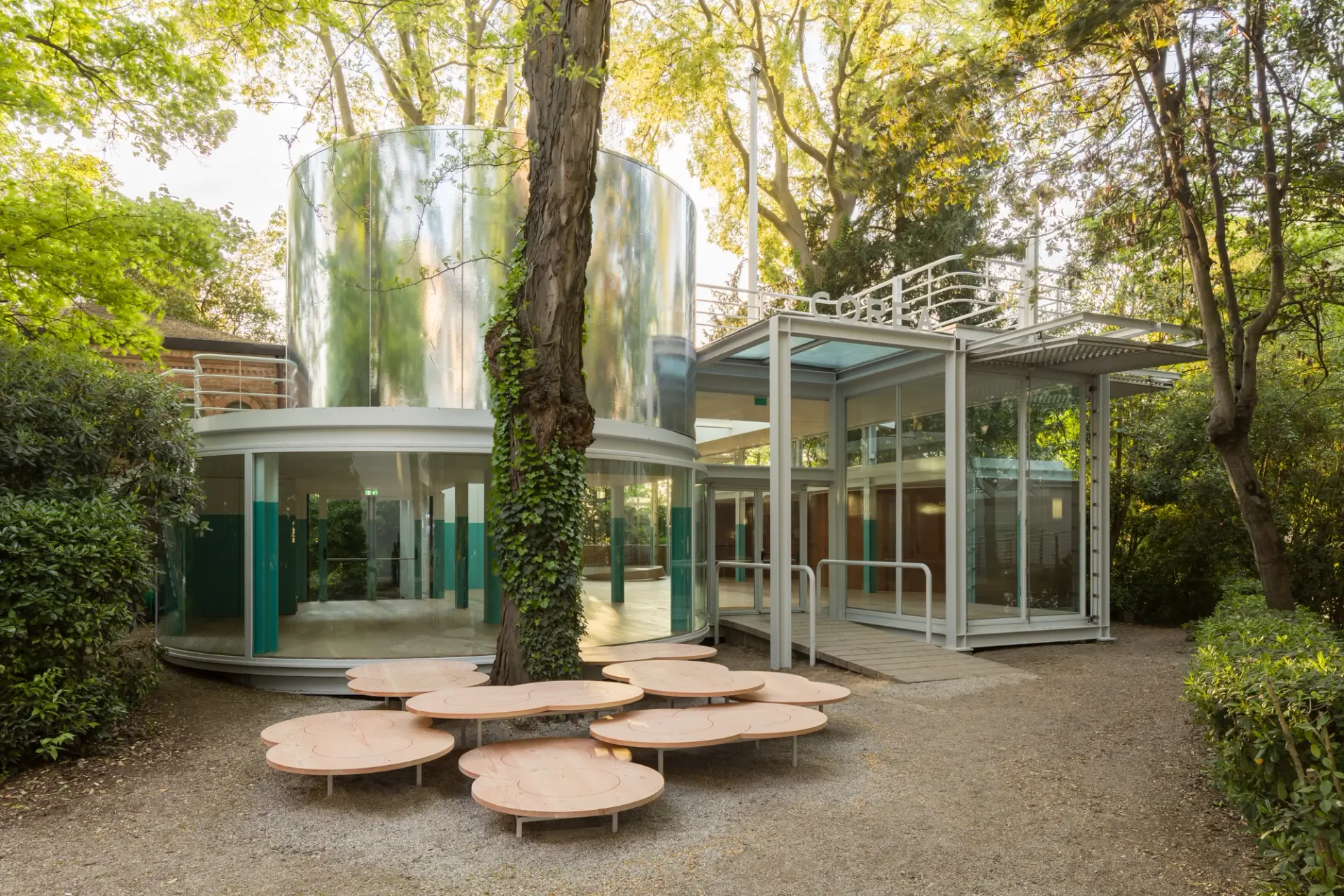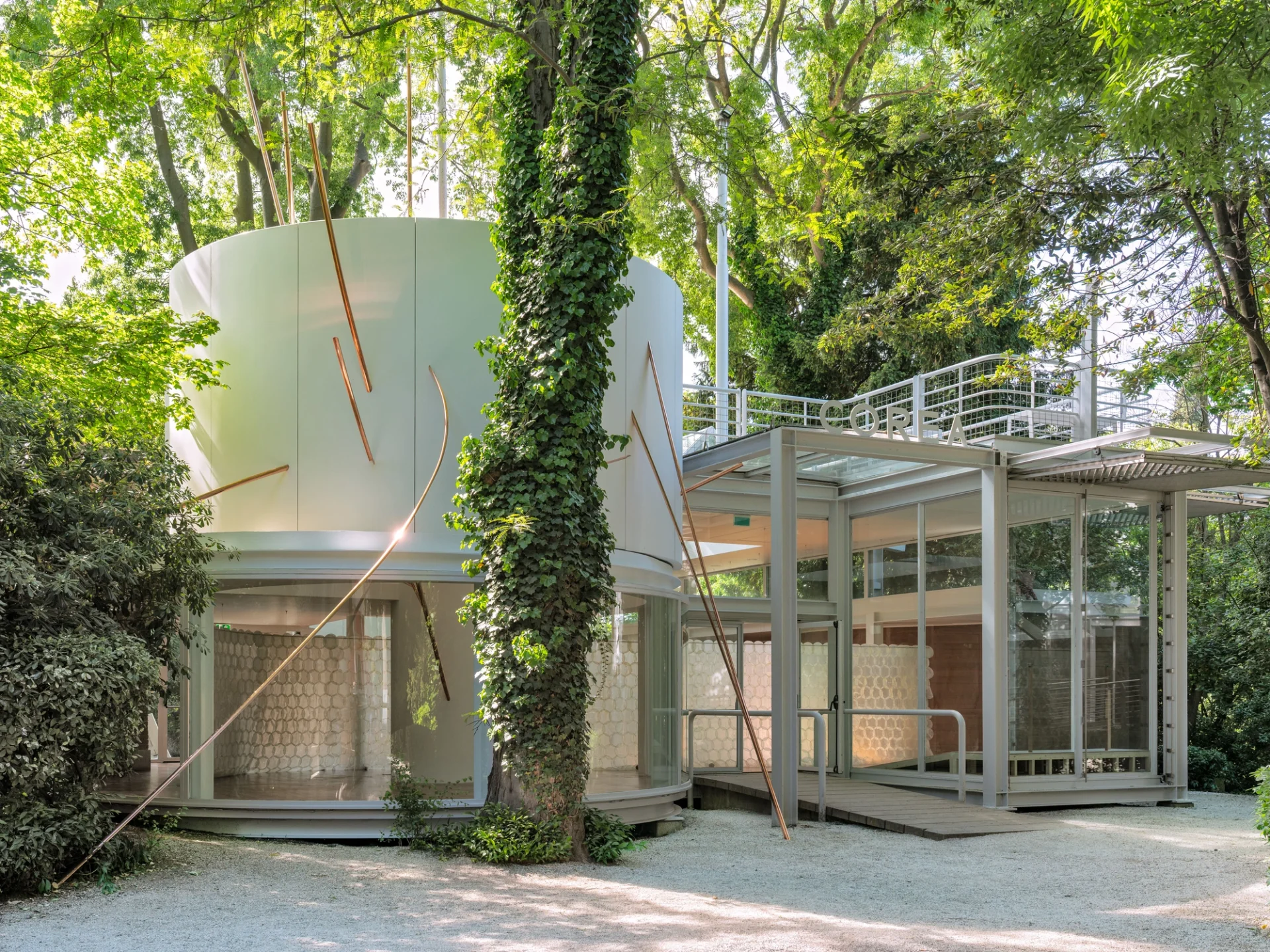
Exterior view of Liberation Space: Fortress/Nest, Korean Pavilion, 2026. Photo by Donghwan Kam.
At the Korean Pavilion at the 61st International Art Exhibition of La Biennale di Venezia, artists Goen Choi and Hyeree Ro expand on their respective uses of industrial and elemental materials to reframe liberation as an ongoing process.
A fortress is a stronghold, an ideally impenetrable force of architecture that implies the existence of something out there to defend against. A nest, too, presents a physical barrier; it draws its protective energy inward in a temporary, fragile structure as a site of nurturing. Ultimately, both the fortress and the nest force the binary position of in versus out, us versus them—but differ in their intentions. But what if they together in a circular movement could generate sites for openness, exploration, and liberation instead?
At this year’s Korean Pavilion at La Biennale di Venezia, artists Goen Choi and Hyeree Ro turn these structures porous while treating the site as the embodiment of the nation. Curated by Binna Choi, Liberation Space: Fortress/Nest blurs the distinctions between walking through, around, or within, inviting audiences to participate in a shared, collective understanding of liberation as an ever-evolving process shaped by movement, resilience, protection, and renewal.
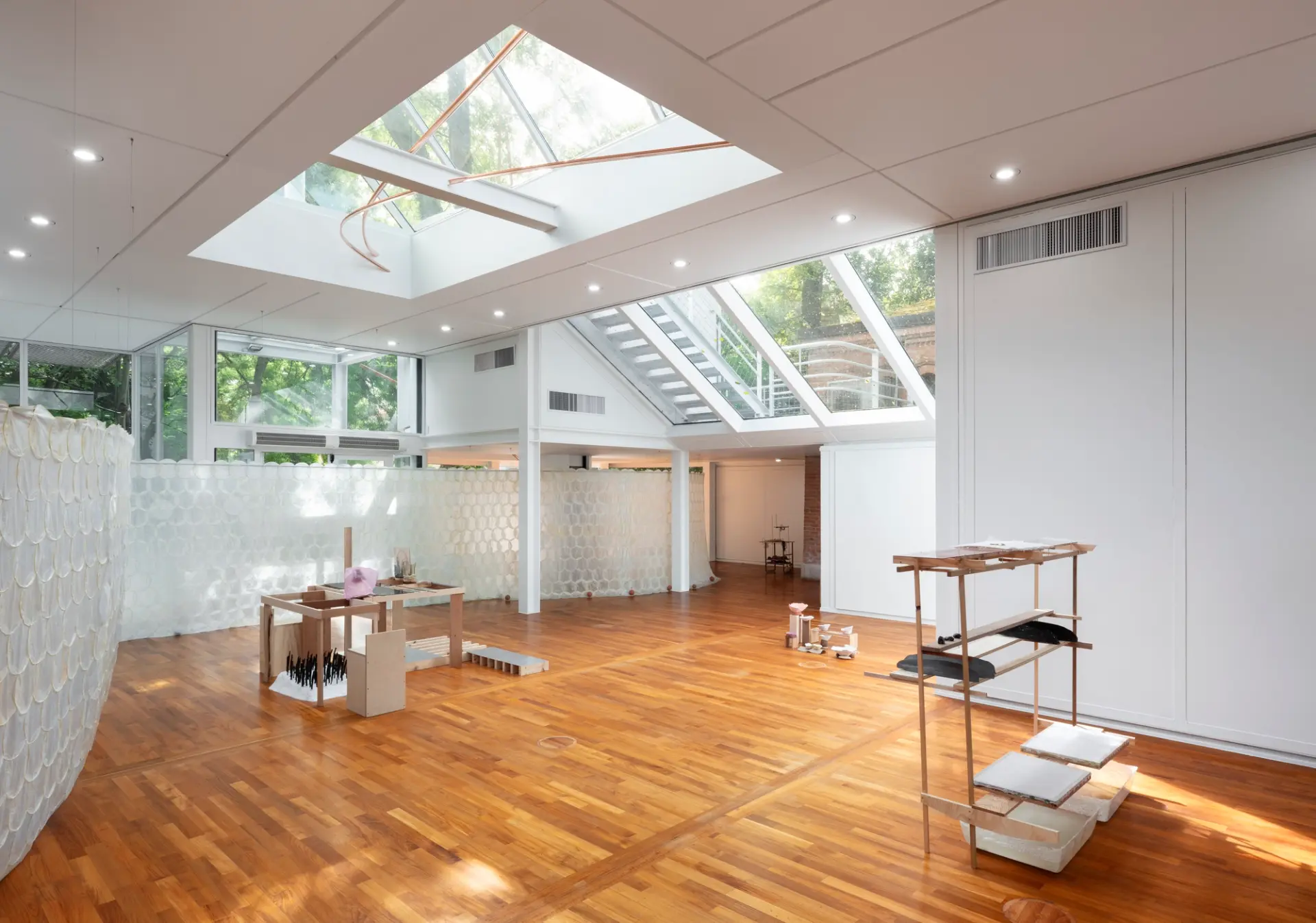
Installation view of Liberation Space: Fortress/Nest, Korean Pavilion, 2026. Image provided by Hyundai Motor Company. Photo: Andrea Rossetti / Héctor Chico.
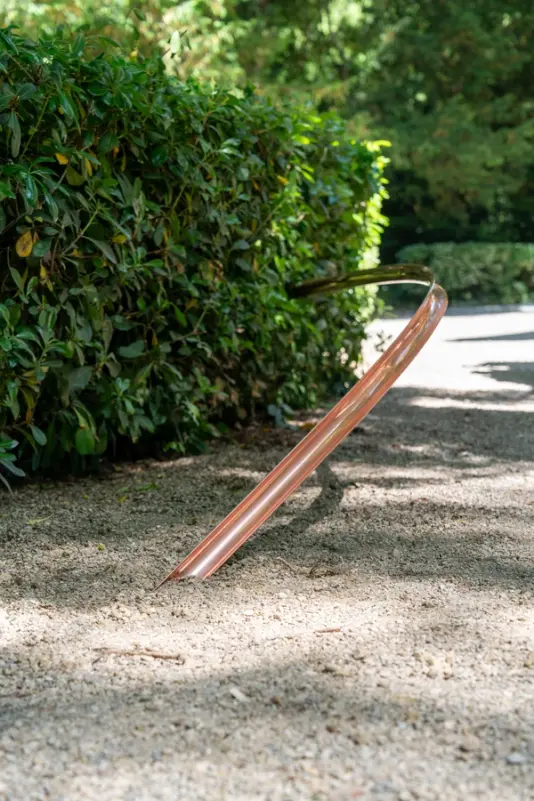
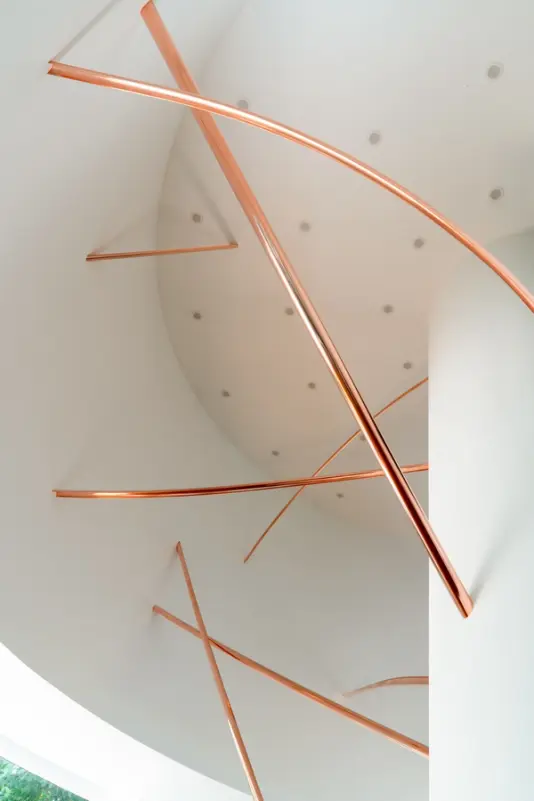
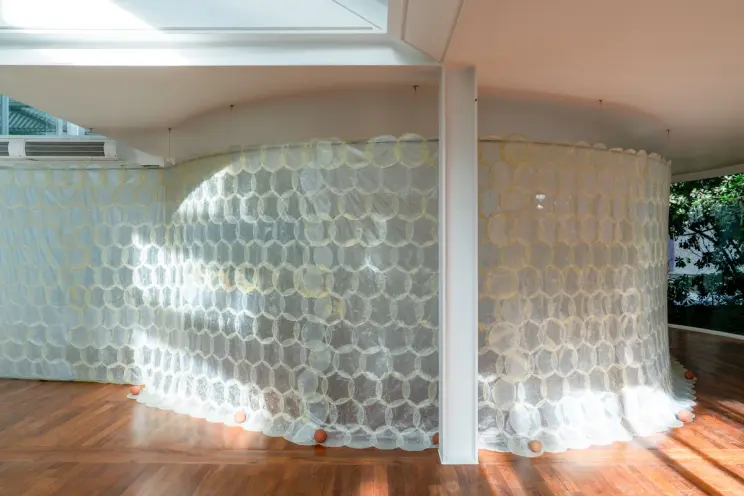
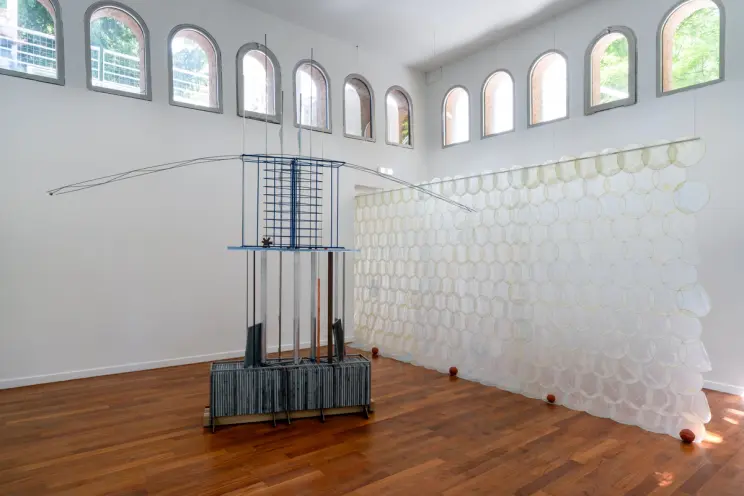
In Goen Choi’s work, Meridian, gleaming spires of repurposed and split copper plumbing pipes penetrate through the pavilion’s circular rooms. These extending golden lines resemble beams of light, disrupting the concrete walls and creating new, swooping architectures for audiences to navigate and reorient themselves. Hyeree Ro’s Bearing positions itself as a quiet contrast. Here, the pavilion’s opacity and rigidity is interrogated not through the act of piercing but through transparency. Ro stitched together thousands of waxed organza circles into a winding see-through maze, a permeable, womblike membrane that contains distinct spaces (referred to as “stations”) for different liberatory functions: mourning, remembering, outlooking, living, mending, sharing, waiting and planning.
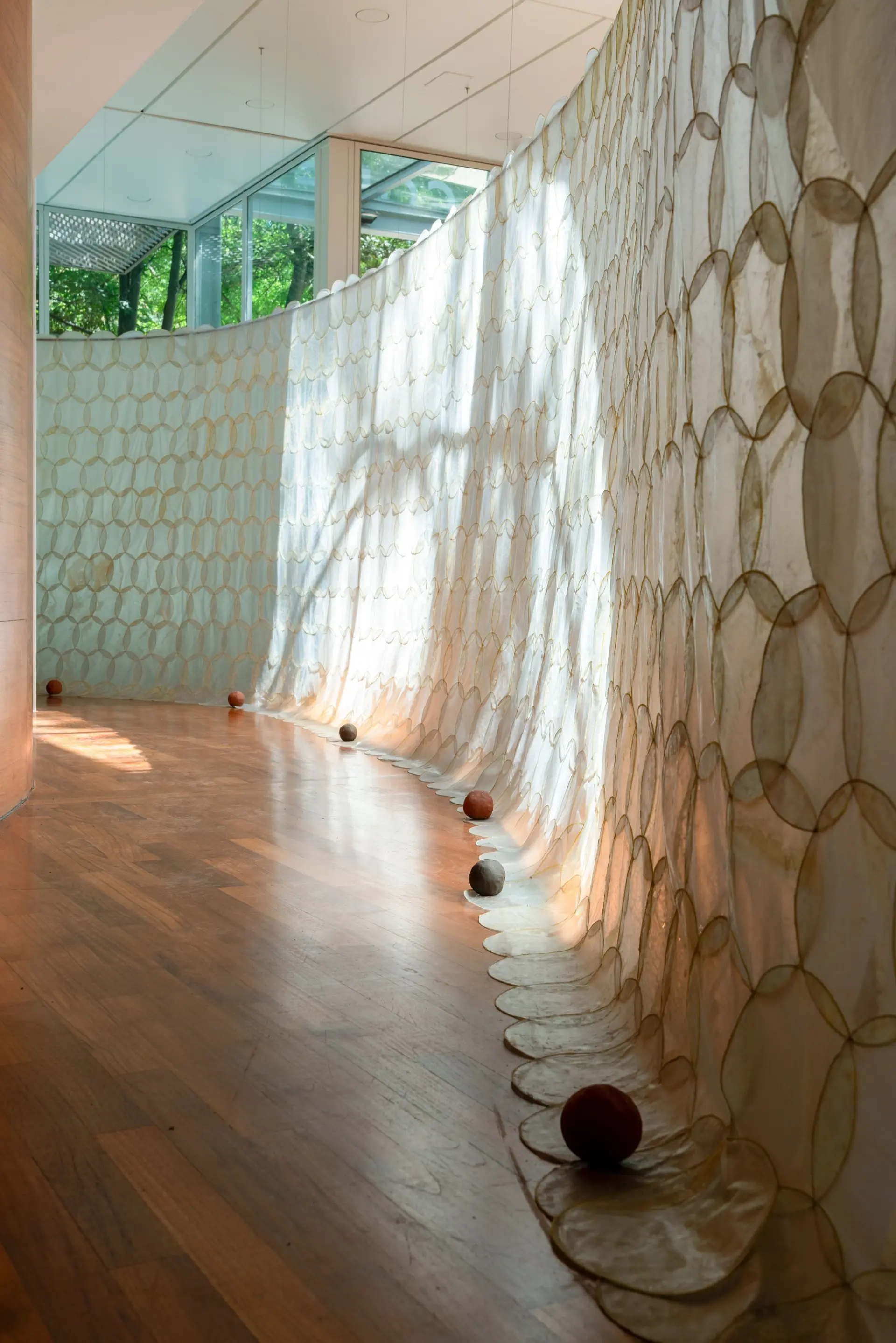
Hyeree Ro, Bearing, 2026. Installation view of presentation in Liberation Space: Fortress/Nest. Photo by Donghwan Kam.
Together, the pavilion represents the generative intersection of Choi and Ro’s artistic practices, where industrial and elemental material meet to create a site of mutual healing. As an extension of Choi’s long-term engagement repurposing industrial materials, from air conditioning units to exhaust pipes, Meridian retools copper pipes to resemble acupuncture needles. “I thought of the Korean pavilion as a single body, and as if I were performing acupuncture on the building,” said Choi.
In the past, the artist has described her practice as recentering “things that have been pushed to the edges” in order to investigate systems and cycles of consumption. White Home Yard, her 2019 installation at Seoul Museum of Art, transformed the outer shells of refrigerators and air conditioning units into abstract minimalist sculptures—curious and austere rectangles in a variety of silvery shades.
Meridian continues her ongoing usage of copper plumbing pipes. Speaking about her 2023 work, Gloria, which features similarly split copper tubes stretched and curved, terminating in severe angles as they lean precariously against a wall, Choi described wanting the relationship between pipes and walls to be “mutually destructive yet intimate, elegant yet sadistic.”
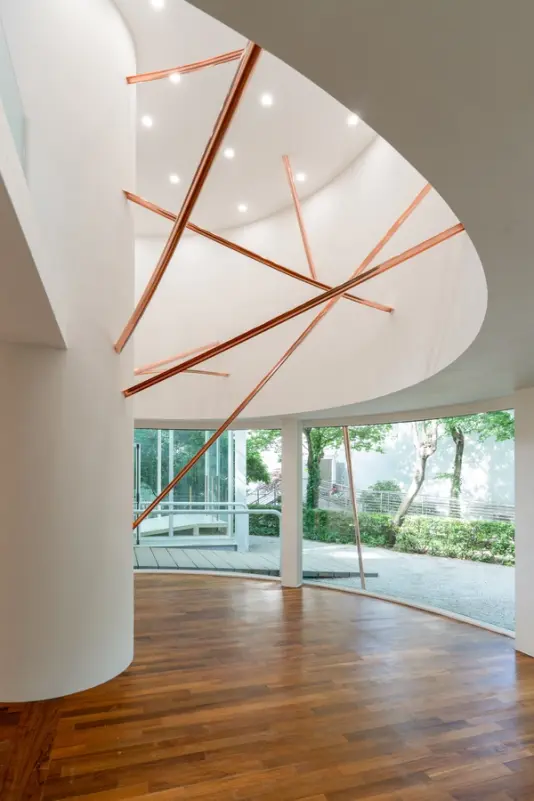
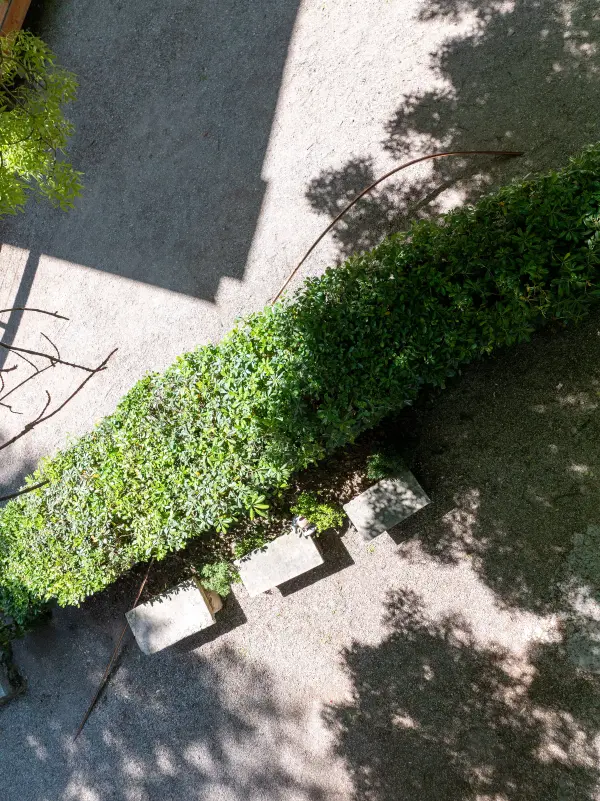
Treating the Korean pavilion as a single body with pipes, Choi focused on sites of blockage. At the center is the second floor that was closed off for the last three decades. At the pavilion’s opening in 1995, there was a spiral staircase that led visitors to the second floor and then to the roof terrace. This time, both of these spaces are made open with Choi’s pipe-gestures. Similarly, the plant border blocking Japan and Korean Pavilions becomes the place where a long curved pipe carefully traverse.
Ro, too, excavates the hidden substrates of contemporary life through sculpture, performance, and video. For her, these investigations are far more personal, revealing intimate, often autobiographical architectures of migration and language based on her own childhood experiences moving between the US and Korea.
The fragile organza circles that make up Bearing were originally purchased in 2023 on a whim—Ro has a habit of collecting materials either found or purchased. The sheets sat in her studio for a year before they were used to punctuate Niro (2024), a life-size wooden chassis of her father’s car (a Kia Niro). In accompanying performances, Ro disassembled this armature, moving its pieces around the space of the gallery while reciting fragments of memories from a cross-country road trip the artist took with her father before his passing. The organza circles dangled from the car’s frame like charms, distorting Ro’s image as she passed through them.
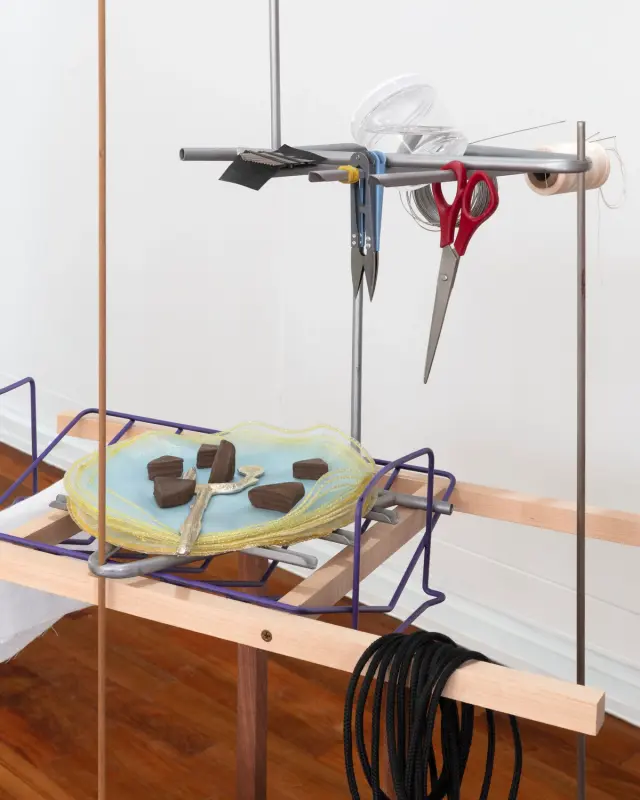
Ro returned to the circles again in 2025, for her work Carry. Dipped in beeswax, this time, they formed a tent over an LED-monitor laid on its back—a tenuous, cocoon-like shelter abstracting the specificities of the image into diffused light.
In Bearing, they are transformed again—from a cocoon into a nest. The inspiration for the work’s stations came from her own reflections on the kind of person she would like to live as and who she hopes a future child would grow up to be: “A person who sees what’s happening in the world, not just their immediate surroundings, not just what’s happening right now but also what has happened in the past, and has their own perspective on what kind of world they want to build.” Here, the person stands for the people who make a nation or world.
“A nest is a place you grow, are supported by,” Ro has said. “But you also need to leave your nest and go out into the world.”
The dialogue between Ro's and Choi's works suggests that Liberation Space is not defined by a single condition of “fortress” or “nest”. Across the Pavilion, acts of piercing and mending, enclosing and permeating, unfold side by side. While their materials, forms, and processes differ greatly, both artists share an interest in using material forms to engage with things that cannot themselves be physically grasped. Together, their works create a space where contrasting perspectives coexist, reflecting the plural and relational nature of Liberation Space itself.
About the Exhibition
The Korean Pavilion at the 61st International Art Exhibition of La Biennale di Venezia, commissioned by Arts Council Korea (ARKO), presents Liberation Space: Fortress/Nest, curated by Binna Choi and featuring artists Goen Choi and Hyeree Ro. Drawing on the idea of “Liberation Space,” a term referencing Korea’s post-liberation period between 1945 and 1948, the exhibition transforms the Pavilion into a living monument that explores liberation not as a fixed historical moment, but as an ongoing process of renewal and transformation through site-specific interventions that engage directly with its architecture. Liberation Space: Fortress/Nest is on view through November 22, 2026.