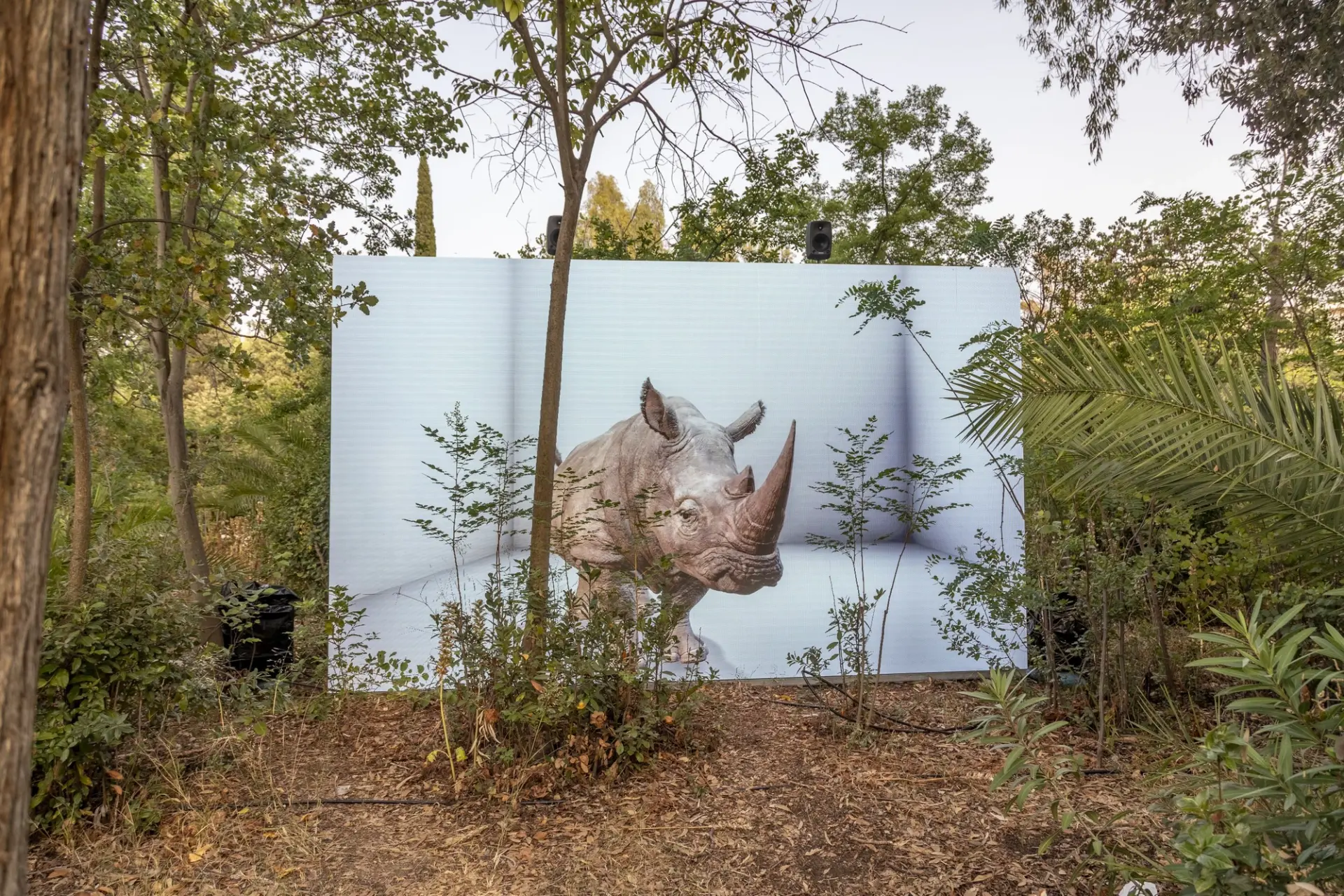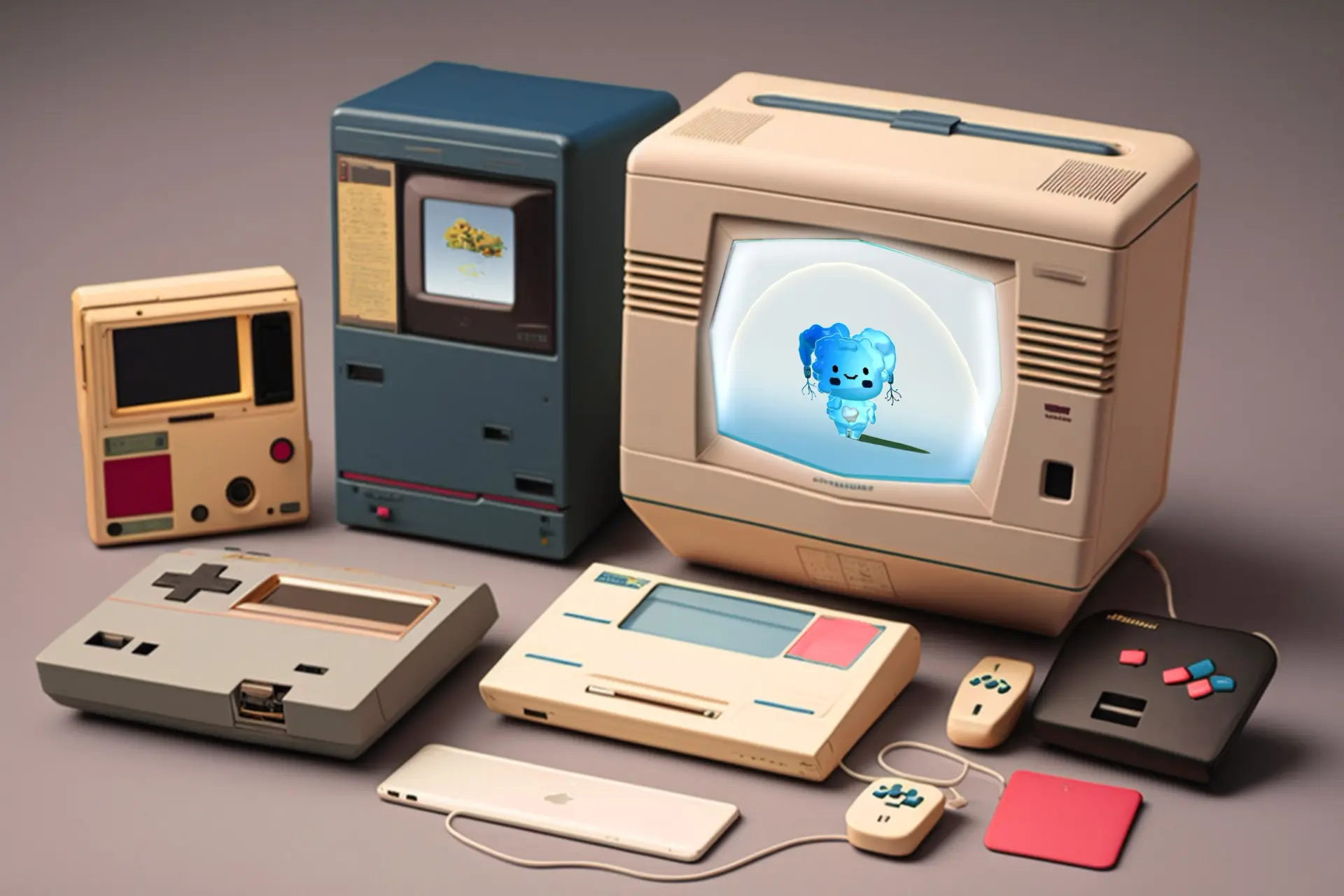
Val Franco, How Did Green Come to Symbolize the Internet?, 2024.
Commissioned by Hyundai Artlab.
From Terminal green to Brat green, the author of Cyberfeminism Index investigates the origins and cultural significance of the viral hue.
Artlab Editors: In recent years, a specific kind of lurid, acidic green has emerged as a signifier and shorthand for digital subcultures. Born out of a nostalgia for Y2K and the early internet, the color, dubbed “internet green” by some, radiates the potential for radical futures and possibilities life online once represented.
As a child of the early ‘90s, designer and researcher Mindy Seu has had a lifetime of close encounters with the color, from Mamoru Oshii’s Ghost in the Shell films and Prada runway shows to flip phones. These experiences are largely what informed her decision to choose internet green for the cover of her 2023 book, Cyberfeminism Index, an archive of cyberfeminist resources and references that began online in 2019. Seu shared some of those inspirations with Artlab, detailing how she perceives the color’s current moment in the cultural zeitgeist, both virtually and IRL.
“Why is it green?” This was the inevitable question I was asked in each Q&A during the Cyberfeminism Index book tour. Wrapped in a glossy pantone green, the 600-page tome gathered hundreds of examples of online activism and net art from 1991 to 2020. Designer Laura Coombs and I didn’t give much thought to the cover’s color selection—it seemed the obvious choice for an index of digital culture. But the consistent line of inquiry did beg the direct but earnest question: How did green come to represent the internet?
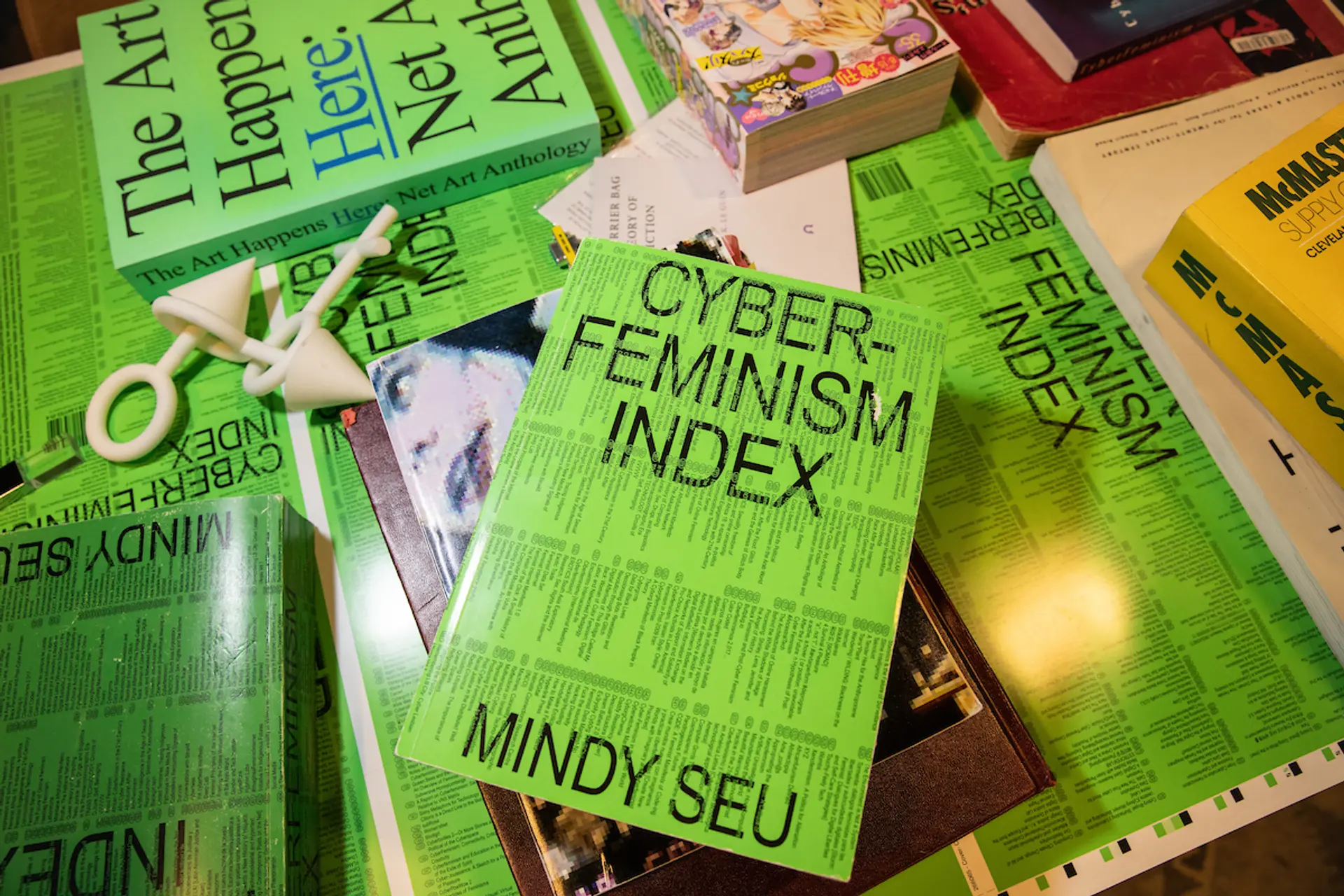
Cyberfeminism Index book.
Photo by Walker Wlodarczyk. Courtesy Pioneer Works.
Early computer screens were oscilloscopes with CRT (cathode ray tube) displays that produced images by illuminating phosphorus in primary colors—red, green, and blue. Before the Graphical User Interfaces (GUI) you’re reading this essay through currently, computers ran on Terminal—the green-text-on-black-background command center that allowed one to communicate with their machine. This was a textual, not icon-based, interface. While other colors could have been used, green, the cheapest available phosphor, was the brightest and clearest. And so, green became the primary association with early computer interfaces.
The most important aspect of Terminal Green, as described by Maxwell Neely-Cohen in a 2019 essay 2019 essay , is not the color, but the darkness that surrounds it. There are many combinations of black and green, but given the right form and contrast, that’s the internet, that’s cyberpunk, that’s hacker.
To enter this void, you had to learn a new syntax: the command line. The internet was an escape. In its nascent stages, it was dark and subversive; a decentralized and unregulated web of bespoke pages. And then the void became easier to enter; with GUI, users didn’t need Terminal anymore. Blinking green revealed the screen was “on;” access was granted.
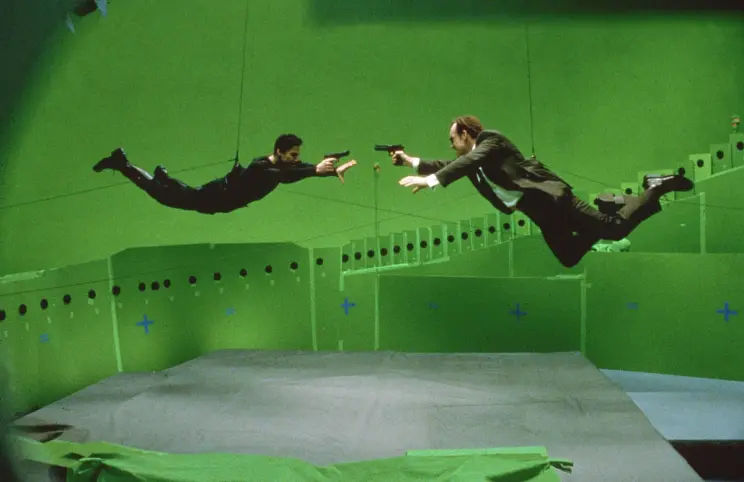
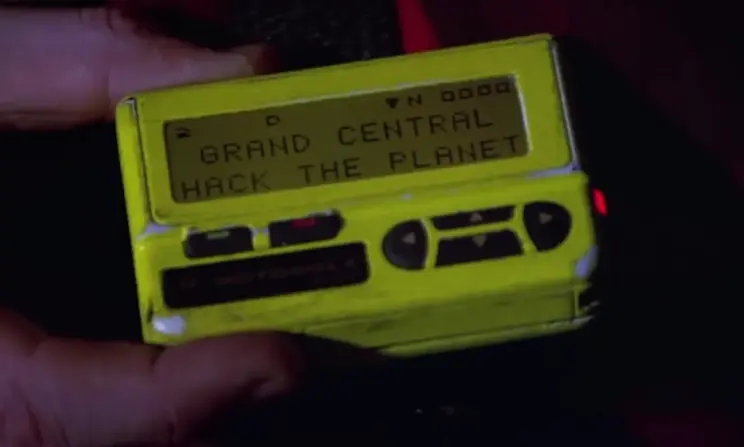
As computers became more accessible, so did its material counterparts. Chroma key, otherwise known as the green screen, increased in popular usage in the 1980s with the advent of affordable computer graphics. Here, the color is a non-color, becoming digitally “transparent” and allowing the filmmaker to insert an entirely fictionalized image in its place. While blue screens are also used, green screens tend to be more effective as the color does not appear in human skin tones or most environments. It is also, however, liable to bleed into the foreground; what people in the industry refer to as “green spill.”
The green screen allowed us to be fully immersed in virtual worlds. If it could be digitally rendered, it was a possible imaginary. The internet was developed by these imaginaries, and hardware and software development soon followed. Techno-evangelists told us of the boundaries of the body, and the liberation that could be found online. “[He] fell into the prison of his own flesh,” wrote science fiction author William Gibson in Neuromancer, his hit 1984 book detailing the despair of returning to the body after the freedom of surfing cyberspace. The novel is also where the term “cyberspace” was coined. We never quite figured out how to blend our physical bodies in digital space. So we instead explored how to remove the material: AI, singularity, virtual reality. But no matter how close we get, we’ll always have the inevitable erratum that reminds us of the body, that green spill.

Charli XCX in concert, touring album Brat, 2024.
Photo: Unknown.
When we pulled green out of the screen and into material space, it was no longer about the void—it became the entire color-field. From chroma key to rippling sheets behind British pop singer Charli XCX and 2018’s futuristic fashion moments 2018’s futuristic fashion moments , converting RGB to a printable colorspace is an imperfect translation. Printing internet green is nearly impossible, variable by ink, paper, and coat. But it’s not about printing an exact shade of green; if it’s fluorescent enough, luminescent enough, that’s digital.
I was born in 1991, the same year VNS Matrix coined the term “cyberfeminism,” and the World Wide Web was released outside of the CERN research facility. The first public website, info.cern.ch info.cern.ch , is still live in 2024. The sparse, HTML-only landing page reads, “home of the first website,” like an online billboard. This fledgling internet, developed by Tim Berners-Lee, a British computer scientist, was developed initially as an information-sharing network for scientists. Meanwhile, VNS Matrix, an early cyberfeminist collective, imagined the sterile, metallic, militaristic internet injected with the slimy, corporeal viscera of the body. Their cyberfeminism asserted the internet was material; it was part of the earth.
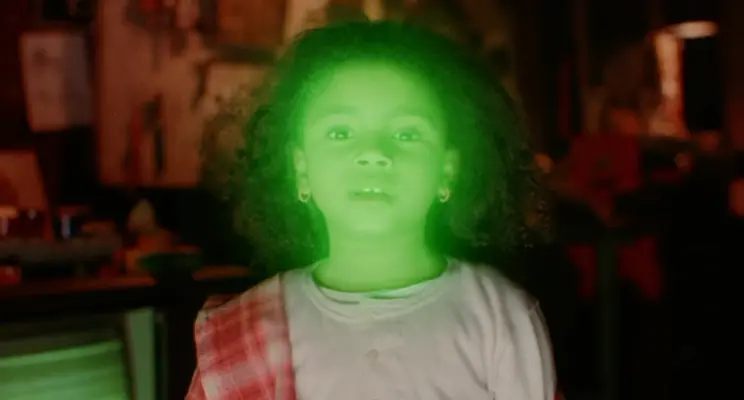
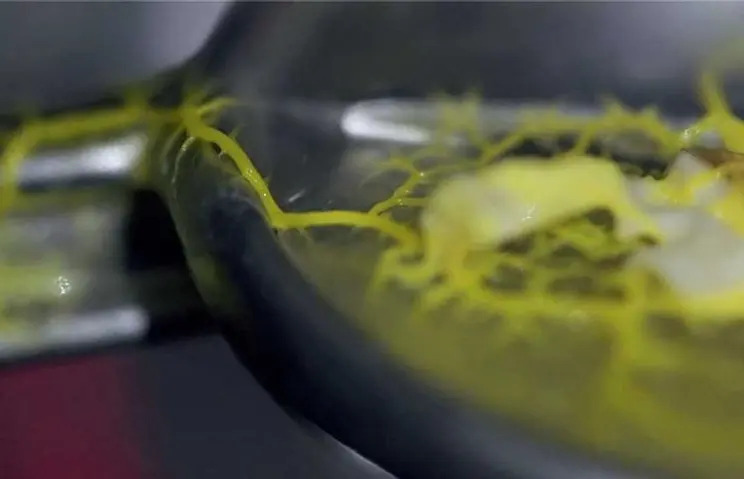
The internet has long borrowed terms from the earth: bug, tree, cloud. These extractions go beyond mere metaphor. The internet exists on planet earth The internet exists on planet earth , and digital technology is part of our ecosystem. Rare-earth minerals are mined and embedded in cell phones by oppressed workers; server farms require immense amounts of water and energy; data in the “cloud” travels in fiber-optic cables on the ocean floor. In both fiction and real life, machinic intervention into nature and its subsequent destruction often yielded bright green: Soylent Green’s people-as-food, Fresh Kill’s radioactive sushi, Jenna Sutela’s slime molds as models for Silicon Valley. Green has always represented nature; bright green, however, is nature destroyed.
In 1991, the internet represented potential. We could find anything, meet anyone, be anywhere. We could change the future. It was hopeful. By the 2000s, the future was here and burst out from the screen. I had a lime green Motorola Razr flip phone and a lime green iMac G3 that was my portal to the blog site, Xanga; file-sharing platform, Limewire; and AOL’s instant messaging application, AIM. My middle school crush had a glowing green meridian globe sticker on his skate deck. These days, the fashion of Y2K has made a comeback—for those born after 2000, the trend is a collective anemoia, a nostalgia for a past they never experienced. My sister is adamant that our “bubble Mac” was actually in the shade “blueberry,” and my dad agrees. Turns out my memories have been tinged by the contemporary cultural zeitgeist too.
What does it mean for us to attach the aura of the internet green of decades past—the potential, the subversiveness—onto a grim contemporary reality? Perhaps it is a gesture toward hope in an identitarian era; a tiny reminder that we can imagine a future we might want. In the face of AI existentialism, a bankrupt media environment, digital tourism of the war torn, climate collapse, and a seemingly relentless arc toward fascism worldwide, perhaps internet green captures the acidic and absurd surrealities of our time.