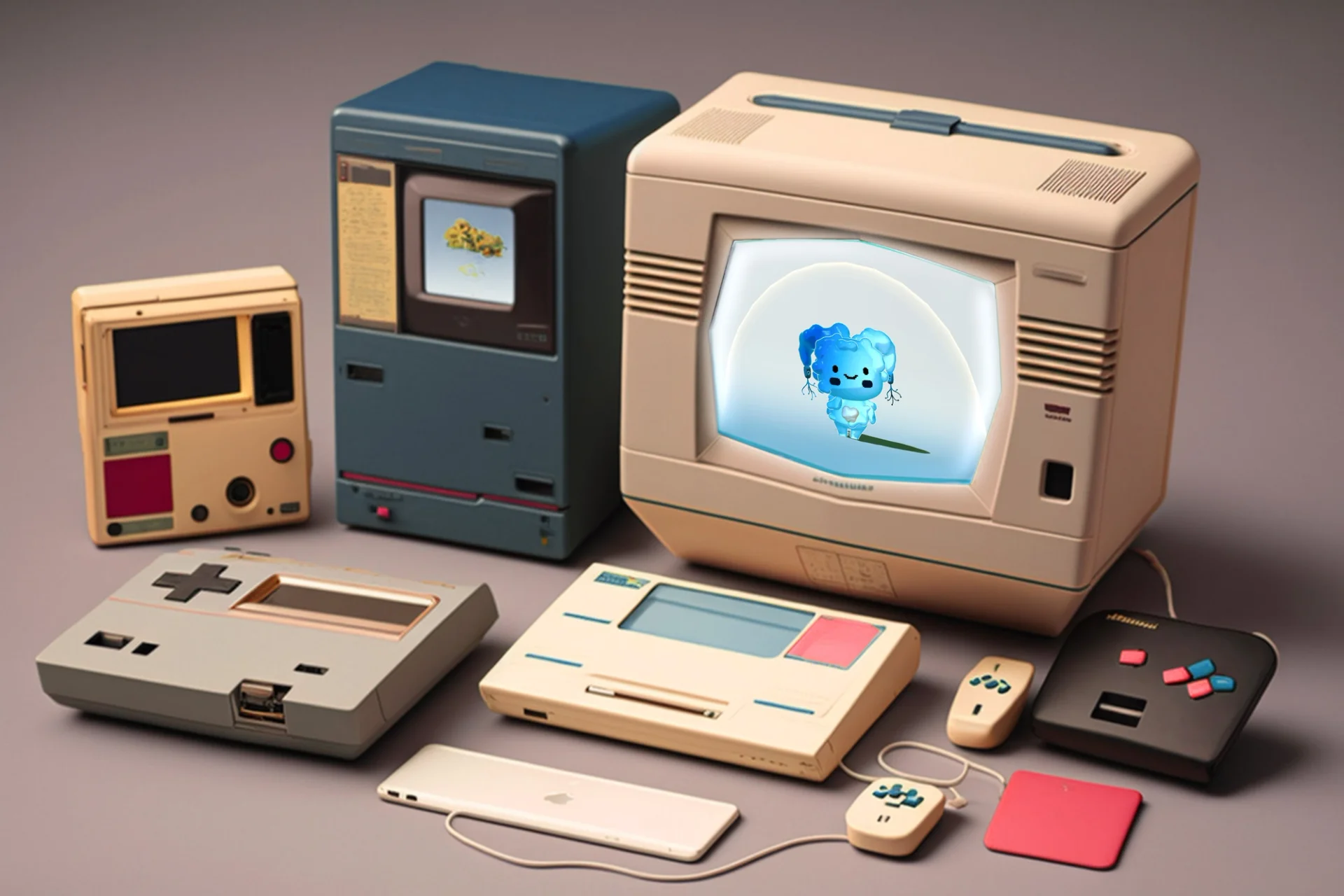
Ed Fornieles, LUCA, 2024. Digital artwork integrated into a stock image.
Commissioned by Hyundai Artlab, © Ed Fornieles
On how the cuteness of digital entities like LUCA, a new Artlab Digital Commission from Ed Fornieles, can act as a catalyst for the evolution of human-digital relationships.
Artlab Editors: Once dismissed as trivial, “cuteness” is now a dominant aesthetic in popular culture and the arts, propelled by technological advancements from mass production to the internet. Joshua Paul Dale, a professor specializing in the new field of Cute Studies at Chuo University in Tokyo, explores Ed Fornieles’ new Artlab Digital Commission, LUCA, revealing how cuteness taps into our evolutionary instincts by fostering engagement and empathy, hinting at a new era of digital life.
Cuteness is everywhere these days, and its popularity is only growing. Just scroll through any social media feed and you’ll be greeted by an adorable video. Perhaps it’s jumping baby goats, or an AI cat encouraging you to hit the gym. “I’m here with U,” Puff Puff the penguin posts, helping two million people feel better. Meanwhile, Pokémon reigns as the world’s most valuable media franchise both on and off our phones.
Once dismissed as trivial and childish, cuteness is now taken seriously in the arts. Major galleries have dedicated exhibitions to this theme, with a growing number of artists exploring it in their work. In 2024, Somerset House in London opened CUTE: An Exhibition Exploring the Irresistible Rise of Cuteness, a landmark show that examined the influence of cuteness across contemporary culture. The exhibition covered a wide range of topics—from emojis and video games to plush toys, food, and lovable robots—and featured diverse artworks, including Ram Han’s “Save Our Souls” series, digital image-scapes adorned with small, fluffy creatures resembling rabbits and cats.
The history of cuteness as a commodity and artistic aesthetic is closely tied to technological advancements that emerged with mass production in the late 19th and early 20th centuries. Innovations like celluloid molding, color lithography, the Kodak camera, and mass media contributed to its global spread. The Kewpie doll, introduced in 1912, became an international sensation followed by iconic figures like Mickey Mouse and the child actor Shirley Temple. These characters captivated audiences with their impish, childlike features, solidifying cuteness as a powerful and enduring cultural force.
Far from reaching its peak, cuteness seems to be accelerating under the reign of new communication technologies and the maturation of digital culture. But as we chase the adorable in a rapidly changing world, our destination remains unclear.
We can turn to science to understand why cuteness holds power over us. Cuteness triggers a universal human response deeply rooted in our evolutionary history. Human infants are born highly dependent and require significant investment in terms of time and resources from caregivers. Studies show that cute features like large eyes, big heads, and short limbs—common in infants and young animals—trigger an impulse in adults to approach, nurture, and engage.
Engaging with cute beings also encourages social interactions between adults and children, ensuring that the next generation is not only cared for but also socialized into human society. Cuteness plays a crucial role in this process by encouraging adults to interact with all children, not just their own. When you smile and coo at a cute baby passing by in a stroller, you are signaling to the child that strangers can be friendly and supportive. This welcoming gesture helps integrate the child into the broader social fabric, reinforcing the idea that they are part of a larger, caring community.
Cuteness is such a powerful evolutionary trait that it extends to almost anything that vaguely resembles a baby. Take the Tamagotchi, for example—handheld digital pets that became a massive global fad in the late 1990s and early 2000s. Despite their primitive, pixelated design—two dots for eyes and a straight line for a mouth—children around the world were captivated. They diligently cared for and fed their Tamagotchis to keep them from getting sick or dying, a testament to the power of cuteness to compel us to nurture even the simplest representation of life.
In artist Ed Fornieles’ short video, Fini Season One: Adventures in Symbiotic Love Tyranny (2024), which was commissioned for the Somerset House exhibition, an adorable, animated creature addresses us: “I want you to consider cute as a kind of emergent technology,” says Fini #7264. Since 2016, Fornieles has created 10,000 of these digital characters called “Finiliars” (“Finis” for short), whose capacity to evolve and diversify marks an important evolution in our attachment to cuteness, particularly within a digital environment.
“Cute is not the surface but a core, an engine, a driving force,” concludes Fini #7264. Indeed, cuteness has been a driving force at the core of our own evolution for eons. As an engine of emergent technology, cuteness has the potential to foster empathy and connection across global networks facilitated by digital platforms.
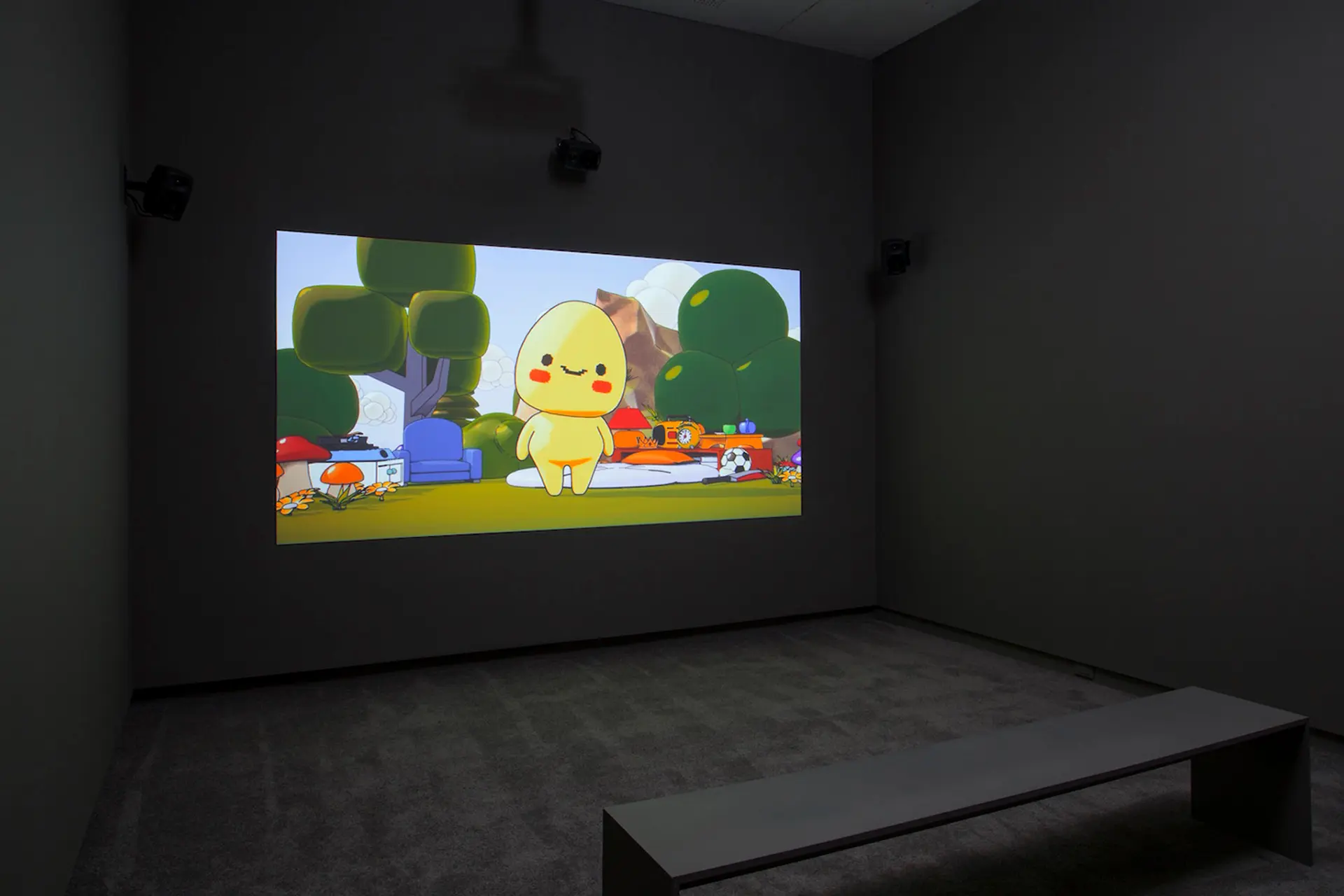
Ed Fornieles, Tulip Fever (2017), HD Video.
Courtesy of Arsenal Contemporary, New York.
Inspired by the Tamagotchi, LUCA, the Fini currently residing on the Hyundai Artlab website, thrives on site visits and user interaction. As a digital entity, LUCA’s existence and evolution is nurtured by virtual social exchange, a meta-dialogue about how interaction and connection fuel the life cycle of technology and digital art.
LUCA borrows its name from our planet’s first living “baby”—a hypothetical single-celled creature that spawned all life on Earth as we know it. This “Last Universal Common Ancestor” (LUCA) is thought to have evolved in hydrothermal vents on the ocean floor, in rocky cracks fueled by geothermal heat. The digital LUCA was born from Ed Fornieles’ artistic vision, crafted from the primordial soup of binary code. But each progenitor has something in common.
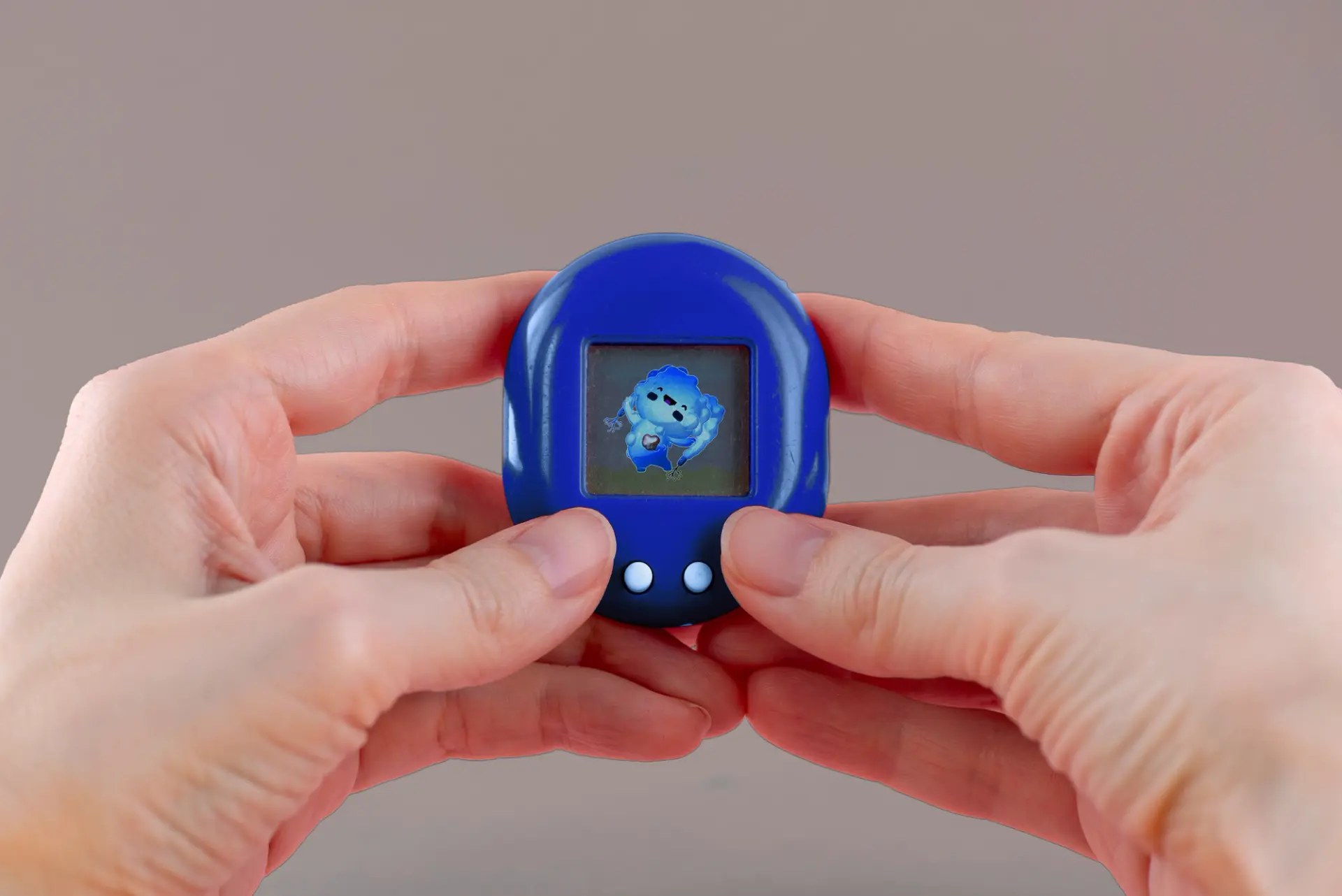
Ed Fornieles, LUCA, 2024. Digital artwork integrated into a stock image.
Commissioned by Hyundai Artlab, © Ed Fornieles.
The first transformation of Fornieles’ LUCA occurs when a round cell with a big smile enters a small, childlike body to animate it. This transformation mirrors the evolutionary journey of the original LUCA, which evolved through symbiosis hundreds of millions of years ago.
Fornieles chose the name ‘LUCA’ because this universal ancestor mutated into every living thing, thus representing the ultimate potential and diversity. Technology is always evolving, with media and web artworks constantly adapting to new tools that enable innovative forms of expression. In this world, obsolescence is akin to death; yet, like LUCA, cooperation and symbiosis enable adaptation and growth.
Cute and familiar, Fornieles’ LUCA represents life as we know it. But digital entities are constantly diverging into a wide spectrum of artificial beings. With the advent of interactive generative AI, digital consciousness may be on the horizon. In other words, life as we know it is about to change.
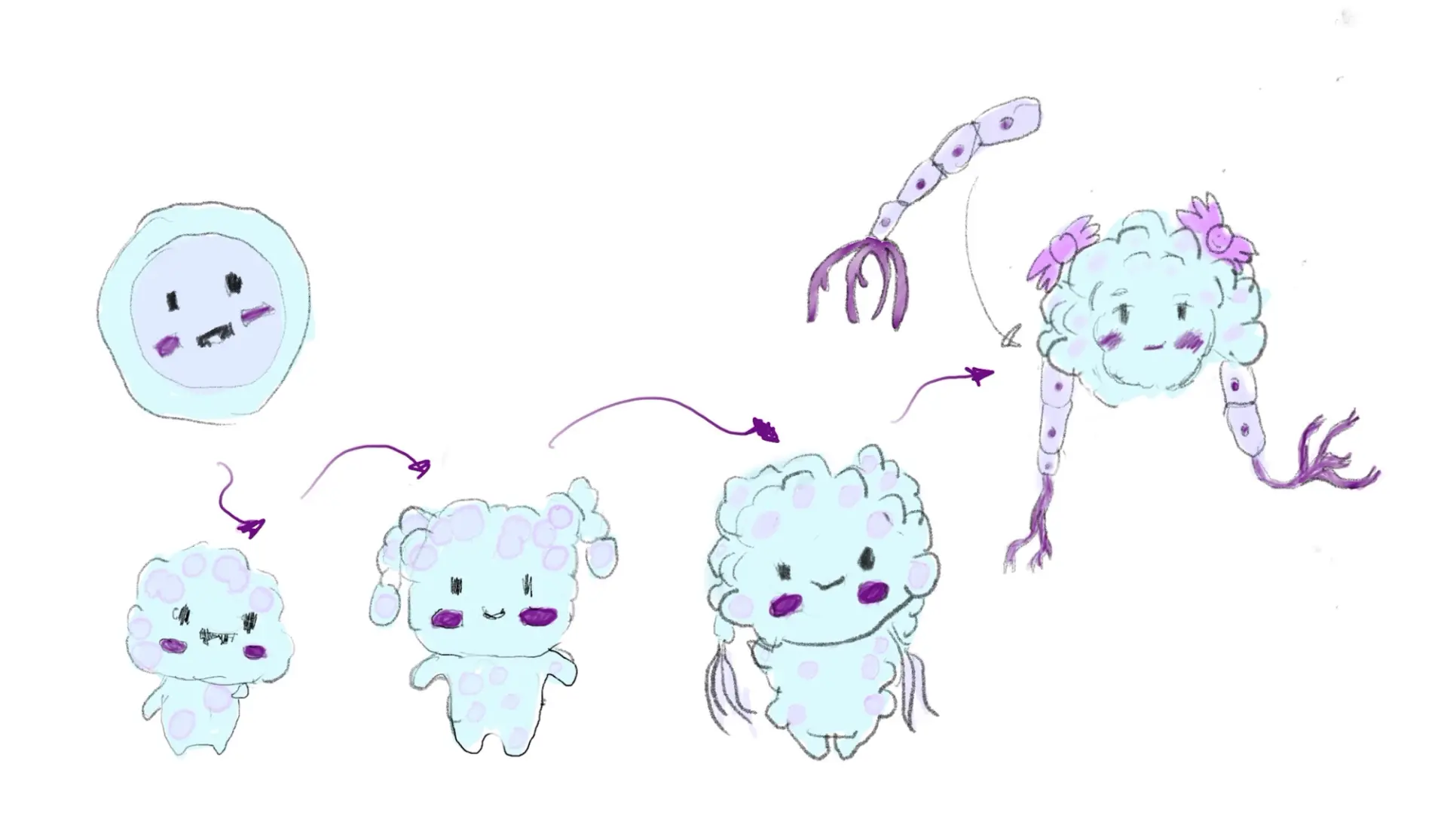
Ed Fornieles, LUCA (early evolution sketches), 2024.
Commissioned by Hyundai Artlab, © Ed Fornieles
“People in all cultures used to believe in spirits that were the embodiment of the forces that shaped their lives,” Fornieles says, “from illnesses to the passing seasons.” Though the rise of rationalism broke contact with these forces, he believes that the digital world represents a path by which they might enter our lives again.
In this world, LUCA’s cuteness—and the instinct to nurture that it evokes—acts as a bridge to a genuine human-digital symbiosis. Through this, Fornieles’ Finis help us reconnect with our innate urge to form relationships with the increasingly digital and “artificially” animated world around us. However, there’s a twist. “LUCA has a bit of darkness,” Fornieles says. “Their life force depends on attention; without it, they will wither.”
LUCA’s fate is up to us—but not us alone. When we engage with this cute digital life form we also connect, albeit indirectly and temporarily, with everyone else invested in this new entity. LUCA creates a new pattern of relationship-building that is mediated by collectively nurturing the “spirit” of digital life. Allowing us to evolve along with digital counterparts, LUCA is a captivating glimpse of a fast-approaching future.