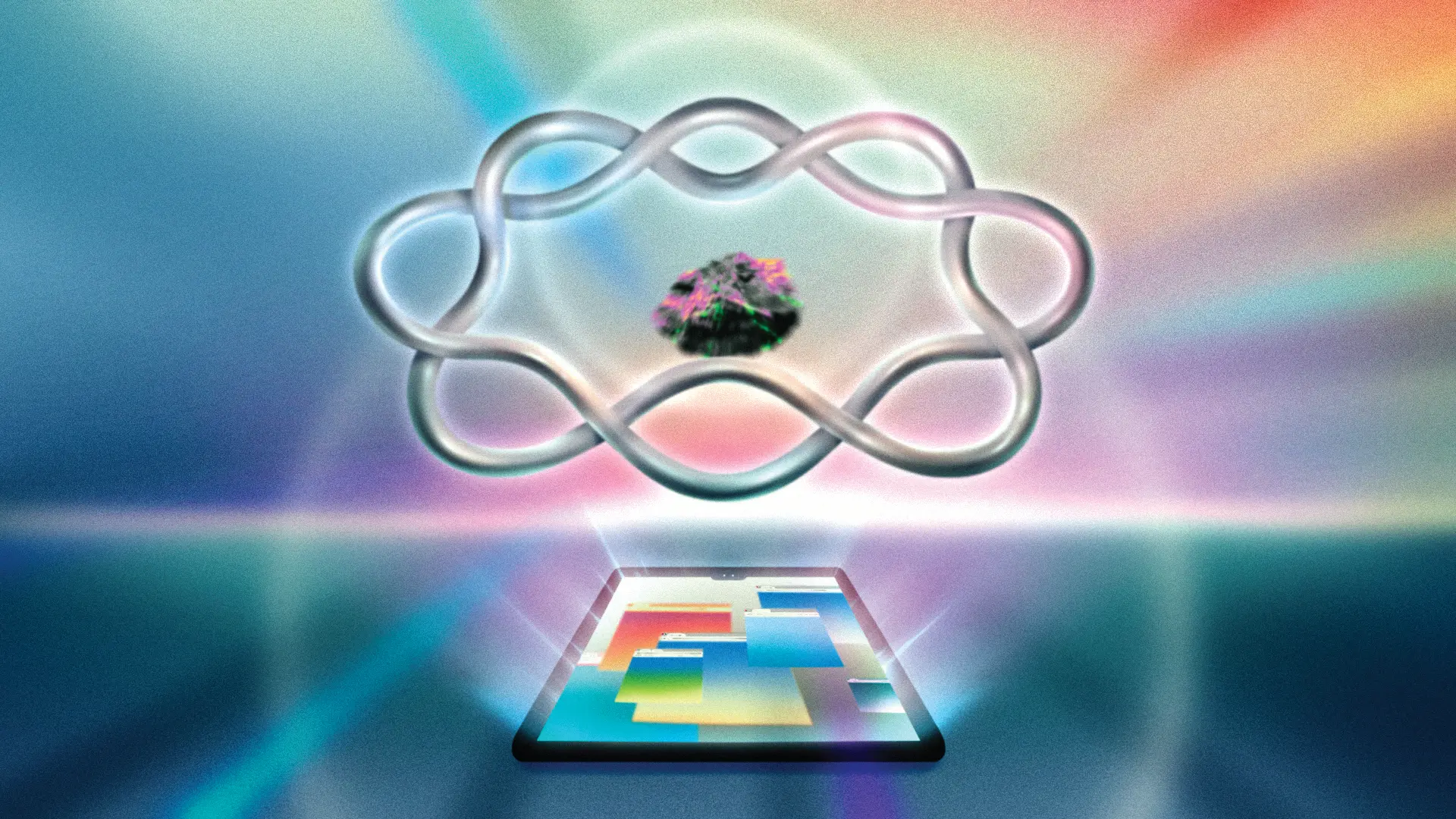
The Substitute, Alexandra Daisy Ginsberg
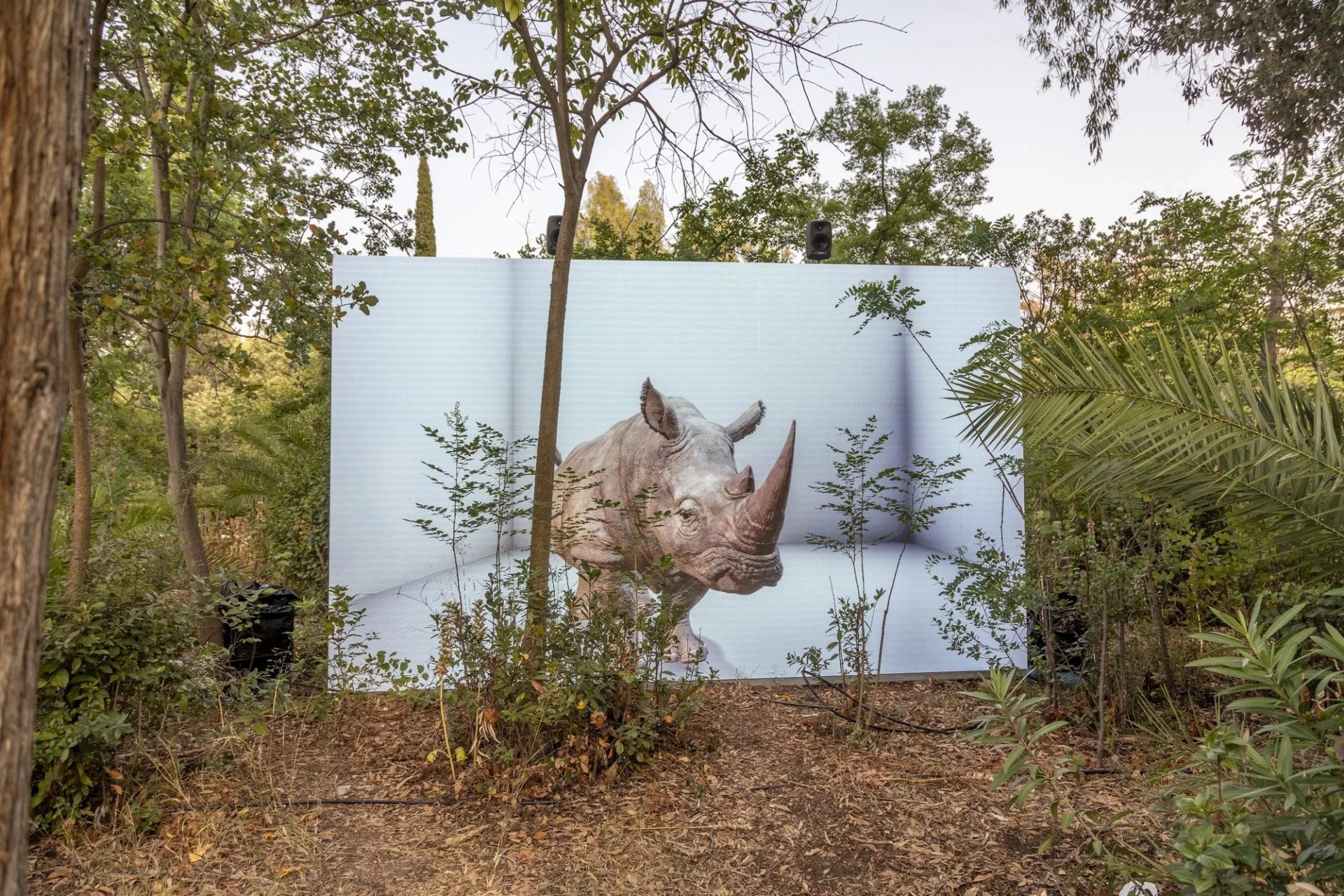
You and AI: Through the Algorithmic Lens (2021) © Stelios Tzetzias for Onassis Stegi
Irini Mirena-Papadimitriou explores the intersection of art, technology, and society, showcasing how artists worldwide are using speculative fiction, mythologies, and hidden histories to challenge dominant perceptions and reframe conversations about AI and emergent technologies.
Artlab Editors: In alignment with Hyundai Artlab’s commitment to sharing stories about emerging art and technologies, Irini Mirena-Papadimitriou reflects on her experiences and observations in the field. Curator, Director of Exhibitions at Diriyah Art Futures, and the former Creative Director at FutureEverything and Digital Programmes Manager at the V&A, Papadimitriou highlights the importance of global perspectives and cross-disciplinary programs that unite artists, engineers, and scientists, showcasing how these collaborations are shaping the future of creativity and innovation.
How do conversations about art and AI take new directions if we move them out of the white cube and into the public space? This became a starting point for You and AI: Through the Algorithmic Lens [object Object] , a large-scale outdoor exhibition I was invited to curate in a public park in central Athens, commissioned and produced by Onassis Stegi Onassis Stegi .
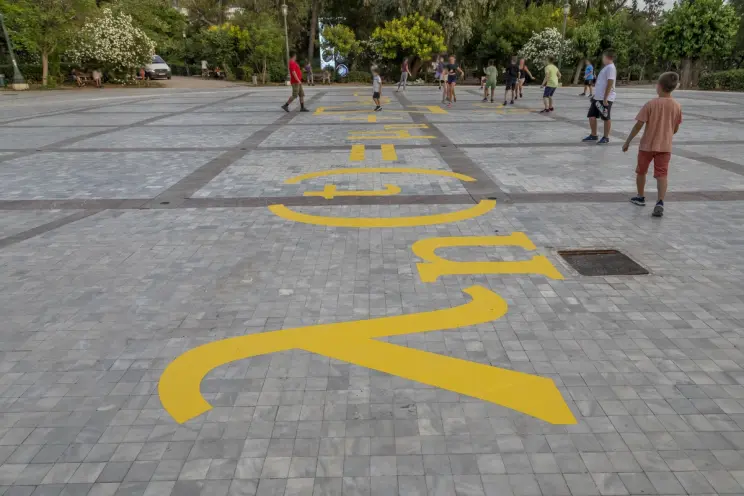
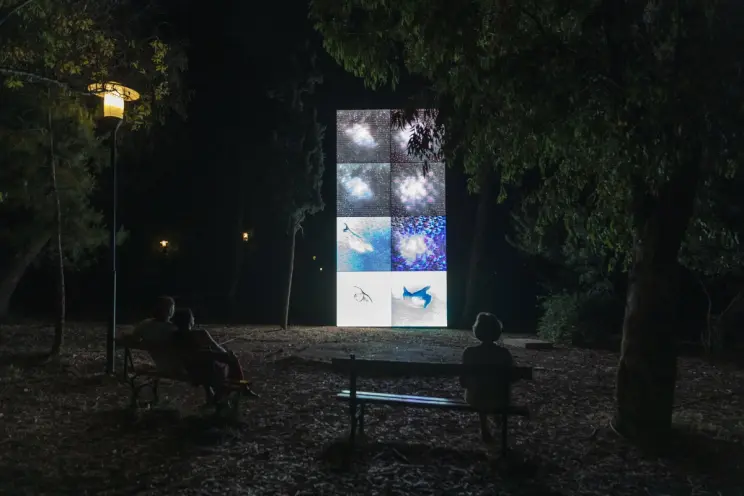
In my curatorial work, I have often explored how artists use speculative fiction, mythologies, folk tales, and hidden histories as lenses to explore truths emerging from the past, present, and future of technology. You and AI aimed to explore, interrogate, and challenge perceptions about a technology we falsely perceive as “intelligent” and autonomous. Through a series of curated journeys unfolding under themes of privacy, democracy, civic space, perception, and environment, the exhibition examined the architectures behind AI systems and their impact on society and communities, while inviting people to rethink and reimagine these technologies.
Something I hadn’t properly thought about in the show’s curation was how the location of the exhibition might give new meaning and purpose to conversations I’m used to having inside closed walls; at museums, academic institutions, and gallery spaces. Presented in a public park right at the heart of multicultural Athens, home to a diversity of communities, this exhibition not only prompted dialogue with people usually missing from these spaces, but also people absent or underrepresented in the technologies we were putting to question.
In front of Mushon Zer-Aviv’s “The Normalising Machine The Normalising Machine ,” local residents came to reflect on algorithmic prejudice and social normalcy, questioning how, through technologies taking over private and public spaces, we come to define what is “normal.”
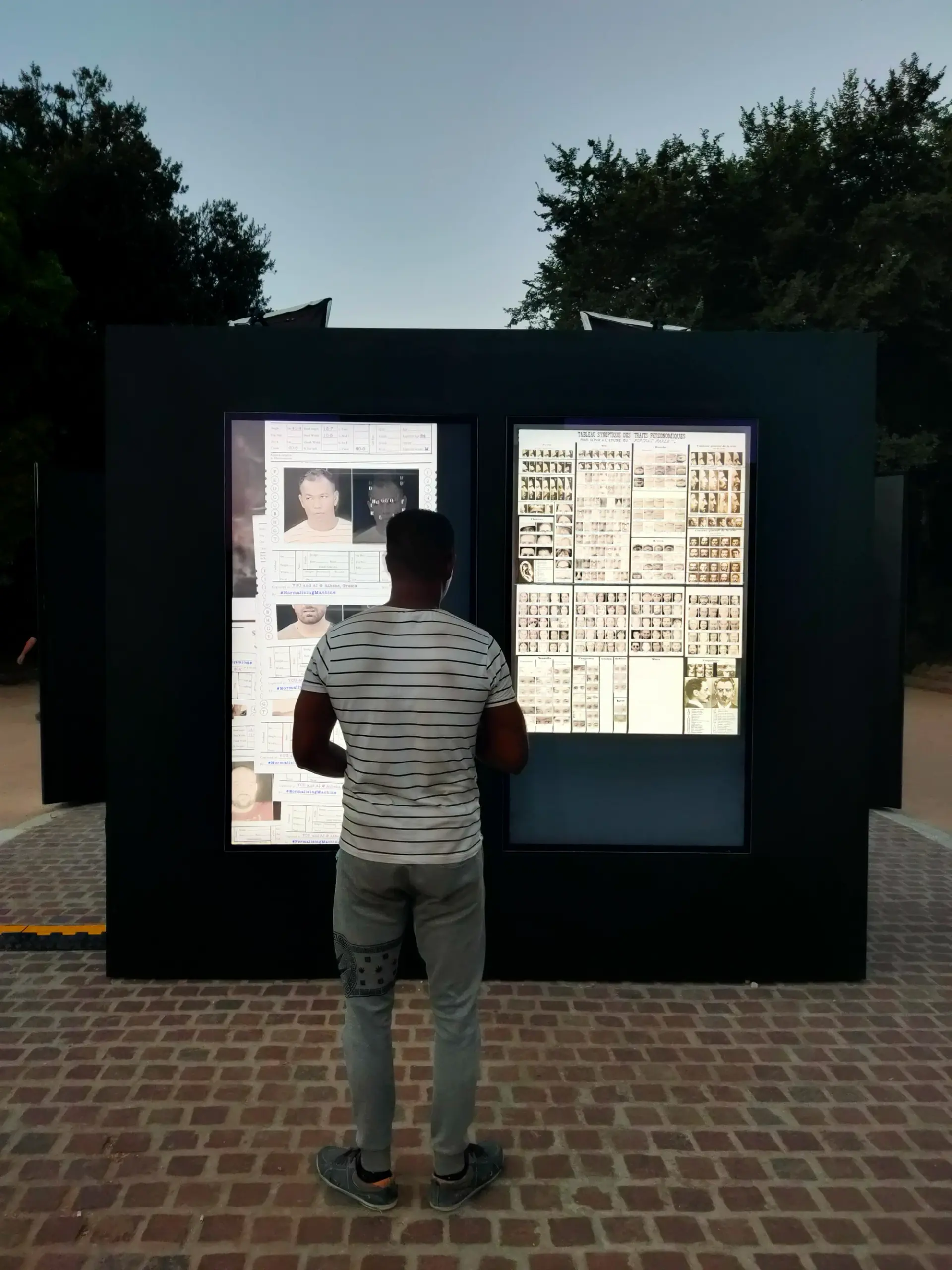
Mushon Zer Aviv, The Normalising Machine. You and AI: Through the Algorithmic Lens, Onassis Stegi, Athens.
Photo: Irini Mirena-Papadimitriou
Participants would select faces from a pre-recorded line up that they felt looked “more normal.” While analyzing visitors’ expressions and decisions, the installation triggered discussions about racial stereotypes and bias from humans to algorithmic systems, namely facial recognition and concerns about machines labeling people as potential criminals based on their race or background.
“The Normalising Machine”—while taking a critical perspective on privacy, surveillance, data, and algorithms—lays bare the systematic discrimination hidden inside the black boxes of AI, exposing how it automates and amplifies past, abandoned physiognomic practices of categorizing human faces that relied largely on racial stereotypes. Coincidentally, the work was shown in Athens following protests in response to a government bill that would allow police presence—and therefore increased monitoring—on university campuses. The timing couldn’t be more pertinent!
Artists have always played an important role in how technologies emerge, are shaped, and develop, from Brunelleschi’s linear perspective and the camera obscura to virtual reality and AI. By engaging and experimenting with technologies in unexpected ways, artists influence and disrupt them, revealing possibilities but also risks that may not have been exposed otherwise.
As artists respond to current issues and use their work as portals to alternative views or spaces for interruption, rethinking, and remaking, art is more than just technology’s passive ally. Such artistic narratives—poetic, speculative, alien—break from digital monocultures, repositioning technology within multicultural stories and humanness.
Morehshin Allahyari is an artist whose work has and continues to influence my thinking and curatorial practice. Her work interrupts, reshuffles, and refigures stories and histories while opening up ways for seeing into the future beyond western-centric approaches.
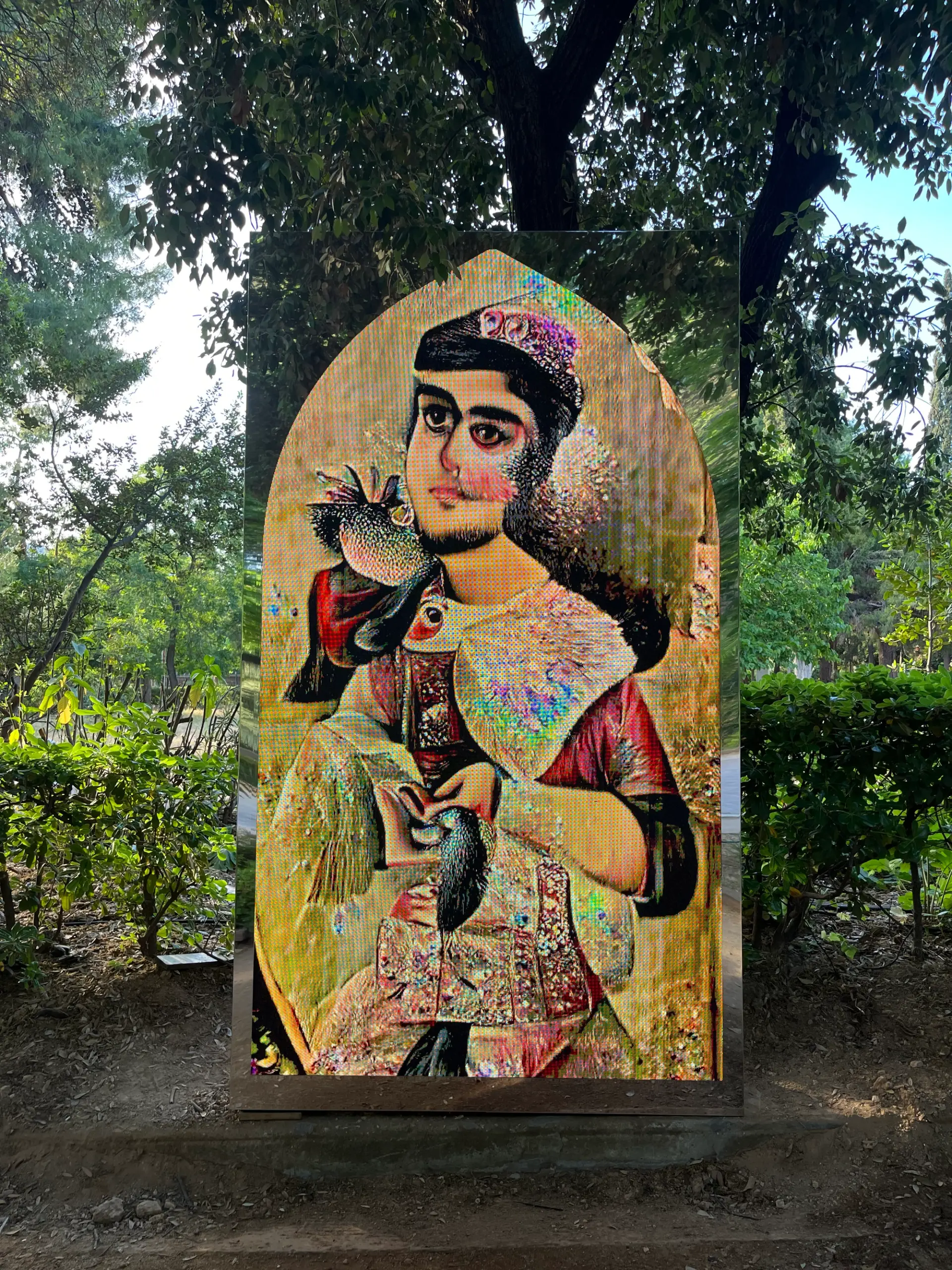
Morehshin Allahyari, ماه طلعت / Moon-Faced. Plasmata: Bodies, Dreams, and Data. Onassis Stegi, Athens.
Photo: Irini Mirena-Papadimitriou (2022)
In her work “ماه طلعت (Moon-faced) ماه طلعت (Moon-faced) ,” Allahyari addresses the loss of non-binary gender representation in Persian visual culture as a result of European influence by using AI technology to repair this history and take back control of the narrative.
Due to colonialism and western influence, the gender and beauty fluidity present during Iran’s Qajar Dynasty (1789-1925) has been erased from much of the contemporary understanding of Iranian culture. Queerness, as we understand it today, was actually ordinary then.
Through meticulous research in Qajar Dynasty painting archives, Allahyari selects data to train AI to paint genderless portraits that bring to the surface histories and knowledge that have been left out. Allahyari’s work is important and urgent as it activates critical reflection and allows us to process hidden stories from a non-western perspective, while subverting AI’s tendency to reproduce stereotypes, social bias, and patterns of colonial history.
Artists like Allahyari and Zer-Aviv, whom I had the privilege to work with recently, have been significant in exploring counternarratives in opposition to (western) technological colonialism, reductionism, and biases. Other artists I’ve encountered are interrogating definitions and meanings of posthumanism, futurity, and decolonization while questioning what it means to be human in a transforming world.
Recently, I was in Bangalore working on a collaborative curatorial project with art and tech platform BeFantastic BeFantastic . Its focus was on art and AI in the context of climate change and from the perspectives of the Global South. I had the chance to delve deeper into local artistic practices such as Antariksha Studio’s “Elsewhere in India Elsewhere in India ,” a video game experience and live performance exploring visions of the future.
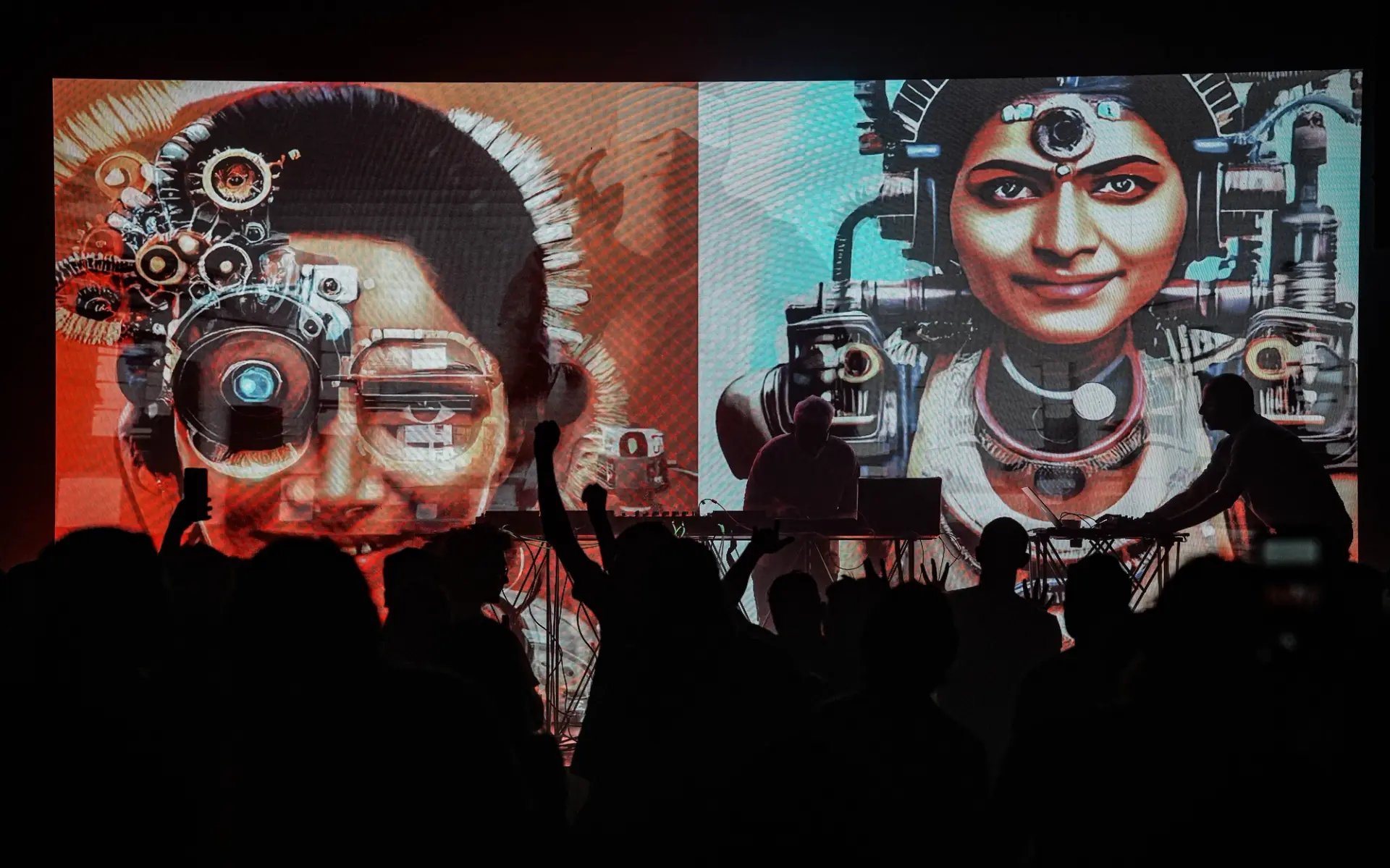
Antariksha Studio, Elsewhere In India, Live at Antisocial Mumbai, 2023
Photo: Abhishek Shukla (2023)
Remixing Indian traditions, storytelling, AI, video game technology, and South Asian culture, “Elsewhere in India” transports us to a time when cultural heritage is threatened with extinction. Cyborgs, humans, machines, crafts, rich colors, and music create an immersive experience through space and time. These elements come together—evolving from local identities, heritage, and storytelling—to pave the way for new technological imaginations and relations. AI in this case is not an isolated or autonomous force that drives change by itself. Instead, it is reframed as a tool very much rooted in history, knowledge, and labor, and used here for creative, collaborative innovation.
The aforementioned works activate radical imaginations and become portals for what if scenarios and future visions from the Global South. At a time when our world almost can’t function without digital devices, computing, or the internet—when machine learning algorithms are implemented in life-making or breaking decisions—there is an urgent need to think more as a human rather than machine society.
As technology enables new bureaucracies, tools of control, colonialism, and inequalities, how can art use and shape technology better? To paraphrase Bill Viola, perhaps allowing art as a process to wake up our soul can allow us to see that different realities and stories of our future are possible.