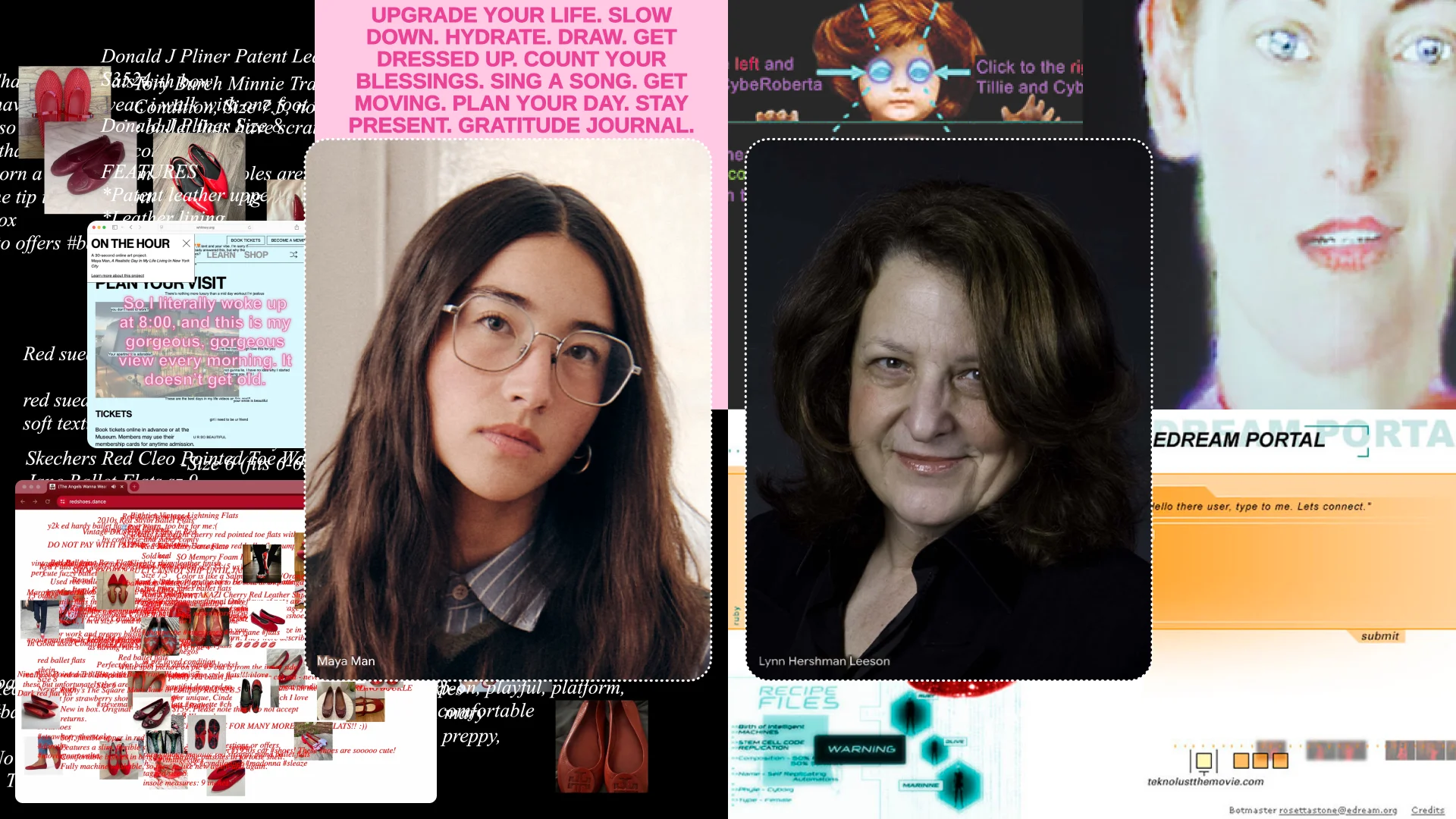
From left to right: Maya Man and Lynn Hershman Leeson, From Maya Man and Lynn Hershman Leeson On Art and AI in discussion on August 12, 2026.
Maya Man and Lynn Hershman Leeson talk AI, “not art,” and making art that uses and speaks to your technological reality.
Artlab Editors: The phrase “artificial intelligence” is less a precise description of specific technological developments, and more of an umbrella term covering a range of tools, techniques, interfaces, and rhetorics that orient themselves around the idea that machines can “think” and execute tasks intelligently and autonomously. For artists like Maya Man, working with AI today means playing with a funhouse mirror of data slushes and thinking through its warped reflections. It’s about using AI tools anyone can access to better understand the world we live in.
In her previous essay for Artlab Editorial, Man looked back on the histories of conceptual art movements for some historical precedents to ground her work and offer a nuanced response to the naysayers who claim AI is antithetical to art. But as Man notes in this following interview, Lynn Hershman Leeson is one of these artists whose work we increasingly point to and say, “Well, Lynn was doing this in the 70s.” Since the 1960s, in fact, Lynn Hershman Leeson has been stubbornly committed to the ever-changing present. Her works have long dealt with and used artificial intelligence, surveillance technologies, digital subjectivity, and even genetic modification in frequently durational and multimedia works that are dazzlingly ahead of her time, and frankly, ours too.
Artlab Editorial joined Man and Leeson in a conversation about their artistic practices, tech-based art throughout the decades, and the artist’s role in the age of AI.
The following interview has been edited for length and clarity.
Artlab Editors: Maya just wrote this essay for us about what it means to work with AI and situated her practice within the legacy of conceptual art. She made really interesting comparisons between prompt writing (for AI) and writing instructions for conceptual art. But before we get to that I wanted to hear from both of you: How did you first learn about AI and when did you decide to use it in your artistic practices?
Lynn Hershman Leeson: When I began using it, it didn’t have a name. I began by both improvising and talking to programmers. The name Artificial Intelligence happened perhaps two or three years after I’d already started to work with it.
Maya Man: Writing code and being on the computer have been major parts of my practice since the beginning. I naturally saw the computer as a place for performing. But I became more interested in using AI specifically when I felt like it was seriously infringing on our idea of reality. I’ve always been interested in the relationship between what is fake and what is real.
Artlab Editors: Can we get more technical? AI discourse tends to homogenize all these tools, but the term “artificial intelligence” encompasses such a wide range of techniques. How do you each work with AI and how did you make these techniques your own?
Lynn Hershman Leeson: I’ve worked with three programmers for over 20 years and I kept asking them if they could do something more specific than what was available with ordinary coding tools. So I can’t take credit for having done it because I work with a team in order to accomplish these projects.
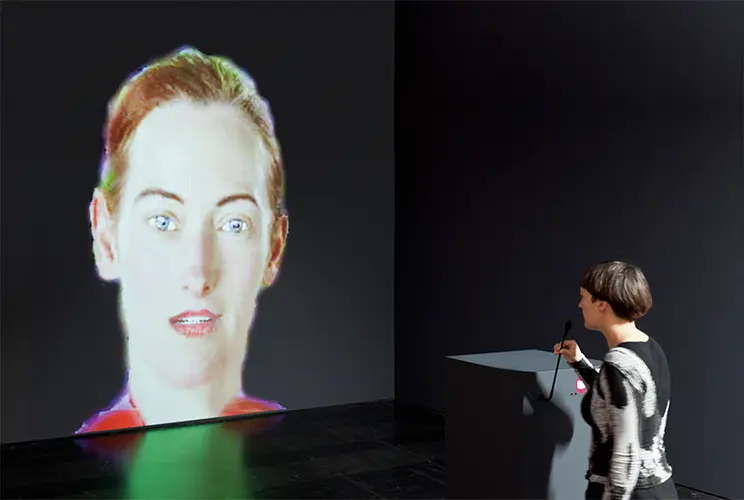
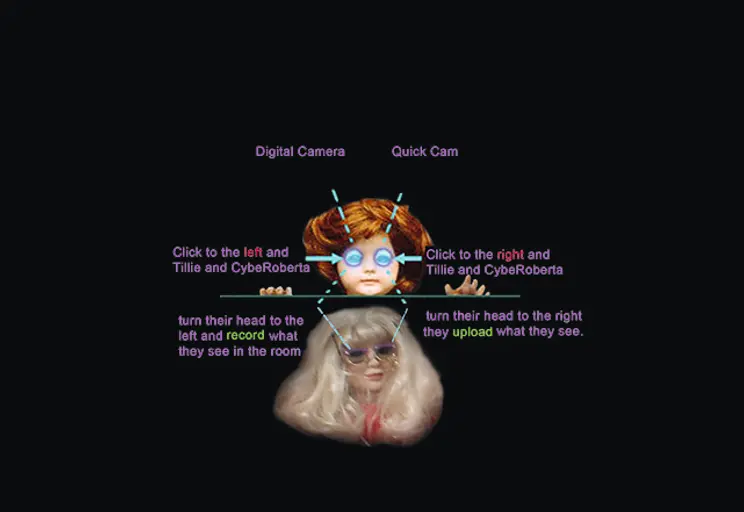
Maya Man: I studied computer science in school and have always programmed everything myself, so my process ends up being a lot of trial and error. I also try to see how far I can push a piece of technology until it starts to reveal some kind of strangeness that I find compelling.That's when I start to get excited about working with new technology-based tools. But Lynn, your work has always been so ahead of its time and, in your new book new book , you talk about the waiting for the world to catch up. How did that shape your relationship with your programmers? How did you know what to ask for?
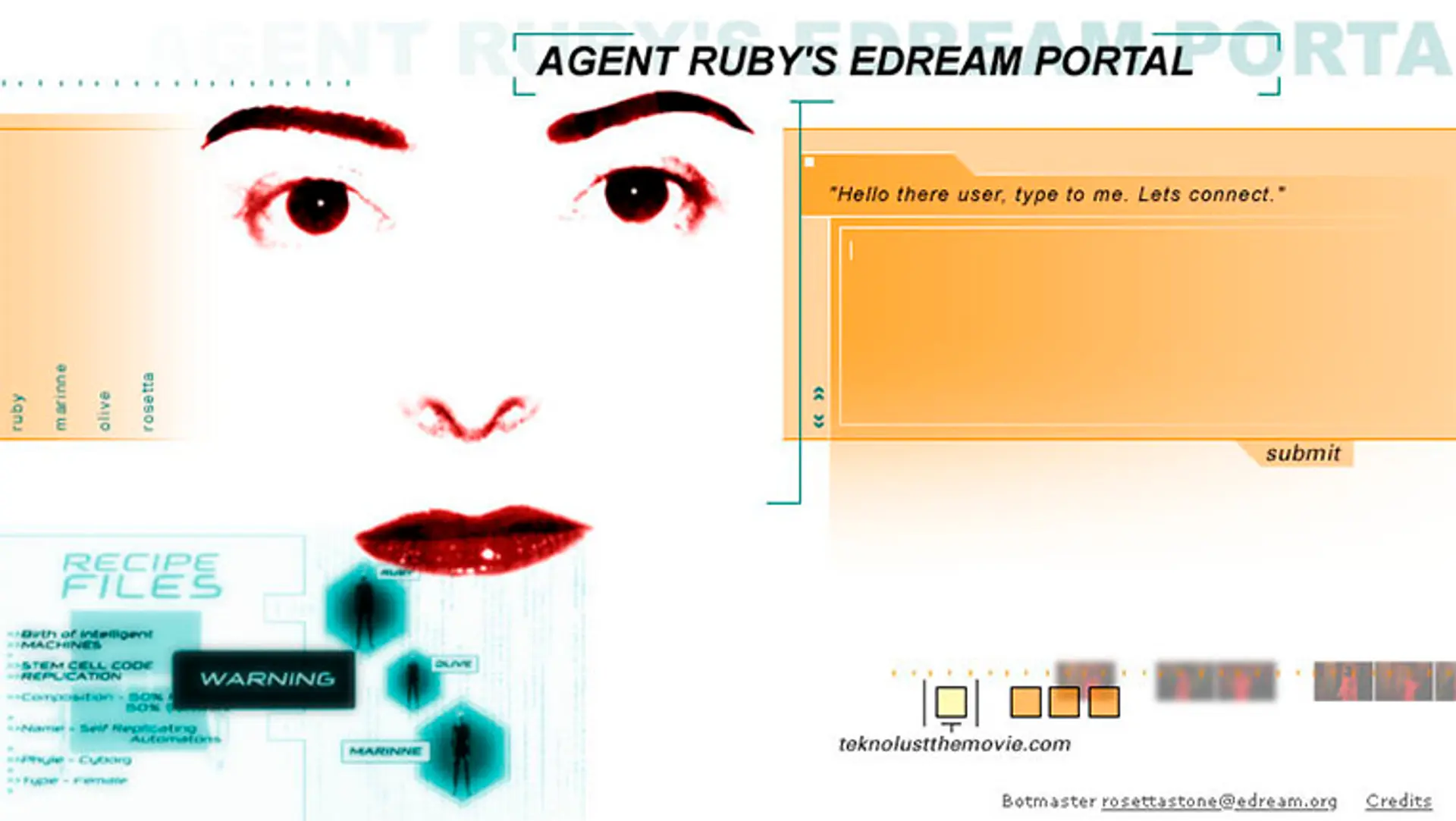
Lynn Hershman Leeson, Agent Ruby’s EDream Portal, 2002, screen shot: agentruby.net. Collection of the San Francisco Museum of Modern Art.
Lynn Hershman Leeson: I think it’s an advantage for me not to know anything because I don’t know what’s not possible. I bring things up and the programmers I work with say, “Oh yeah, I never thought of that,” and then we try to do it. I think if I were trained in coding, I probably wouldn’t go around that edge.
I was just looking at things that hadn’t been done. I always thought that artists should use the technology of their own time in order to speak to the issues of that time.
Artlab Editors: I’m sure the answers are obvious, but how do you identify what those technologies are and the terms that you work with them?
Lynn Hershman Leeson: It’s just a matter of seeing and inventing what you think could be possible that doesn’t exist yet, and then finding people to do it. I’ve been working with a team of programmers for a couple decades. But I think an artist’s job is to think about what doesn’t exist that speaks to the time they are actually in.
I was just looking at things that hadn’t been done. I always thought that artists should use the technology of their own time in order to speak to the issues of that time.
Artlab Editors: I’m sure the answers are obvious, but how do you identify what those technologies are and the terms that you work with them?
Lynn Hershman Leeson: It’s just a matter of seeing and inventing what you think could be possible that doesn’t exist yet. And then finding people to do it. I’ve been working with a team of programmers for a couple decades. But I think an artist’s job is to think about what doesn’t exist that speaks to the time they are actually in.
Maya Man: I’ve always wanted to reflect my experience of the world I’m living in. And a lot of that world is constructed through technology. So it’s always felt like the most natural thing in the world to me. I think it’s quite natural yet untraditional.” That’s where a lot of the friction happens.
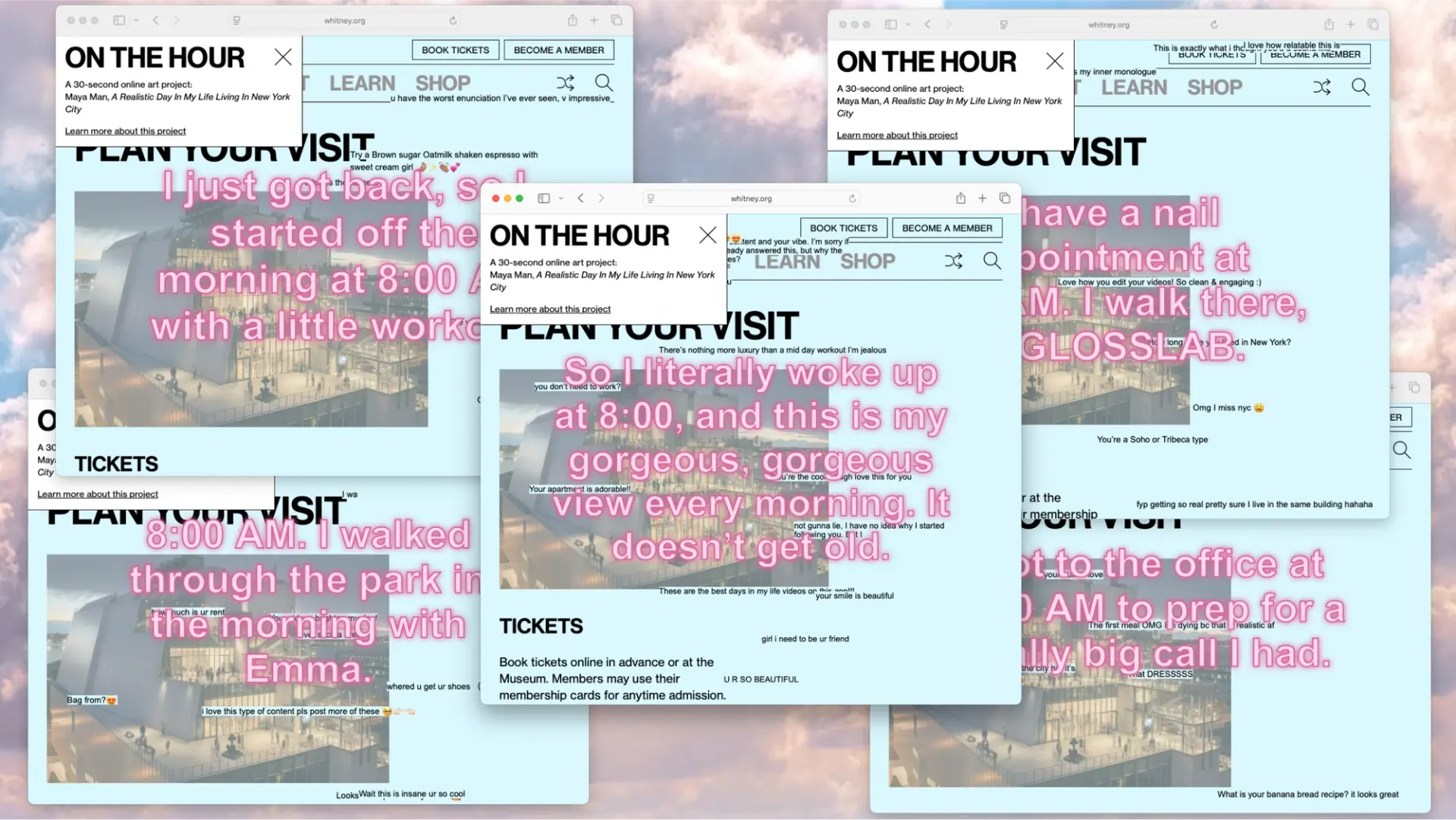
Maya Man, A Realistic Day In My Life Living In New York City, 2024, custom generative software, color, silent, for the 'On The Hour' series on artport at the Whitney Museum of American Art, screenshot of the work across multiple browser windows. Courtesy of the artist.
Lynn Hershman Leeson: For me, it’s a great advantage to live in the Bay Area because if people in LA breathe scripts, up here they breathe code, and as an artist, one gets infected by it all.
Maya Man: How you see your role in working with new technologies, since you’re also a filmmaker. Do you see yourself as a director even when you’re making something software-based and working with programmers?
Lynn Hershman Leeson: No, I always come from a point of not knowing anything. So I think of myself as an amateur that throws out crazy ideas. The people I work with tend to like that. You have to have a good sense of humor and figure nothing’s going to work and have some kind of instinct or intuition that it just possibly might work and that it’d be great if it did. It’s really a matter of staying with the project and not giving up.
Maya Man: I’ve been writing recently about conceptual art as a framework for working with new technology and thinking about the machine as executing a work and its instructions as the basis for an artwork. How do you situate your work? Do you think about conceptual art and that lineage in your work?
Lynn Hershman Leeson: I think it’s a continuation of that. And we say it’s conceptual but it actually exists, you know? Like conceptual art exists as well.
I almost titled my book “Not Art” because everybody told me what I was doing wasn’t art. Culture tends to live in the past, and if you’re in the present and dealing with issues that are pertinent and materials that are just being invented, people are very resistant because it means that they have to change their attitude.
I think it’s just a matter of keeping your sense of humor and really believing in what you’re doing. If you’re thinking about it then there must be some logic or some cohesive way that it’s interfacing with the time that you’re living in. As an artist you use tools of your time to see the issues of your time and amplify them that way.
Maya Man: I think especially in art, people are much more comfortable pointing back to art history to be able to validate something that’s happening now. And now, people point to your work and say “well, Lynn was doing this in the 70s.”
Artlab Editors: Lynn, your first AI works were completed in the nineties. But Maya, your essay touches on how AI is impacting how artistic skill is valued in the marketplace and how that affects how artists are able to earn a living. An artist working with AI now has to not just defend their work as art, but justify their work on another level.
Maya Man: And I share a lot of the concerns and questions around how AI will impact labor for artists, especially more commercial art opportunities. But I’ve always felt that it’s the artist’s role to use the tools that are available today to ask big questions. I don’t view an artist’s engagement with a technology as a wholesale endorsement of all of its use cases. I think some of the most important technology-based work that exists makes intelligent use of the technologies that it intends to critique.
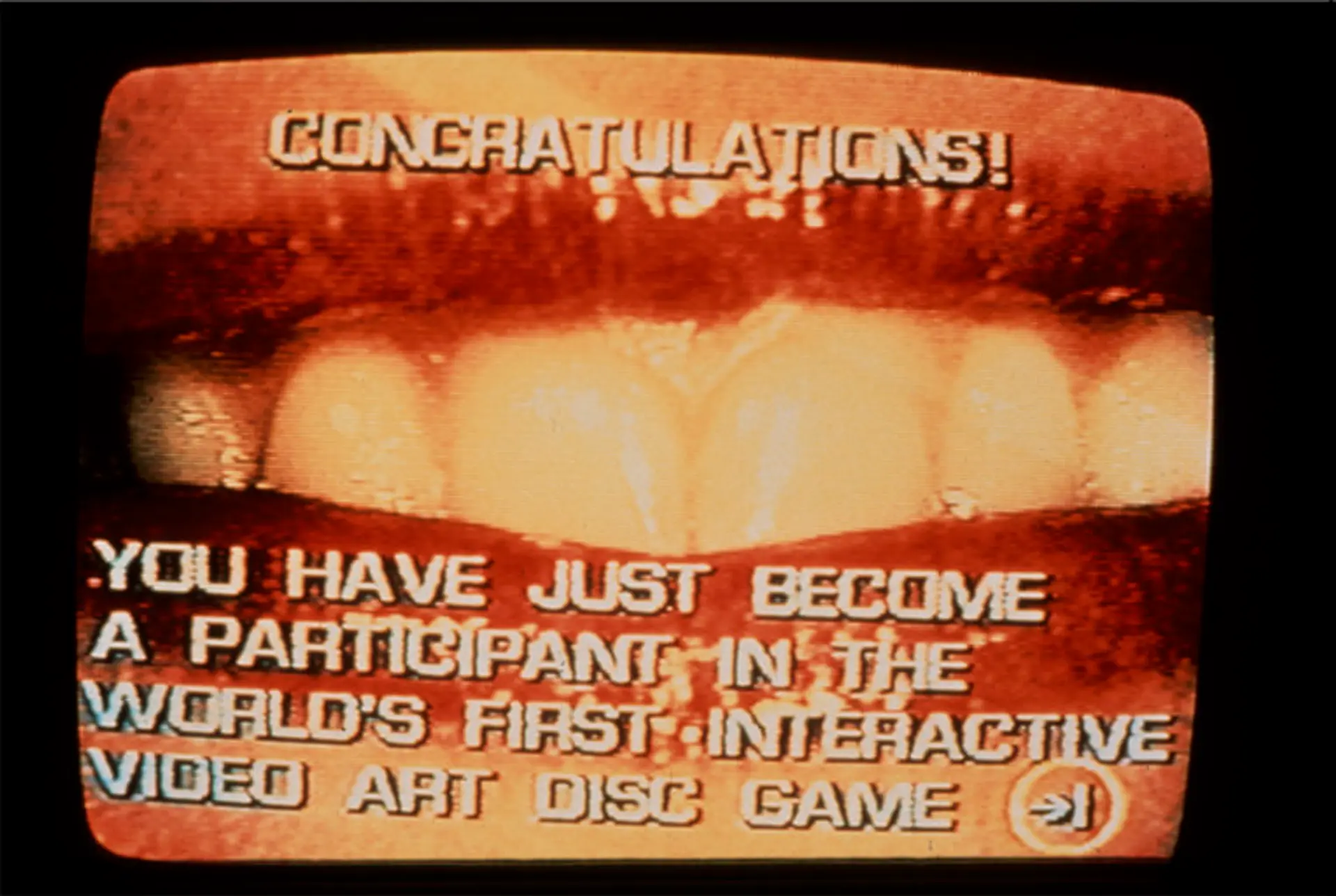
Lynn Hershman Leeson, Lorna, 1984, interactive videodisk installation, infinite duration, video stills
Lynn Hershman Leeson: When I had my first retrospective, the work that was in it was made 35 years prior to the exhibition, and that was the first time it was ever shown because of the enormous prejudice of people not wanting to deal with their current conditions. You have to just use the tools of your time to talk about the issues of your time. But keep notes so that you know keep all of your records for the future! (laughs).
Artlab Editors: It would be easy to assume that because you’re artists working with AI, you might have some privileged insights or unique connection to these technologies. Is that true? Does your practice teach you something most people might not know?
Maya Man: I don’t think it’s privileged. I like using mass consumer-oriented pieces of technology that anyone might be using because I’m very curious about how people are living now, how I’m living now. All the times that I’ve worked with AI, I’m using a lot of tools or models that are pretty generally accessible to anyone.
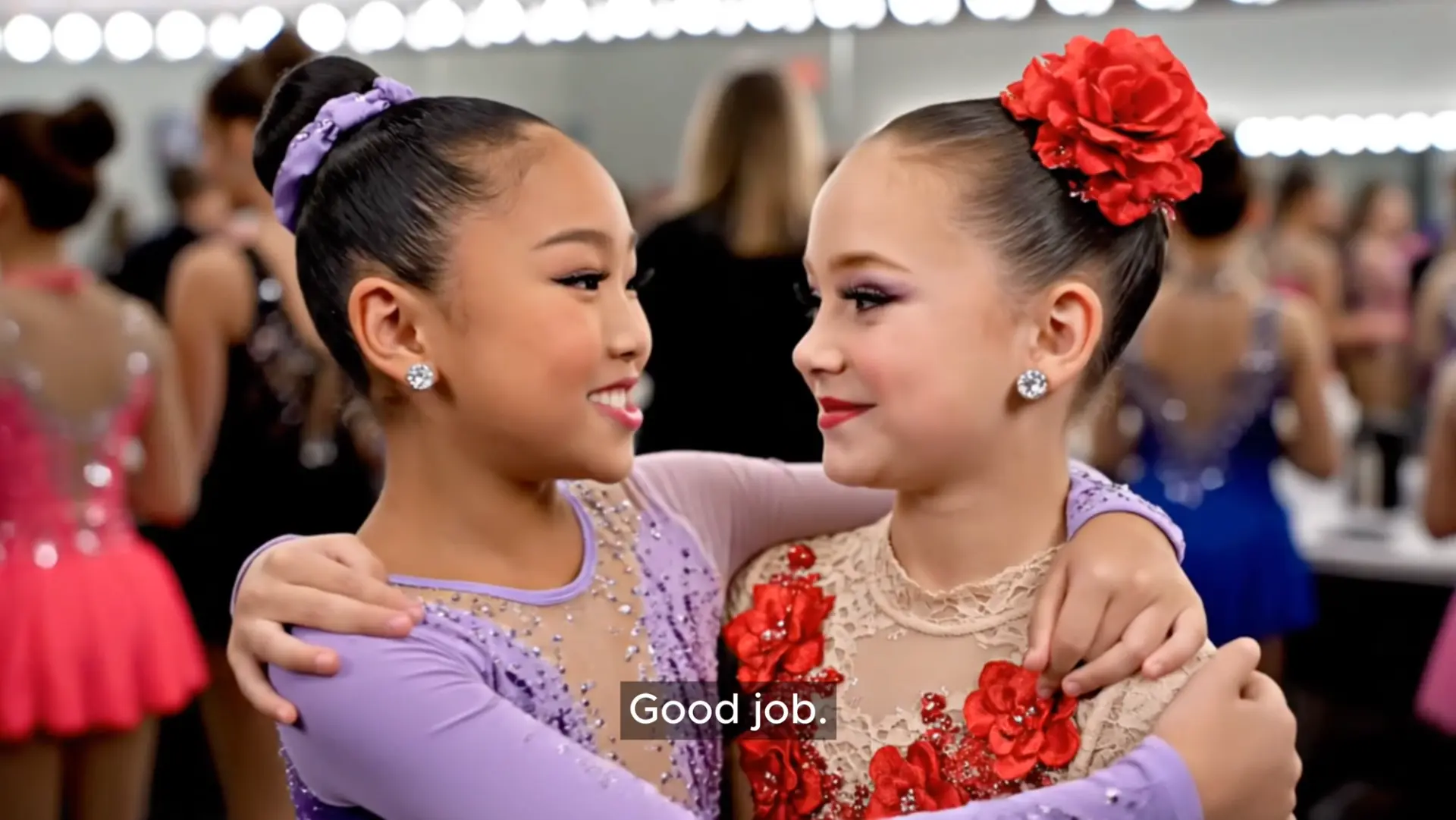
Maya Man, StarQuest, 2025, custom generative software, color, sound. Courtesy of the artist.
Lynn Hershman Leeson: It’s sort of like if you trust it, then the reward is that you actually are doing things that you wouldn’t have gotten to otherwise.
Maya Man: It’s such a strange warped mirror, especially neural nets where the training data produces this average of all the biases and associations embedded into our culture. And it’s such a faith-based relationship. When working with a generative system, whether it’s software or an AI model, as an artist, you give up a degree of agency to whatever you’re using.
Lynn Hershman Leeson: Yes. You do the same thing with a pencil.