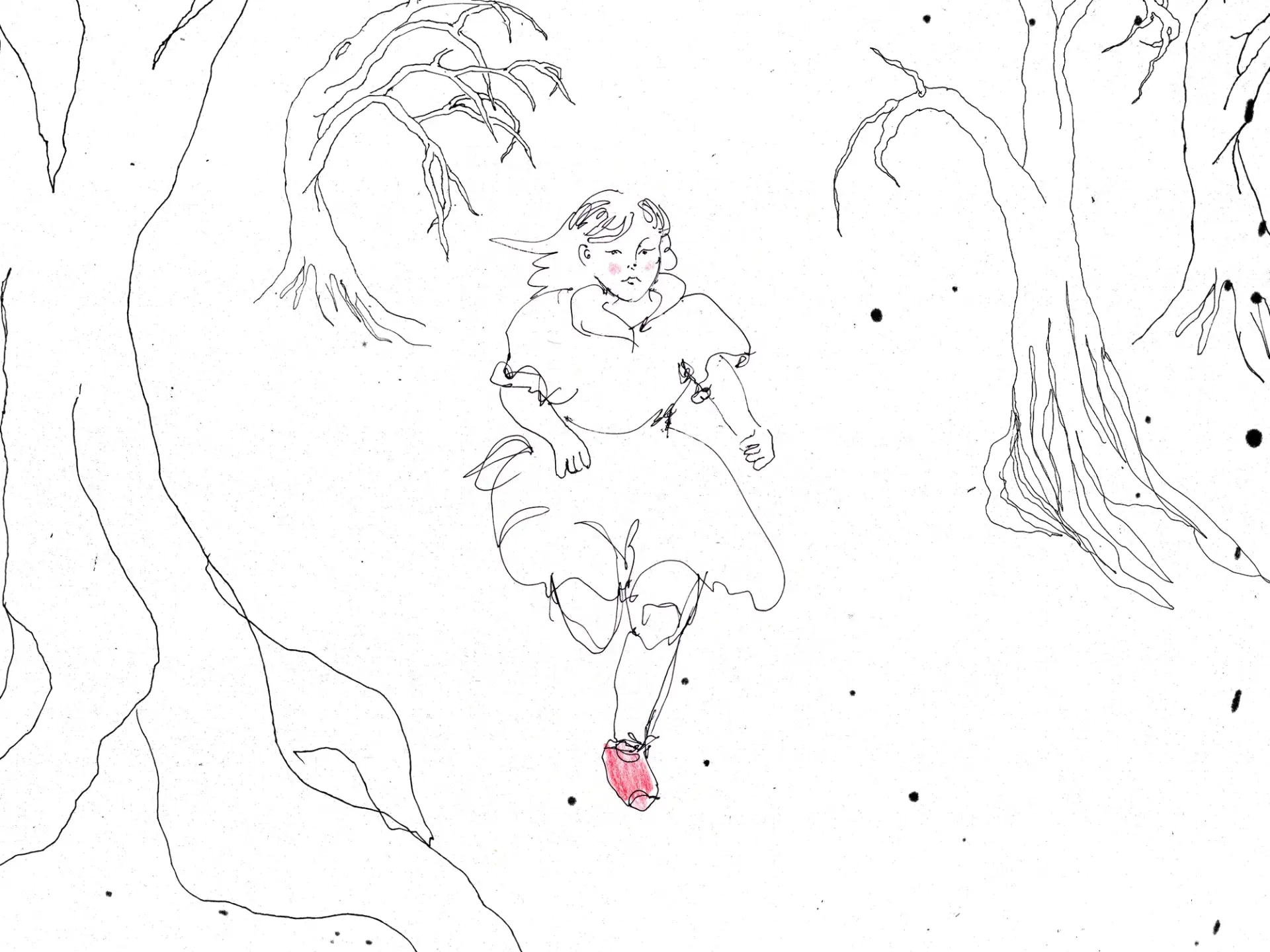
Chia Amisola, “There Are No Gardens on the Internet,” 2026. Commissioned by Hyundai Artlab © Chia Amisola.
Matthew Prebeg reviews “There Are No Gardens on the Internet,” an Artlab Digital Commission by artist and tech worker Chia Amisola.
Artlab Editors: Writer and designer Matthew Prebeg digs into the roots of the phrase “digital garden” to describe his wandering experience through Chia Amisola’s latest work, “There Are No Gardens on the Internet.” While he can relate to the desire for a cozy and cocoon-like corner of the internet, he turns to Amisola’s hypertext for a way through, and eventually out of, the garden gates.
A garden is a classroom. That’s what my second grade teacher, Mrs. Lutch, would say as we traded our science textbooks for shovels and headed for the flowerbed behind the playground one spring afternoon. By May, our little town on Lake Erie would be fluttering with migrating monarch butterflies, and it was our job to plant milkweed for them to lay their eggs on. I took this job very seriously, in fact, I made sure to check on the growing caterpillars every recess. My definition of a garden was as small as a chrysalis, just as unaware of the walls it lives inside.
A garden is wild, but it is also not. According to landscape historian John Dixon Hunt, a garden is an enclosed space that holds some sort of relationship to the outside. It is an in-between space, not purely nature nor architecture, but a place where the two are in dialogue with one another. While gardens across cultures and centuries are incredibly variable—a Japanese dry garden has almost nothing in common with a Persian pairidaeza—structurally, they all presume a degree of enclosure. Whether we draw a line in the dirt or build a wall, a garden has an inside and an outside, a here and a there. The Wikipedia article for “Garden Wikipedia article for “Garden ” puts it more bluntly: “The single feature identifying even the wildest wild garden is control.”
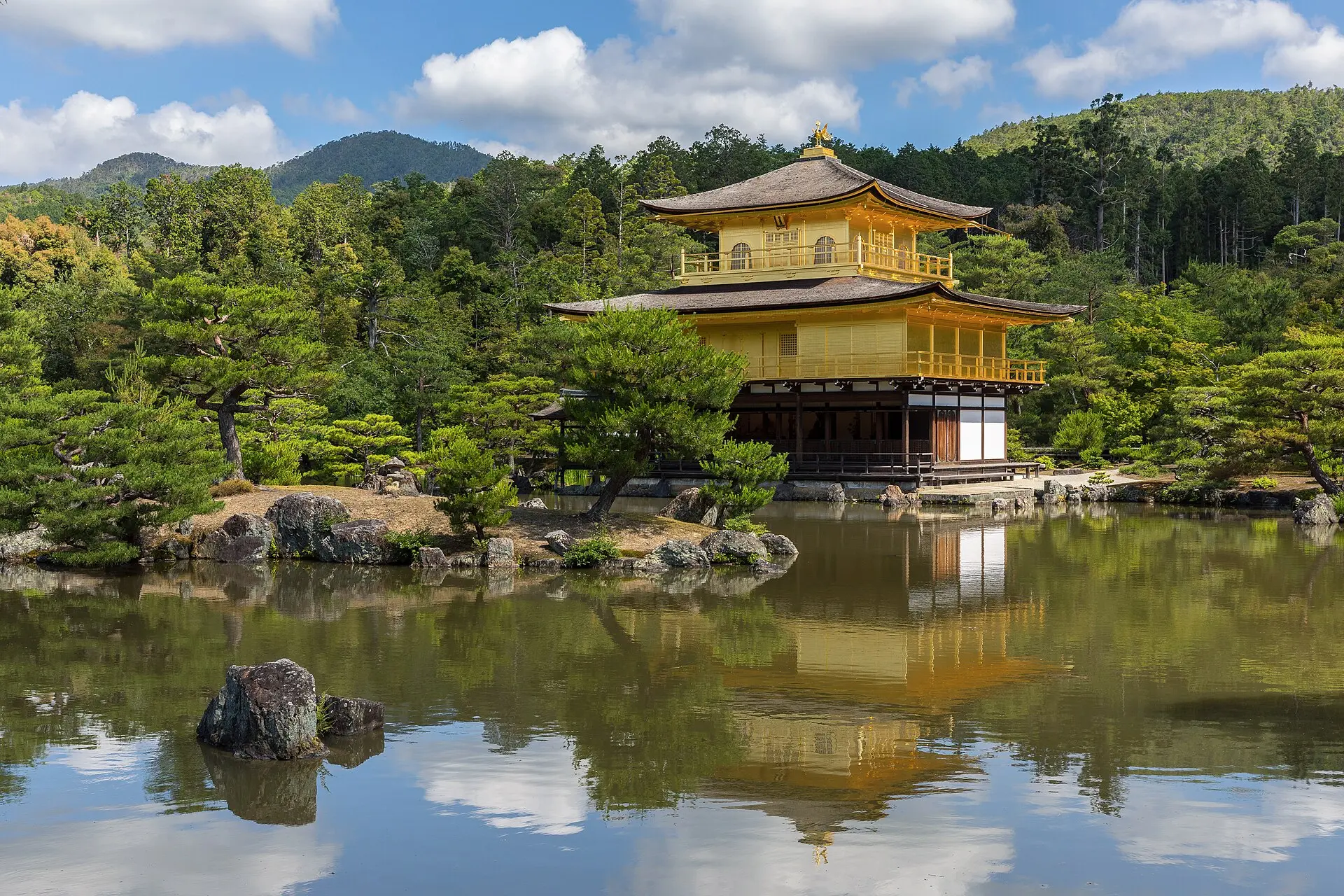
Water reflection of Kinkaku-ji Temple with blue sky and white clouds, Kyoto, Japan. Source Source .
I first heard of a “digital garden” in my university days studying new media. The “indie web,” as I came to know, was a creative renaissance for more personal, handmade websites. This involves a revival of older web ideologies, like self-hosting and decentralization, as an alternative to relying on corporations to host and monetize our online activity. Sites often feature Old Web aesthetics—system fonts, low-res gifs, “under construction” banners. Services like Neocities aimed to “make the web fun again” through free web hosting, giving rise to a plethora of static web pages that evoke the feelings of a past time on the internet, such as the Museum of Modern Gifs Museum of Modern Gifs , MelonLand MelonLand , and acres of digital gardens. Nostalgia for a simpler time on the web comes easy, and a digital garden in the thickets of cyberspace does feel cozy.
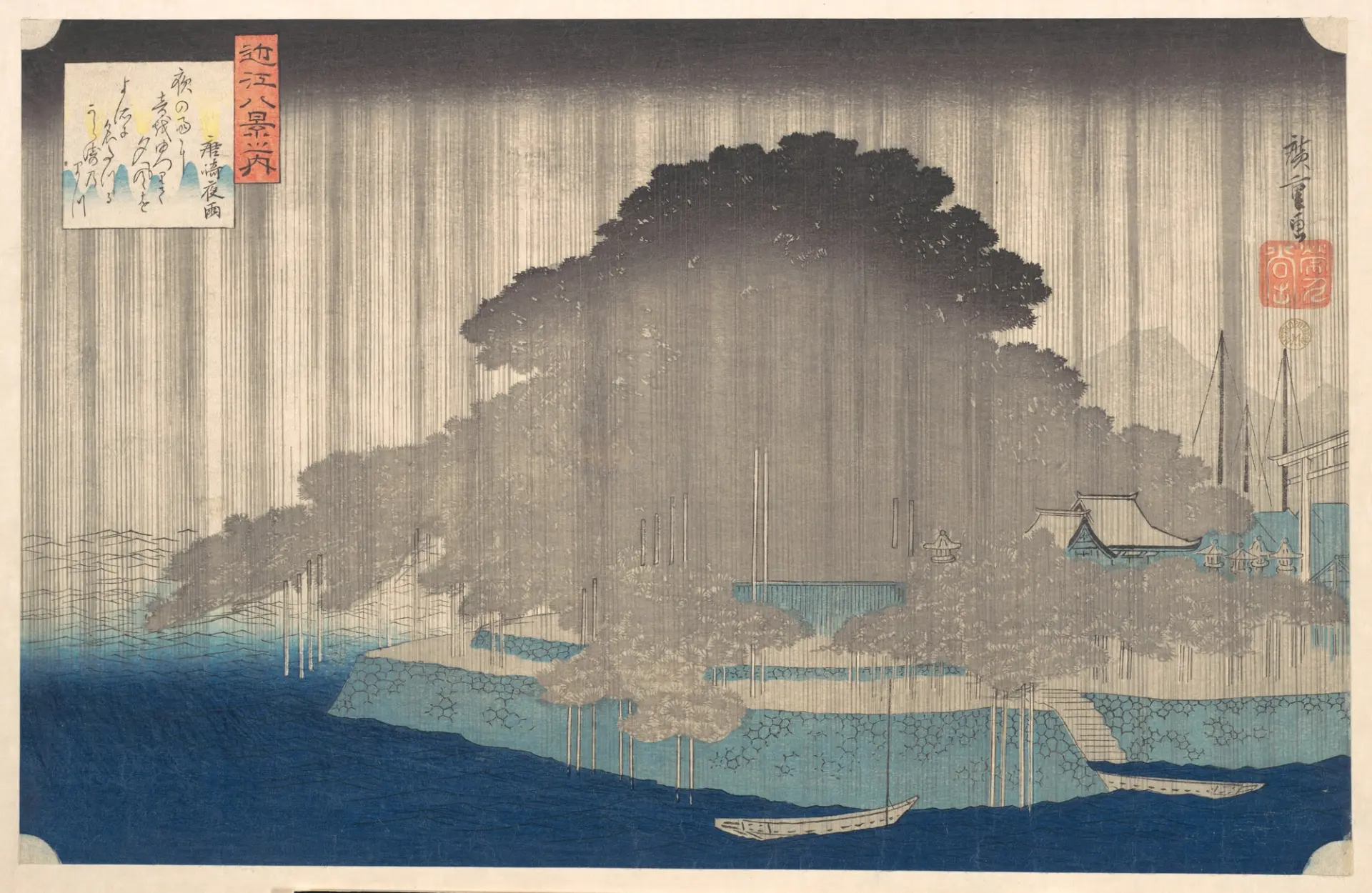
Utagawa Hiroshige, Night Rain at Karasaki, from the series “Eight Views of Ōmi (Ōmi hakkei no uchi),” ca. 1835. Woodblock print; ink and color on paper. Source: The Metropolitan Museum of Art, Rogers Fund, 1914.
Designer and anthropologist Maggie Appleton described the history and ethos of the digital garden the history and ethos of the digital garden as a philosophy for publishing personal knowledge on the web. Appleton dates the term’s first emergence to Mark Bernstein’s 1998 essay, “Hypertext Gardens Hypertext Gardens ,” which describes what early web researchers called the Navigation Problem, wherein “hypertexts would enmesh readers in a confusing tangle of links.” The internet of the nineties was a sprawling wilderness of links that grew in every which direction, and digital gardens offered a clearing. Bernstein was concerned with striking the right balance by maintaining “the promise of unexpected delight,” without ushering explorers into a wilderness. But enclosure online meant something very different in 1998 than it does today.
“Could I create my own little garden on the internet, to sink my fingers in the soil of the web, and come to understand the material reality of the technology it uses?”
— Harriet Horobin-Worley, Can A Website Be A Garden? [object Object]
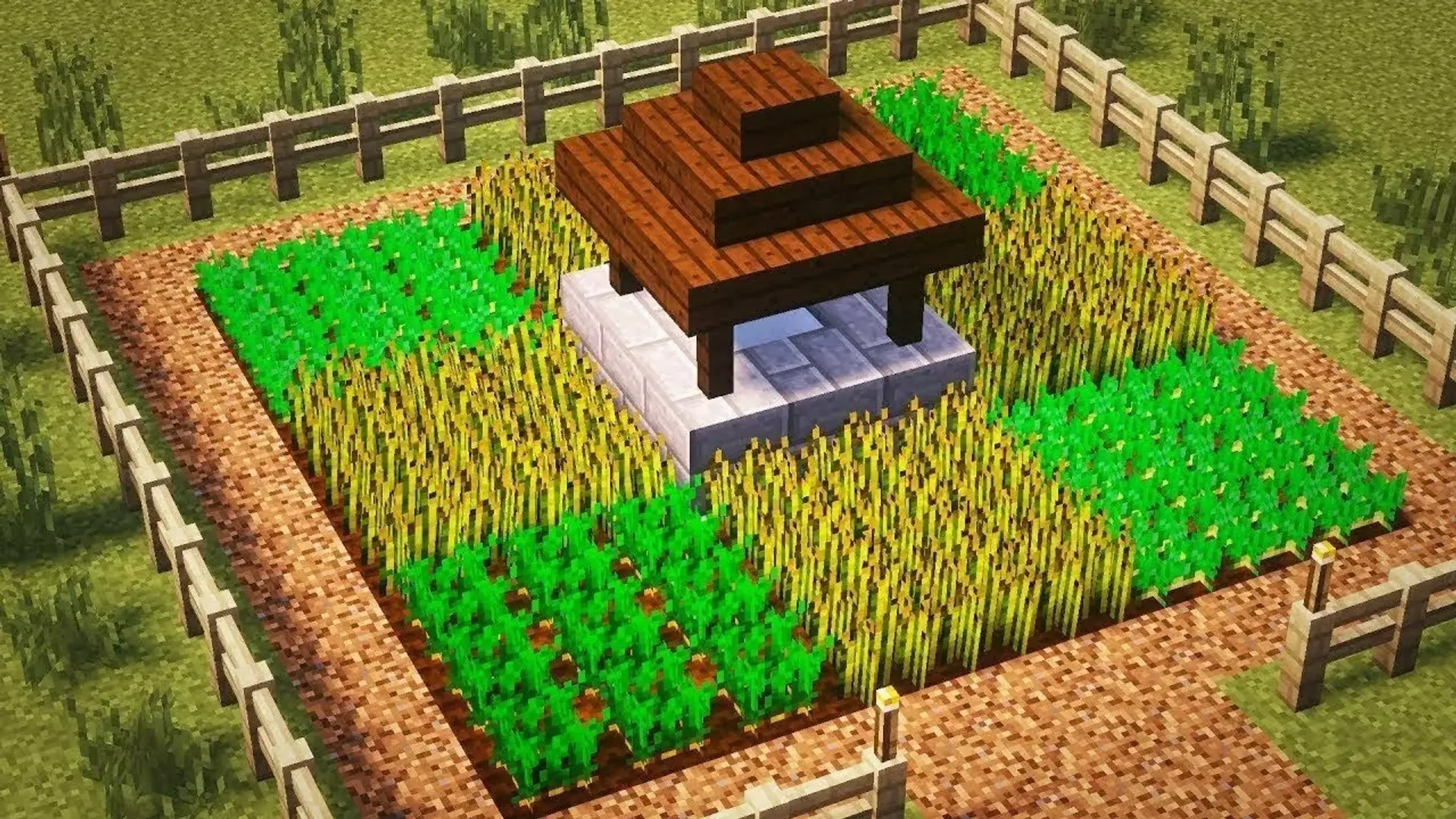
Phil Houtz, “Origins of the digital garden,” “Origins of the digital garden,” 2020.
In “There Are No Gardens on the Internet,” artist Chia Amisola interrogates the metaphor of the “garden” in digital culture, paying particular attention to what is lost when we build enclosures and naturalize predation online. The piece is a hypertext point-and-click: After clicking in I am transported to the Garden and left to wander, free to take the flowers, eavesdrop on the ladybugs, or just sit for a while under the chirping birds. I was struck by the image of a butterfly fluttering by a tree stump, slowly flying offscreen. Above, a passage from Nathaniel Hawthorne’s The Artist of the Beautiful (1844) reads: “Nature’s ideal butterfly was here realized in all its perfection; not in the pattern of such faded insects as flit among earthly flowers, but of those which hover across the meads of paradise.” Amisola gives us an opportunity to move like the butterfly and hover across the meads of this hypertext paradise. The images arrest, the interactivity pace your rhythm, and the text swerves you in many different directions.
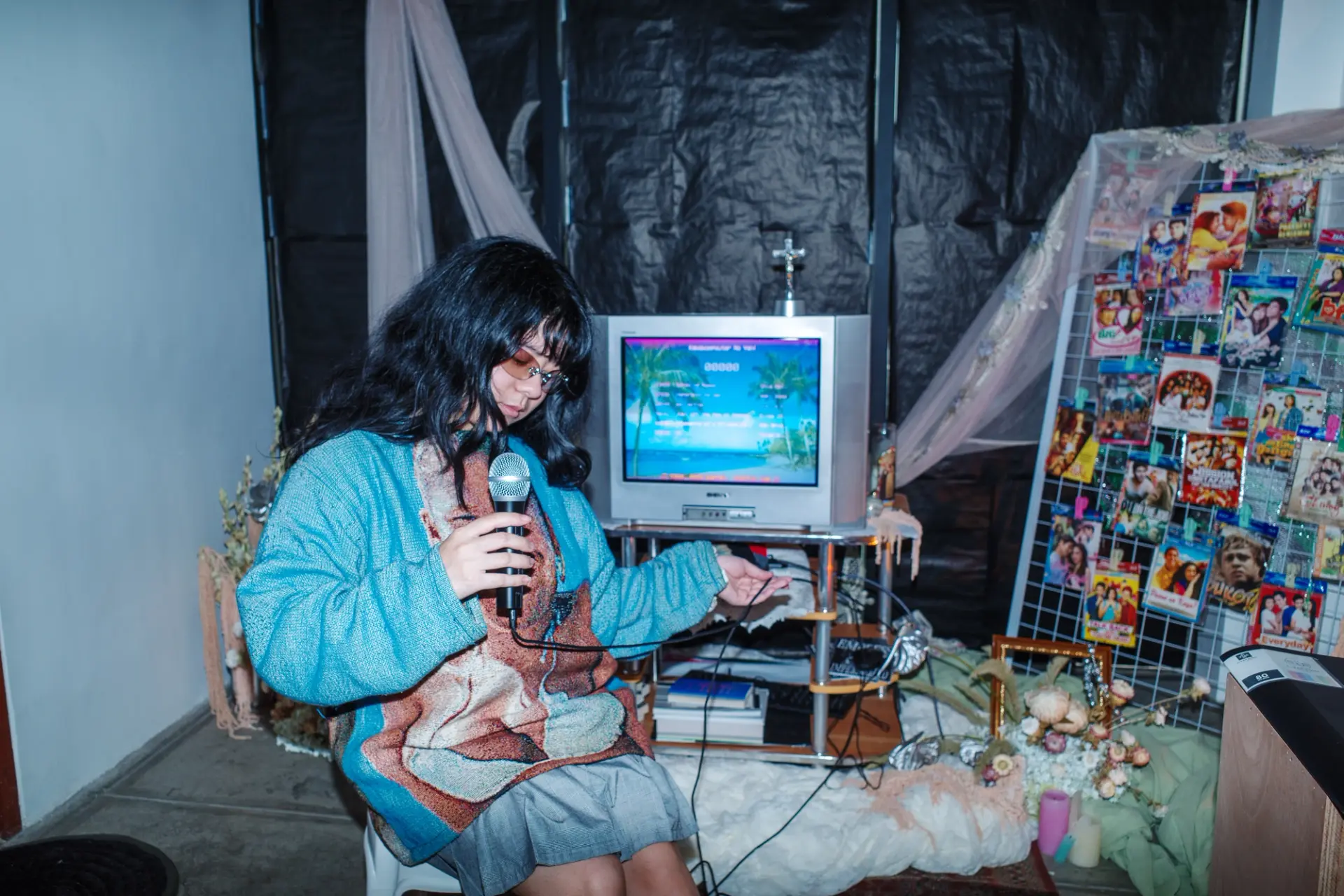
Chia Amisola in KMY at Space63, Comuna, Courtesy of Kaloyan Kolev.
There are no trails left behind by others. The Visitor must carve their own path, exploring the map and collecting scattered artifacts to weave together a collective knowledge of nature, labour, and technology. The spectral soundscapes and mixed media collages shrouded in shaders and gradient maps immerse the Visitor in a world that feels boundless, even at its edges. Like being on your knees planting milkweed in a flowerbed, knowing becomes tactile and embodied through hands-on engagement with the environment. It is in the thickets of an HTML iFrame that one may literally interact with technical and lived knowledge to deepen their understanding of the web, both emotionally and structurally.
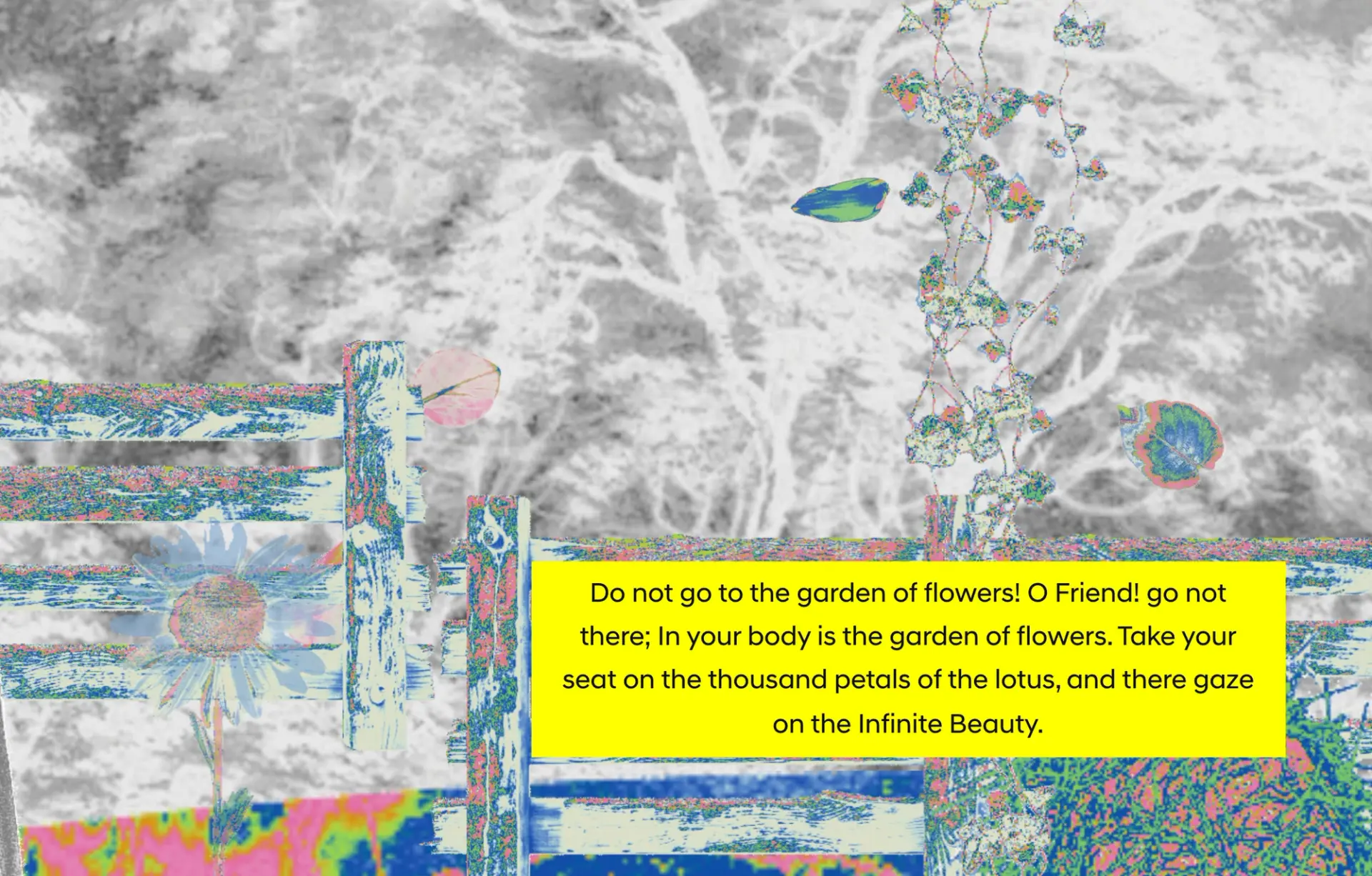
Close-up Still from Matt Prebeg’s experience through Chia Amisola’s “There Are No Gardens on the Internet,” 2026. Commissioned by Hyundai Artlab © Chia Amisola.
The longer I stayed, the less innocent my freedom started to feel. As they get closer to the edge, the Visitor may pluck the blushing apple. Doing so, I learned, reveals an excerpt from Cory Doctorow’s writing on Apple’s “walled garden” ecosystem “walled garden” ecosystem , which describes how Apple enacts control through strategic design and functionality decisions. The truth of the garden, that its verdancy and peacefulness are not without consequence, is slowly revealed through each interaction. As the Visitor stumbles upon the figure gazing over the garden walls, they can’t help but wonder about what lies beyond. At this point, we experience for ourselves how Amisola leverages the boundaries and confinements of the hypertext as form to successfully guide us–our cursors, fingers, bodies, and gaze–towards the work’s crumbling borders.
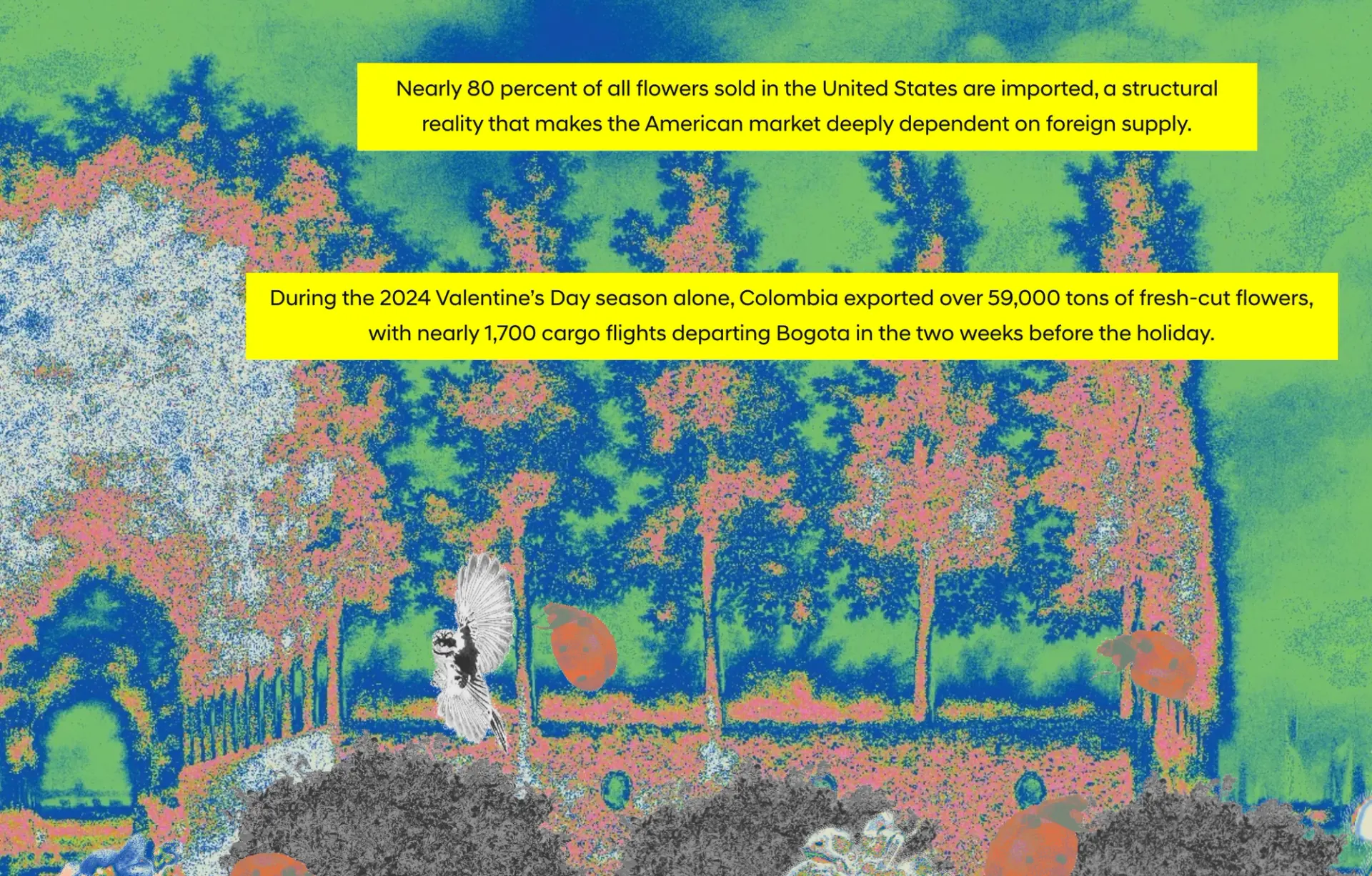
Close-up Still from Matt Prebeg’s experience through Chia Amisola’s “There Are No Gardens on the Internet,” 2026. Commissioned by Hyundai Artlab © Chia Amisola.
Nature metaphors are everywhere on today’s internet. But metaphors, as the authors of Metaphors We Live By [object Object] (1981) make clear, create realities that guide and govern our social, political, and economic actions. The cloud, for instance, creates the reality that our personal data is as weightless and omnipresent as a summer’s nimbus, shielding us from the thousands of servers housed in data centres with very real ecological consequences for local and global communities. Or take a “viral” post. What suggests an intrinsic quality that lets something spread on its own is actually a product of a finely tuned, A/B tested, made-by-engineers recommendation algorithm. When technology is “natural,” we assume it to be inevitable and innate, ignoring its labour and material underpinnings. It is not that metaphors like the garden have no place on the internet, but what realities do they impose? Who is inside the garden walls, and who is not?
In a 2016 essay titled “Cloud and Field,” “Cloud and Field,” media studies professor Shannon Mattern calls for “cloudy” ways of knowing, where there is potential for wisdom that comes with obfuscation. When we search for metaphors and models to frame our relationship with technology, we must acknowledge their partiality and perhaps refuse the quest for total clarity to classify and territorialize digital ecologies. “As conscientious ethnographers,” Mattern explains, “we need to recognize the shadows cast by our presence as explorers in the field.”
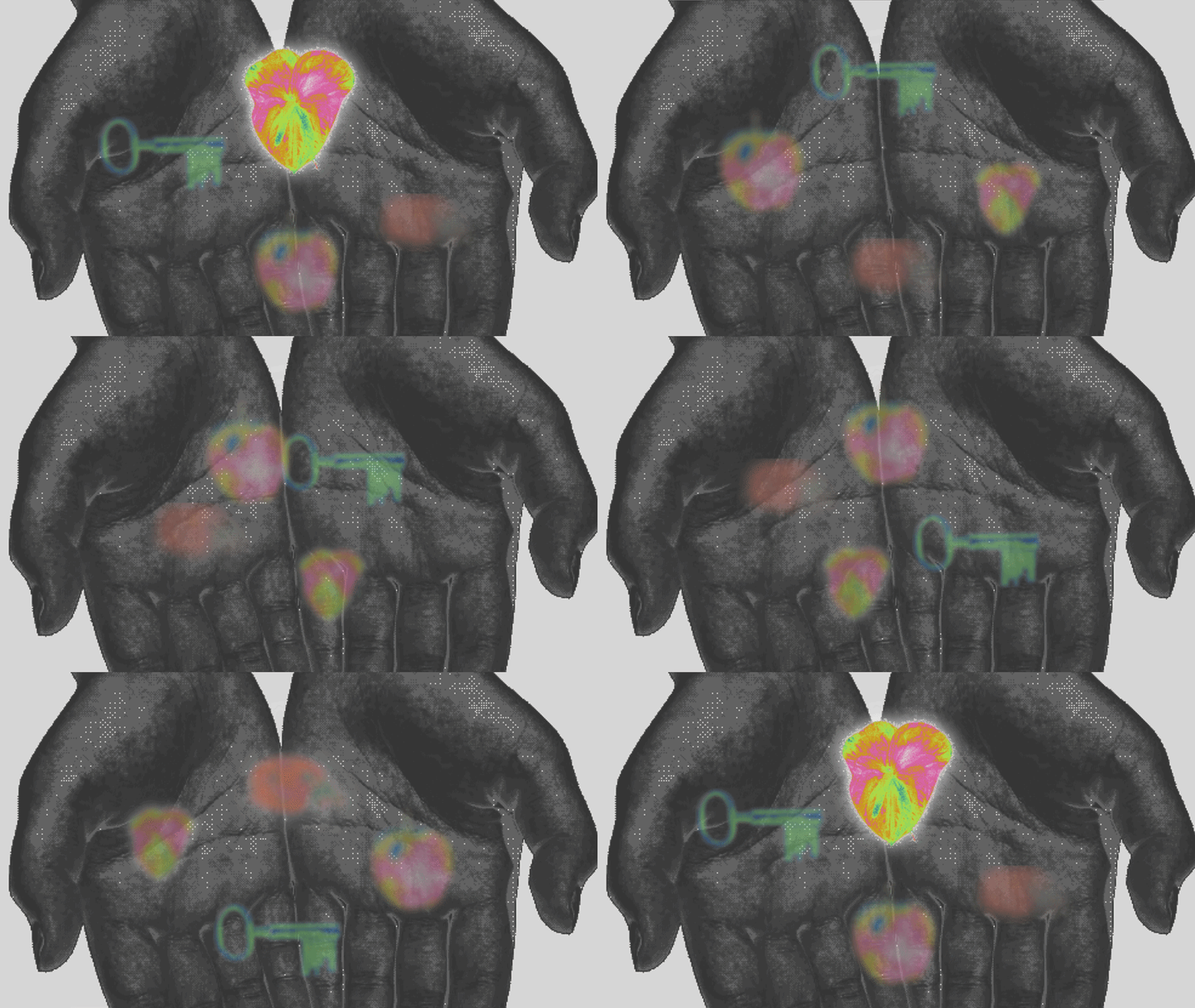
Chia Amisola, “There Are No Gardens on the Internet,” 2026. Commissioned by Hyundai Artlab © Chia Amisola.
Everything I know about gardens, I learned in the dirt. And what I now know about digital gardens has been deepened by Amisola’s invitation to walk through the internet and touch it with those same hands. When we experience the internet as an interdependent ecology, we can ask what enclosure entails, and reflect on the web as a place to be tended to and to measure what that tending truly costs. Outside of the garden, the “wild other” of the web persists as a dense site of survival, labour, and so much life.
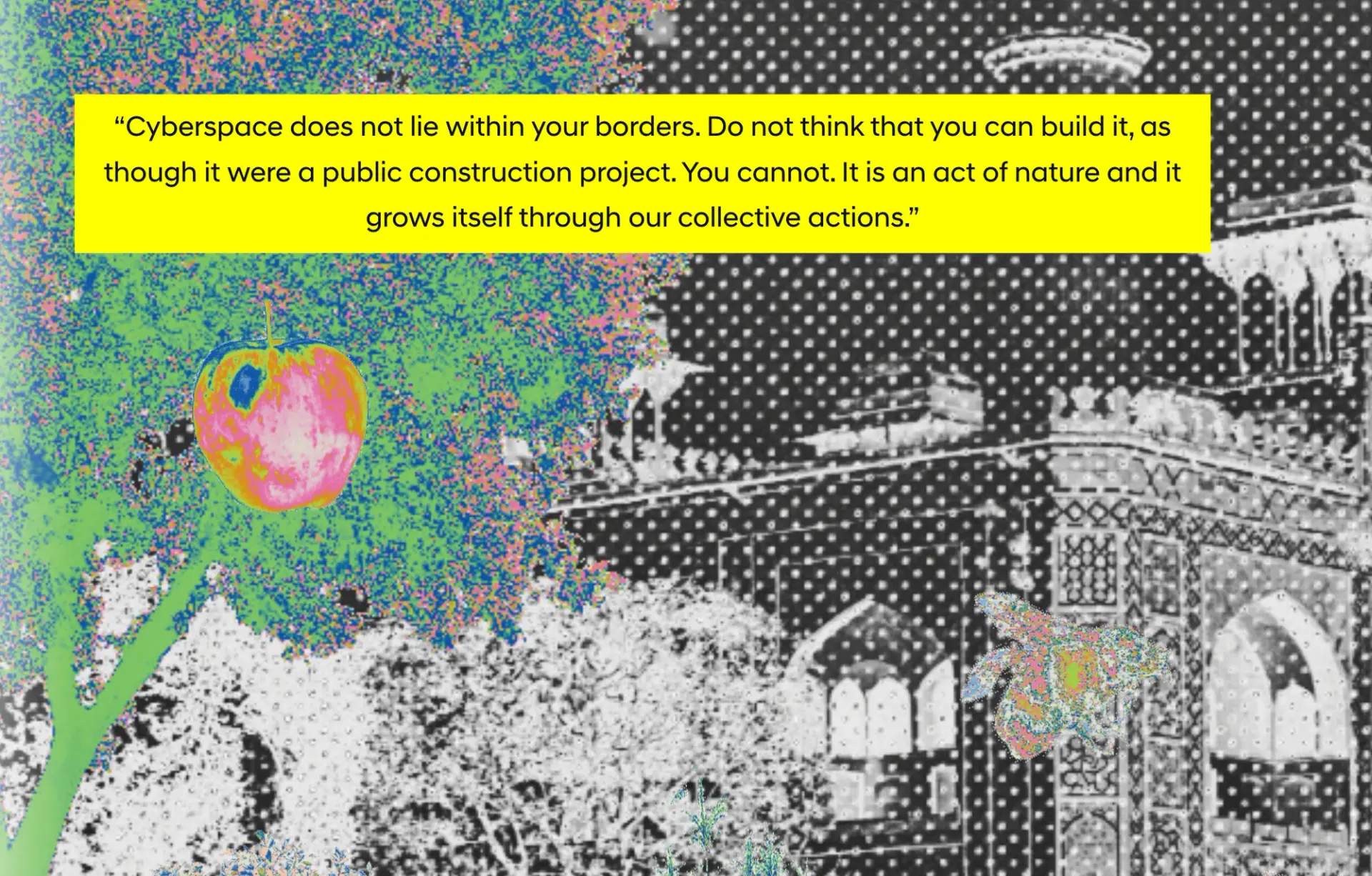
Close-up Still from Matt Prebeg’s experience through Chia Amisola’s “There Are No Gardens on the Internet,” 2026. Commissioned by Hyundai Artlab © Chia Amisola.