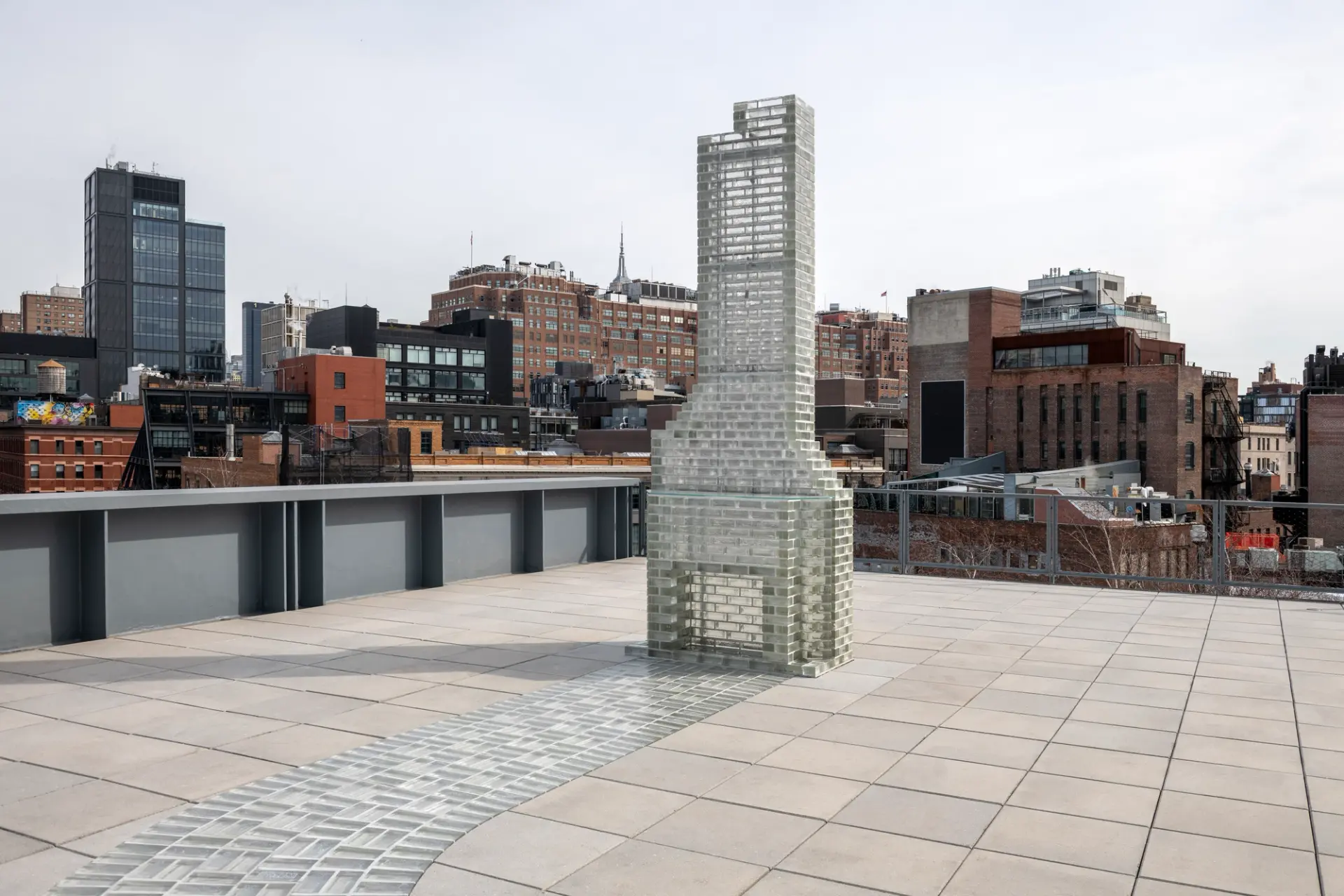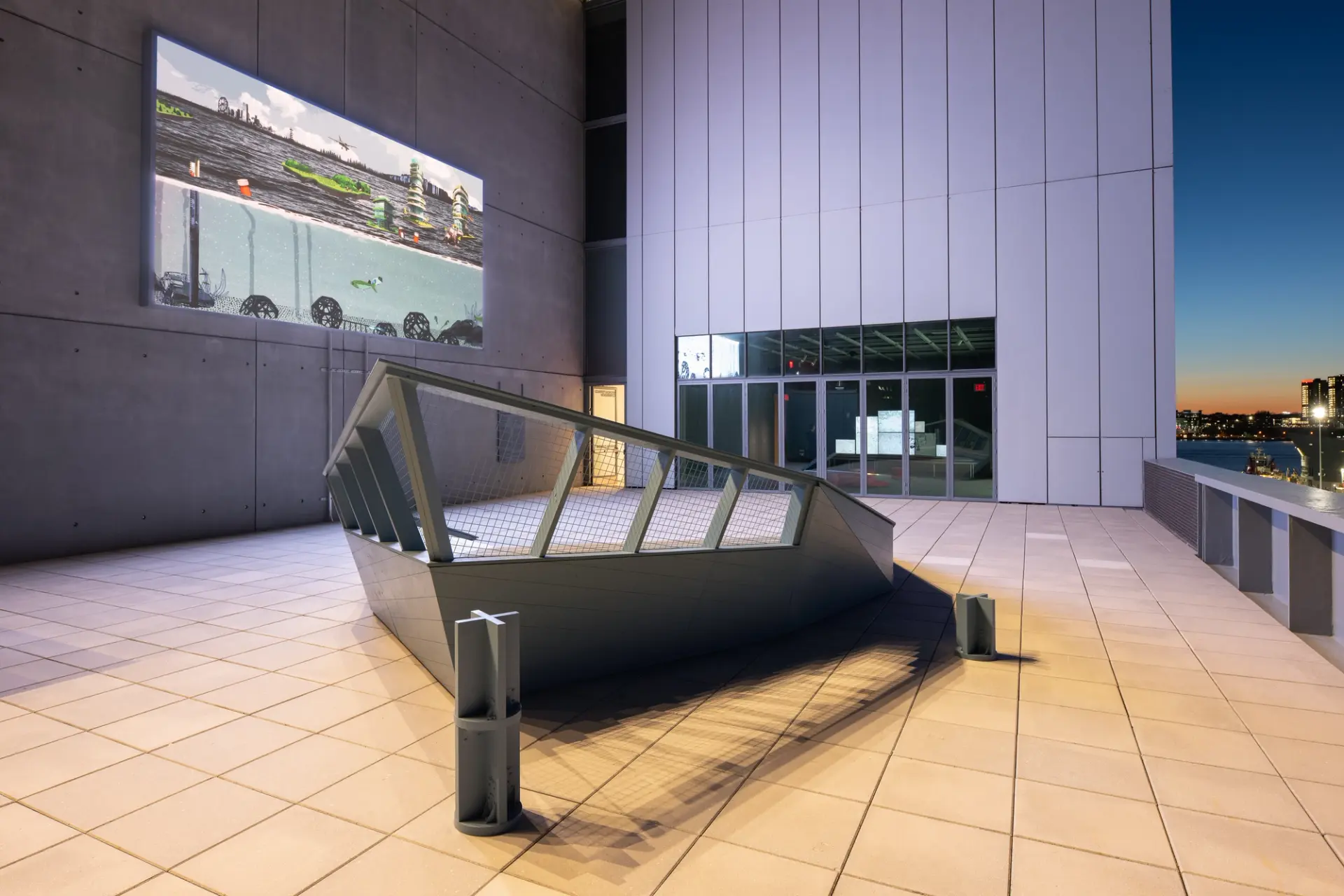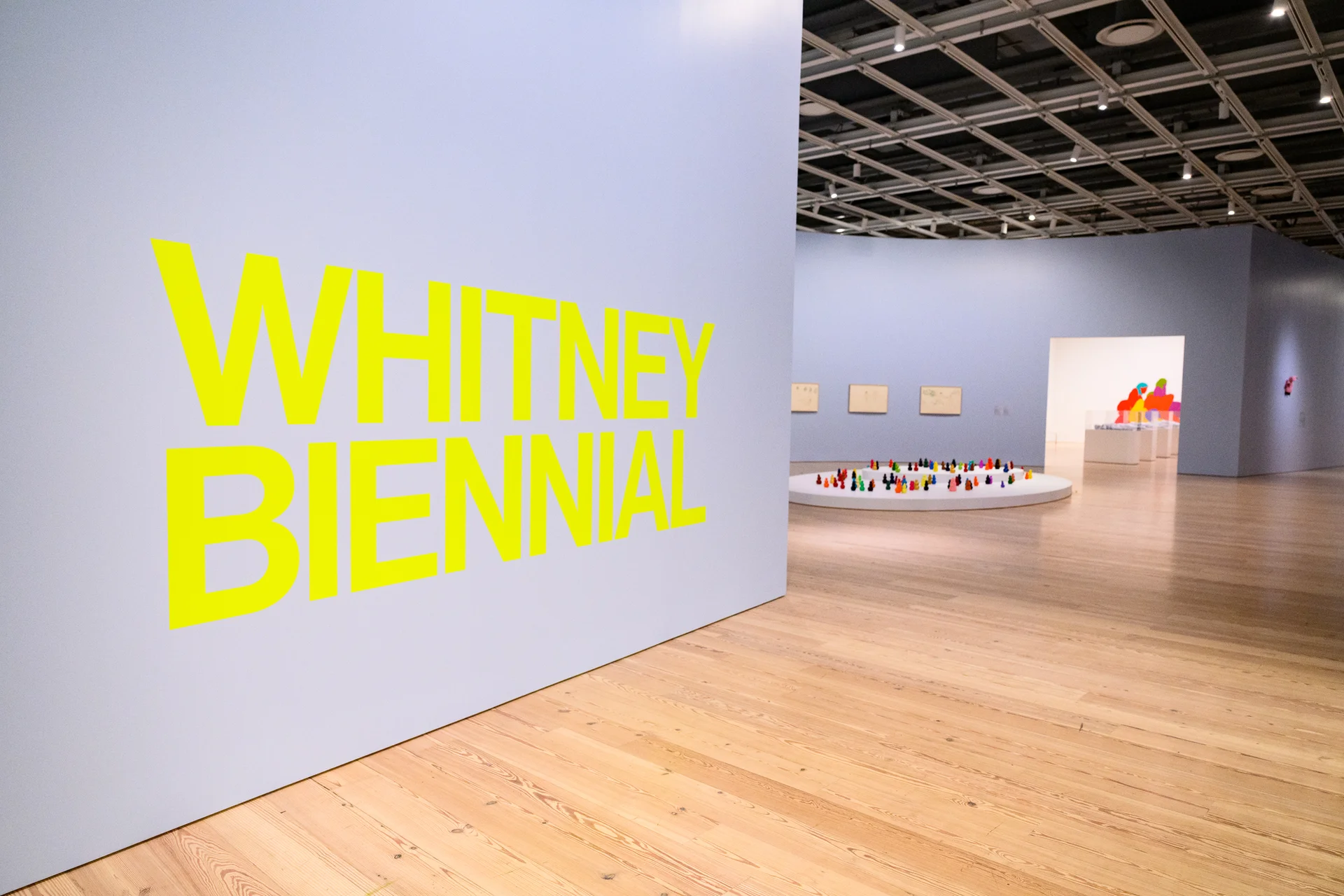
Installation view of Whitney Biennial 2026 (Whitney Museum of American Art, March 8–August 2026). From left to right: Emilie Louise Gossiaux, Kong Play, 2026; Emilie Louise Gossiaux, Becoming Part of the Forest 2, 2025; Emilie Louise Gossiaux, The Marriage of Hand and Paw, 2025; Emilie Louise Gossiaux, In Dreams We'll See Again, 2025; Andrea Fraser, Untitled (I-V), 2024; Carmen de Monteflores, Four Women, 1969. Photograph by Darian DiCanno/BFA.com. © BFA 2026
The Whitney Biennial is the definitive survey on contemporary American art. This year’s edition ambitiously gathers the work of 56 artists, duos, and collectives.
Artlab Editors: Whitney Mallett unboxes the works of Nile Harris and Precious Okoyomon at the 82nd Whitney Biennial to unpack how contemporary desire, spectacle, and consumption manifests in their works.
The best work is made by intelligent people who are not blustering to show you how clever they are. When the artist manages restraint, and every gesture is not already resolved or anxiously controlled, they leave space for the viewer to enter. Work that feels urgent right now coaxes me back to my body and a sense of time passing.
I thought I should confess that upfront, what it is I want from art in 2026, because every review I’ve read about this year’s Whitney Biennial seems just as much a temperature check on criticism as the show is supposed to be for American art. For almost a century, the Whitney Museum has had the tradition of these sweeping survey shows, checking the pulse on how artists are working and what they are making. The 82nd edition is curated by Drew Sawyer and Marcella Guerrero (if you’re wondering how that “math maths,” it was an annual format for decades). Bringing together 56 artists, duos, and collectives, the Whitney Biennial 2026 presents an overwhelming amount of work to distill into a single reaction. Reducing it to a tidy thesis, in spite of all the conflicting currents and thematic bleeds, can reveal more about a critic than they’re aware. It’s almost a Rorschach test; you can see whatever you’re looking for.
The easy and obvious entry points to this motley, unwieldy whole are the artists whose works you already feel invested in, whose practices you know. Moving through a show this dense, their works land differently—they become nodes that spiral outward with the information and emotion you’ve encountered previously. The gestures they make in the piece right in front of you offer something richer when they take their place within a continuum of other works and exhibitions: Imagine a trap door, a nesting doll, an accordion file folder. For me, it’s artists in the biennial like Nile Harris, Precious Okoyomon, CFGNY, Kelly Akashi, Agosto Machado, and Andrea Fraser whom I encounter already with a story (or many stories within a story) in mind. I know I’ll approach the time-based work of Julio Torres and Martine Gutierrez in a similar way, but it won’t be presented until near the end of the show’s run.
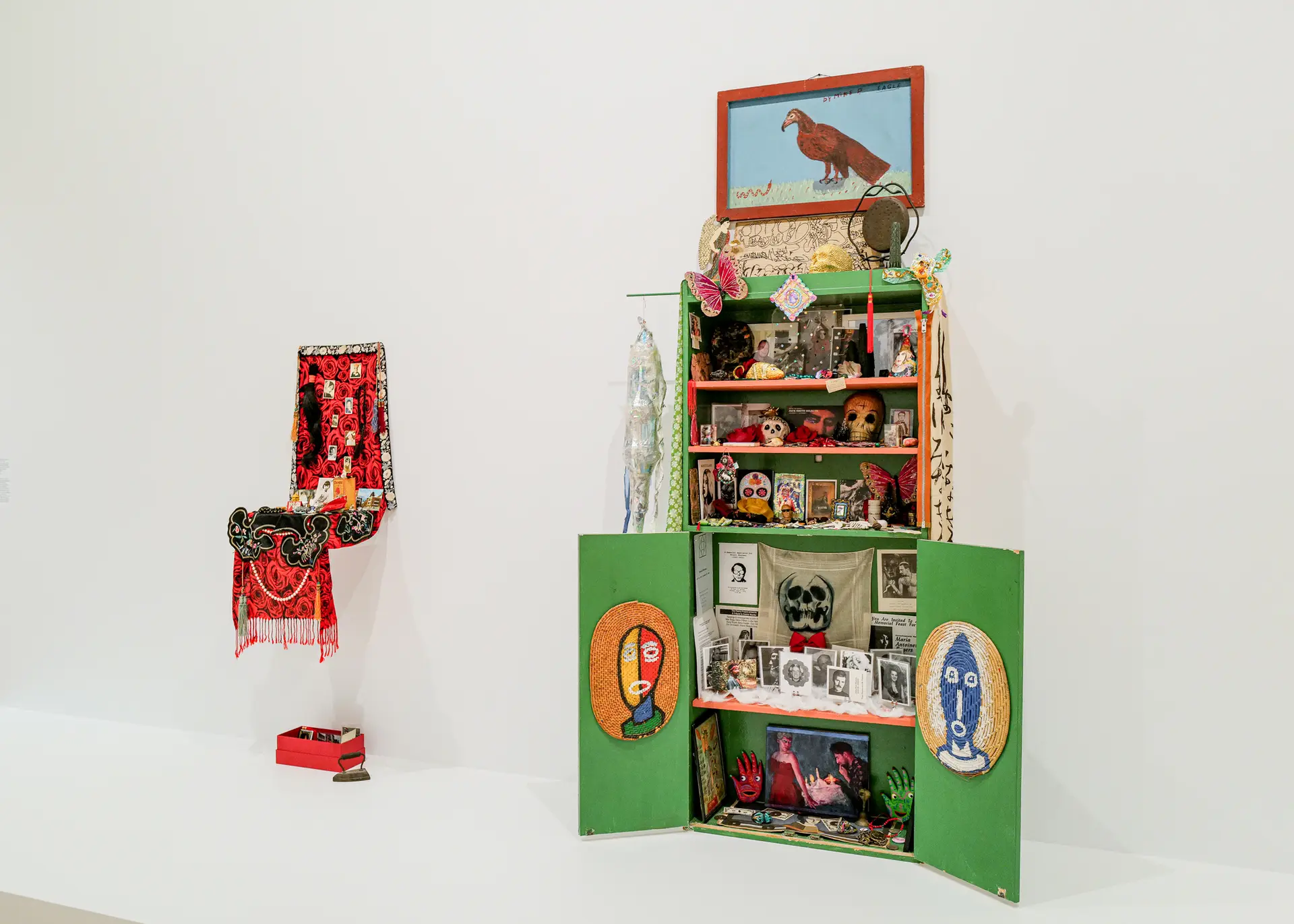
Installation view of Whitney Biennial 2026 (Whitney Museum of American Art, March 8–August 2026). From left to right: Agosto Machado, Shine (Green), 2022; Agosto Machado, Anna May Wong (Altar), 2025. Photograph by Jason Lowrie/BFA.com. © BFA 2026
Harris, who’s best known as a performer and director of theater, dance, and film, was the first artist to present time-based work in this edition of the biennial. I was introduced to Harris’s practice back in 2019 through a short experimental film he co-wrote with Trevor Bazile, which invokes an ill-fated clown, troubling both death-as-spectacle and the white consumption of Black entertainers. Over the years, how Harris has further deepened and corkscrewed his inquiries into grief, relationality, and the structural conditions of creative practice has continued to excite me. There’s a tension in Harris’s work between frictionless entertainment and dark existential unease. The way he deploys language in his performances shows an ear for the nuances of vernacular under the algorithm’s accelerationist pressures. He reprises run-through memed readymades, (disrespectful AF, Black don’t crack, five-step skincare regimen, Zyn), twisting them ever so slightly, like reflections in a funhouse mirror. You can feel this impulse to let his own cleverness run amok with word play, but he always reigns it in, calibrating each hit for maximum impact.
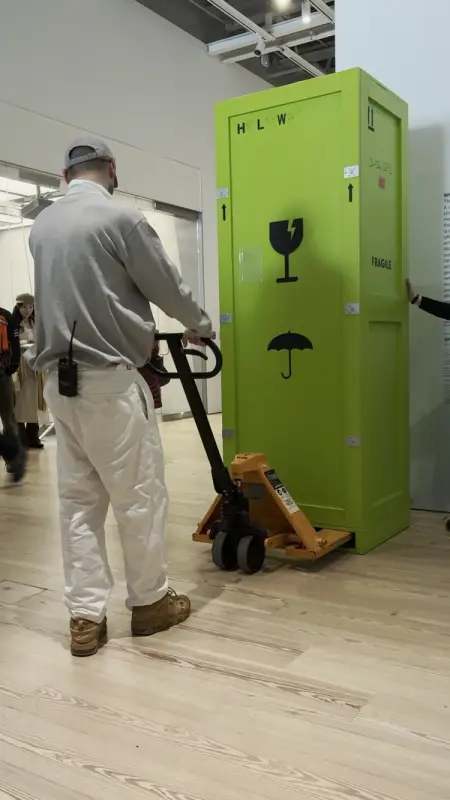
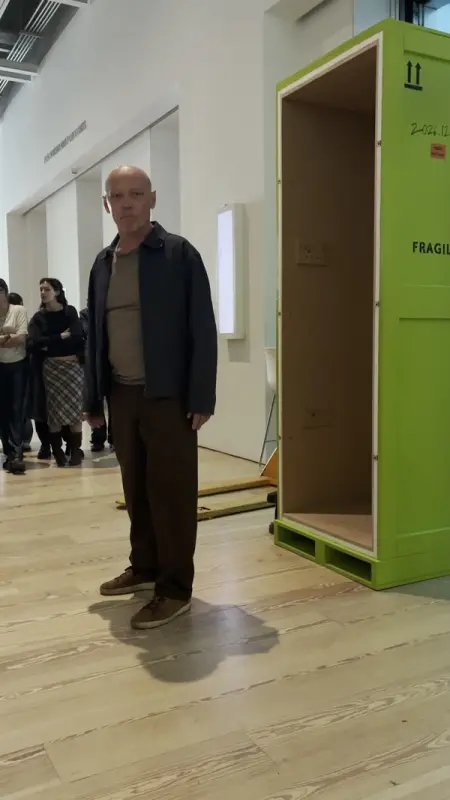
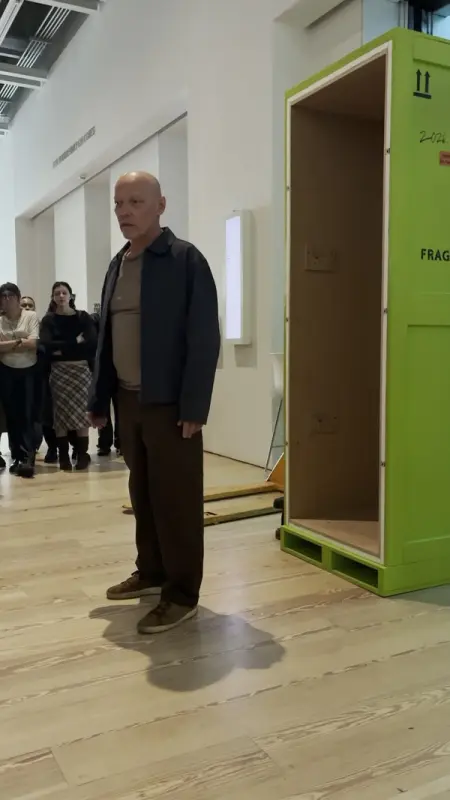
“End of Days,” his Whitney Biennial performance in collaboration with Dyer Rhoads, recurring 25 times during the exhibition’s run, takes place on the museum’s fifth floor. Elevator doors open like a curtain call: Art handlers wheel out a high-vis green crate and unload it to reveal a bald, middle-aged white man inside. He exits the crate and begins to deliver a story, as if this was precisely the reason for his release. He performs in Russian while a tripod-mounted screen displays a speech-to-text English translation of his Tales from the Crypt-esque yarn. An attention to friction and ease, desire and consumption on the level of language is heightened through the listening-reading effect of the live translation, reverberating out to Harris’s broader fixations: artist and market, spectacle and oblivion, relationships and extraction.
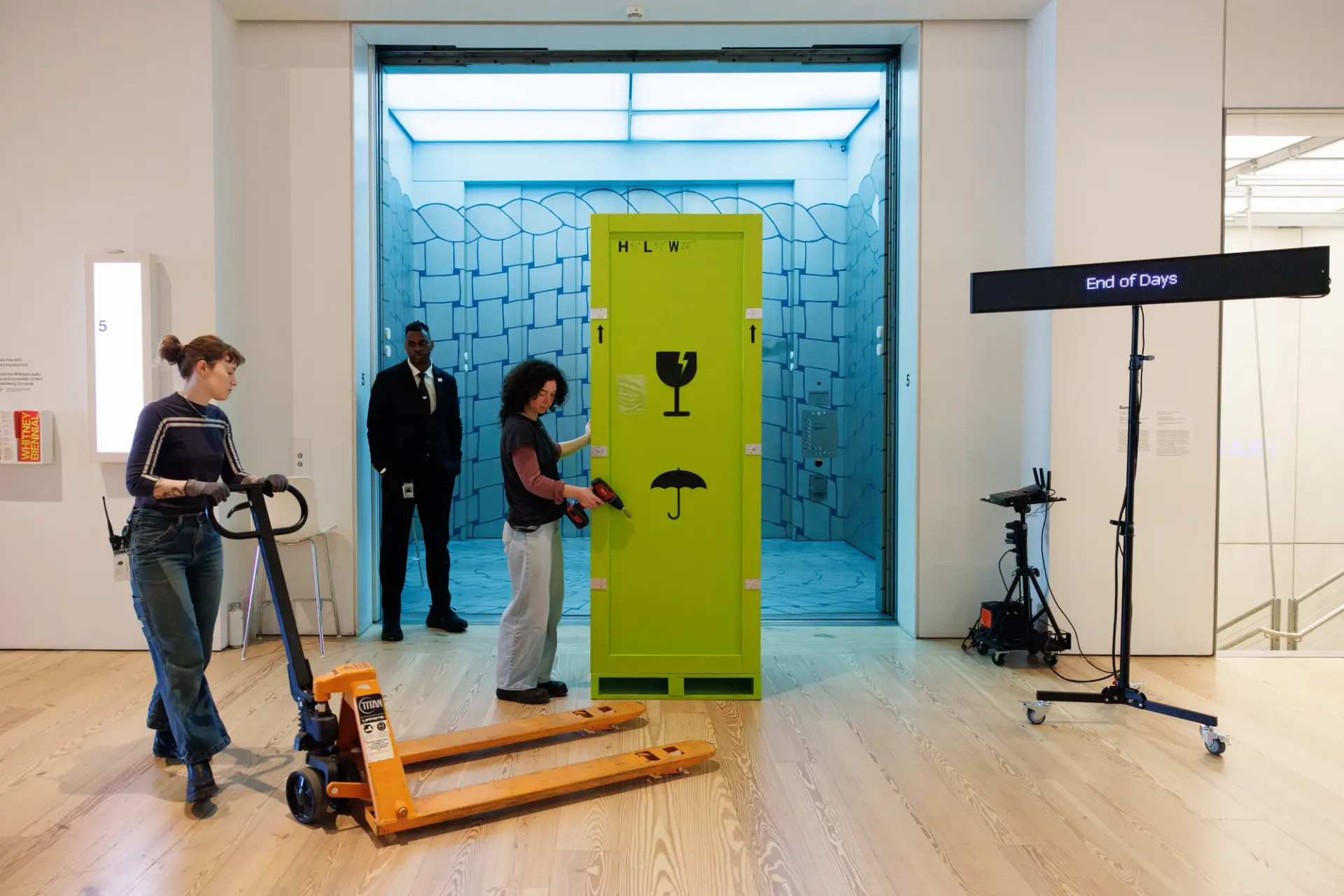
Nile Harris in collaboration with Dyer Rhoads, End of Days, 2026. Photography by Maria Baranova.
The story centers on a macabre request that an interracial gay couple makes to a leatherworker for a bootleg Birkin bag. Their unusual request is for the handbag to be made from the Black boyfriend’s skin, his sacrifice supposedly intended as a testament of devotion (unreliability is introduced as the narrator has been told all this indirectly from the leatherworker). At times, the Russian storyteller, freed from his crate, moves through the biennial’s installation of artworks across the performance’s 30-minute duration. Institutional critique is made by way of Harry Potter, as the narrator compares the Birkin (standing in for the artwork) to a horcrux — an object of dark magic that fragments the soul to grant immortality. Is the artist transforming his deepest feelings into a commodified art object equally cursed? Does he, in the process, become an object of display and exchange like the boxed-up bald man? I felt complicit making an iPhone video, content-brain intuiting the money shot was the man’s evil-coded unboxing. At the end, the narrator returns to the crate, sealed shut by a power drill’s whir.
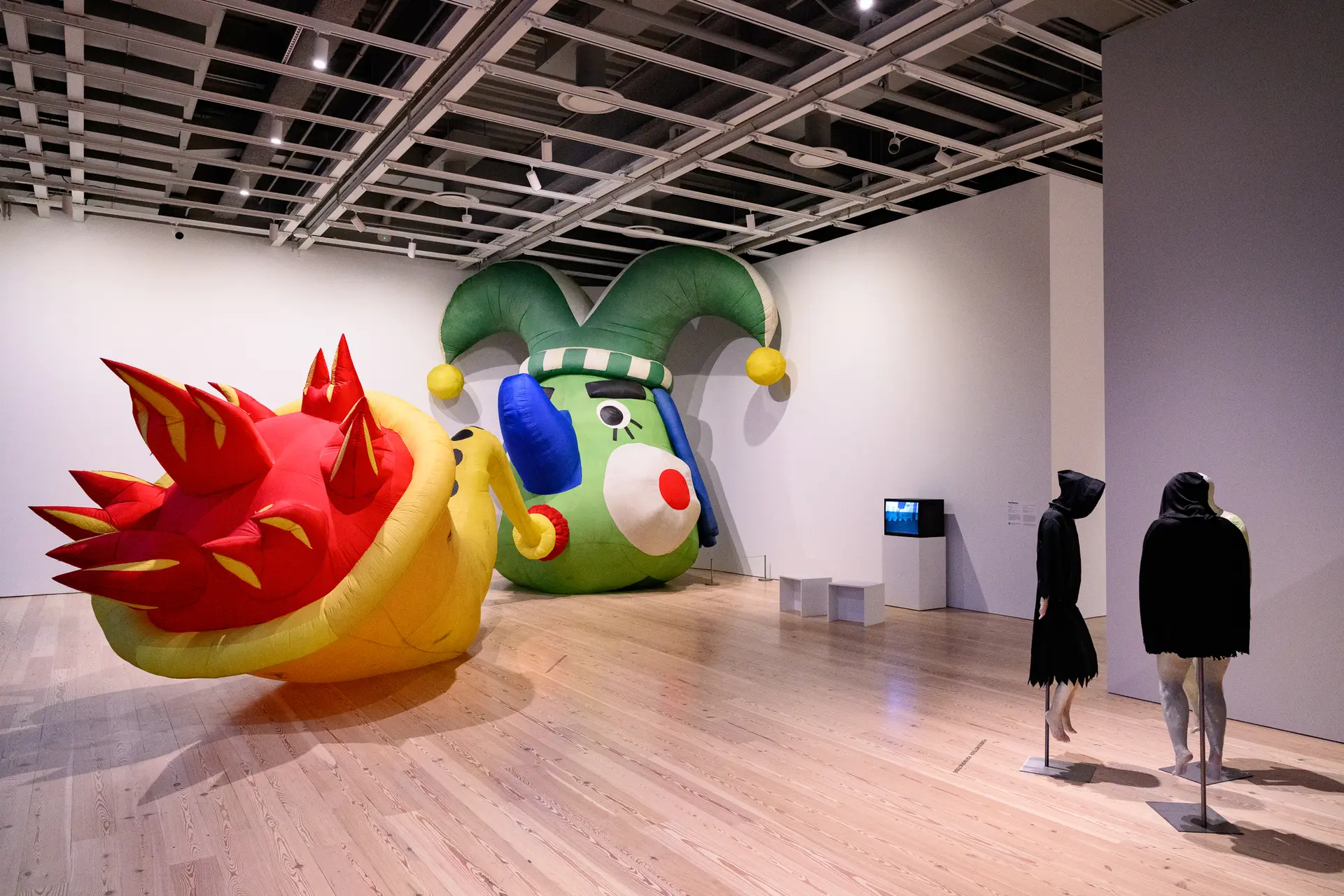
Installation view of Whitney Biennial 2026 (Whitney Museum of American Art, March 8–August 2026). Photograph by Darian DiCanno/BFA.com. © BFA 2026.
While the performance is playful and absurd, it undeniably carries a note of pessimism. We’re left to consider in what ways the artist is confined by the museum and its expectations. We are reminded that under the prevailing media ecosystem, the designer bag—or the artwork—isn’t merely commodified, it’s fetishized (as in, charged with symbolic power far beyond its material use). This ritual of recording an unboxing both stages and amplifies object-value, turning attention into desire, and desire into spectacle. The unboxing of a person—here, the man in the crate—means they are subject to the protocols of product-oriented visual consumption. By designing the performance with telegenics in mind (including the image-bait text on the tripod-mounted screen) Harris and Rhoads are at once exploiting and interrogating media’s extractive impulse and potential dehumanization.
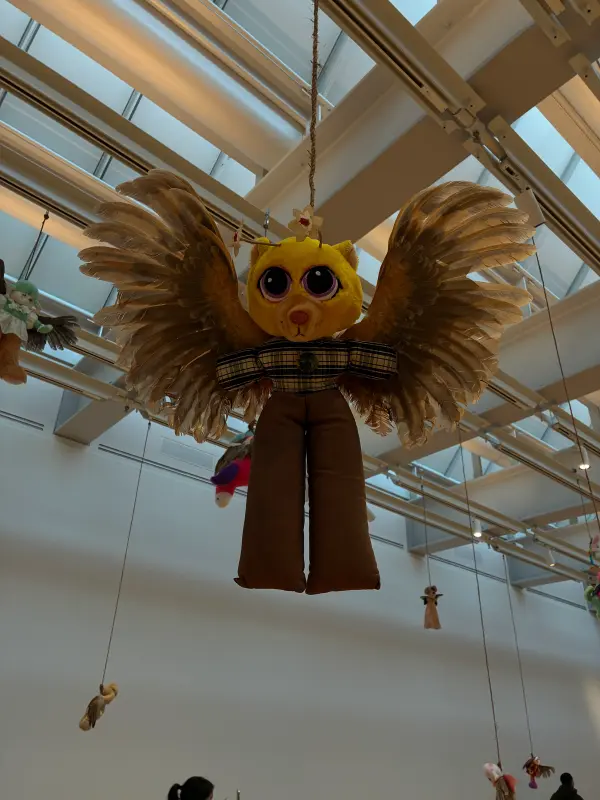
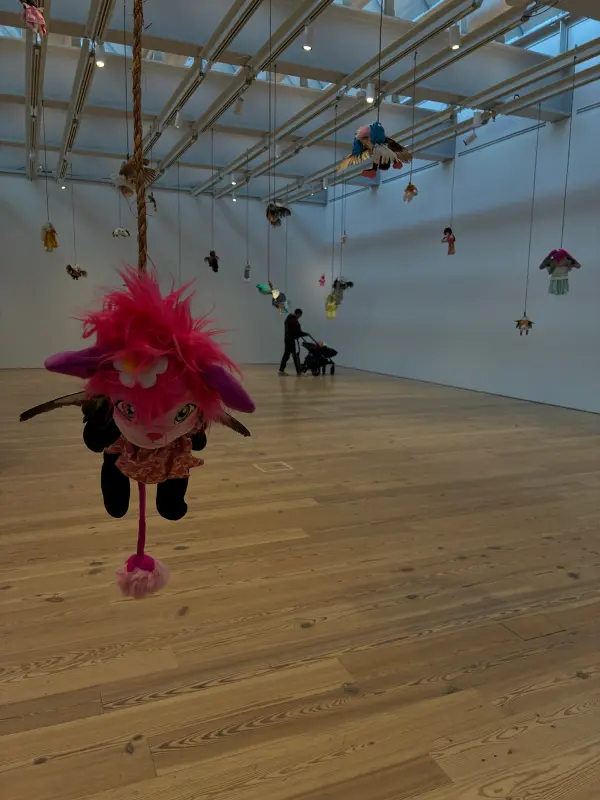
Precious Okoyomon’s stuffed-animal installation three floors up similarly triggered my impulse to mine the show for content. In a room full of chubby cheeks and teardrop eyes, who can help themselves but take a pic? Despite the eeriness of the Frankensteinian plushies remixed with doll parts, taxidermy bird wings, and nooses around their necks, a cuteness persists (I swear). This Kindchenschema triggers a physiological reward response, echoed in the instant double-taps when you post a pic, in turn reviving the image’s circulation. Okoyomon’s title, Everything wants to kill you and you should be afraid, suggests that either these creatures wanted to kill and were eliminated because of it, or they were lynched because they didn’t heed the warning to properly fear what wanted to kill them. The installation, in turn, comments on how cuddliness can mask a threat, and naiveté can make you end up dead, the creatures’ fate signaling the cost of ignoring such warnings. Either way, the murderous “everything” of the title includes the platforms the artist knows will inevitably circulate these strange fruits. The uncomfortable impulse to turn the stuffed-animal execution into content evokes the history of lynchings as popular entertainment, their photographs circulated as postcards and mementos. Are Web 2.0 platforms an update of the same system? How much do they value us alive—and how much do they harvest from the spectacle of Black death?
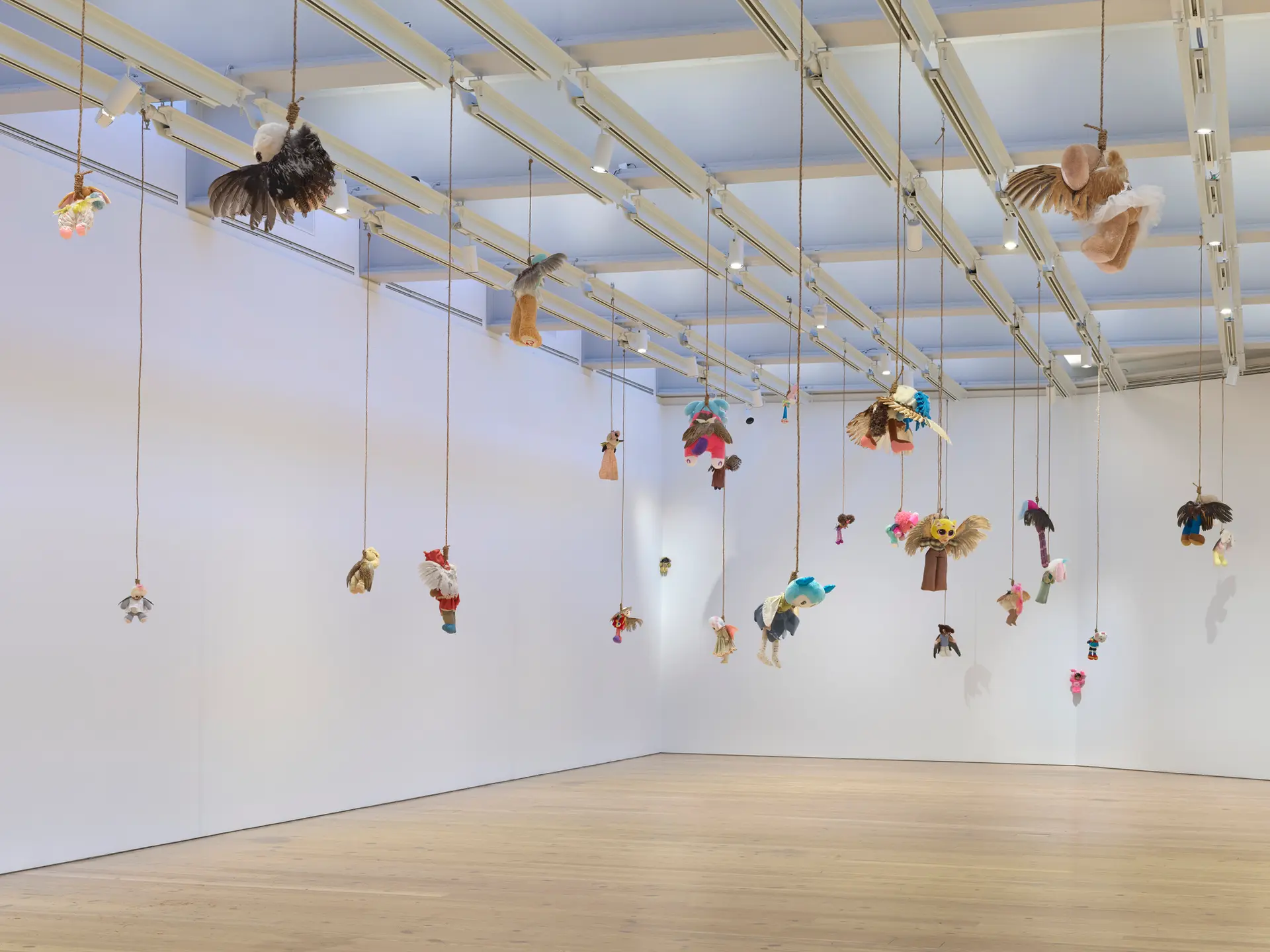
Installation view of Whitney Biennial 2026 (Whitney Museum of American Art, New York, March 8–August 23, 2026). Precious Okoyomon, Everything wants to kill you and you should be afraid, 2026. Photograph by Ron Amstutz.
Anima, angels, and mortality are recurring in Okoyomon’s broader meditations on ecology and mysticism. The Everything installation deepens their study and can be read in the context of past poetry and installations. I mostly want to unpack, however, the artist’s deadpan delivery: An extreme legibility in their sculptural language simultaneously obscures and underscores more mysterious currents. It’s the spatial equivalent to how fairytales and fables operate. As these objects-cum-creatures hang from the museum ceiling, you feel their gravity; they move ever so slightly, as if registering a presence. Not quite alive, but not inert either, they hover at a threshold that affirms art’s power even if the larger machinery prefers it as a pet.
Both Harris and Okoyomon operate within a lineage of storytelling that evokes folklore and fables—communal, mythic, and adaptive. Their works fulfill the contemporary demands for art. More interesting to me, however, is how each artist smuggles into this schema, where interpretability and legibility can feel like forms of capture, an ability to unfold in a kind of “deep time,” where attention is measured not by speed or virality but by presence: by being there, witnessing the performance or the sculptural tableau. This mode of storytelling privileges a temporal space in which narratives can breathe, accumulate resonance, and circulate meaning with nuance beyond immediate consumption. Yet, even as they deliberately introduce this friction they also harness, to their own benefit, the extractive, networked mechanisms of content circulation that viewers will inevitably engage. The result is work that’s at once legible and stylishly ambivalent.