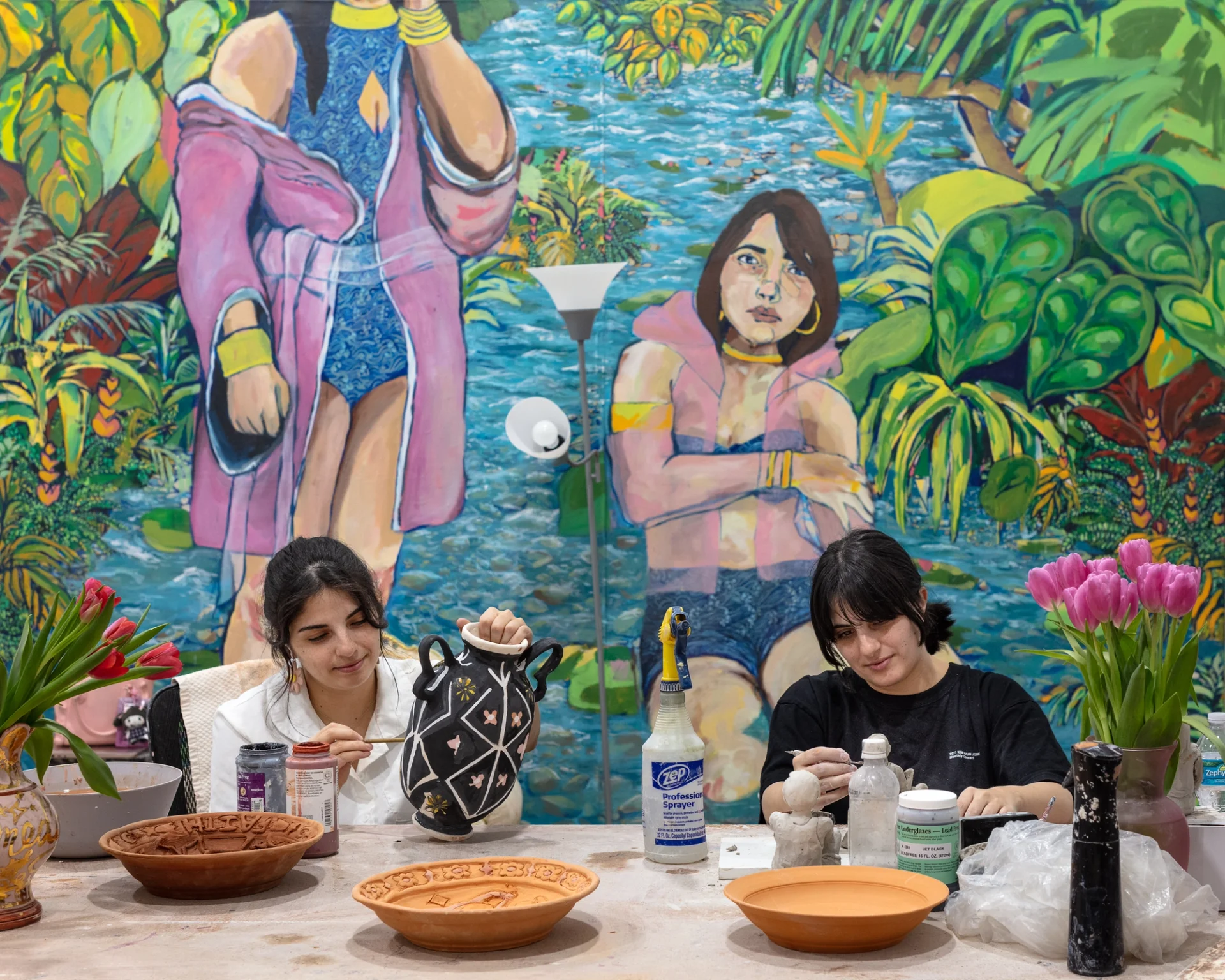
2Win Studios, Miami, Florida, 2024.
Photo by Anastasia Samoylova. Commissioned by Hyundai Artlab for Artlab Editorial.
As the cost of living continues to soar in Miami proper, Hialeah's ample and affordable warehouse spaces are making it a coveted—though contested—cultural hub.
Artlab Editors: 2023 Artlab Editorial Fellow Laurie Rojas’ final dispatch focuses on Hialeah, a suburban neighborhood with a burgeoning art scene. Through personal anecdotes and encounters with residents, Rojas captures Hialeah’s changing cultural landscape, the enduring spirit of its community, and its ambivalent role in Miami's artistic renaissance.
My first two essays for the 2023 Artlab Editorial Fellowship explored how Miami's rising costs have driven artists to seek unconventional studio and gallery spaces in the neighboring communities of Little Haiti Little Haiti and Allapattah Allapattah . For my final piece, I’m focusing on Hialeah, a vast working-class suburb just north of MIA airport with a resilient Cuban American community that, in recent years, has started to attract more artists and musicians. It also happens to be where I live.
When my family moved to Hialeah in the 1960s, it bore little resemblance to its current state. Back then, it was primarily farmland, punctuated only by the renowned Hialeah Park horse racetrack, a favorite entertainment destination for tourists seeking refuge from winter's chill, inaugurated in 1925.
Hialeah now resembles Brooklyn’s Bushwick in the late 2000s: a blend of residential areas, small businesses, industrial factories, and warehouses. While there is a lot of new energy, Hialeah has had a strong, albeit evolving, artist community for decades, followed by new waves of artists seeking affordable studio spaces—a response to Miami's soaring rents. The racetrack is still here, though largely unused save for a casino.
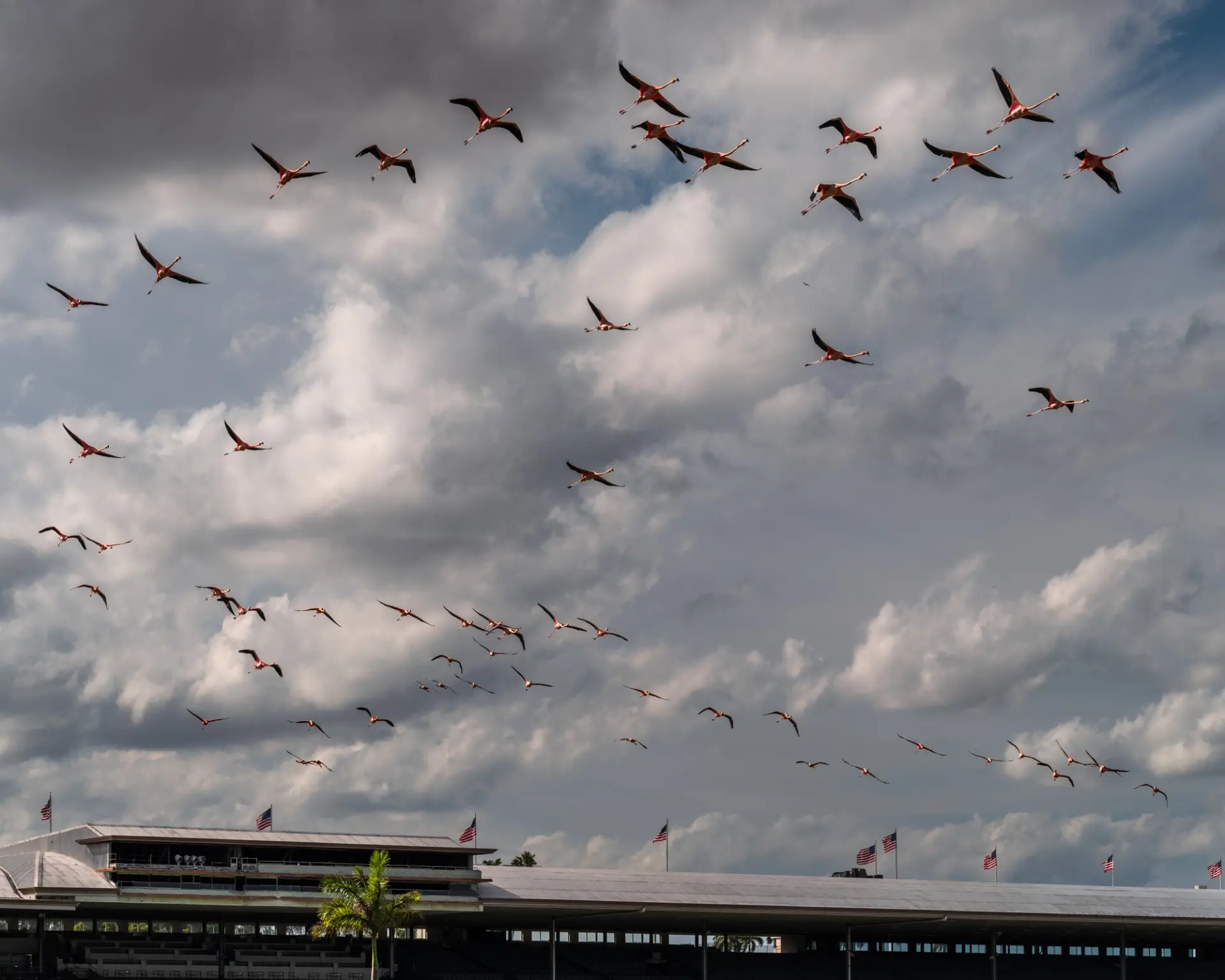
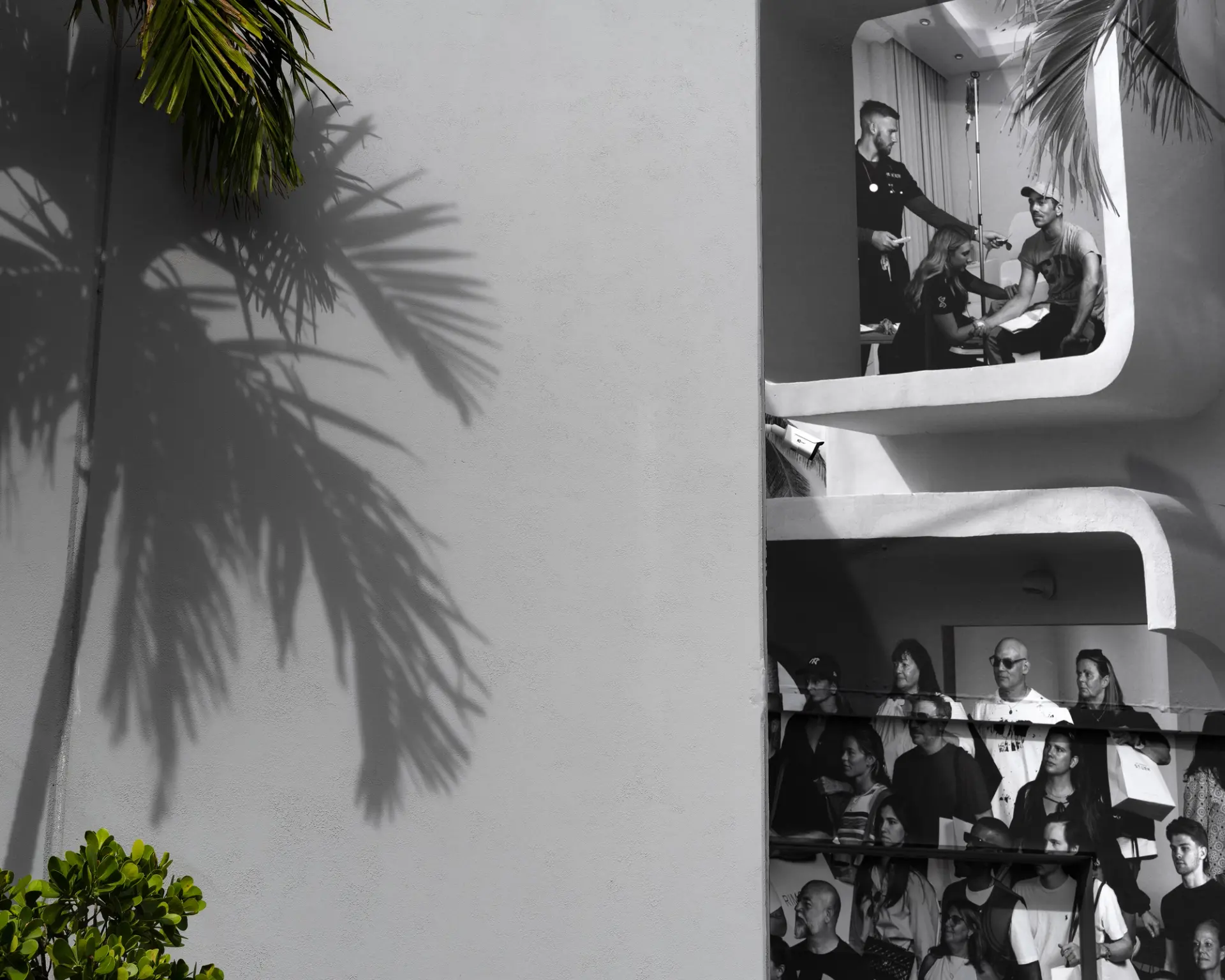
Hialeah Race Track Flamingos, Miami, Florida, 2024.
Photo by Anastasia Samoylova. Commissioned by Hyundai Artlab for Artlab Editorial.
With major development projects cropping up in the surrounding area, the neighborhood is bracing for major changes. Hialeah has become an attractive hotspot for developers as Miami’s redevelopment expands outward. The question on many artists' and local residents' minds is whether Hialeah will suffer the fate of many once artist-oriented, now over-developed neighborhoods in Miami such as Wynwood, where almost no artist studios or galleries remain today.
I posed this question to Loriel Beltrán. The Venezuelan-born, Miami-based artist is known for his abstract paintings, which he creates through a labor-intensive process that accumulates layers of paint—sometimes built up over years—resulting in vivid sculptural forms of optical distortions. He has lived in Miami for the past 23 years and has been working out of his 2,500 square-foot studio in southeast Hialeah for a decade.
“It's going to take a while,” said Beltrán. “Hialeah is massive compared to Wynwood and is not likely to change as quickly.” His studio is surrounded by a cafeteria, warehouses, and manufacturing and welding businesses. It is also neighbored by Factory Town, an open-air, post-industrial, multi-acre space, which has become a new hotspot for music festivals and NFT art exhibitions.
The area has tried to become a more dynamic cultural district, but its full transformation into a cultural hub remains to be seen. “The people around haven’t changed much. It's mostly real, hard-working people,” Beltrán continued, noting that he only knows of two other artists in the area.
Still, he warns that if real estate trends continue on their current path, displacement is an inevitable threat: “Eventually, as the city keeps growing outward and prices go up, there won’t be a lot of places for people to go, unless they leave South Florida altogether.”
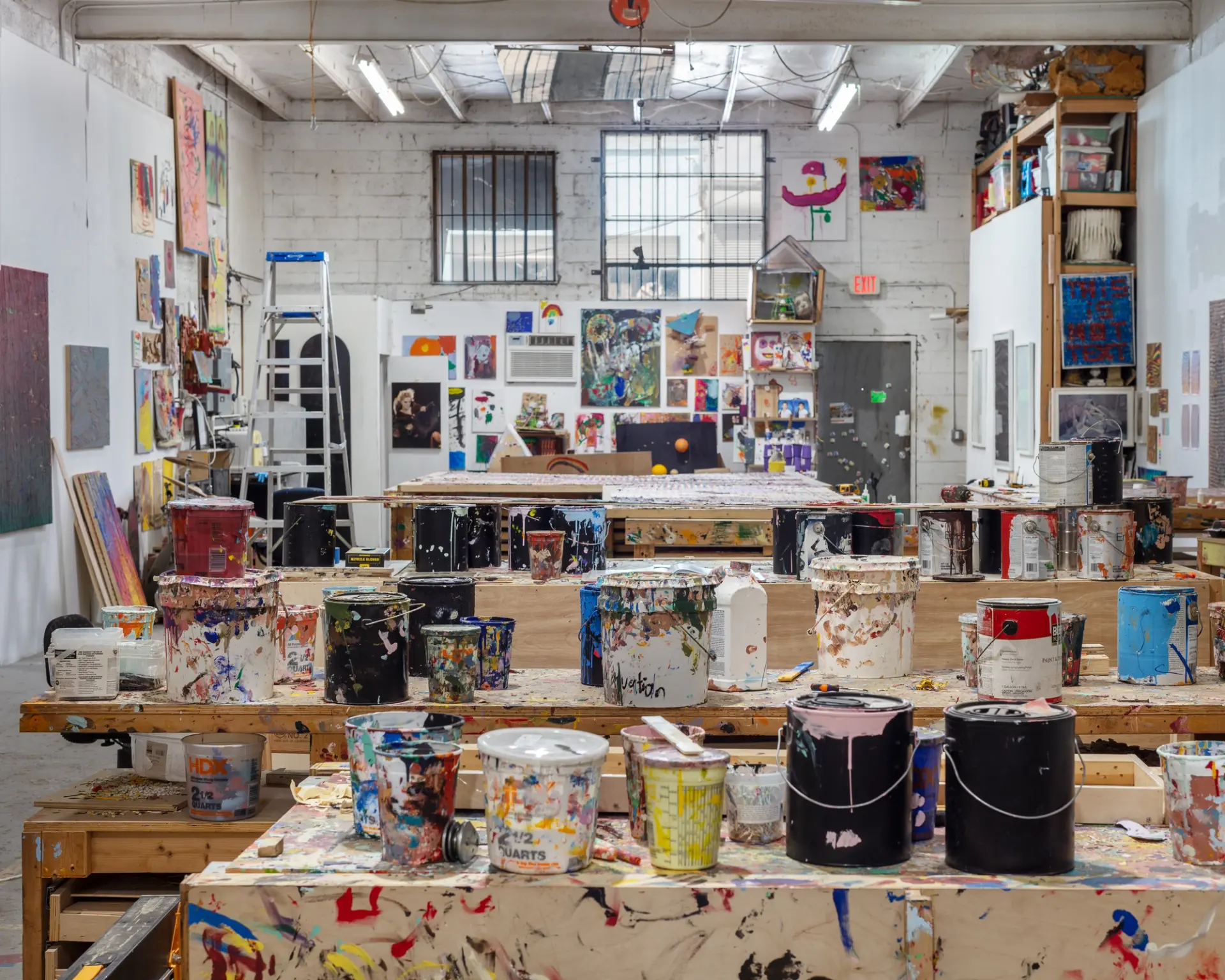
Loriel Beltrán Artist Studio, Miami, Florida, 2024.
Photo by Anastasia Samoylova. Commissioned by Hyundai Artlab for Artlab Editorial.
In addition to its relative affordability, one of the greatest draws of Hialeah for artists is its easy access to a wide range of materials and fabrication businesses. One of the machines Beltrán uses in his studio to make large-scale works was designed by the artist and produced by one of his neighbors, who otherwise builds machines for boat and airport construction. “Hialeah has great resources and techniques, as well as a great community,” said Beltrán. Of course, to take advantage of these perks, you have to be able to speak Spanish. When I mentioned this to Beltrán, he responded, “Claro” (of course, in Spanish), without a second’s hesitation. “That’s the only thing spoken around here.”
Hialeah’s cultural transformation has been slow, partly due to its less-than-stellar reputation across Miami. Few Miamians dare to trek here, largely due to unfair prejudices and assumptions about the neighborhood's predominantly low-income, working-class Cuban community. It also doesn’t help that the streets are numbered differently than the rest of Miami’s grid—it’s easy to get lost trying to navigate Hialeah. But speaking as someone who has mostly lived in immigrant, “artsified” neighborhoods like Pilsen in Chicago or Neukölln in Berlin, I believe that getting lost is part of the fun.
Hialeah is a wild sensory experience. Schools of roosters and chickens cross the Target parking lot as if they own it. Kids dip buttered Cuban toast in their extra sweet café con leche. The aroma of freshly made croquetas and pastelitos de guayaba, wafting from local bakeries, is interrupted by mysterious factory emissions. The sound of trucks and construction cranes compete with locals arguing in Spanish, reggaeton music, and a baseball game playing on TV. I find Hialeah’s surreal sensorial energy refreshing—chaotic, yet vibrant; gritty, yet resourceful; and utterly unpretentious.
Younger artists recognize Hialeah’s potential too. Last September, I had the pleasure of meeting twin sisters Sarah and Samantha Ferrer–Hialeah natives and artists in their late 20s—at an LnS gallery opening. Since then, I’ve had several meetings with the two, who are becoming instrumental figures in the local art scene. Together, they support the gallery at Miami-Dade College’s Hialeah campus with programs, organize photography tours of Hialeah’s landmarks, and host DJ nights in their space, 2win! Studios.
Housed in a former storage depot, 2win! Studios enjoys ample space with soaring 15-foot-plus ceilings and provides painting facilities and ceramic kilns for artists to explore and collaborate. 2win! Studios also started hosting intimate art critiques for local artists. I joined one session on a recent Tuesday night, participating in a friendly community of 6 young artists who shared their works-in-progress and gave thoughtful feedback in 20-minute intervals.
“Growing up in Hialeah, there was no strong influence for art locally,” said Sarah Ferrer. After college, Sarah spent three years studying ceramics in Japan, while Samantha returned to Miami to start saving for the studio space. Today, the Ferrer sisters support their facilities by working full-time at their family’s home health care business located just next to the studio. Meanwhile, their evenings and weekends are dedicated to working on their own visual art practices. “When do you sleep?” I asked them. “We don’t,” they answered in unison, smirking.
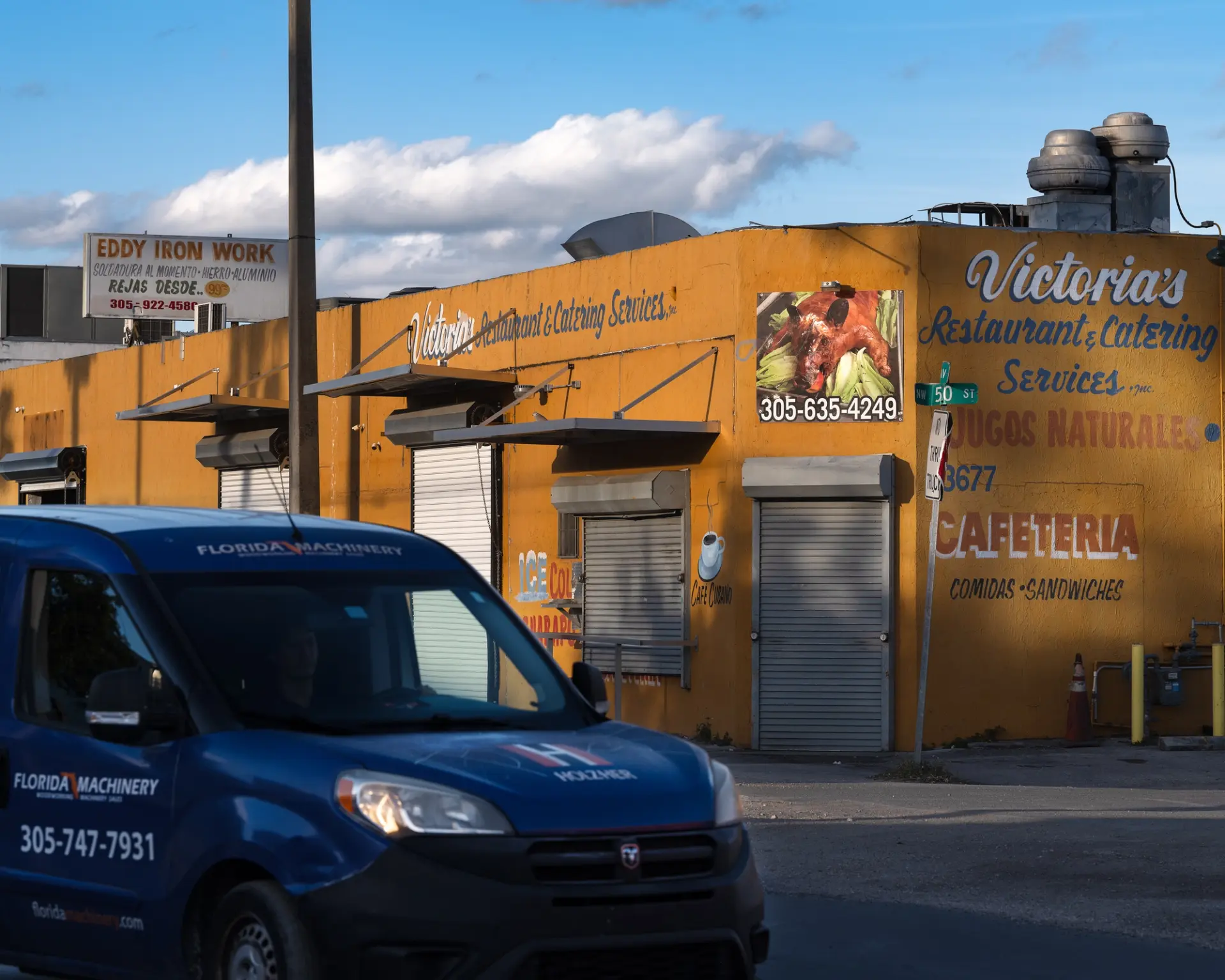
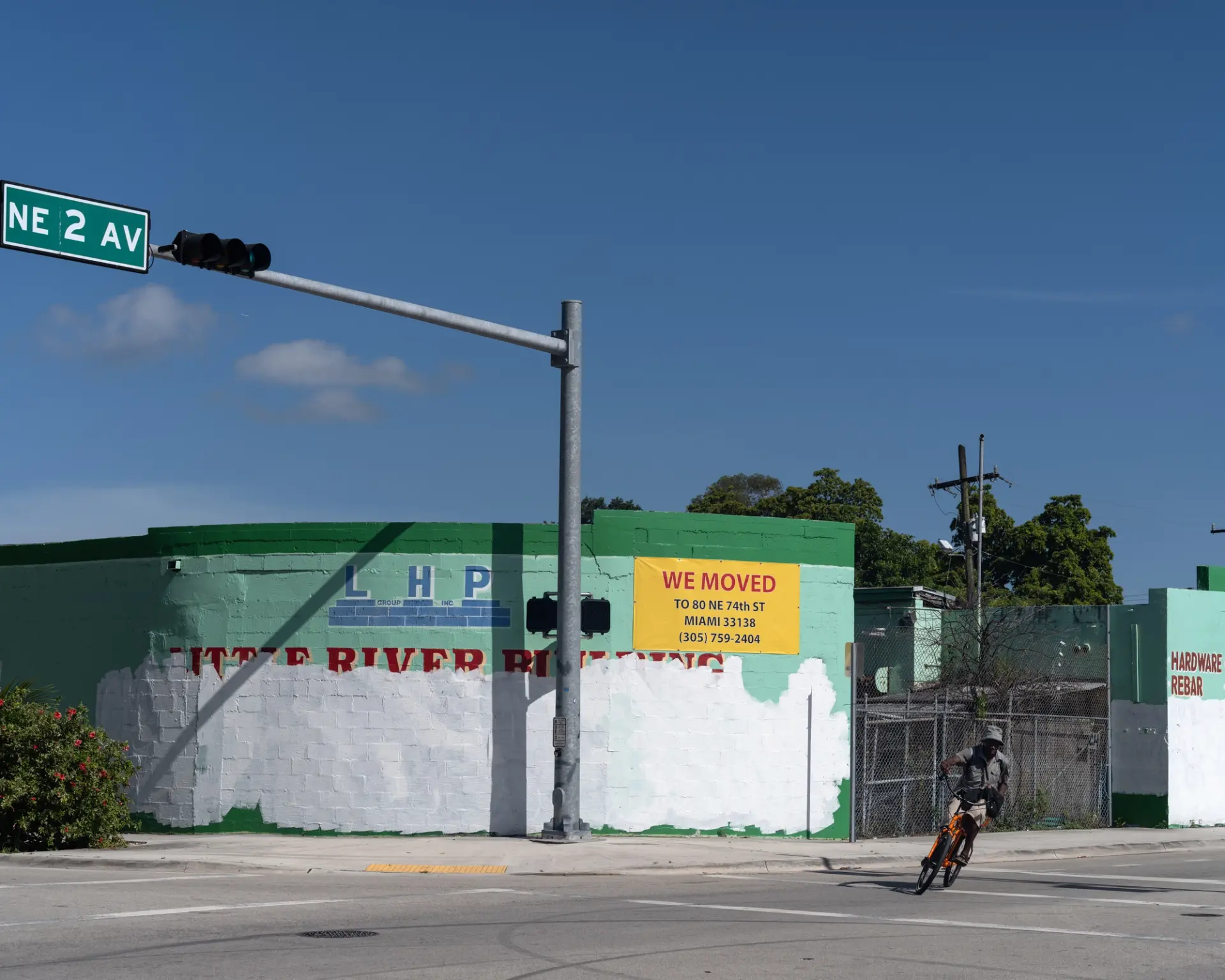
Hialeah Warehouse District Cafe, Miami, Florida, 2024.
Photo by Anastasia Samoylova. Commissioned by Hyundai Artlab for Artlab Editorial.
Looking ahead, 2win! Studios aims to become a cornerstone for artists in Hialeah. With plans for expansion including a photo developing lab, a gallery, and rentable studio spaces, the studio hopes to unify and strengthen the local art community by bridging existing gaps and nurturing more opportunities for art.
“We are currently facing the challenge of getting more interest and attention to the studio,” said Samantha. “Although there are artists and other art studios, everything feels disconnected and spread out.”
Dubbed "the city of progress," Hialeah’s resilience makes me cautiously optimistic about its future. Unlike many neighborhoods facing rapid development in Miami, Hialeah prides itself as a tightly knit community of exiles that has endured for decades. Preserving the neighborhood’s affordability and staying true to its heritage while promoting artistic experimentation and growth will be key in creating a sustainable future for art in Hialeah.
The Hialeah 2050 Master Plan, led by PLUSURBIA in partnership with the city, is a great example of community activation, collaboration, and openness to change. The plan aims to enhance livability, improve infrastructure, and elevate residents' quality of life through increased mobility and green spaces by the city’s 100th anniversary. By involving the community through online surveys, events, and workshops, this holistic plan seeks to balance progress with community engagement and preservation.
When I lived in Berlin, I witnessed how communities were able to resist Amazon’s corporate expansion into Kreuzberg and other redevelopment projects in Tempelhof Park. Still, despite these efforts from local activists, rent prices continued to rise, highlighting the complexity of urban development and local politics. While Hialeah aspires to a vibrant future for its residents new and old, challenges loom. Can commitments to longstanding residents be upheld? Will the community stay engaged in the face of change?
The answer lies in approaching our particular moment with clarity and purpose. Artists, in their role as stewards of the collective unconscious, possess a unique ability to give form and substance to the zeitgeist; to bring dreams into fruition. In Hialeah, those dreams are still taking shape. In this ever-evolving environment, sustainable change will come from a bold commitment to a collective vision that respects a shared history and looks forward with optimism. Amidst the fickle realities of modern urbanization, one wonders if and how art can endure as a constant.