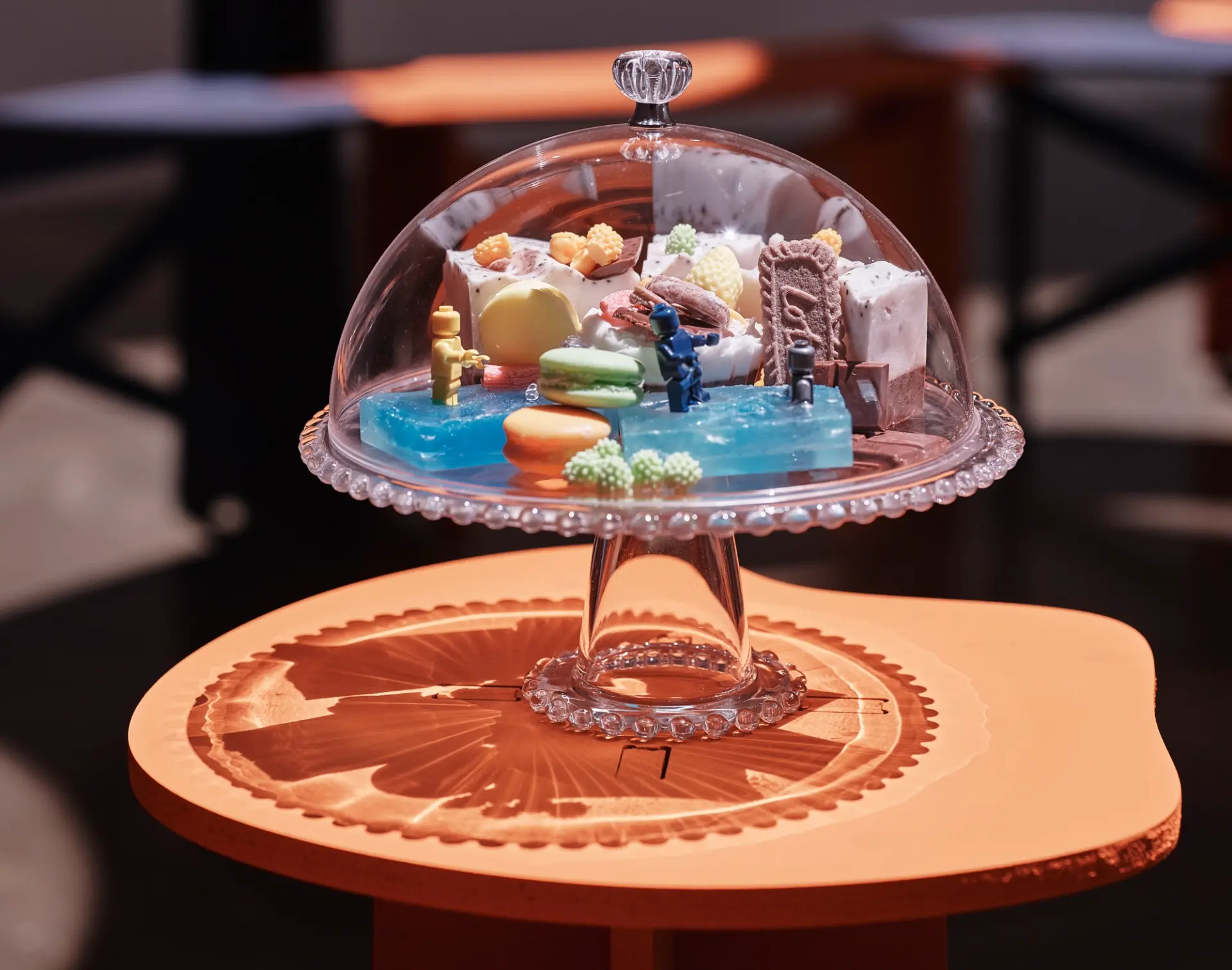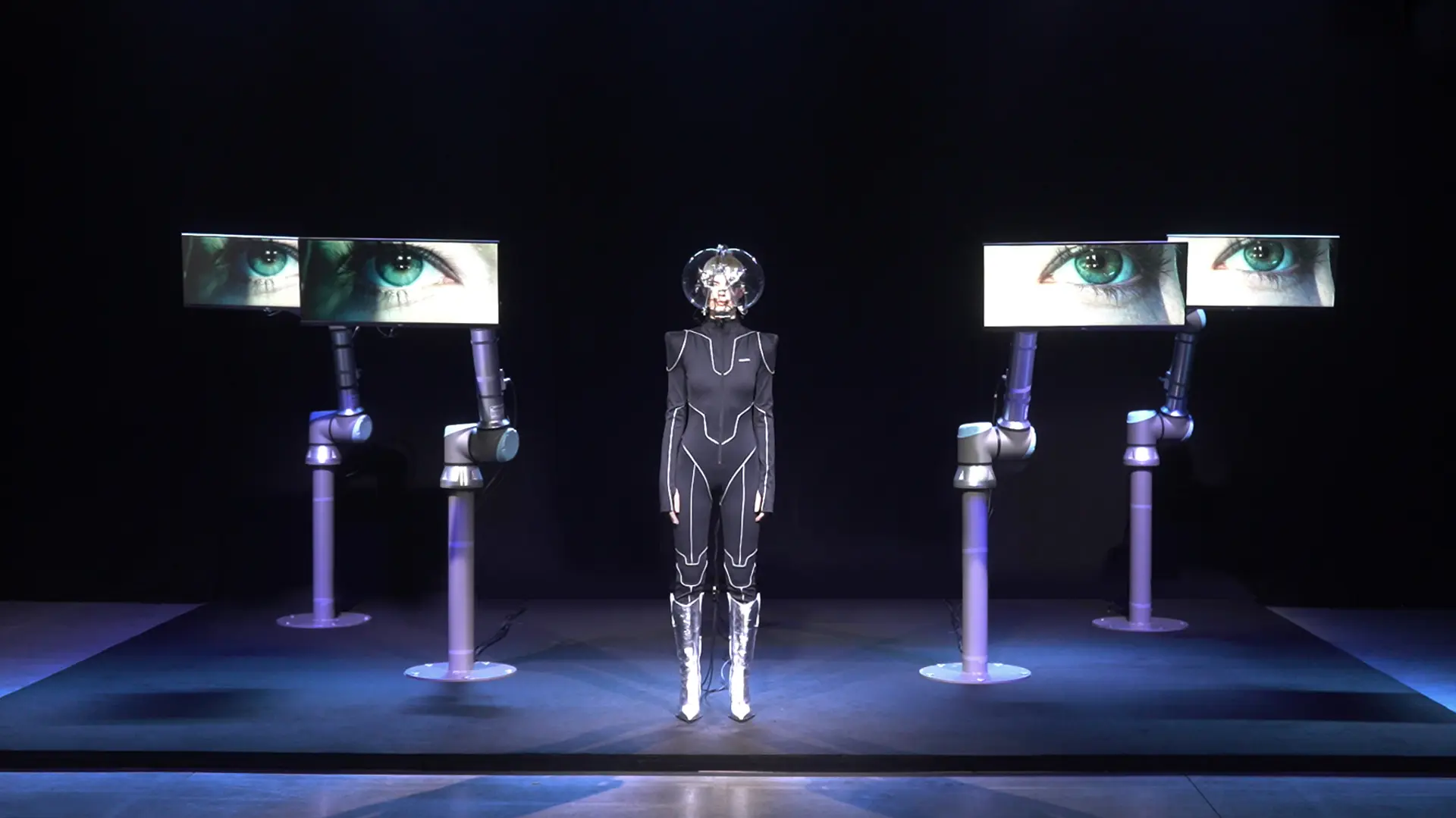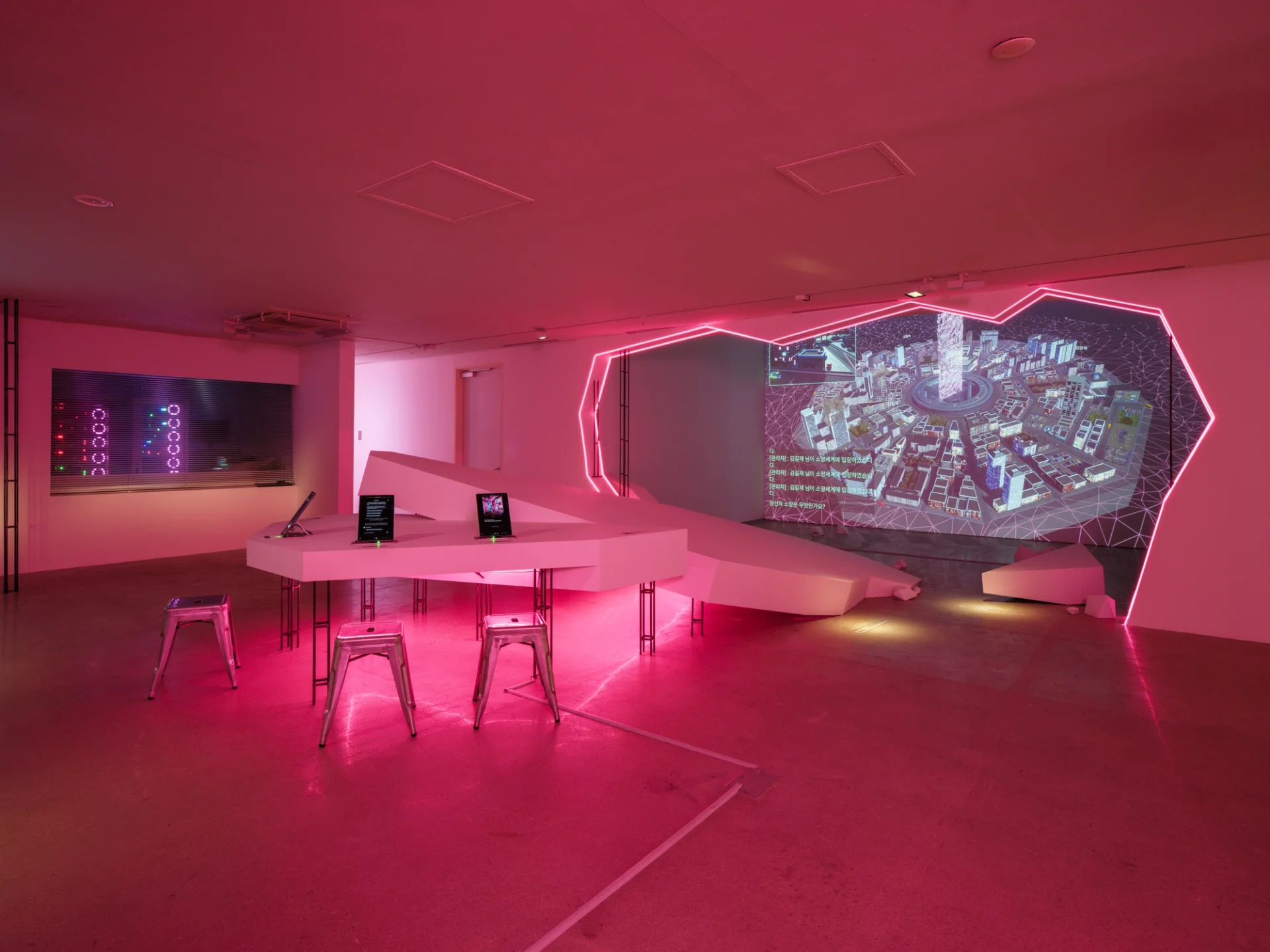
PROJECT HASHTAG 2024, Wish Office Installation view.
Image provided by MMCA.
Artist and writer Mary Flanagan explores how 2024’s PROJECT HASHTAG artists, Wish Office and Playing Art Method, are carrying the torch of reimagining museum spaces as dynamic arenas for social experiments, dialogue, and cultural play.
Artlab Editors: Initiated in 2019 through a partnership between Hyundai Motor and MMCA, PROJECT HASHTAG seeks to foster experimental and cross-disciplinary projects among Korean creators with an annual open call for artists, producers, and researchers across diverse fields. This year’s finalists, Wish Office and Playing Art Method, have cultivated experiences exploring the relationship between contemporary society and art through the medium of games.
As the author of “Critical Play,” a seminal text exploring the ways in which the concept of play has influenced contemporary art, Mary Flanagan is an expert on the culture of games and game design. Here, she contextualizes the work of Wish Office and Playing Art Method within the greater history of games in museum spaces.
Since the first known public museum was created in 530 BCE by Princess Ennigaldi-Nanna in Ur (now modern day Iraq), museums have primarily functioned to instruct and to collect, organize, classify, and display works of historical or contemporary significance. Disrupting the space with loud conversation, mobile phones, or touch often meant a scolding or worse from museum guards. We’re used to visiting museums as though we’re attending a funeral, their spaces rendered solemn and hushed.
In the mid-20th century, however, the formal presentation of galleries and museums began to evolve. In particular, the incorporation of games transformed these formerly austere spaces into ones filled with dynamic and participatory action.
By hosting the 1944-45 exhibition The Imagery of Chess, New York’s Julien Levy Gallery made a bold and perhaps controversial statement in the art world. Organized by Marcel Duchamp and Max Ernst, the exhibition brought together a group of well-known artists who were in New York during World War II to create work about—and perhaps more importantly, play—the game of chess.
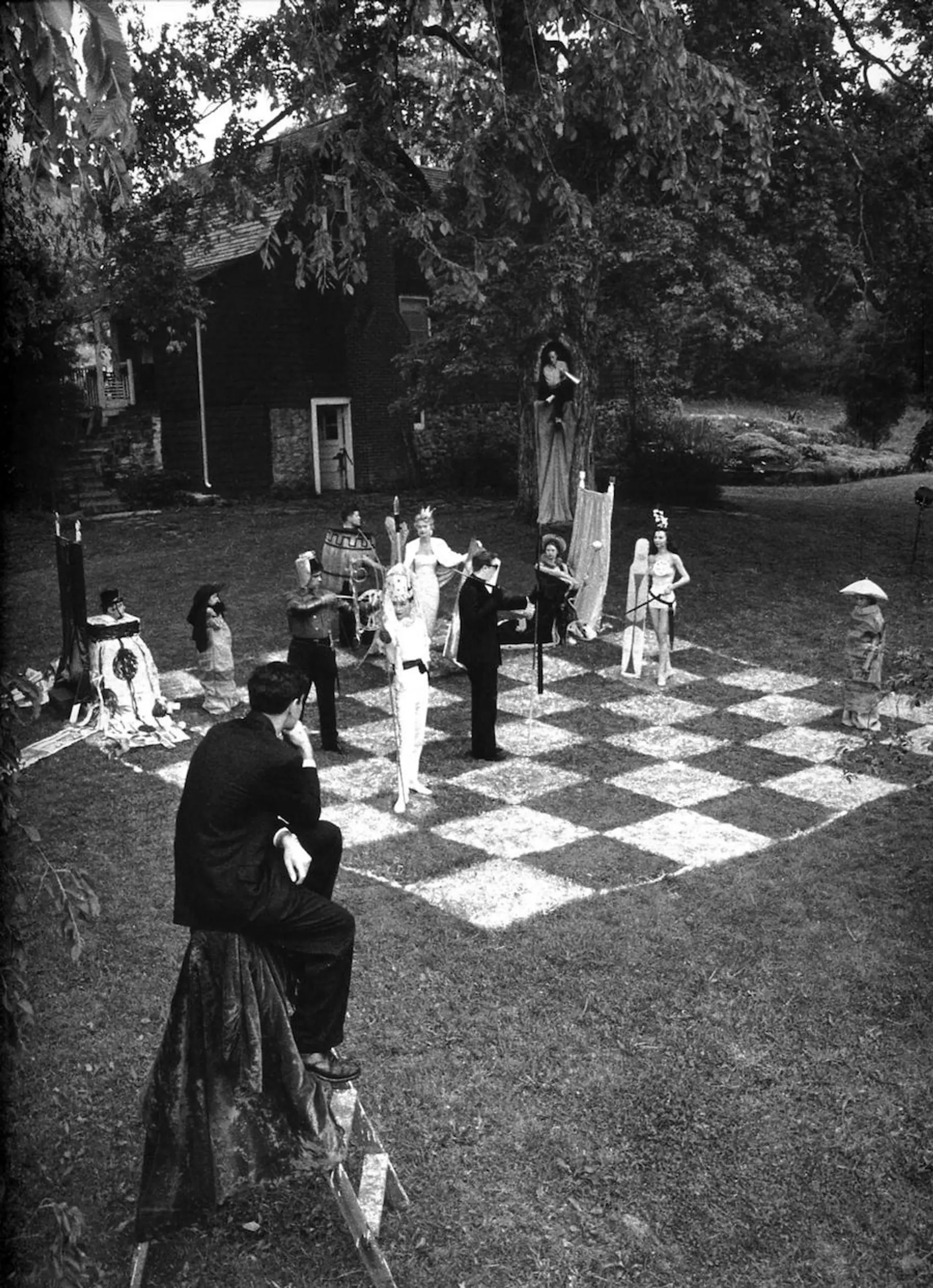
Marcel Duchamp directs a life-size chess game, 1956.
Source: MessyNessyChic MessyNessyChic .
Isamu Noguchi presented an acrylic chess set and a chess table. Playable chess boards were created by Alexander Calder, the duo of André Breton and Nicholas Calas, Man Ray, Xenia Cage, and Carol Janeway. John Cage and Dorothea Tanning submitted paintings that incorporated chess themes. Stefi Kiesler created photomontages.
The artworks from the 32 invited artists (corresponding to the number of pieces on a chessboard) filled the walls, tables, and shelves of Levy’s small gallery. A highlight of the exhibition was the series of events that accompanied the display, including a simultaneous chess match between George Koltanowski, the World Champion of Blindfold Chess and the participating artists—Koltanowski won every game.
The live performative play sessions held in the Julien Levy Gallery set a new standard for formally integrating games with art and changing the ways museums relate to the public. In many ways, the exhibition could be considered a precursor to today’s interactive experiences in museums.
The shift toward interaction continued with the Gutai movement in Japan, which explored the relationships between human actions, material, and matter. Similarly, the globally influential Fluxus movement of the 1960s celebrated humorous objects and performances. Notable artists in this movement included Yoko Ono, Ay-O, and Kim Soun-Gui, all of whom incorporated performance and play in their work. Meanwhile, Nam June Paik pushed boundaries by integrating electronics into conceptual and playful gallery works, making technology playful, sculptural, and philosophical, all at the same time.
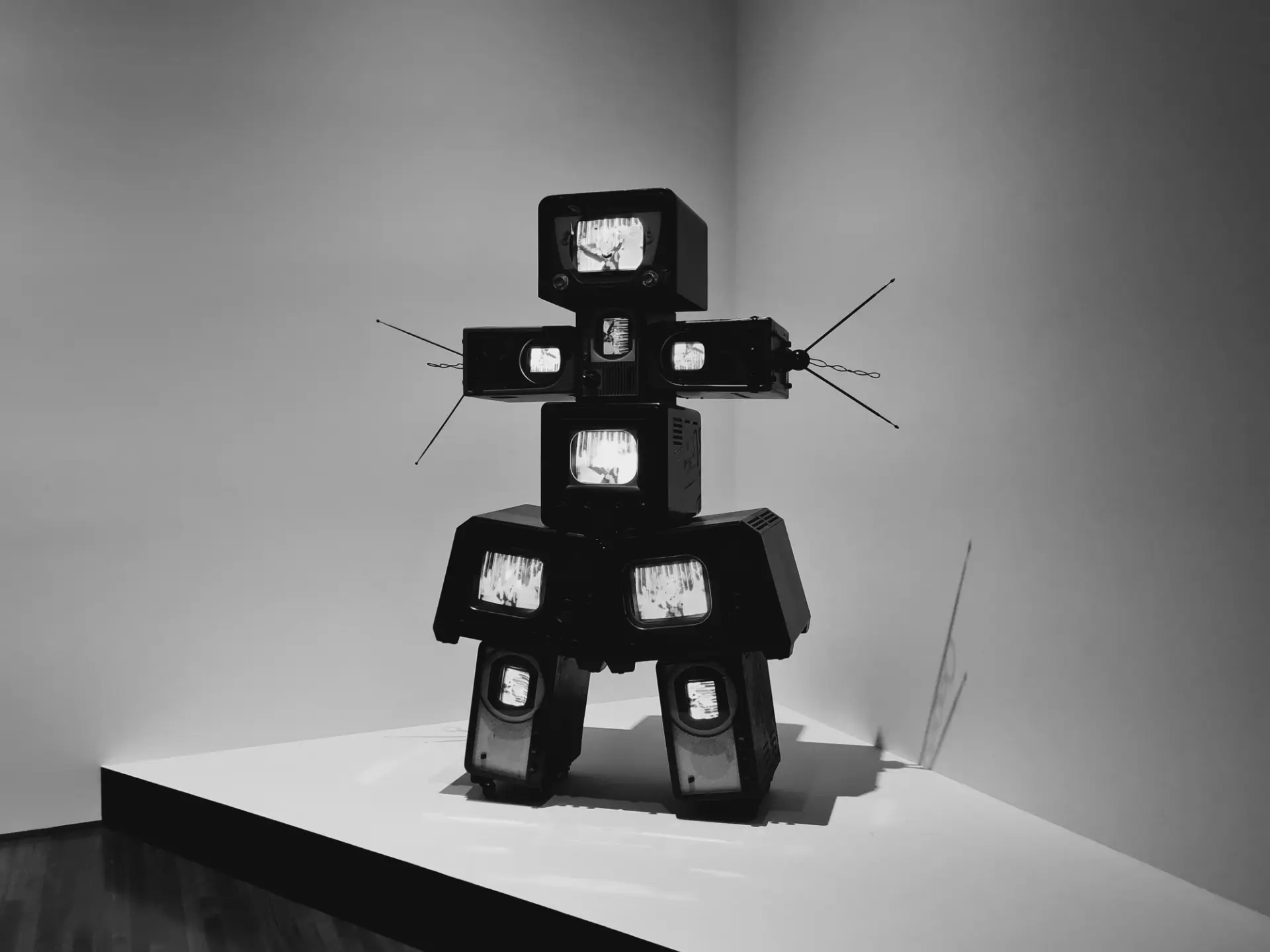
Nam June Paik Sculpture.
Source: Shutterstock.
These artists’ practices embodied a form of critical play, reframing assumptions about games, art, and everyday life. Since then, museums and gallery spaces have continued to develop from their formerly austere foundations. The dynamic and collaborative nature of gaming necessitates active participation. Engagement within a gallery space offers a distinct institutional experience, reshaping our understanding of what it means to be in an art space.
Art has continued to become more active, dynamic, and participatory. A case in point is Seoul’s Museum of Modern and Contemporary Art (MMCA), a national museum that until recently has favored more traditional art formats, but has begun to incorporate more experimentation via games. Their 2023 exhibition Game Society, for example, examined how the grammar and aesthetics of video games have influenced contemporary art and visual culture. The growing acceptance of games within museums signifies a broader shift in how the art world is recognizing games as a legitimate form of art.
Furthering MMCA’s interest in interactivity is PROJECT HASHTAG. A partnership with Hyundai Motor, the annual program presents the work of two creator teams. This year’s teams have taken an innovative approach to examining the relationship between contemporary life and art through the lens of games. These projects each use the space of the art institution in different ways as places of encounter and spectacle. After all, games communicate mostly through their rules and aesthetics—they must be played in order to be enacted, living works.
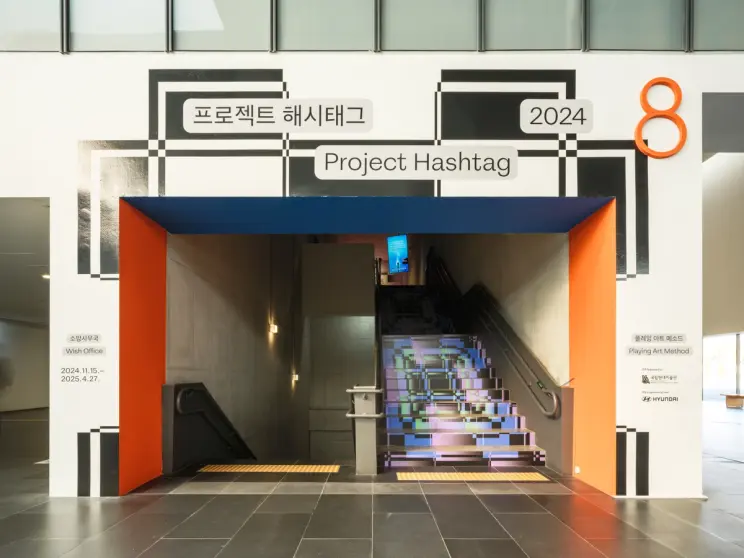
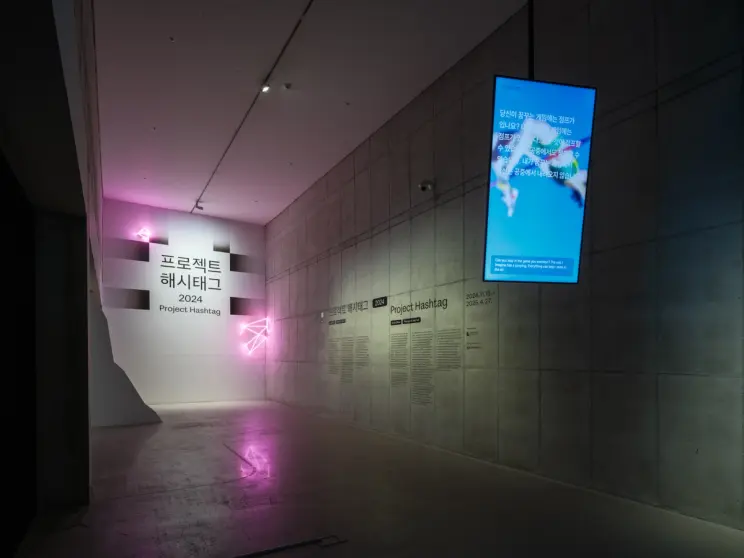
The Wish Office team, artists Kim Raeo, Oh Saeol, Seo Jinkyu, Seo John, and Titanium (Choi Joonseong) have created the virtual space of Wish World, an alternate reality where everyone’s wishes can come true. It is a sophisticated simulation system and interactive novel that is fueled by the collective willpower of the players. Within Wish World, The Wishes serves as a social experiment using the language of computer games.
Wish World players are assigned their own “home base” and interact with administrator characters through a chat function. Participants start by typing out their wishes, which are then classified by AI and delivered to Wish World, whose fate is determined and shaped by these wishes. As other players join and enter their wishes, the fate of Wish World becomes more complicated—some wishes may contradict others, some may collapse.
The simulation assesses the world’s potential for survival or collapse in 10 minute sessions, aiming to collect cycles of solutions to keep the world operating successfully and providing players with hope for real-world solutions. “Individual wishes have been frustrated in the real world and the Willpower to keep the world running has rapidly decreased,” said Kim, explaining the motivation behind Wish Office. “As the real world initiated ‘destruction,’ Wish Office urgently activates debug mode to prevent the world from collapsing.”
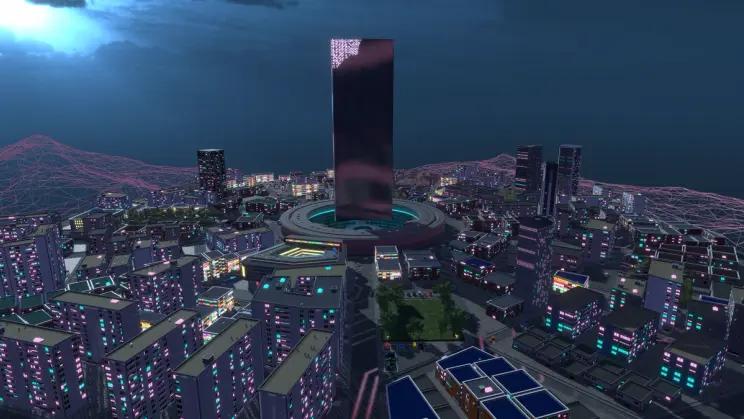
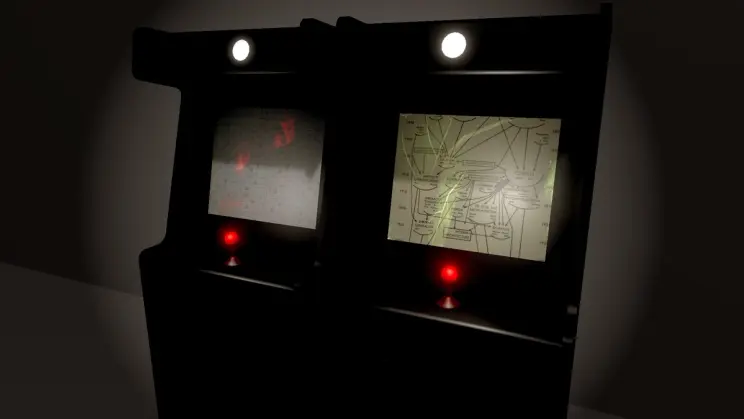
In the second exhibition space, Playing Art Method’s artists Parade & Patchwork (Rhee Sei) and Loopntale (Kim Youngju and Cho Hoyoun) focus on fostering dialogue around the challenges that arise when video games are exhibited as art in museums. There are four sections to this work. The first features two looping campaign videos, “Games I’ve Made and Games You’re Going to Make.” These videos function as fictional sales pitches that highlight the links between art creation, advertising, branding, and selling work.
The second section features multi-channel video works, one based on a game shown in an art exhibition, and the other a mashup of indie gameplay footage, assets, and play scenes. Questioning traditional notions of formal museum spaces and their public functions, the third section of the exhibition resurfaces a virtual art museum that was recovered from a fictional flood. In this virtual museum, only bits and pieces of games have survived. Finally, a digital exhibition guide diagramming the elements of the project visualizes the connections and relationships between all of the works.
Playing Art Method further reflects on the future of art spaces by offering a range of live programs within the galleries to foster an open learning community aimed at promoting meaningful dialogue through workshops and interactive sessions. These programs interrogate and unpack various expectations between commercial games and artistic ones, or those in between—what if players refuse to play? What if there is an option to stop the game? How are games that stand alone in the museum without a docent or tutorial understood? Can the art world come to accept the “grammar of games”?
What might be a tacit expectation in gaming culture can completely change in an arts context, and these questions serve as the core of Playing Art Method’s proposed dialogue. Over the course of two months, a variety of experts—art critics, poets, and game researchers—will act as docents, engaging with visitors about the meaning of games.
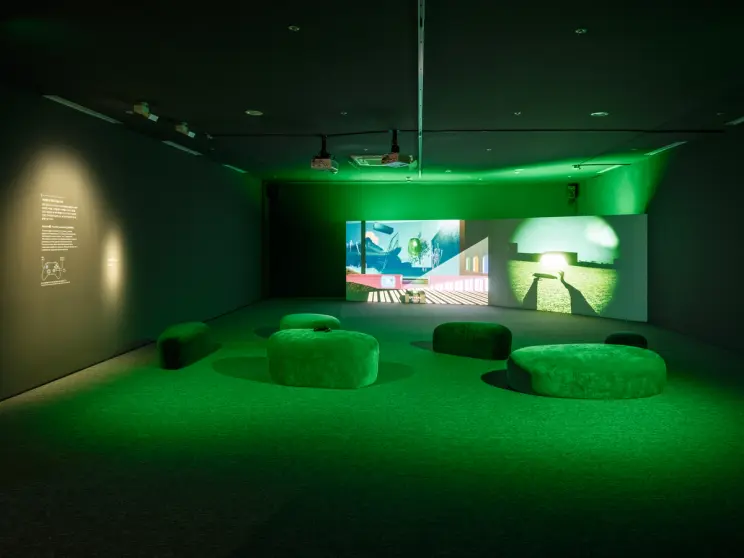
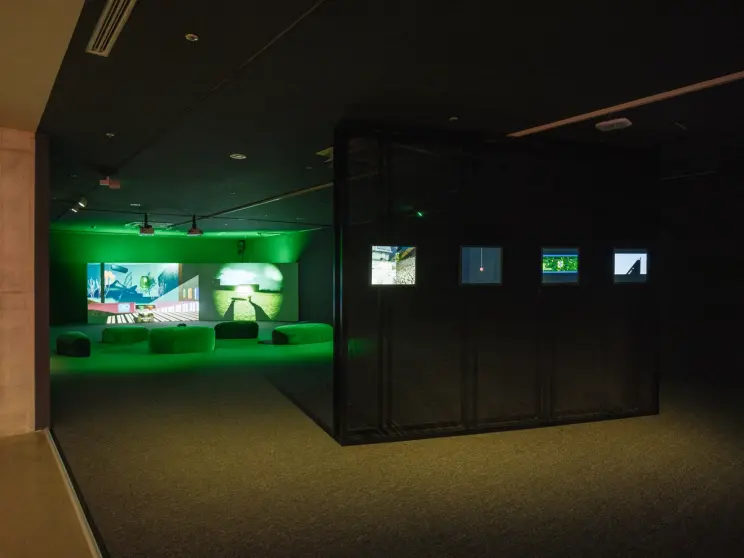
Wish Office and Playing Art Method have created works which will shape the future of games in the museum. When chess was played at the Julian Levy Gallery in 1944, the artistic interpretations adhered closely to the “mechanics” of gameplay. Today, however, the possibilities have expanded significantly as museums continue to evolve their own vibrant new communities of play as cultural production. The games showcased by both teams in the PROJECT HASHTAG 2024 exhibition present a fresh approach to participation, involving players both in-person and online alongside experts.
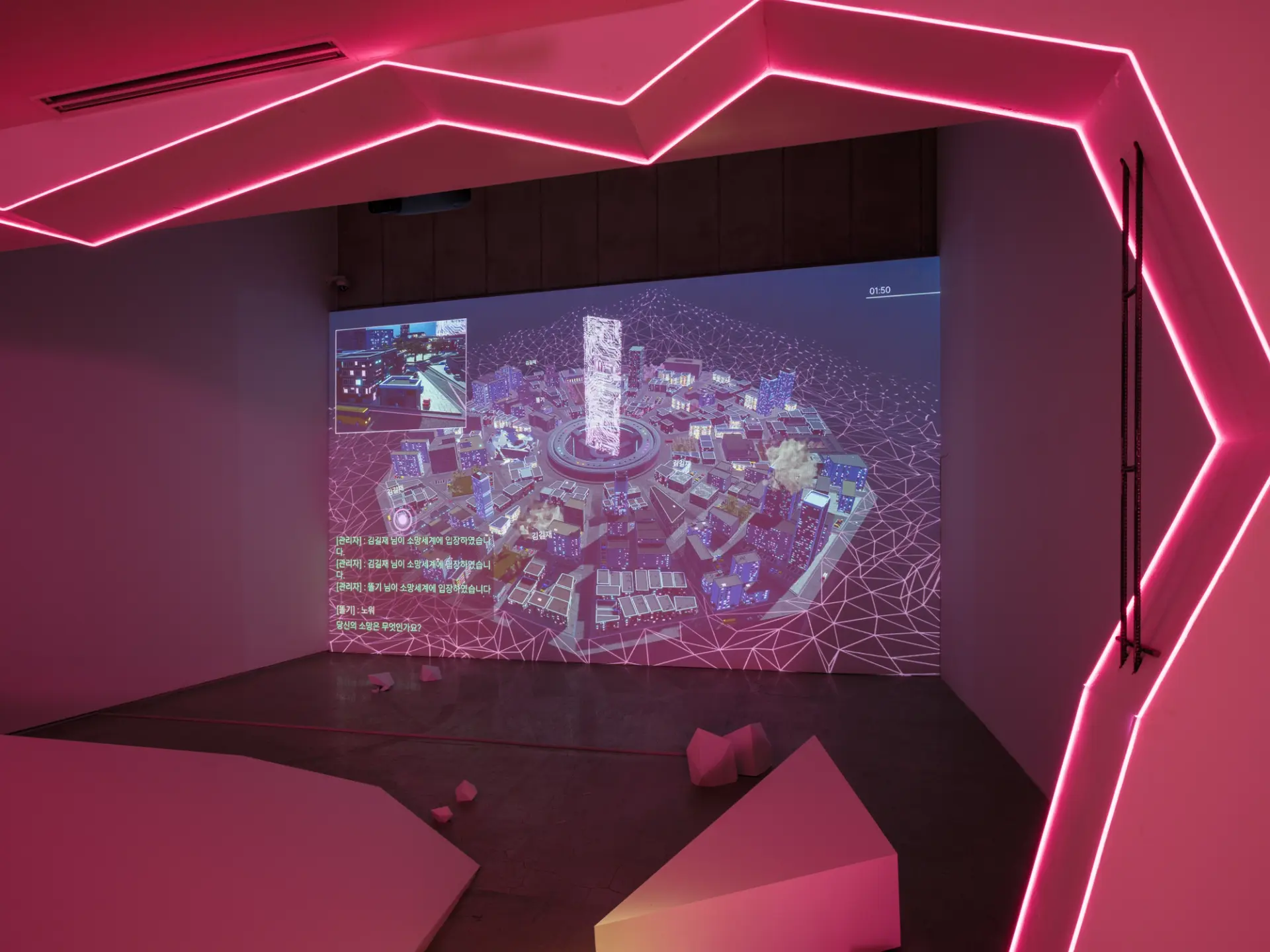
PROJECT HASHTAG 2024, Wish Office Installation view.
Image provided by MMCA.
These projects playfully explore and reinterpret the relationships between games and art—whether perceived as an integrated medium or as separate “industries” each with its own conventions and standards. The dynamic interactions presented in PROJECT HASHTAG 2024 establish a new foundation for the future of museums and the essence of games, pushing—and even shattering—the limits of play and art.