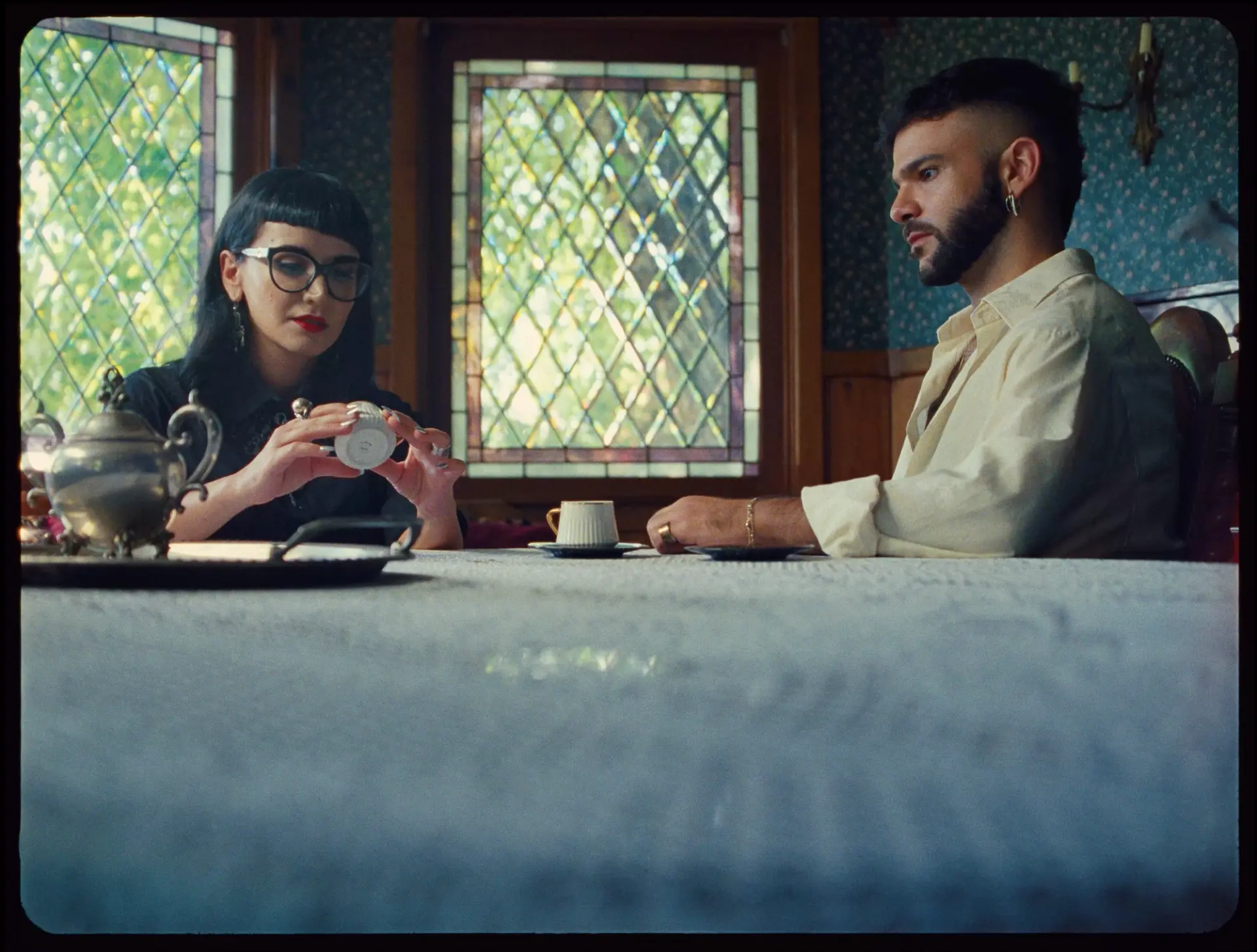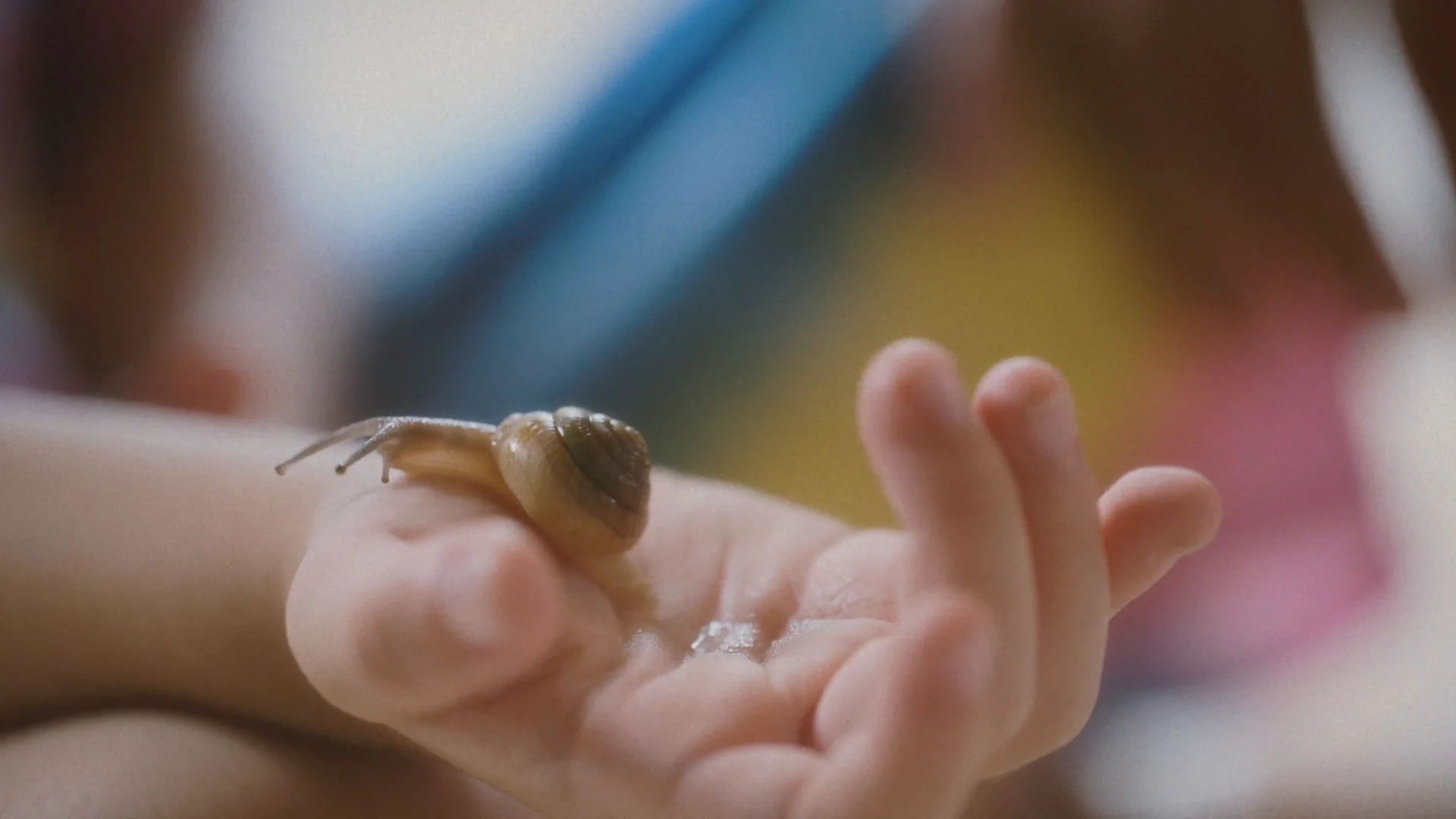
Still from Charmaine Poh, What’s softest in the world rushes and runs over what’s hardest in the world (2024). Image courtesy of Charmaine Poh.
2025 Artlab Editorial Fellow Jiaying Sim immerses us in the poetry of Singaporean artist Charmaine Poh.
Artlab Editors: In her first essay for the 2025 Artlab Editorial Fellowship, Singapore-based academic and writer Jiaying Sim carefully observes the whispered and fluid radicality of Charmaine Poh’s film, What’s softest in the world rushes and runs over what’s hardest in the world (2024).
而攻堅強者莫之能勝,
以其無以易之。
弱之勝強,
柔之勝剛,
天下莫不知,
莫能行。
– 老子, 道德经, 第七十八章
Nothing in the world is softer or weaker than water
and yet when struck, nothing hard or rigid can surpass it
for it is that which cannot be changed.
The soft prevail over the hard
And the weak prevail over the rigid:
None in the world know not of these,
And yet none are able to behave as these.
— Lao Zi, Dao De Jing , Chapter 78, trans. J.H. Huang
Charmaine Poh’s film What’s softest in the world rushes and runs over what’s hardest in the world (2024) opens in a liminal space, suspended in washes of textured greys and shadows of light. Like an ultrasound, the camera drifts in search of focus, immersing us in an amniotic visual field that feels porous and indeterminate. The soundscape, like the steady patter of rain heard from underwater, evokes a sensation of submersion, both cocooning and safe. A voice emerges, recounting the C-section delivery of her baby before a cut scene draws our gaze to a quilted surface. Its faint geometric patterns resemble ripples in a pond or the delicate raking of sand in a Zen garden. Here, another voice recalls the birth of her daughter:
“When she was born, she turned purple. At that moment, I really didn’t know what to do because Pearlyn was still trying to deliver her placenta and Velda was just put in a clear transparent box. My heart just…just stopped. For that split second. That’s my first memory of her.”
More than an aesthetic detail or backdrop, the quilt offers itself as a corporeal and sonic membrane where lived experiences emerge intimate, layered, and soft. Hands caress the smallness of a baby’s feet, intercut with shots of the mothers, draped in translucent fabric, diffused by an ambient glow. The image recalls the gauzy covering of a bridal veil.
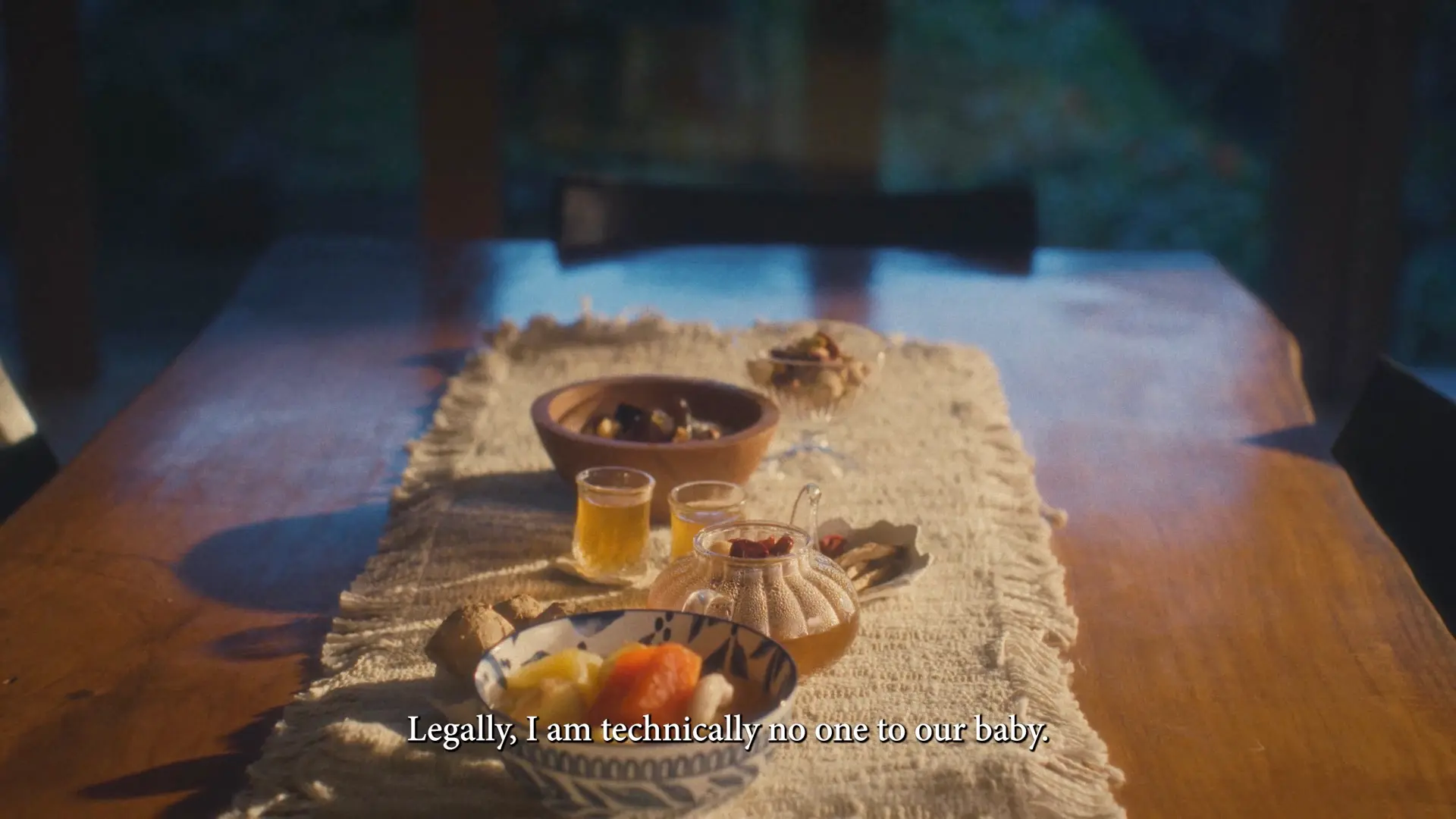
Still from Charmaine Poh, What’s softest in the world rushes and runs over what’s hardest in the world (2024). Image courtesy of Charmaine Poh.
First presented at the 2024 Venice Biennale, Stranieri Ovunque (Foreigners Everywhere), curated by Adriano Pedrosa, What’s softest… acts as a second chapter to Poh’s 2021 film, Kin. In Kin, communal domestic life and creative rituals of safety and belonging among queer people are presented through emotive and intimate vignettes. Named Deutsche Bank’s 2025 “Artist of the Year” and a 2026 Villa Romana Prize recipient, Poh has expanded her practice—which began in performance arts and experimental documentary photography—to engage with cinematic forms that incorporate play-making, imaginative world-building, and embodied storytelling. Featuring personal stories shared by queer parents and individuals, What’s softest… was produced with an almost entirely female and non-binary, queer-affirming crew, a quietly radical gesture in a country like Singapore.
Since its debut, What’s softest… has screened internationally, in Bangkok, Hong Kong, New York City, and Germany, and is available online via platforms like Cinelogue Cinelogue . Locally, however, the film was classified “R21” (restricted to viewers over the age of 21) by the Infocomm Media Development Authority of Singapore. This designation underscores the enduring hardness of structural power, where queer lives and narratives remain circumscribed by institutional gatekeeping. The film was eventually shown behind closed doors as part of the exhibition Disobedient Bodies: Reclaiming Her at Sundaram Tagore Gallery.
In Singapore, LGBTQIA+ couples and their children are not recognised as legitimate by the state. While Section 377A of the Penal Code which criminalised sex between men was repealed in 2022, the Constitution of Singapore was concurrently amended to legally define marriage as a union between a man and a woman. Deftly, Poh positions this context not as confrontation, but as terrain, where softness becomes a way of witnessing, holding space, and insisting on affective resonance.
Amid the tensions between global recognition and domestic restriction, What’s softest… asks how the experience of childbirth and parenthood might be fleshed out in ways that move beyond fixed binaries of male/female, parent/child, biological/non-biological, legitimate/illegitimate. How might one embrace the generative potentialities that emerge when desire and intimacy exceed heteronormative boundaries? To regard the work solely as a critique of state power would be to miss its deeper pulse: a steady attunement to the interwoven labors of care and sustenance that expand from dichotomous relations to rhizomatic interspecies interdependence.
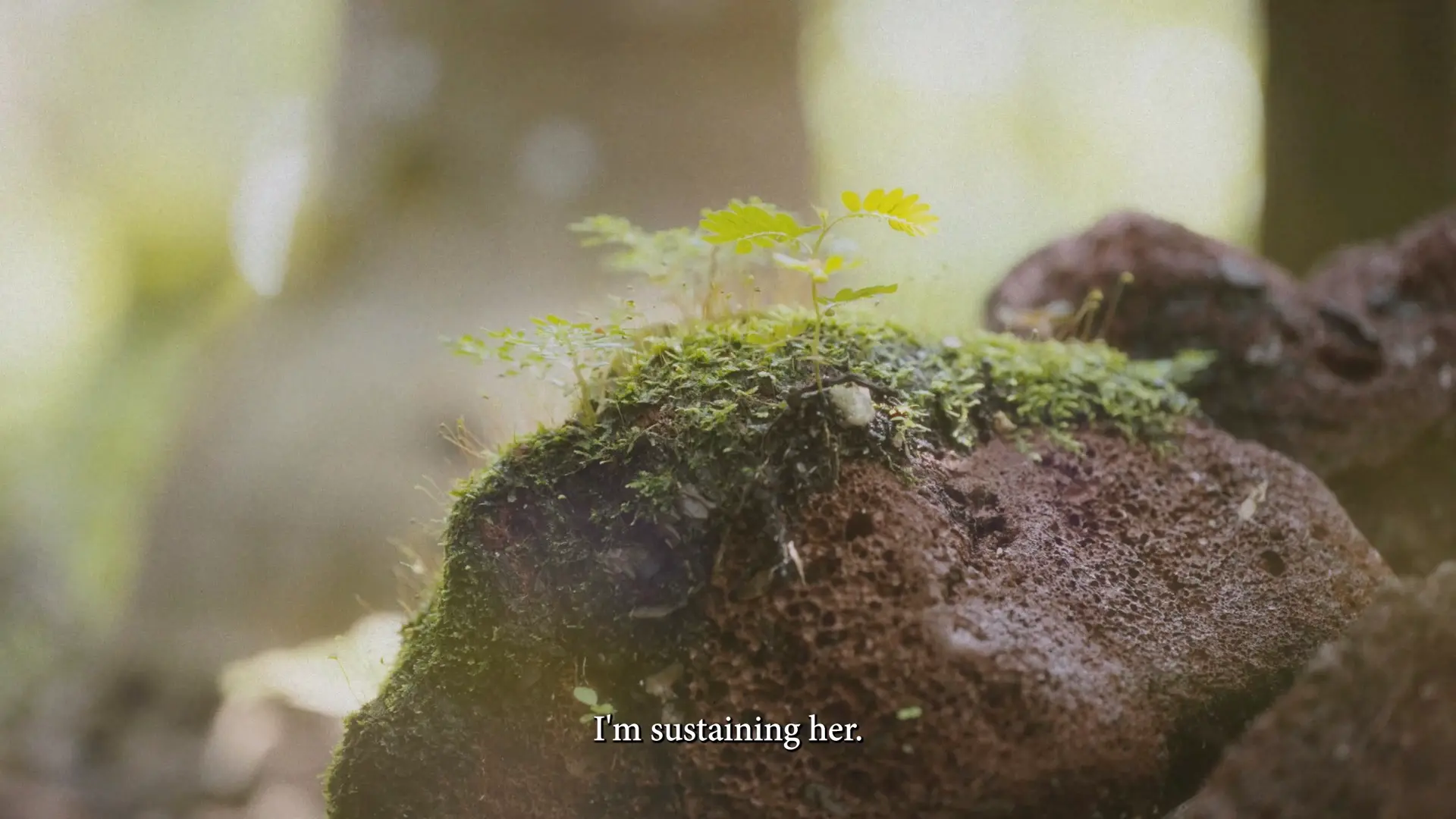
Still from Charmaine Poh, What’s softest in the world rushes and runs over what’s hardest in the world (2024). Image courtesy of Charmaine Poh.
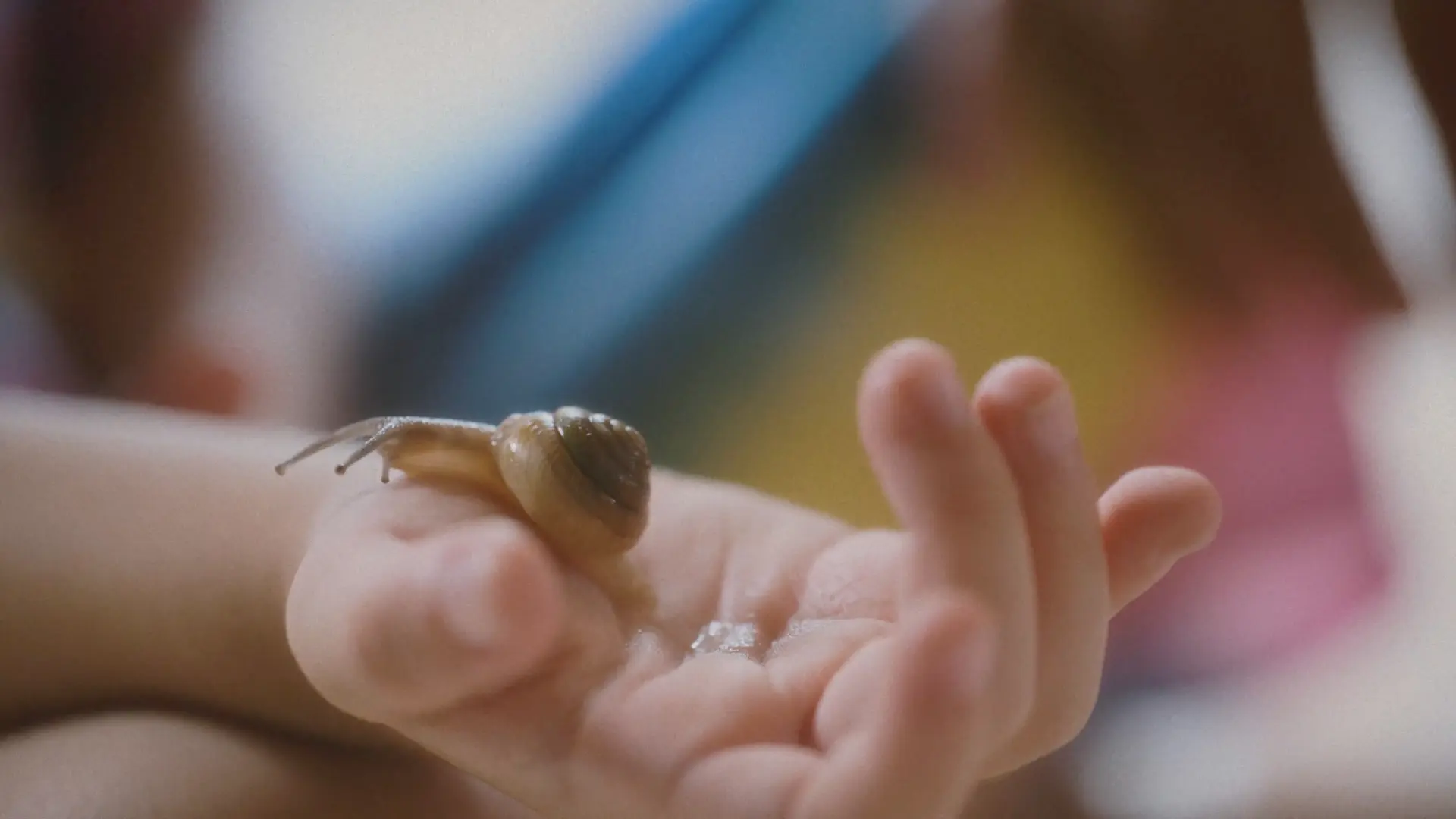
Cradled by a moss-covered rock, tiny seedlings glisten as a voice-over calmly asserts: “I’m sustaining her.” The question of who sustains whom is left suspended, as the imagery opens into an ecology where kinship takes root in collective interspecies tending and vulnerability, beyond the bounds of human identity or anthropomorphic relation. In her 2003 book Gathering Moss, botanist and writer Robin Wall Kimmerer reminds us that mosses flourish together, sustained by complex ecosystems that nurture moisture, offer shelter, and welcome life to gather. The camera work in What’s softest… mirrors this sensibility: breathy, as it pauses on close ups of a tree. Tactile, weathered, and furrowed with age, the bark’s intricate surface catches the light in uneven ridges as an ant moves in and out of focus, almost imperceptibly. Yet, the expansive nature of intergenerational growth, and the life source of a tree is undisputed. “And I just felt shocked in awe”, a voice recalls.
Still from Charmaine Poh, What’s softest in the world rushes and runs over what’s hardest in the world (2024). Image courtesy of Charmaine Poh.
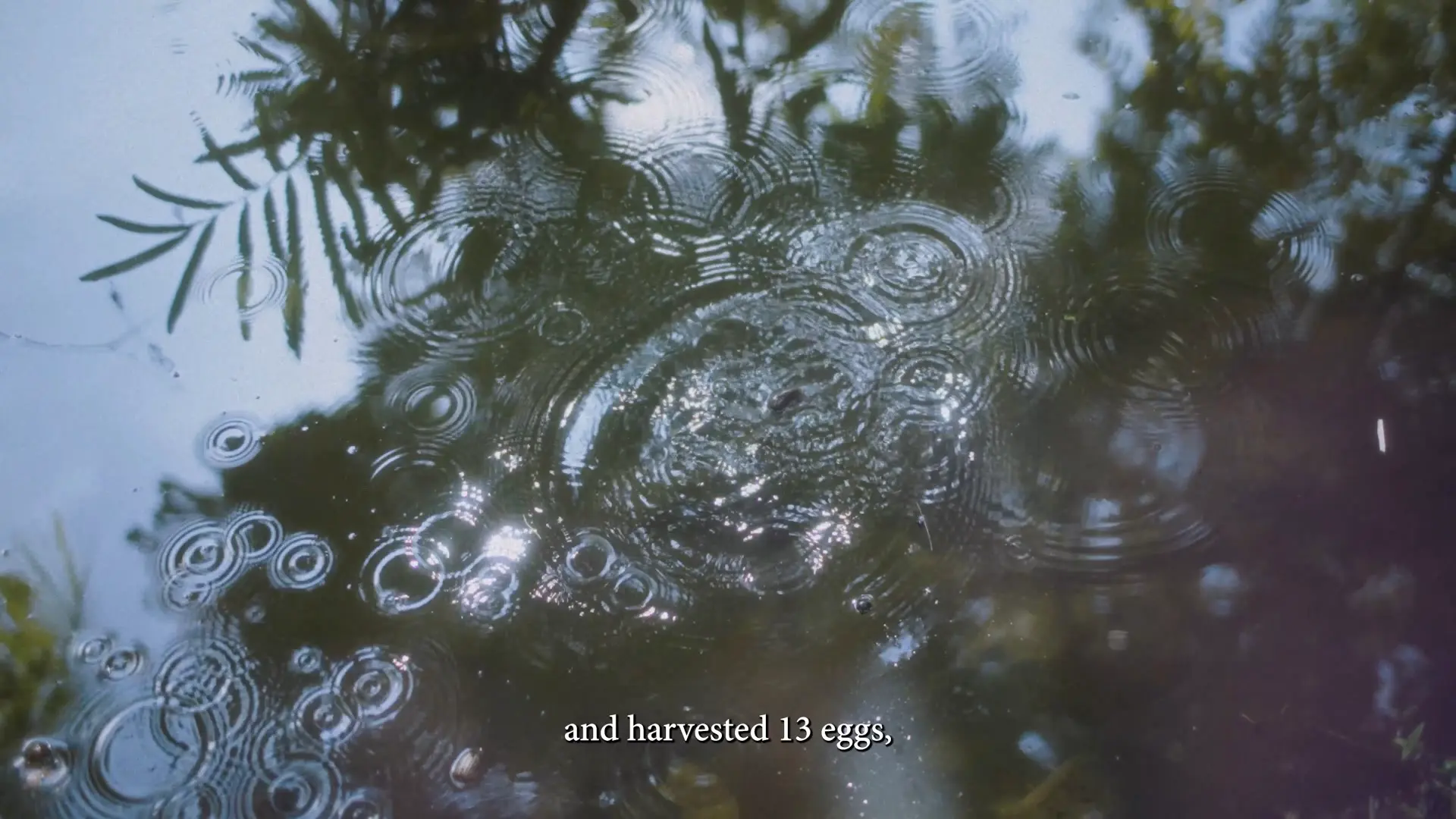
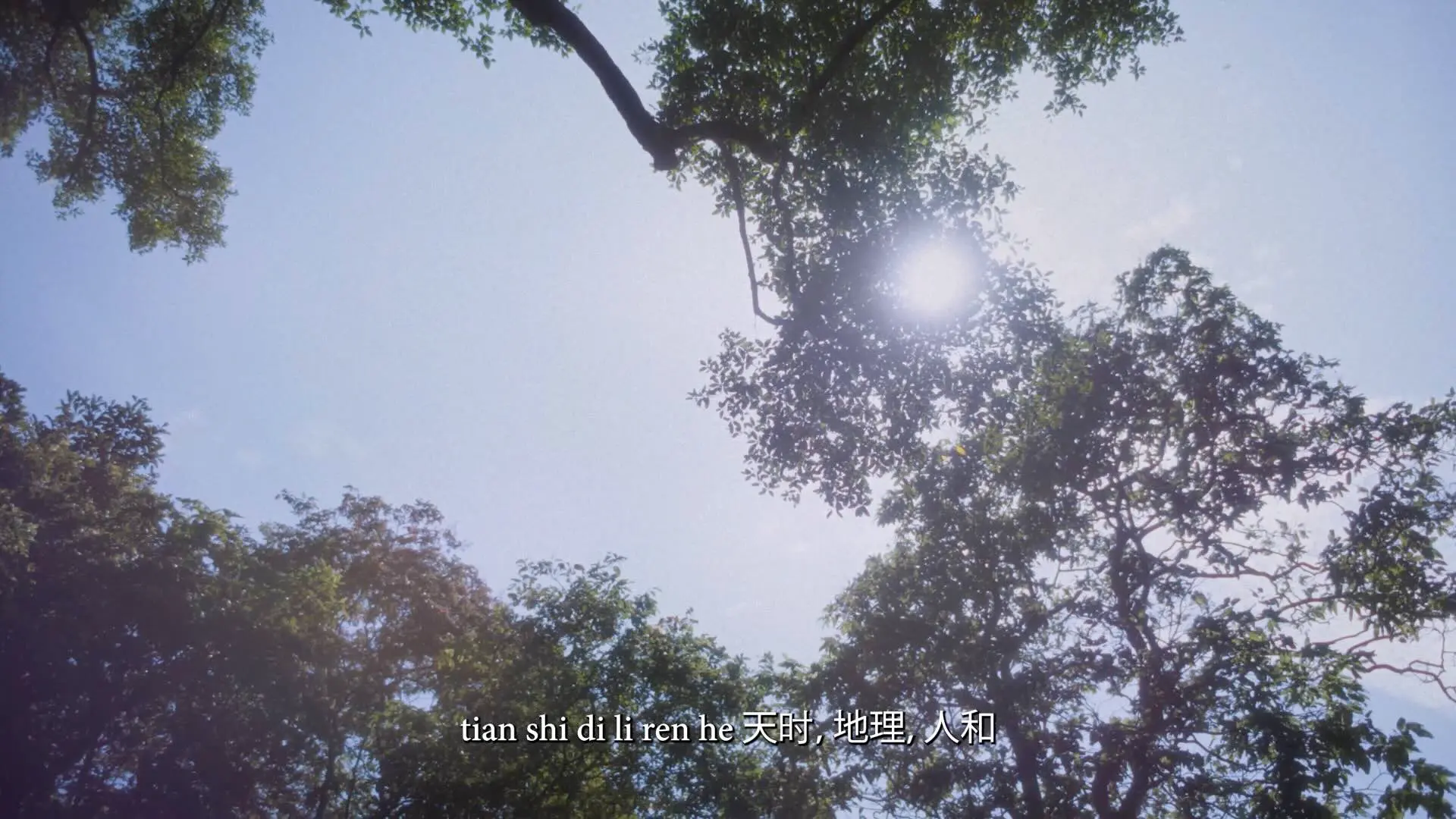
Other recounts of what it took to start a family reveal deep intention, yearning, and mutual commitment: “I definitely consider starting a family as a queer person as an act of resistance.” For one couple, this meant years of intentional planning, egg harvesting, freezing, and patiently waiting for the right time before Baby Bubble was born. Still, the film hesitates to frame parenthood as an individual triumph of will, or an act of ultimate resolution. The candid and humble invocation of the Chinese saying “天时, 地利, 人和” (favorable timing, geographical and human conditions) from one of Poh’s interviews embodies an acknowledgment of the limits of human agency. Success, What’s softest… reminds us, emerges from cooperation, not conquest.
Still from Charmaine Poh, What’s softest in the world rushes and runs over what’s hardest in the world (2024). Image courtesy of Charmaine Poh
The film’s title, borrowed from Ursula K. Le Guin’s feminist rendition of Lao Zi’s Dao De Jing, reflects the science fiction writer’s emphasis on how water, through its supple constancy, alters what appears immovable. Poh extends this metaphor as both a homage to Daoist philosophy and a tactile meditation on care, creativity, and relationality.
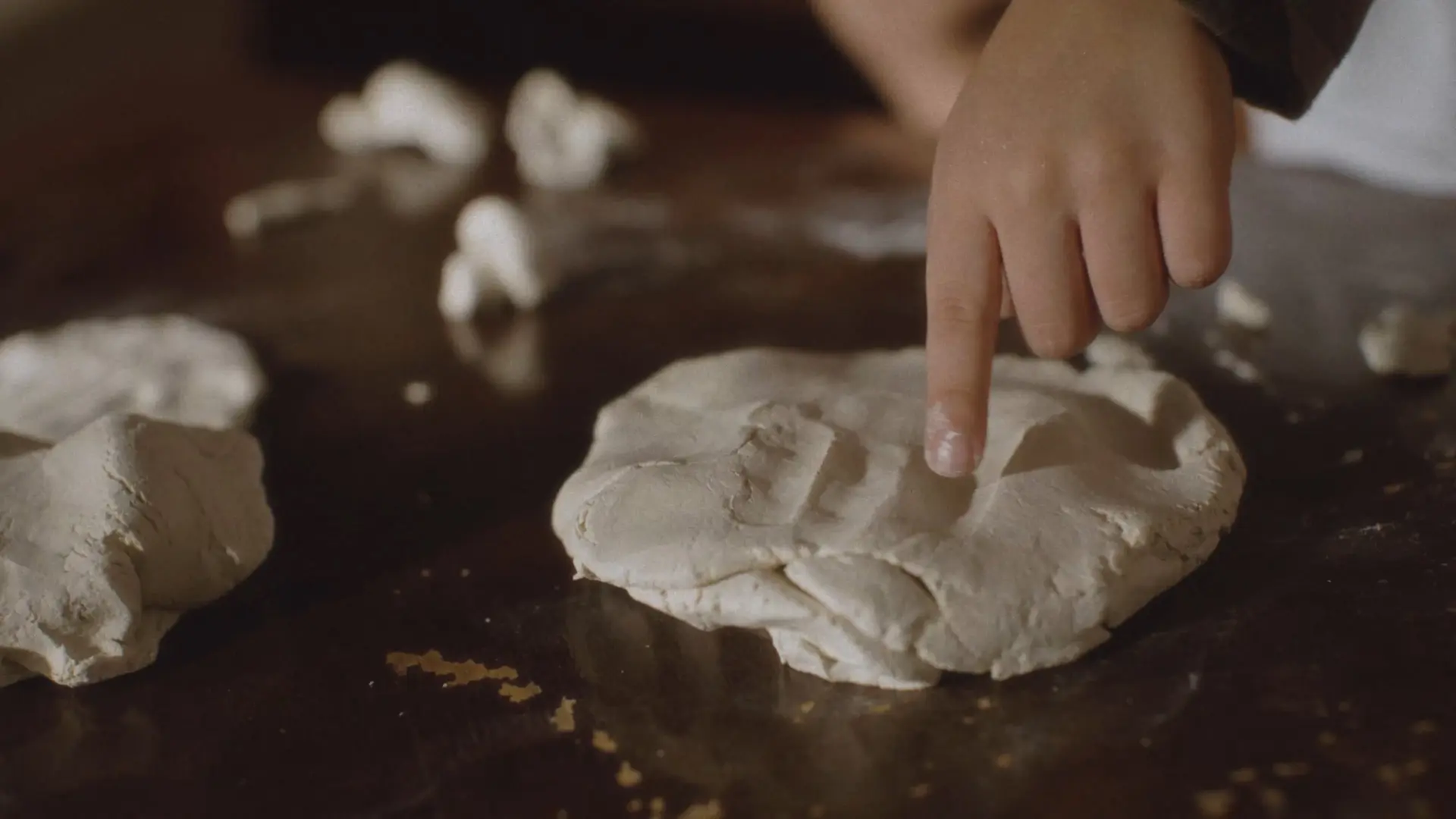
In one scene, clay is kneaded on a table. Tiny handprints are pressed into its pliable surface, not just leaving a mark but enacting an understated form of shaping. They recall Chapter 11 of the Dao De Jing: “埏埴以為器,當其無,有器之用” (Clay is kneaded to form a vessel; it is the void within that makes it useful). The handprints become more than traces; they embody an ethic of softness, suggesting that tenderness leaves its own kind of structure.
Still from Charmaine Poh, What’s softest in the world rushes and runs over what’s hardest in the world (2024). Image courtesy of Charmaine Poh.
In modern Chinese, the act of kneading is written as ‘揉’ (róu), a character that shares its phonetic sound with ‘柔’ (róu), meaning softness or pliancy, and forms part of the word ‘温柔’ (wēnróu), often translated as tenderness or gentleness. ‘揉’ carries the “hand” radical (扌), evoking an embodied practice of attention enacted through repetitive touch. This etymological parallel reflects the ethos of Poh’s filmmaking, which performs its own gestures of ‘温柔’: layering voices, textures, shadows, and light to imprint memories rather than impose interpretation. Similarly, the film refuses to reduce queer parenting to a singular narrative of overcoming. Instead, it weaves multiple stories of coming out, to oneself, to family, to society, and to one’s chosen kin, embracing permeability, plurality, and a spirit of inventive play as guiding principles.
With their hands, parent and child form silhouettes of flying birds, cast in shadow on a translucent veil. Once a symbol of heteronormative exclusivity, the veil transforms into a shared canvas, a plane for hopeful projection. This attention to everyday intimacies continues in scenes of communal food preparation, hair braiding, and in a light, playful exchange where an origami fortune teller moves between hands.
During an otherwise playful scene, a voiceover recalls her daughter unpromptedly reaching for the words “Mommy” and “Papa”—an instance that underscores how heteronormative kinship roles are prefigured in language—as a game of rock-paper-scissors unfolds alongside. The simultaneity reveals a productive interplay: while language leans toward fixity, improvisational playmaking invites rhythm, unpredictability, and the unfolding of permutations, possibilities, and choices. The camera does not frame a winner, only the reciprocity of interactions. In these gestures of holding, offering, and play, the film unpicks the roles of “mother” and “father,” replacing prescribed hierarchies with a relational ethic of co-presence. Parenthood here lives as a practice, held together by repetition, responsiveness, and the everyday labor of showing up.
Still from Charmaine Poh, What’s softest in the world rushes and runs over what’s hardest in the world (2024). Image courtesy of Charmaine Poh.
Through What’s softest… Poh’s practice moves beyond visual representation into haptic and topological encounters, an expanded cinema that smudges the boundaries between touch and visuality, body and screen, form and feeling, self and other. A radical mode of filmmaking dedicated to cultivating moments, bringing to the surface hidden infrastructures of care, relation, and labor that often remain unacknowledged: What emerges is a vessel conceived through affective visuality, where softness becomes both method and ethic, and meaning arises through what is gently held rather than explicitly stated. Here, softness is not a retreat; it expresses as a form of armature, fluid and adaptive, resisting the rigidity of heteronormative exclusion. Shaped by reciprocity, sustained attention, and the act of staying with what remains indeterminate, this is a softness that gestures toward futurity, not as reproductive promise, but as the potential for more ways of becoming.