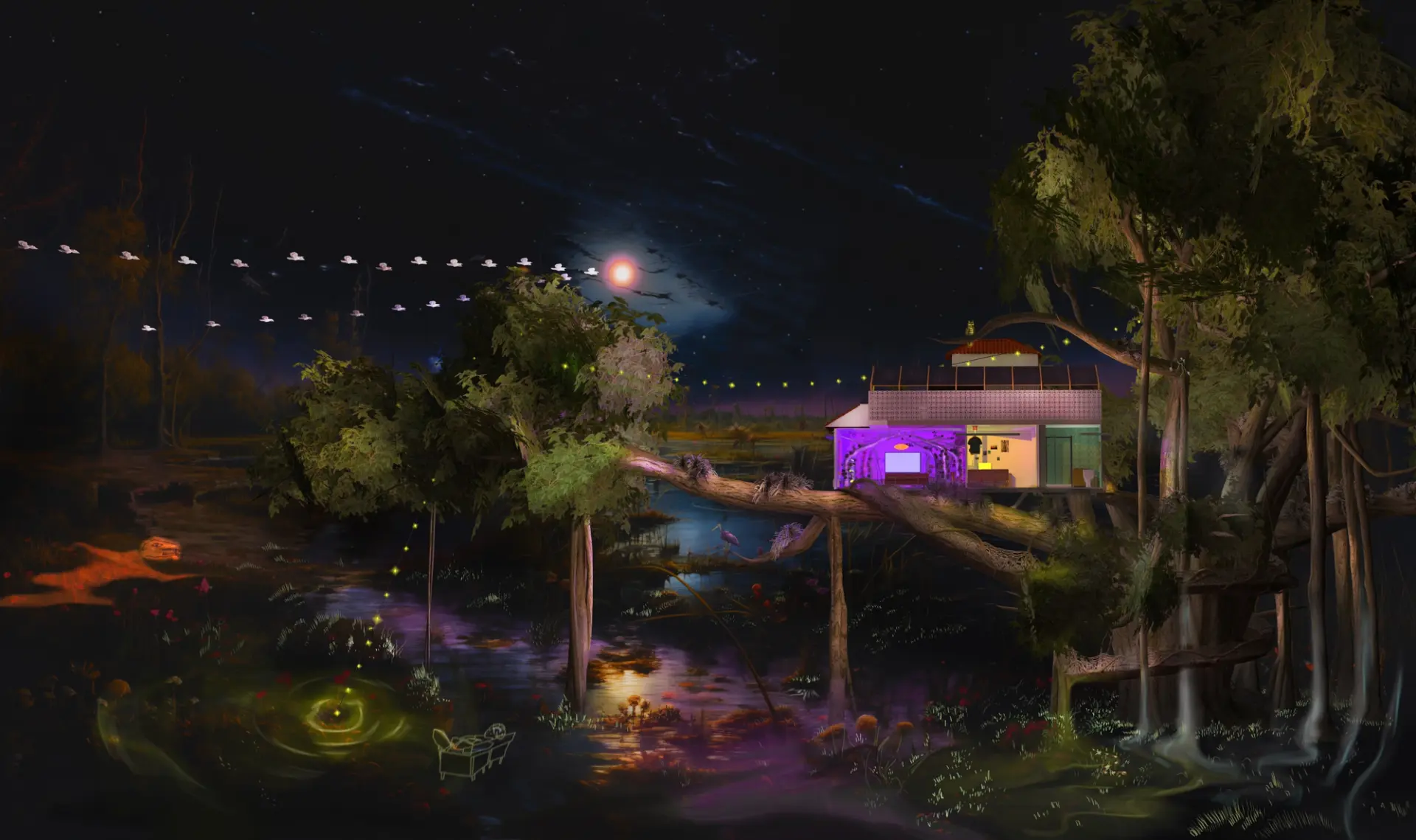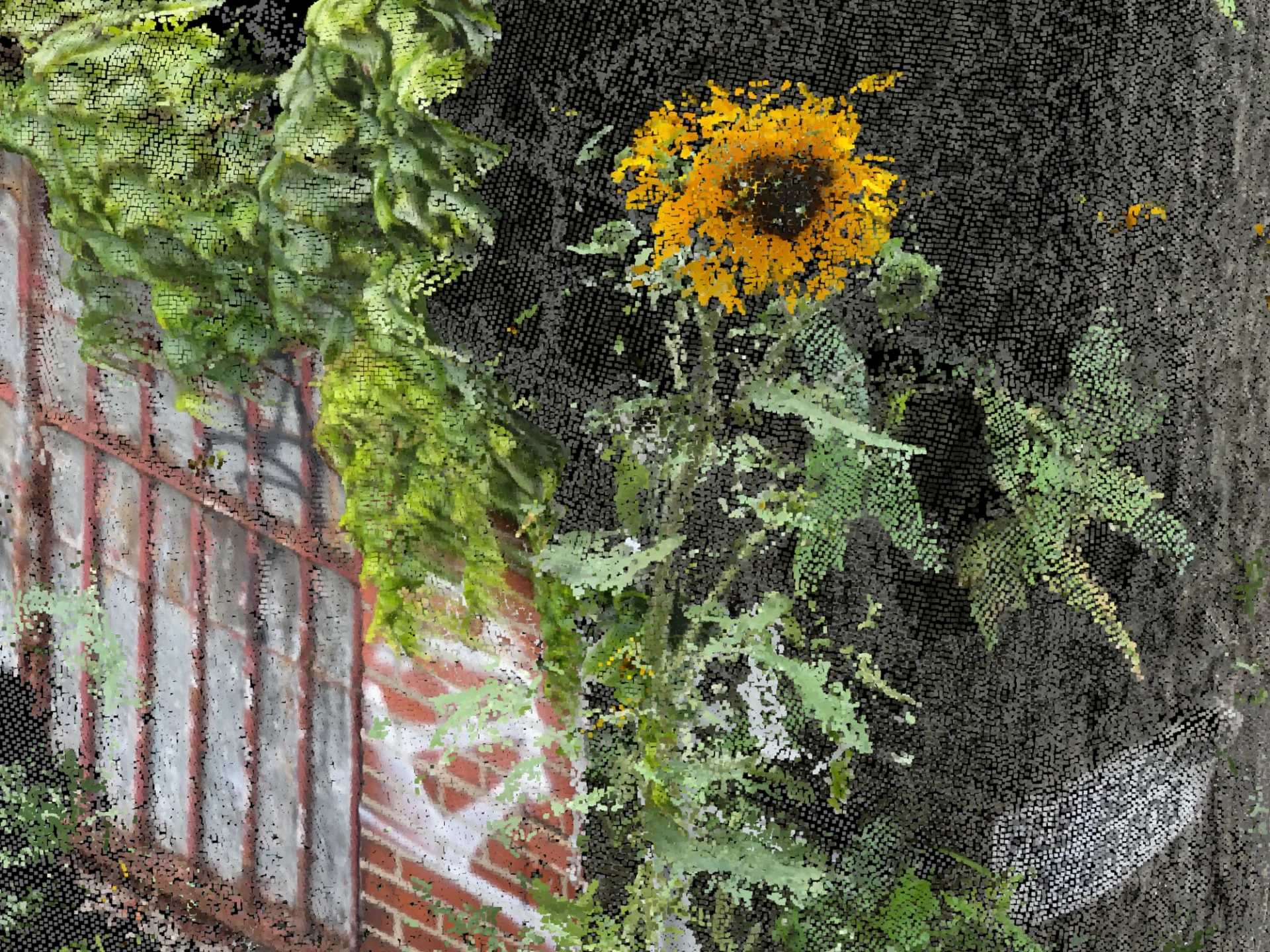
Bryant Wells, Brower 0725, 2024.
Commissioned by Hyundai Artlab, © Bryant Wells.
A multifaceted guide to how artists might foster ecological resilience within their communities, both locally and abroad.
Artlab Editors: For our latest piece in the Ecological Horizons series, Brooklyn-based writer and editor LinYee Yuan reflects on learnings from the first year of Field Meridians’ Nature School. Founded by Yuan in 2022 as an extension of MOLD magazine, a publication exploring design and the future of food, Field Meridians is an artist collective committed to strengthening local food ecologies through programming, publications, and radio broadcasts.
Core to Field Meridians’ program is the Nature School, an arts-based urban ecology curriculum that generates tools for resilience. Through the Nature School, Field Meridians produces artist-led strategies that are site-specific but globally adaptable, allowing communities worldwide to cross-pollinate ideas for more ecological sustainable ways of being.
On a sunny Saturday morning this past June, myself along with a group of 15 other New Yorkers participated in an art event at the Brooklyn Museum—or at least, on the grounds of the Brooklyn Museum. Assembling on a patch of greenery at the edge of the museum’s parking lot, our group was gathered to participate in an activity facilitated by the soil scientist Mustafa Saifuddin, organized by Field Meridians’ Nature School.
As he spoke, Saifuddin led us through the liminal concrete space, inviting us to think about its ecology—specifically, the symbiotic microecologies of lichen and the ways that lichen, typically power washed off the sides of institutional facades, are the original world builders. With magnifying loupes, pocket microscopes, and glass slides in hand, we explored the perimeter of the parking lot. Together, we learned how these overlooked symbiotes have radically challenged the way scientists think of individuality, mortality, evolution, and species classification.
The Nature School is an invitation to notice. It is a project of Field Meridians, an artist collective based in the unceded territory of Lenapehoking—specifically Crown Heights, Brooklyn—that is creating tools for ecological resilience through social practice. Over the course of three months this spring, the Nature School hosted over 30 free and accessible artist-led events in the libraries, public parks, community gardens, and streets of our neighborhood. We went birding, tied knots, foraged for mugwort, learned about our tree neighbors, and made posters, textiles, book covers, and origami boxes.
Through these tools, we invite our community to notice the ways nature weaves together the fabric of New York City—backyard birds, street trees, sidewalk weeds, soil, fungi, rats, bats, and other pollinators—and to recognize that we too are a part of nature. By creating a free curriculum free curriculum for each program, we aim to pollinate these ideas to other fertile grounds, encouraging people outside of our immediate geographies to adapt these formats to their own local contexts.
More than the sharing of skills, knowledge, and collective values, the Nature School is an opportunity to practice new ways of being together—with one another and with our more-than-human neighbors. In the face of a loneliness epidemic loneliness epidemic , Field Meridians is building social infrastructure and offering connection to place and people. Together, and with curiosity, we are building a community of dreamers and creative collaborators as a hedge against uncertainty. Together, we are mapping a path towards a more abundant, generous, and just world. Here, we’ve gathered a few lessons from our first cycle of programming as a way to reflect and map a path forward through uncertain times. Like our lichen teachers, through radical symbioses and pushing beyond classifications, we can challenge current notions of how to flourish in a concrete jungle.
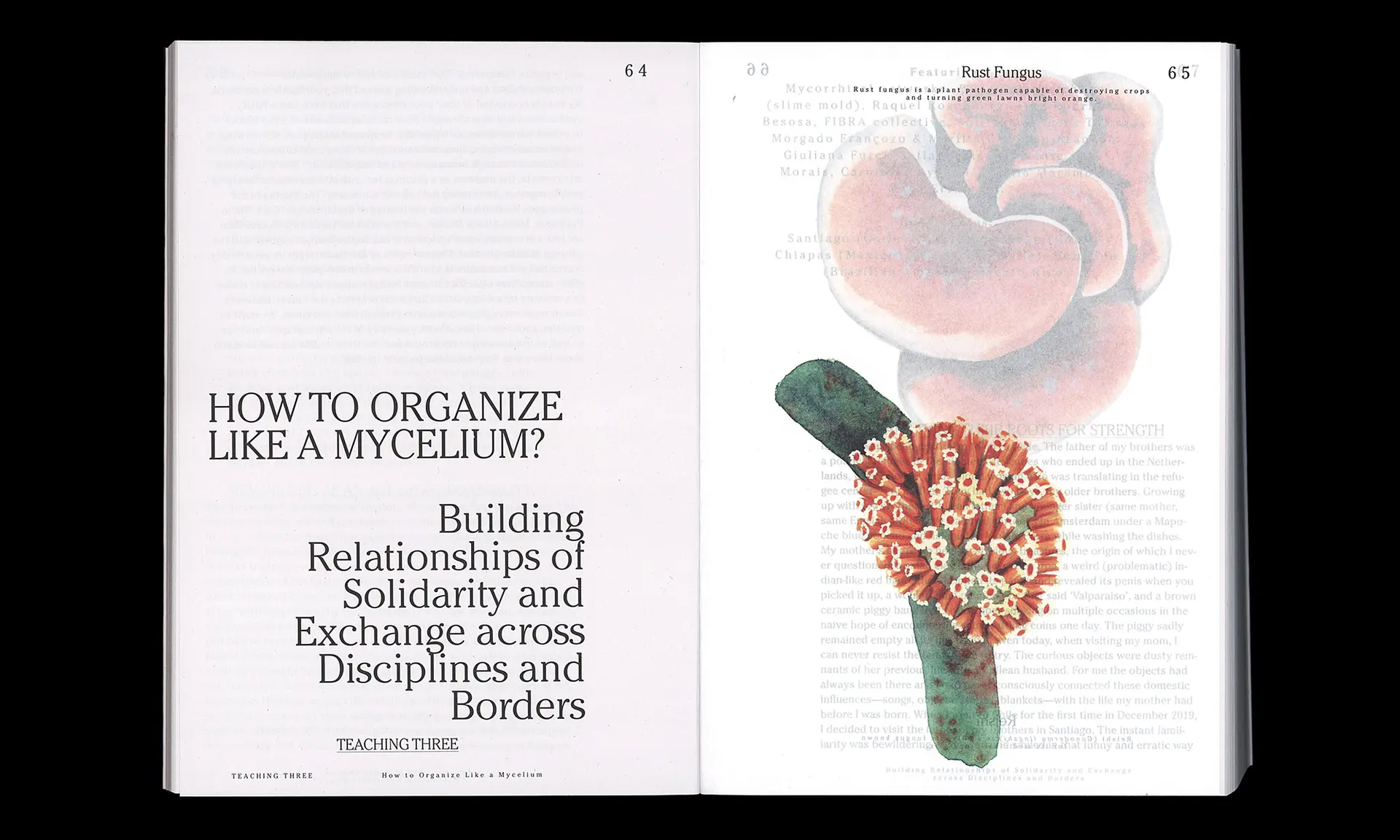
Yasmine Ostendorf-Rodríguez, Excerpt from “Let's Become Fungal!: Mycelium Teachings and the Arts,” 2024.
Courtesy of Field Meridians.
Let’s Become Fungal!: Lessons in Solidarity and Exchange
In a time of polycrisis and great uncertainty, the fungal networks that structure our soil and undergird our forests, city parks, and plains are also providing lessons in solidarity and exchange.
In the Nature School workshop “Let’s Become Fungal Let’s Become Fungal ,” facilitated by Yasmine Ostendorf-Rodriguez and Juan Ferrer, we were guided through lessons on “fungal activism” taken from Ostendorf-Rodriguez’s recently published book of the same name.
The ideas that emerged in dialogue with Ostendorf-Rodriguez’s reading touched on our relationship to things that are visible and hidden, decomposition/composting, the slowing of time, and the ways that movement work—community organizing for collective liberation—can be informed by fungal notions of decentralization guided by shared strategy. Through the workshop, we explored how solidarity comes in many forms and that fungal activism can be a starting point for envisioning ways to deepen our ties to one another.
For designers and artists, the work of this moment is to facilitate relationships built on solidarity. Much of that work cannot happen without actively engaging with and supporting the commons—cultural and natural resources that should be accessible to all members of a society. As a result, Nature School was facilitated in partnership with resources like our local branch of the Brooklyn Public Library and local public parks.
In places like New York, many of these critical resources are being defunded critical resources are being defunded to bloat police budgets. By using an abolitionist lens to guide our work, we are employing creative practice to self-organize. Collaborators of ours—including One Love Community Fridge One Love Community Fridge , an organization that is reducing food waste and feeding their neighbors with dignity through a network of community-facilitated public fridges; the Crown Heights Care Collective Crown Heights Care Collective , an organization that is reimagining how resources can be redistributed for the health of our neighborhood; Alfreda’s Cinema Alfreda’s Cinema , which programs films for and by BIPOC storytellers to spark our collective imagination; and the 1100 Bergen Street Community Garden 1100 Bergen Street Community Garden , a 40-year-old community garden founded by neighbors on the ashes of a fire that destroyed a row of houses—are actively holding space for community care using the tools of dignity, education, and the arts.
MOLD, our online and print magazine about design and the future of food, is also deeply inspired by mycelial systems. Here, fungal networks serve as guides by which we explore relational architectures relational architectures and the ways that collectives and organizations worldwide are using design as a tool for fostering greater resilience in the face of planetary crisis and transition. Whether its Cooperation Jackson’s work Cooperation Jackson’s work in building and modeling a solidarity economy in the American South; La Ferme du Rail’s creation of a living hub La Ferme du Rail’s creation of a living hub that includes a farm, affordable housing, recycling center, and cafe in Paris guided by the notion of architectures of care; or Berlin-based artist group’s Organisms Democracy Organisms Democracy project which is practicing a form of interspecies politics, people are enacting locally-based solutions for our globally-induced problems and practicing a sort of fungal activism through solidarity.
The mycelial nature of the Nature School has also allowed us to connect and learn from other locally-situated assemblages working at this intersection of pedagogy and land-based art practice—groups like Squash Squash (Liverpool, UK), Hahatay Hahatay (Gandiol, Senegal), and Mississippi River Open School for Kinship and Social Exchange Mississippi River Open School for Kinship and Social Exchange (USA). After exchanging seeds with Squash, we learned about strategies of engagement through their decades-long work. In addition to holding weekly programs at their garden and space in Liverpool, they connect the community with the seasons through open gatherings aligned with the Pagan calendar. They honor the equinoxes, solstices, and cross-quarter celebrations that make up an eightfold year. Clare Owens, Squash’s artistic director, reminded me that facilitating community can be as simple as holding space with intention, consistently, over time. Our connection with Senegal’s Hahatay, meanwhile, was thanks to an introduction facilitated by architect and collaborator Mae-ling Lokko Mae-ling Lokko . For over a decade, Hahatay has facilitated pathways towards autonomous forms of reproduction and consumption by teaching skills in design, broadcast, and community health that benefit the people of Gandiol. Together, our groups will be engaging in a series of exchanges this spring to strengthen our work of creating locally-rooted economies through alternate pedagogies.
Livingness—for all our microbial, plantae, fungal and animal kin—is a metabolic process of exchange. Being human draws from our fungal ancestors in order to feel the world around us, synthesize that into energy, and collectively build tools for survival.
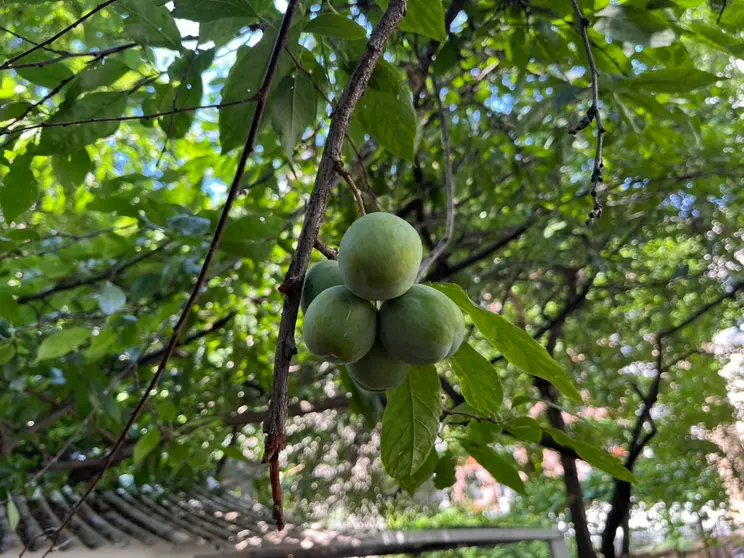
Planting More than Gardens: Lessons in Tending Fertile Grounds
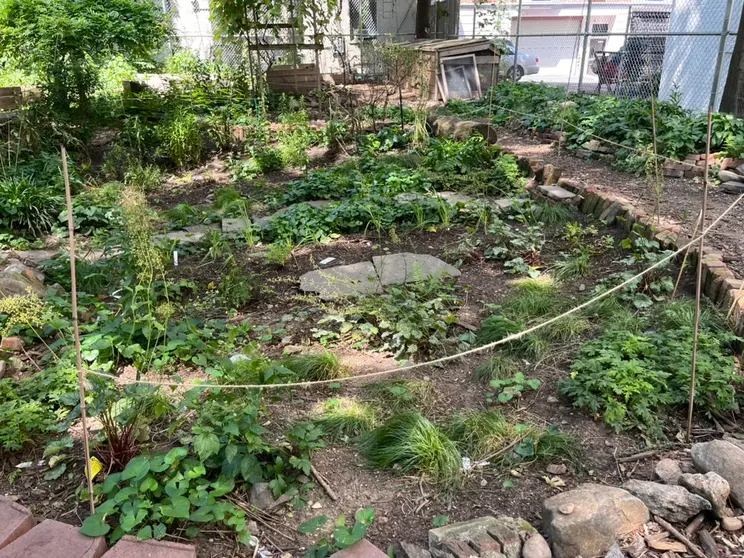
Gardens are great teachers of virtues like patience patience , healing healing , and equanimity equanimity . Instead of fighting to fill a depression in one’s garden landscape that constantly floods, turn it into a native pollinator bioswale! Could the empty lot on your own street be turned into a productive place for community care? How can we reimagine spring weeds—like dandelions and clover—as food for hungry pollinators emerging from a winter’s rest? What does it mean to garden in the time of climate change, when our understanding of seasons is continually in flux?
Since October 2023, Field Meridians has been sending out a bi-weekly newsletter a bi-weekly newsletter to chart an alternative calendar of our new microseasons. Every two weeks, a visual artist, poet, and gardener are assembled to reflect on the “season” in real time—heat waves, spring blooms, garlic planting. Being in relationship with plants and understanding the long and symbiotic history of kinship can open doors to imagine imagine and dream dream . The newsletter weaves together an urgent and intimate archive of what it means to be in hyper-local conversation with a microseason.
Through our newsletter, gardeners all around central Brooklyn have taught us that gardening is more than just planting things. Gardening is about tending—it’s about being a receiver of non-human information from plants, soil, and pollinators; it’s about expanding notions of community care to consider shade and rest; and it’s about creating a sense of belonging.
Places like community gardens need all sorts of actors to flourish—someone to open the gates, someone to water, someone to do accounting, someone to distribute mulch, someone to coordinate compost collection. Just by showing up to offer consistent, small actions, community can find fertile ground and take root.
A Weed is Simply a Plant That’s Out of Place: Lessons in Belonging
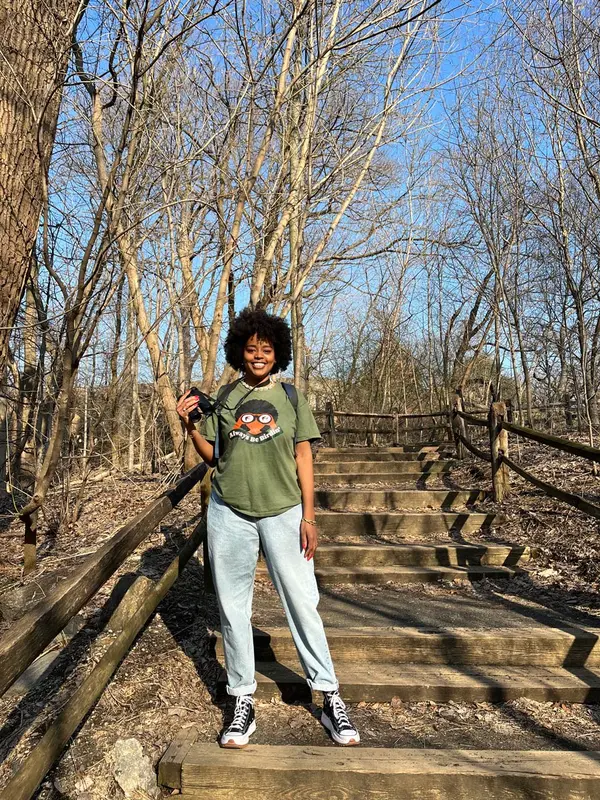
For poet and birder Indigo Goodson-Fields, the world of birding is an opportunity to communally consider larger implicated themes of visibility, migration, and community dynamics. She has been leading a monthly bird walk bird walk with the Nature School, “Birding, Poetry & Power.”
On our first walk in April through Prospect Park, Goodson-Fields shared a prompt to guide our conversation: We often find it beautiful when birds migrate and we, who live in communities where people have lineage or are from the same places these very birds winter, we also find it beautiful. What connotation does human migration currently have in our society?
From mid-April through May, we in New York are lucky enough to experience spring migration where many bird species make their annual voyages from Mexico, Central and South America, and the Caribbean to breed and nest further north. That day, we saw a diversity of local and migrating birds—sparrows, starlings, herons, and hawks. But the joy of experiencing an osprey fly above us as a group continues to be a highlight of the Nature School.
Each of our “Birding, Poetry & Power” walks ends with a moment of reflection and journaling:
If I had Wings by Indigo Goodson-Fields
If I had wings
I wouldn’t need an appointment at the embassy
I wouldn’t have to answer questions about my intentions
About bank statements
About past trips
Work, property,
No Visa fees
If I has wings
I would pass trees
Fly over rivers and seas
Lakes and creeks
I would eat my full of berries
And sunflower seeds
If I had wings
I would use them to bypass borders that younger than my grandma
I would use them to soar when the suns down over any town I please
I would flock to my family
I would nest with my love
And teach our young to thrive
These migratory metaphors can also be found in our surrounding flora. In a two-part workshop workshop in partnership with the Brooklyn-based Taiwanese food distributor Yun Hai and the gardeners at the Naval Cemetery Landscape, we considered the ways that mugwort—an introduced plant often considered a blight and found abundant in Brooklyn parks and yards—is also a traditional agricultural product in places like Taiwan.
Considered the “mother of herbs,” the rhizomatic plant is used for medicinal, culinary, and sacred practices throughout Asia, Africa, and Europe—it is also considered indigenous to all continents except Antarctica and the Americas. During the annual Qingming Festival, a day of “tomb-sweeping” to honor ancestors, people across the Chinese diaspora will eat chhau-a-kuih 草仔粿, a mugwort rice dumpling. Early spring mugwort is macerated, mixed into sticky rice dough, and made into bright green, beautiful dumplings. They’re stuffed with red bean or a savory version with ground meat, dried shrimp, mushrooms, and shallots. In New York, Yun Hai founder Lisa Cheng collaborated with Vinci, a local purveyor who forages mugwort across public parks in Queens and painstakingly prepared these seasonal specialties.
“Mugwort is considered an invasive species here and I like that people are recreating traditional foodways by foraging out in the fields in Queens,” Cheng shared. “[The workshop] taught me not only about the ecology of mugwort, but how these ecologies in the city also need to include humans.”
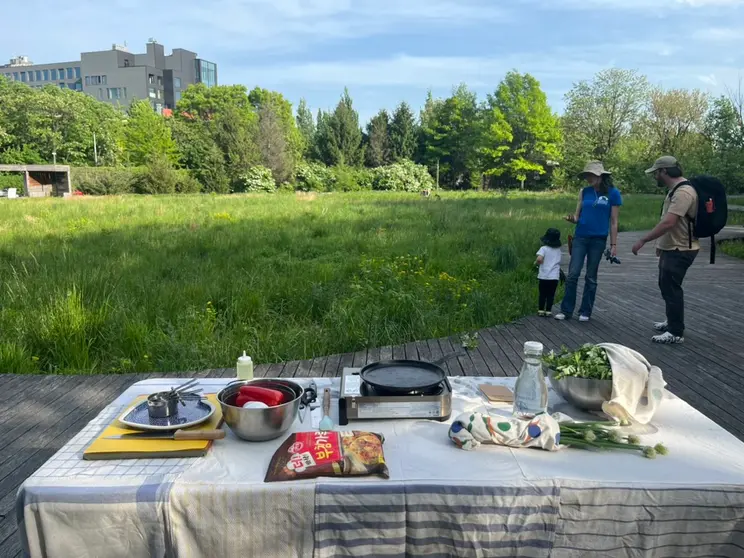
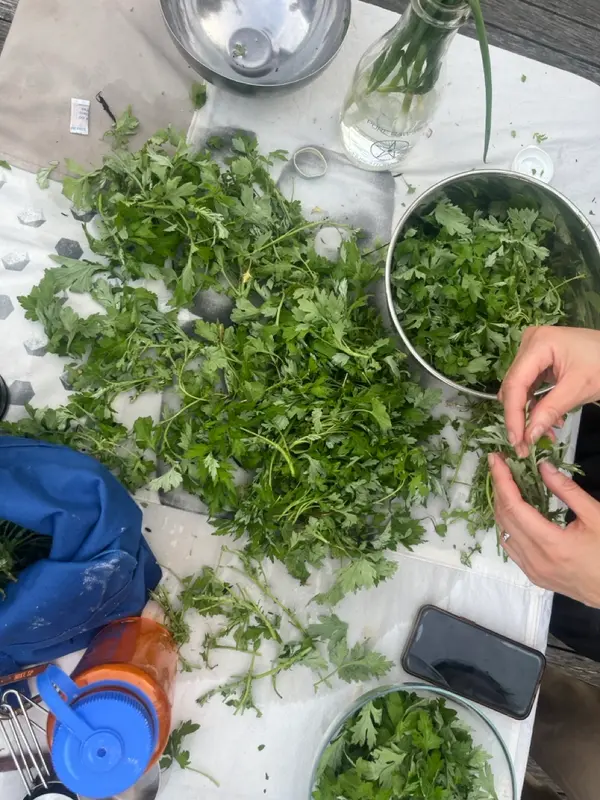
Creative practices like foraging, planting, and birding can teach us so much about a place and its seasonal rhythms and cultures. These practices connect us with one another and our more-than-human neighbors. Spotting a rose-breasted grosbeak out in the wild, eating fresh mugwort pancakes in early spring, or making a door decoration out of non-native plants for a dragon boat festival (a southern Chinese tradition) in New York City can create a sense of belonging and fight the loneliness—something that so many of us continue to search for—by creating a moment for context and curiosity.
Around the world, political theater has tended to create a cloud of vitriolic rhetoric around migration, turning it into an “issue” for politicians to debate over rather than a material, human condition. Locally, however, we see how migration manifests on a human scale. Children need diapers and formula. Single men need winter coats and boots. Everyone needs a soft landing, help navigating a bureaucratic system, nourishment, and a way to pass the time. All of us, bound together as citizens of Spaceship Earth, are looking for a safe place to rest and belong.
Joy, Wonderment and Poetry: Lessons in Holding Space for Feeling
On one of the hottest days of the year, two days after the summer solstice, the artist and poet Praise Fuller facilitated a cyanotype printing workshop—”the Poetics of Sun Printing Poetics of Sun Printing .” Honoring the power of the sun during the longest days of the year, we observed the prompt: On the summer solstice, write a poem or some word associations to create the sensation of filling a long, hot, summer day. Collaging objects from home, found flora from the park, and words on the page, we created a personal memento to mark the transition of the season. Laughter rang through the air as people ran from the sidewalk where the cyanotype fabric was left to expose and towards the water bath to fix the image. The prints revealed themselves in the wash, and participants connected with one another while reflecting on ways to approach the next print. This beginner’s mind allowed us to put aside titles and hierarchies and embrace a sense of curiosity and joy.
Experiencing joy and wonderment, together, is a balm in this world of divisions. This has been one of the primary motivations driving participation in the Nature School. In a time of death and grief, many of us have found the need to move beyond language towards feeling. The emotional tenor of being together to reflect, be curious, and experience unmitigated joy, is the connective tissue for community. Here, we’ve found that the practice of collective meditation has created opportunities to reflect on our internal landscape before acting upon our external landscape.
In “Alongside the Elements Alongside the Elements ,” educator and organizer Radhika Sharma facilitated a walking meditation and radical attention practice in a local park, giving participants permission to slow down and focus on how their senses engage nature through the elemental lenses of earth, wind, and fire. Photographer Guarionex Rodriguez Jr. employed the same technique to facilitate a focus on the “Feeling of Taking a Photo” Feeling of Taking a Photo” as a more nuanced approach to image making and capturing the world. And Leah Yassky, a movement artist and educator, led participants in breathwork and moving meditation to prepare them for an observational comic drawing practice observational comic drawing practice . Beyond language, tools like meditation allow us time and space to process, turn our attention towards things to the present, and attune to our surroundings.
We need more tools for resiliency in the face of uncertainty, but a primary one is the ability to craft a sense of community that reflects and responds to our moment. In the same way that beauty should be a basic service beauty should be a basic service , accessing a sense of joy in being together should be the live wire that electrifies our convenings.
We are the Compass: Lessons in Worldbuilding
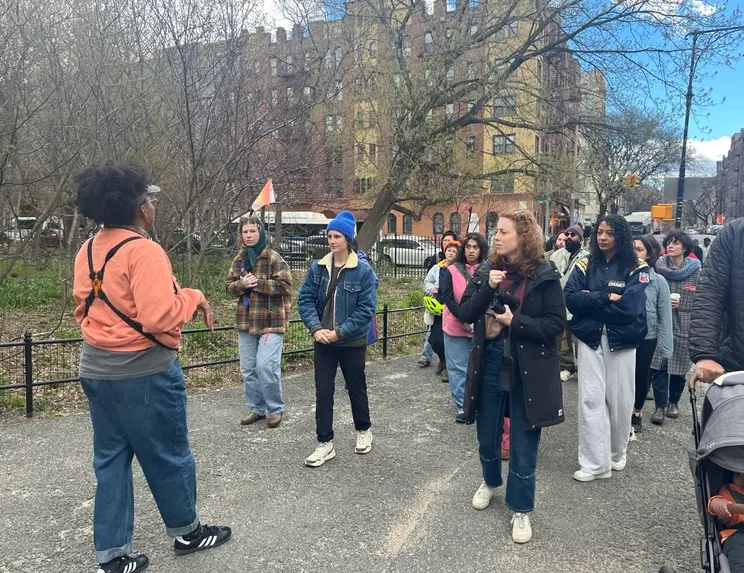
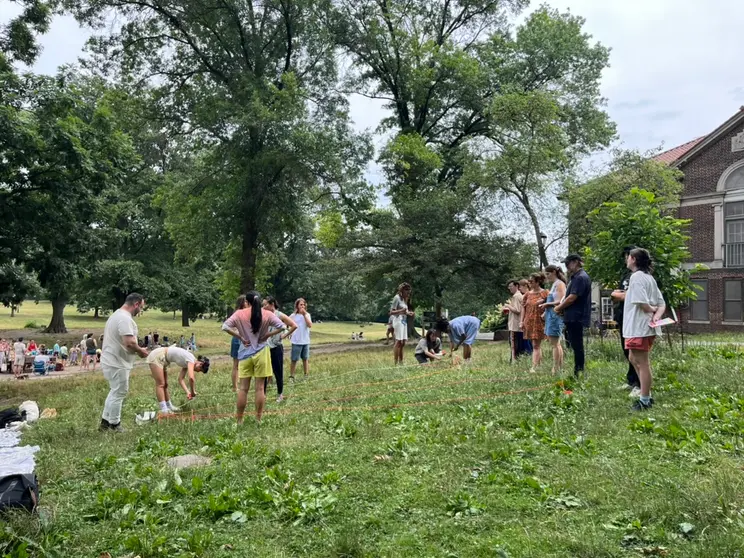
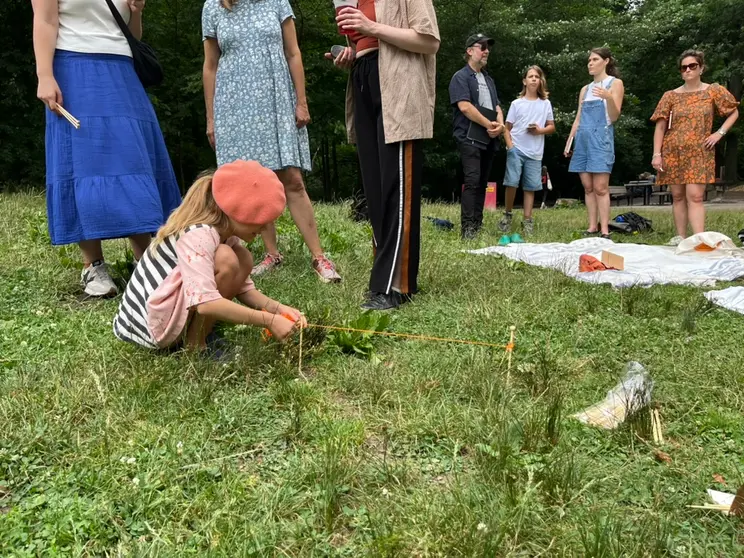
These days, most people would use a handheld GPS device to chart a path forward. For the Nature School’s “Wayfinding: Collective Constellations in the Park Wayfinding: Collective Constellations in the Park ” workshop facilitated by artists Adam DeMartino and Farah Velten, however, we constructed our own maps. Splitting up into groups, we traversed the span of Brooklyn’s Prospect Park, plotting places of personal interest along the way—a sour cherry tree, a flowering burdock plant, a hollowed tree stump with a costume mask inside, a beetle swarm. We then came back together to construct a new way of understanding our world that mirrored that moment—our group, on that day, in that place.
Opening up a perspective on the world that gives us permission to navigate a space based on feeling and sharing these maps of our own making validates our ability for place making in a concrete way. In the face of unspeakable grief and greed, Field Meridians is investing in world building, utilizing ourselves as tools for ecological resilience in the service of connecting our livingness—as a community, as a place, and as humans in a living web of life.
Many of today’s conveniences and efficiencies are, in practice, isolating us from one another and creating an epidemic of loneliness. Technologists are selling us on a future defined by meta worlds, AI relationships, virtual reality, and other escapist fantasies that cull our attention from the present and turn our preferences, interior lives, and personal relationships into a product to be extracted. Instead of leaving our future in the hands of corporations, the Nature School insists on being together to learn from one another in a framework of generosity, exchange, and solidarity.
The primary tool is community. And in building other worlds, we must also learn to consider our non-human neighbors and how we might work to care for one another. This past year, PLANT (Preserving Lincoln Place’s Abundant Natural Treasures), taught us about the fundamentals of street tree care and block greening strategies fundamentals of street tree care and block greening strategies . They’ve won numerous awards for their neighborhood beautifying work including first place in Brooklyn Botanic Garden’s “Greenest Block in Brooklyn” competition in 2019, 2021, and 2022.
On the day we got together, we worked in groups to clear weeds, put down mulch, replant straggling plants, and plant new perennials to create an aesthetic that signaled thoughtful intention and care. By caring for our tree neighbors we are also caring for our human and more than human neighbors—providing shade, rest, nourishment, and beauty. Block associations like PLANT also teach us lessons in emergence, the way the complex systems arise from a multiplicity of relatively simple interactions. A single action, like weeding a street tree pit, might feel small and straightforward, but when done in chorus with your neighbors, it facilitates a space of refuge and connection.
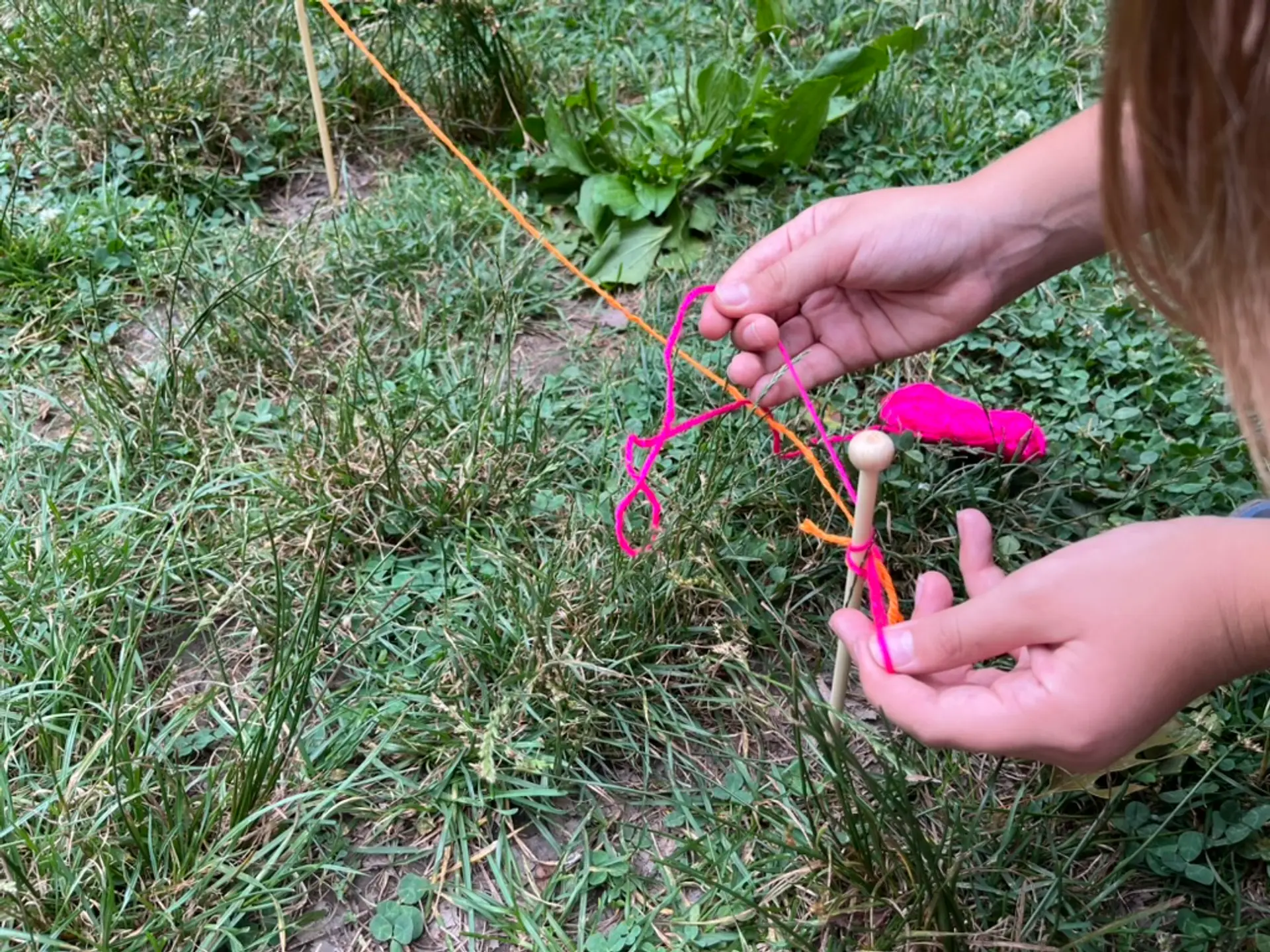
Images from the Spring Nature School programs.
Photos courtesy of Field Meridians.
***
Returning to Mustafa Saifuddin’s “Parking Lot Lichen Walk,” the lessons we can learn from lichen on worldbuilding continue to resonate with me. As symbiotes comprised of fungi, algae, and/or bacteria, lichen’s complex existence defies human categorization. Similarly, our binary concept of life vs. death is problematized when we consider lichen—they can “live” for hundreds of thousands of years and go between being active and dormant. Most importantly, however, their mere existence allows for new ecosystems to emerge.
How might Field Meridians be in symbiosis with our neighborhood like the worldbuilding lichen? What sort of offering might our artist collective have that could be nourishing for our community and also generate new shapes, possibilities, and ecosystems?
As we set a path on a map of our own making, we navigate with a north star of starting a community land trust to plant an artist-stewarded food forest in our neighborhood of Crown Heights, Brooklyn. We’re building towards a world of stewarding an open-harvest food forest, where our neighbors can care for, be nourished, and experience a complex ecology unfolding in its own time. This vision is fortified with the foundations of a solidarity economy—rooted in food sovereignty, land access, and safety. By exercising creative practice in the service of this larger vision, we are catalyzing community and planting seeds in the fertile ground of joy, wonderment, and belonging. Our hope is that these seeds will germinate and take root in our neighborhood, and with our flourishing, pollinate ideas elsewhere, crafting and adapting to ecologies and communities around the world.