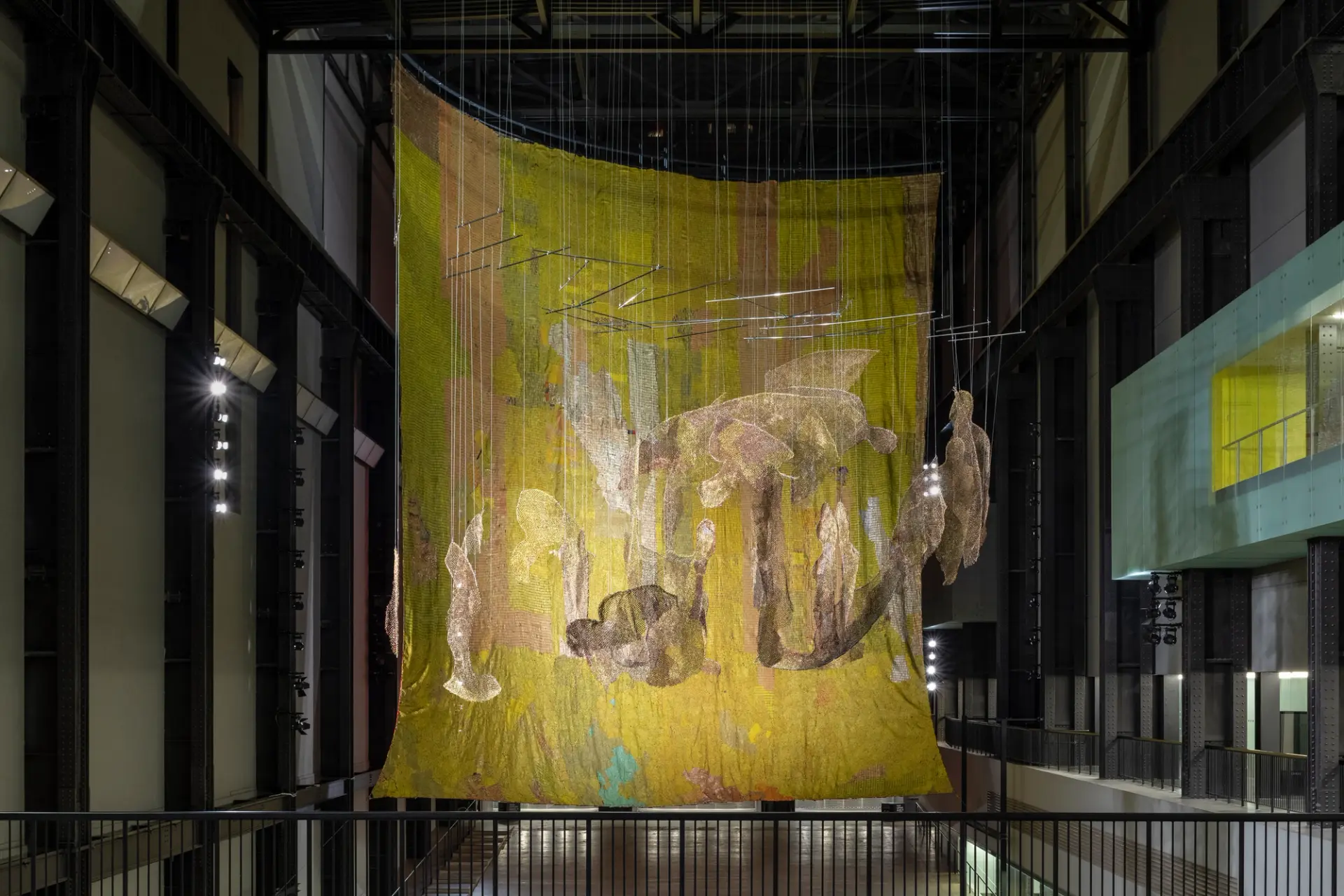
Hyundai Commission: El Anatsui: Behind the Red Moon, Installation View
Photo ©Tate (Joe Humphrys)
Throughout Hyundai Commission: El Anatsui: Behind the Red Moon, the moon plays a starring role, acting as a symbol of the complexity and cyclicality of human history, in all of its darkness and light. Art historian Melissa Baksh reflects on the artist’s interest in Earth’s celestial companion, a poignant metaphor for the ebb and flow of civilizations, cultures, and individual lives.
Since the dawn of human history, the moon has captivated collective thought and imagination, remaining a powerful object of contemplation and wonder. For most of this history, Earth’s celestial companion existed as an untouchable entity. In recent years, the moon has become a reflection of humanity’s shortcomings, as well as a cosmic symbol of Black liberation, with writer and activist James Baldwin noting that: “Some people wish to colonize the moon, and others dance before it as before an ancient friend.”
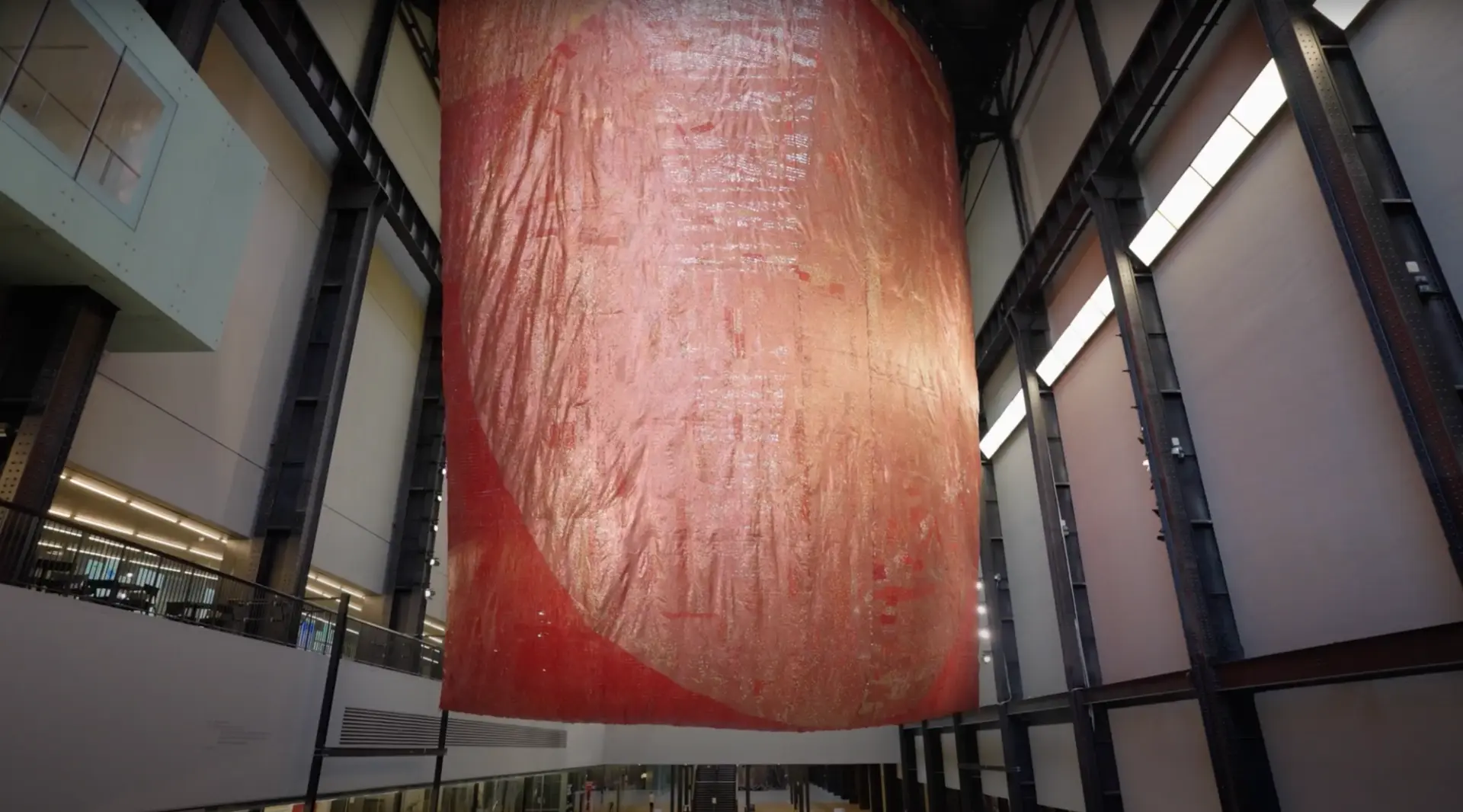
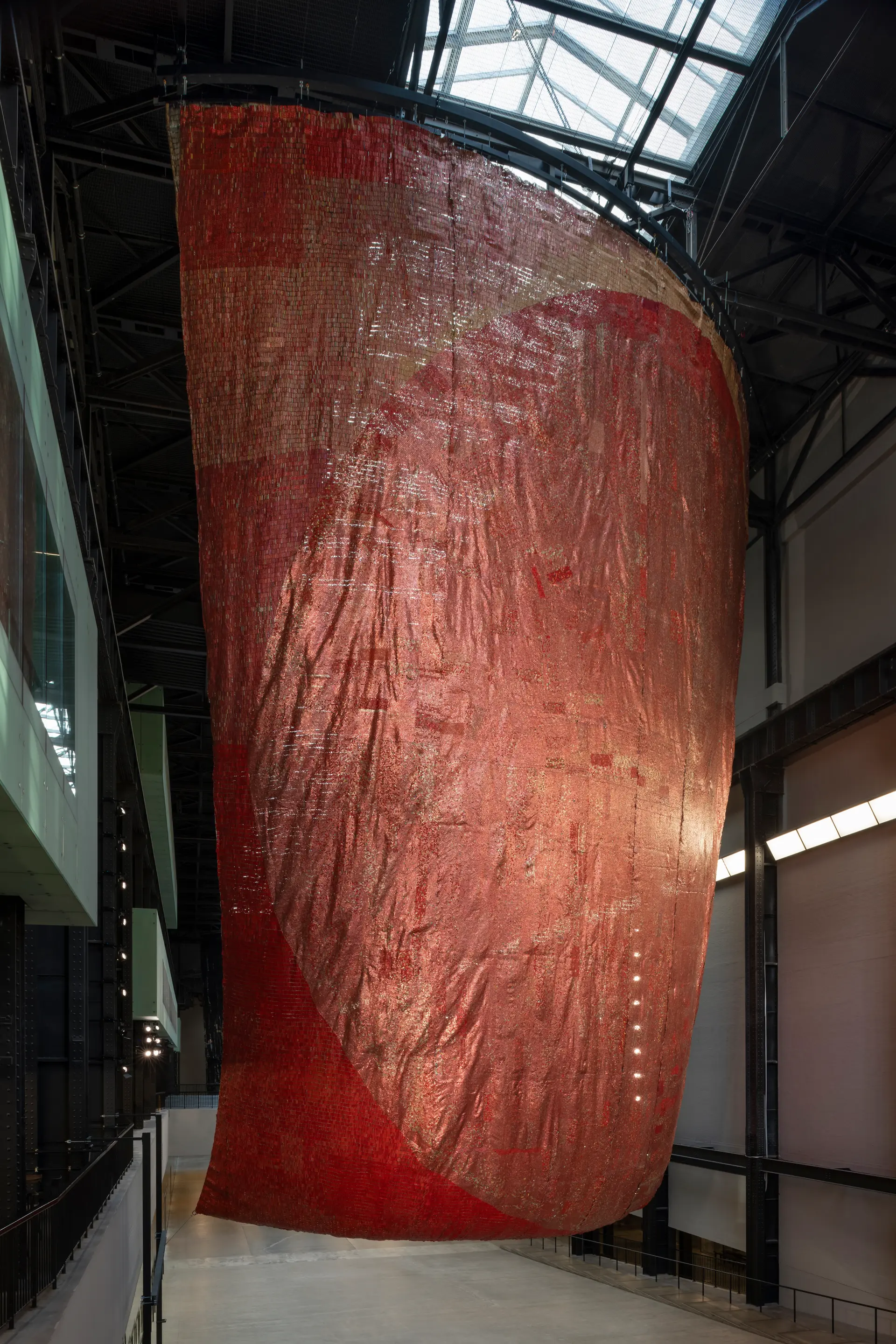
During a total lunar eclipse, when the moon is fully in Earth’s central shadow, it can appear blood red in the sky; this is colloquially known as a Blood Moon. The recent October Blood Moon coincided with the celebration of the Hyundai Commission; a monumental, site-specific work by Ghanaian sculptor El Anatsui, comprising three ‘Acts’ in Tate Modern's Turbine Hall. The first Act, entitled The Red Moon, takes the shape of a billowing sail filled with wind. Throughout history, people have used the moon as a navigational tool to guide their journeys at sea. Here, the moon marks a departure; it signifies the fateful journey made by millions of enslaved Africans across the Atlantic, whereby the moon was used to direct the transatlantic crossing from West Africa's Gold Coast.
Hyundai Commission: El Anatsui: Behind the Red Moon, Installation View
Photo ©Tate (Joe Humphrys)
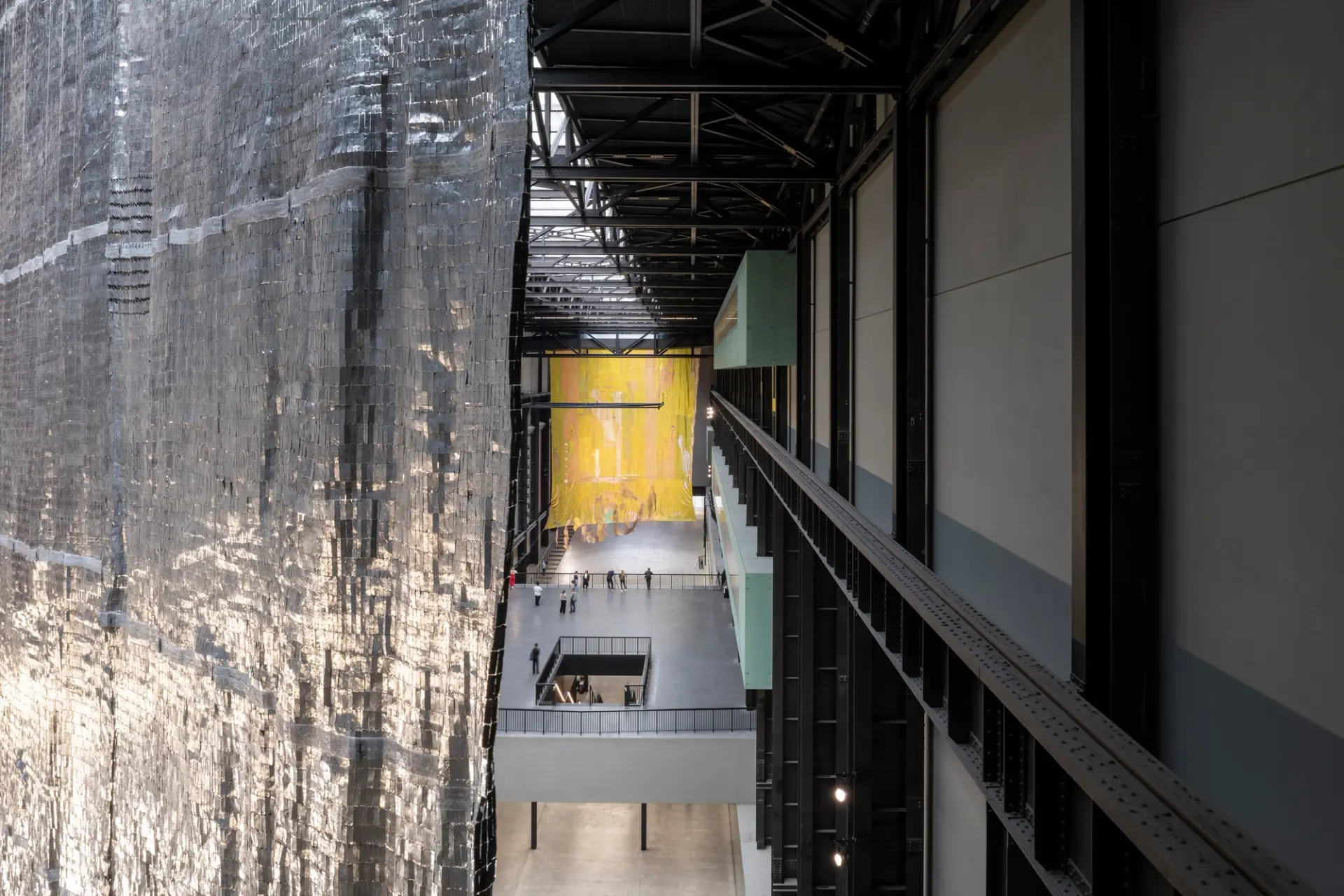
Voyaging further into the space, our eyes are led upwards. We are met by glimmering, fragmented forms, dancing delicately before the Turbine Hall bridge, suspended in the air. The restless figures are created by wiring together thin bottle top seals, creating a gauzy, mesh-like material. At first glance these forms seem ambiguous, but when viewed from a particular vantage point, they coalesce into the circular shape of the Earth. This convergence of art and perspective points to a deeper synchronicity between the disparate people, countries, and continents that compose our world; a momentary glimpse of unity that is made all the more precious for its transience.
As El Anatsui’s largest indoor commission to date, the work’s participatory nature encourages the viewer to go beyond simply ‘viewing’ the work, inviting movement and perspectival shifts: gazing upwards, looking closely. This provokes not only an awareness of the many hands that have worked and reworked the materials, but of one’s own physicality in relation to the vast, industrial space the artwork inhabits, fostering a connection to the movement and migration of people around the world, past and present.
Hyundai Commission: El Anatsui: Behind the Red Moon, Installation View.
Photo ©Tate (Joe Humphrys)
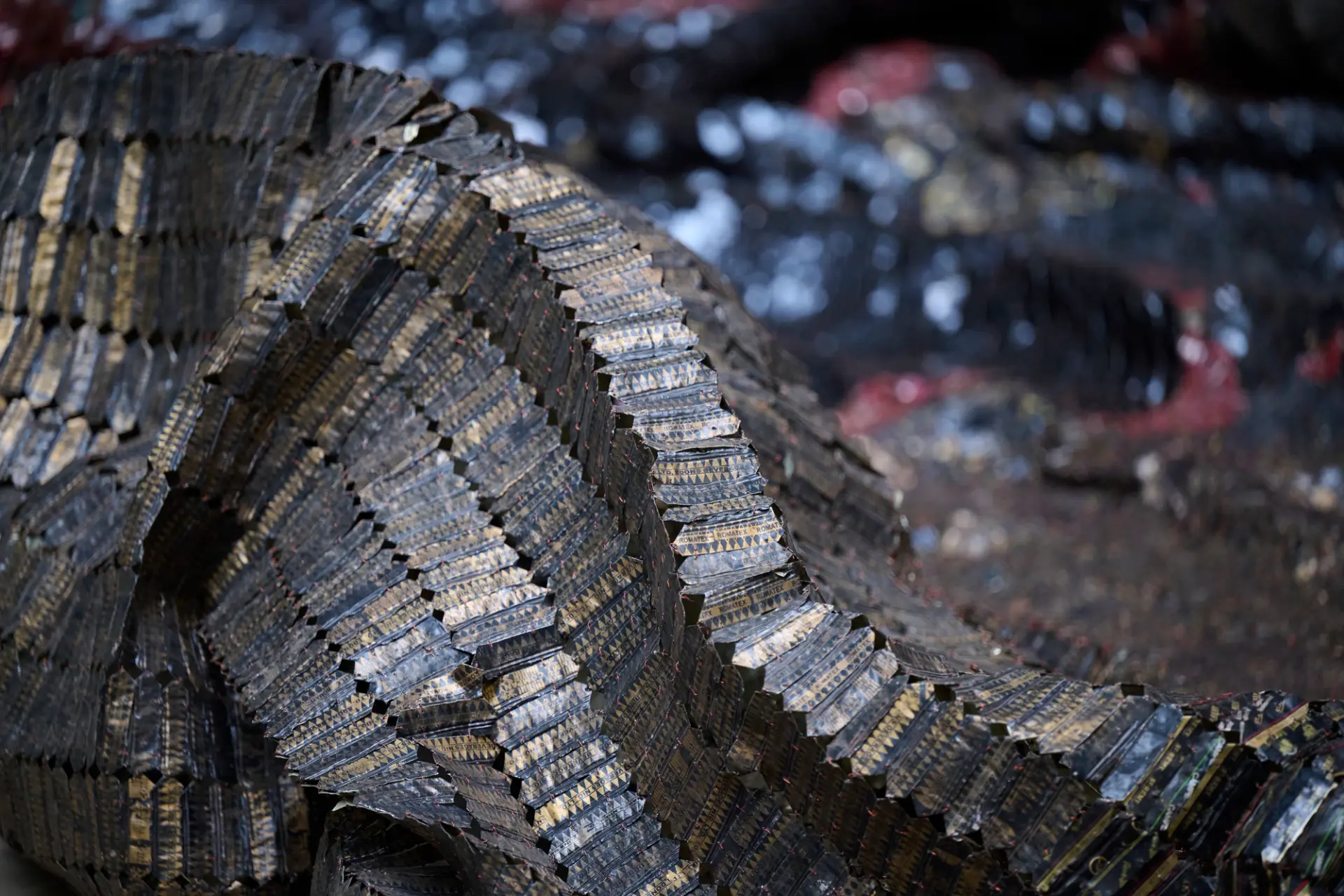
The moon’s perpetual cycle—impacting Earthly time, tides and light—embodies transformation and renewal. El Anatsui’s transformative approach to found and recycled materials has long been celebrated, and for this commission, the artist repurposed thousands of metal bottle tops and fragments—an everyday, humble material, yet a potent carrier of history. From the 16th century, Europeans traded commodities—including bottles of spirits—for enslaved Africans, who were shipped to America and the Caribbean to work on sugar plantations, distilling the sugar that would infuse liquor that was then sold internationally. With this in mind, the work speaks to the way in which human histories intersect with materiality and global consumer culture.
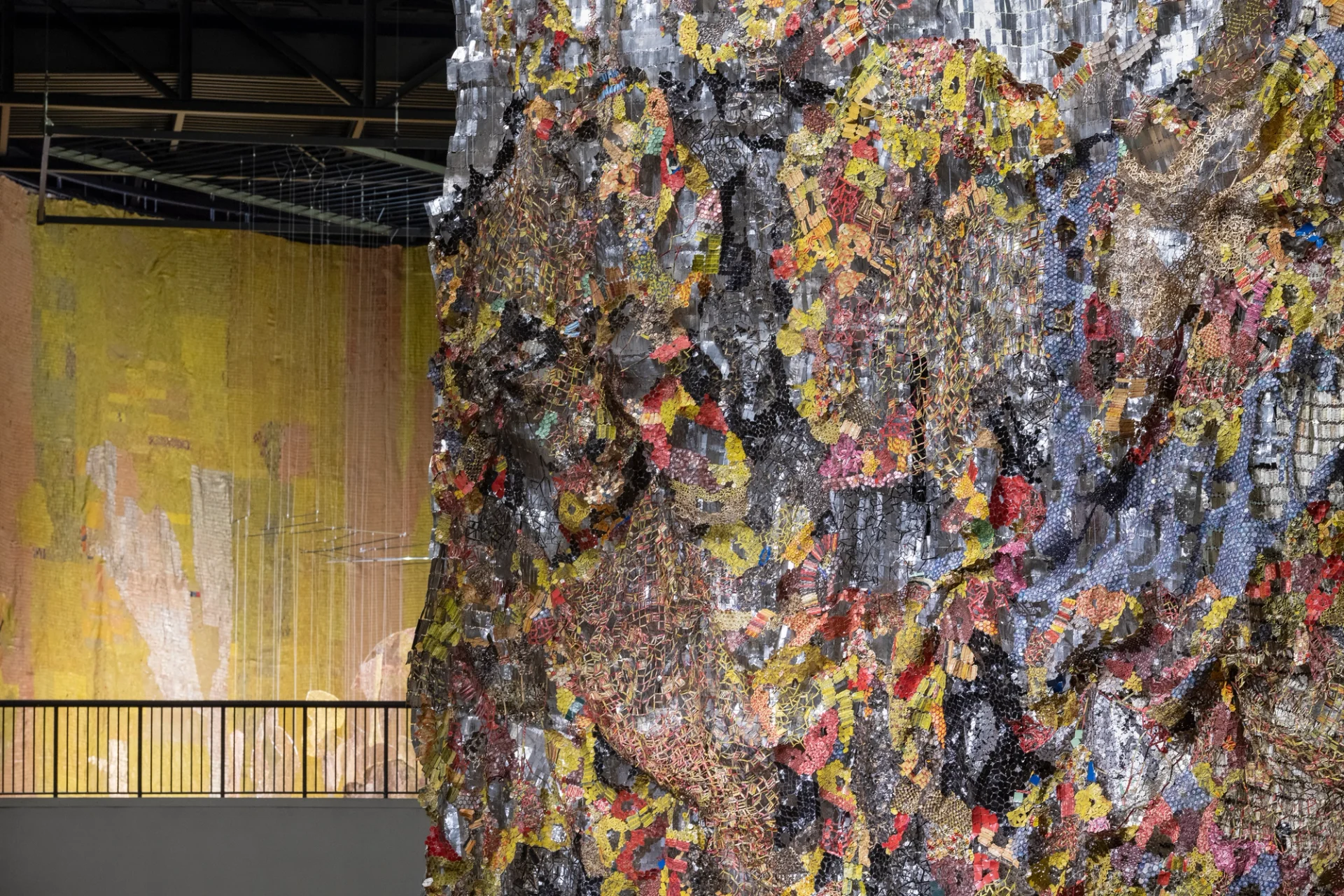
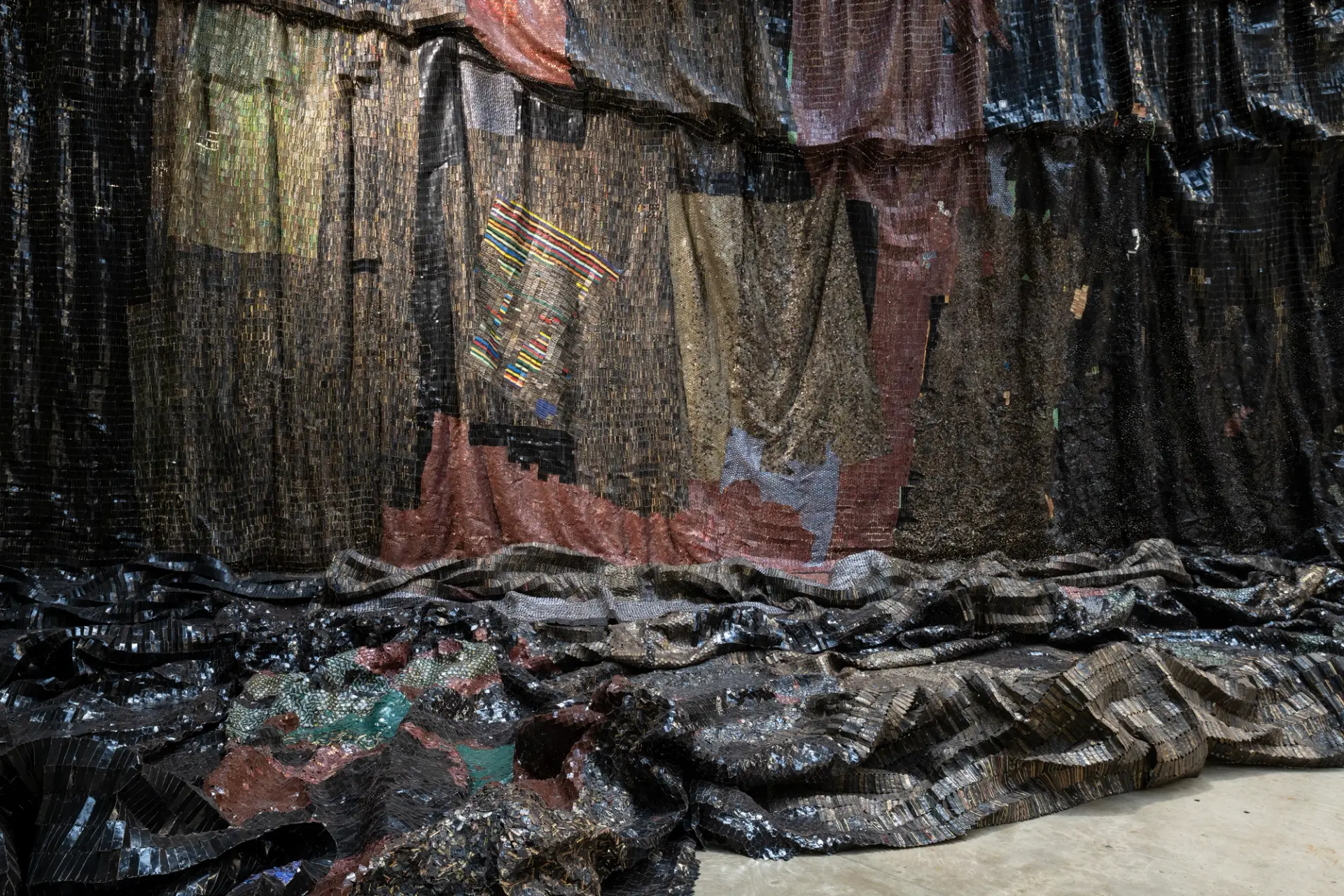
The third and final Act, The Wall, is a double-sided sculpture of sorts. On one side, a monumental black wall cascades down from ceiling to floor, its rhythmic waves and peaks evoking both the luster of an oil spill on the sea’s surface and the robust texture of a reptile’s scales. We are reminded of the moon’s connection to our oceans, and how snakes—a creature often associated with the moon—will periodically shed skin in a continuous cycle of renewal. By contrast, the other side brings an explosion of color; a multitude of iridescent, brightly colored patches stitched together with copper wire. The natural light of the Turbine Hall pierces through the areas of transparency; a glimmer of hope to savor, perhaps, when faced with difficult and painful histories.
Hyundai Commission: El Anatsui: Behind the Red Moon, Installation View
Photo ©Tate (Joe Humphrys)
History is a lot like the moon. It is a complex, multifaceted union of light and dark, oscillating between revealing and hiding our mortal transgressions. One can never know it entirely, and in an attempt to know it in some small way, we are mired by perspective. Rather than recalling a specific historical event, or being anchored in a particular place, Anatsui’s bottle tops transcend time and space, and are as much about the past as they are about the present. Hyundai Commission: El Anatsui: Behind the Red Moon challenges us to look closer at our shared, interconnected histories, imploring us to think—and feel—deeply about the physical, tangible legacy of colonialism.