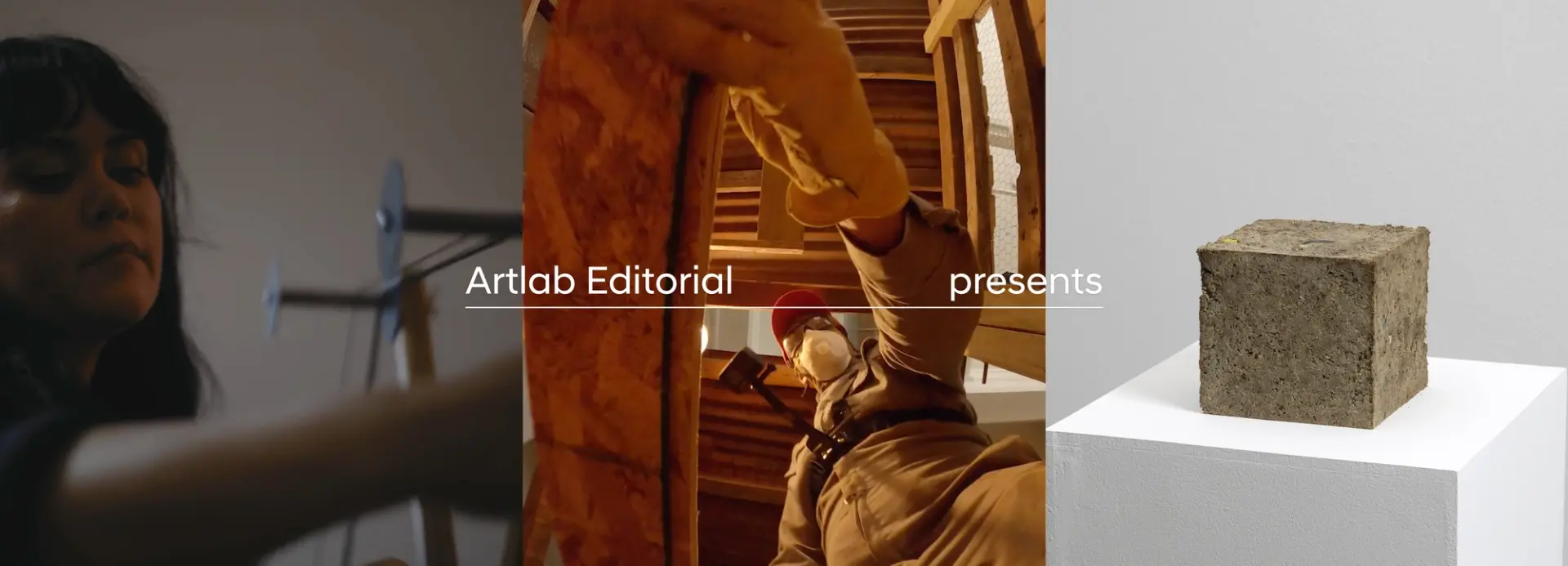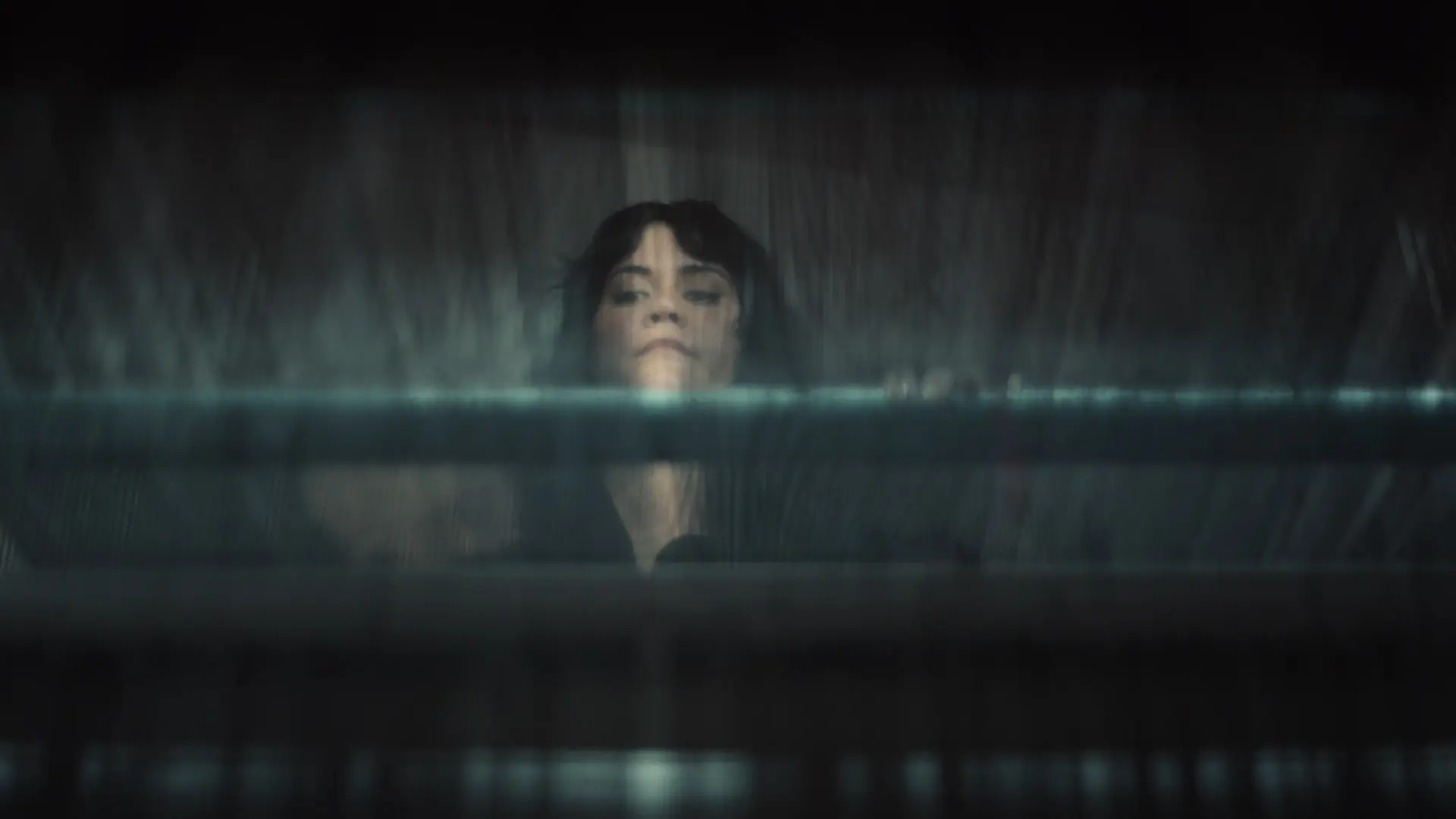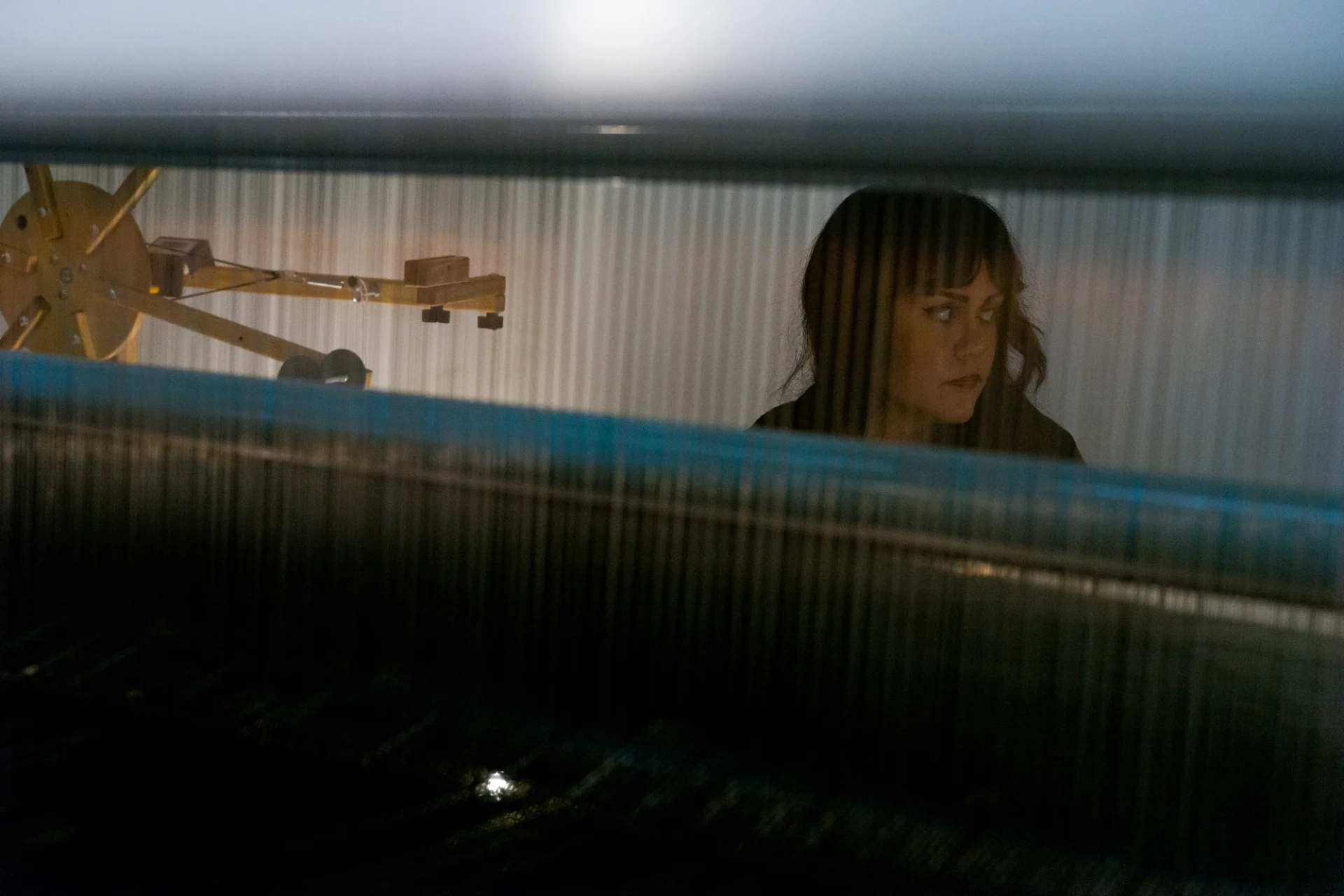
Sarah Rosalena, Portrait of the Artist.
Photo: Mike Vitelli.
Take an intimate look at Sarah Roselena’s groundbreaking practice with close collaborator and curator Mika Yoshitake and uncover how the artist merges Indigenous craft techniques with pioneering technology to challenge colonial narratives and address climate justice.
Artlab Editors: Accompanying the Artlab Editorial presents film Sarah Rosalena: In All Directions, curator Mika Yoshitake reflects on witnessing the evolution of Indigenous artist Sarah Rosalena's practice since their first meeting in December 2020. By tracing their shared working relationship over the years, Yoshitake provides an up close and personal perspective on how Rosalena weaves together her Wixárika traditions with technology.
The first time I met artist Sarah Roselena was virtually in December 2020, the year of the COVID-19 pandemic. She was giving a presentation for a Getty PST Curatorial Convening on her hybrid practice that destabilizes conventional binaries: ancient/futuristic, handmade/autonomous, earthly/otherworldly.
I was immediately intrigued by how eloquently she bridged emerging technology and Indigenous knowledge. In particular, I was struck by how her work functions not through didactic metaphor, but rather by forging a critical, relational conduit for an epistemological inquiry into and reassessment of Western scientific perceptions of the world.
As a Wixárika artist who has inherited her ancestral weaving tradition, Sarah integrates Indigenous crafting techniques with technologies like machine learning, digital weaving, and 3D printing to create hybrid objects. Based on her living knowledge of Indigenous craft, scholarly research, and real-life experiences, Sarah shifts our conventional perspectives on colonialism and climate injustice into powerful propositions.
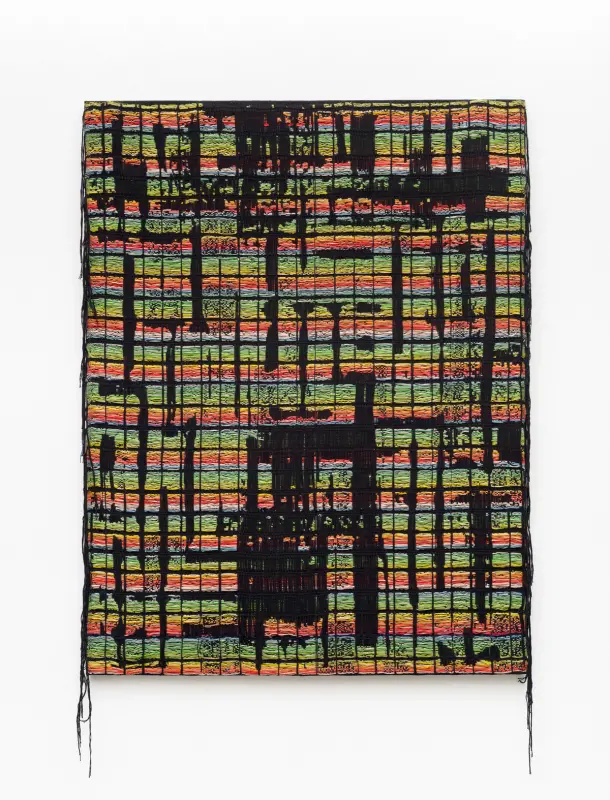
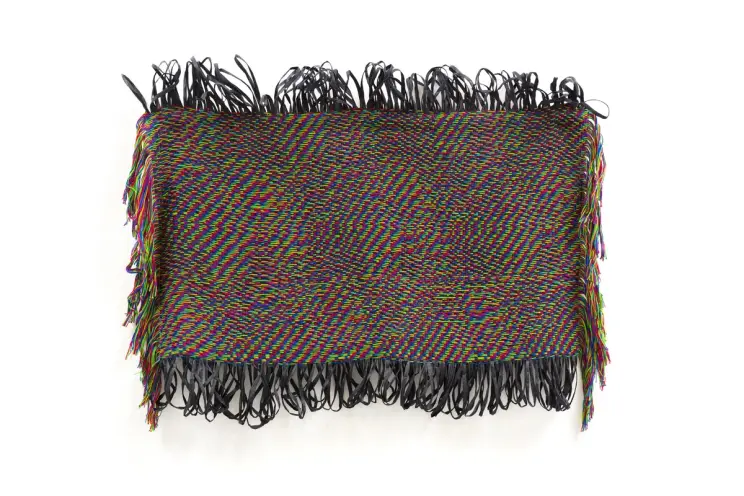
At the time, I had just begun research on Breath(e): Toward Climate and Social Justice, a multi-year curatorial project for the Hammer Museum, featuring artistic practices that have transformed the cultural tropes of the climate crisis into narratives of resilience, transformation, renewal, and coexistence. The exhibition, co-curated with artist Glenn Kaino, is now on view as part of the Getty PST Art & Science Collide initiative.
Sarah’s examinations of the geopolitical impact of climate change and the exploitation of natural resources via space colonization felt incredibly aligned with my research. Her then-recent piece, “Exit Point” (2019) was such a powerful image, provoking multiple layers of scientific and existential questions—it is currently showing as part of Breath(e).
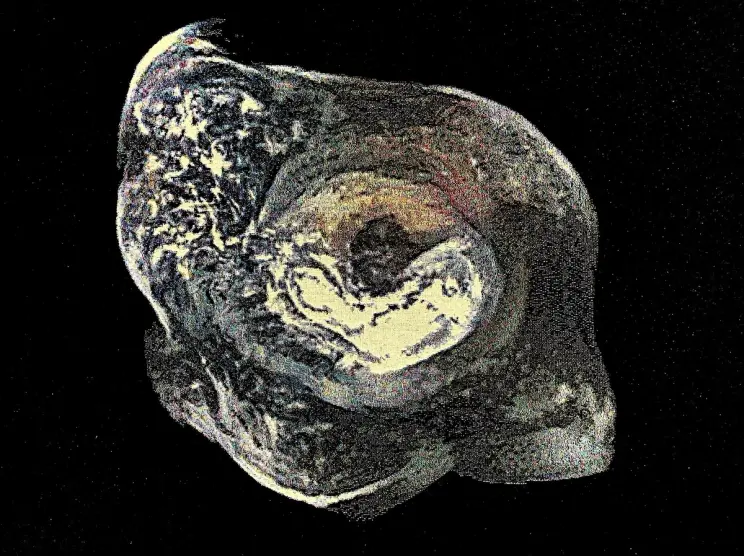
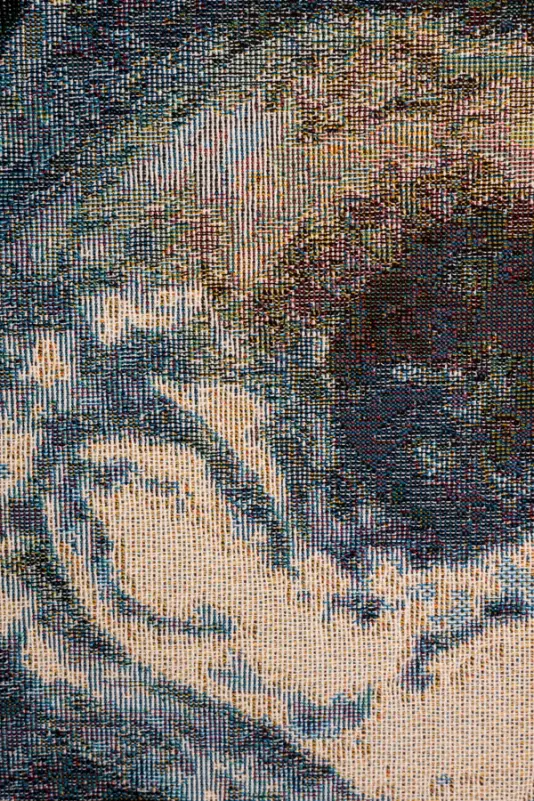
Described by Sarah as “an exit image, a glitch, or opposite of an image materialized through each pixel as thread,” “Exit Point” is a textile that uses AI to merge NASA’s famous 1972 images of a “Blue Marble” earth with images of a black hole in the M87 galaxy, located 55-million light years away taken by scientists using the Event Horizon Telescope (EHT) in 2019.
The work is one of the clearest instances in which Sarah’s work can be described as a “portal,” operating along a looping temporality. “They follow the laws of their form, operating in a spiraling time, stretched beyond a linear chronology,” Sarah told geographer Kathryn Yusoff in an interview published on the occasion of the artist’s 2023 solo exhibition at the Columbus Museum of Art. “When the past and future are together, you can weave materials that deconstruct images of systemic power, thus diverting the future of New World geographies and settler colonialism in space.”
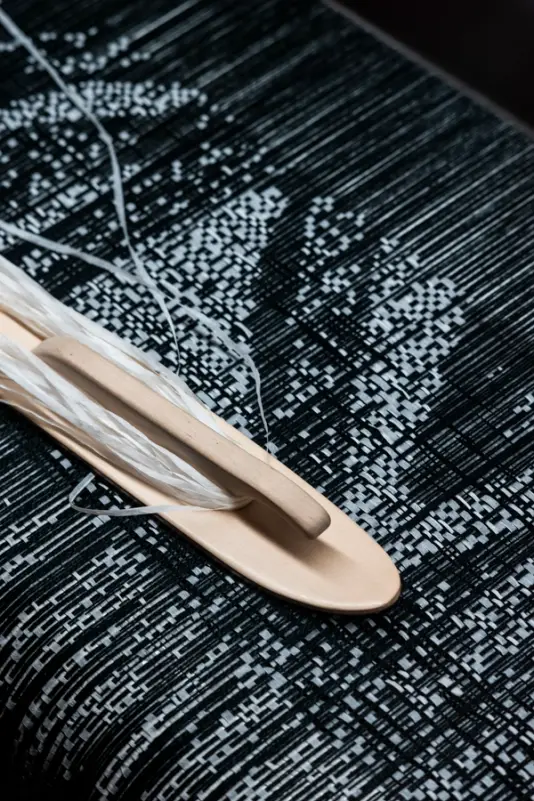
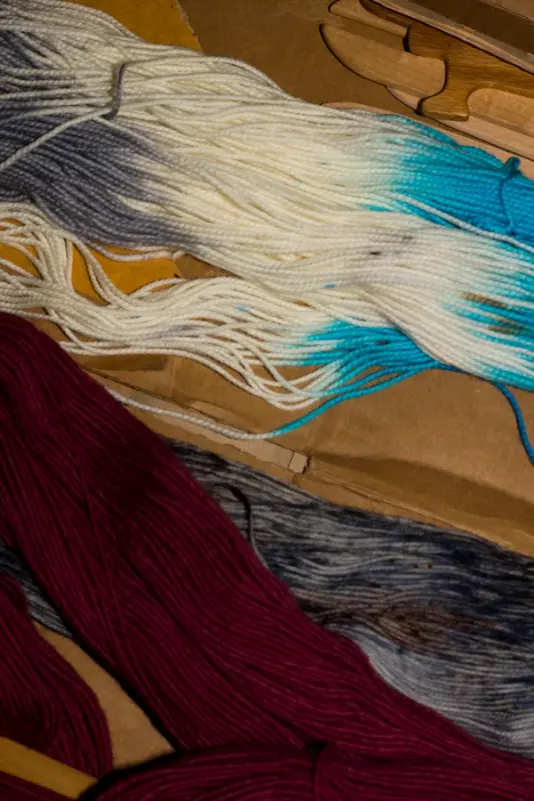
Developed through LACMA’s Art + Technology Lab, “Exit Point” is part of Sarah’s larger series, “Exit Points,” which follows the lineage of artists like Robert Irwin and James Turrell who collaborated with the aerospace company Garrett Corporation as part of LACMA’s Art + Technology program back in 1969. Through this program, Irwin and Turrell were able to integrate the latest technologies into their respective research into perception conditioning and experiments in sensory deprivation.
Half a century later, Sarah’s approach to the LACMA Art + Technology Lab is wholly distinct. By combining craft techniques and patterns that Sarah inherited from her matrilineal Wixárika lineage with her interest in disturbing the algorithms of neural networks, Sarah incorporates anti-colonial and feminist perspectives to resist the tendency to fetishize technological progress.
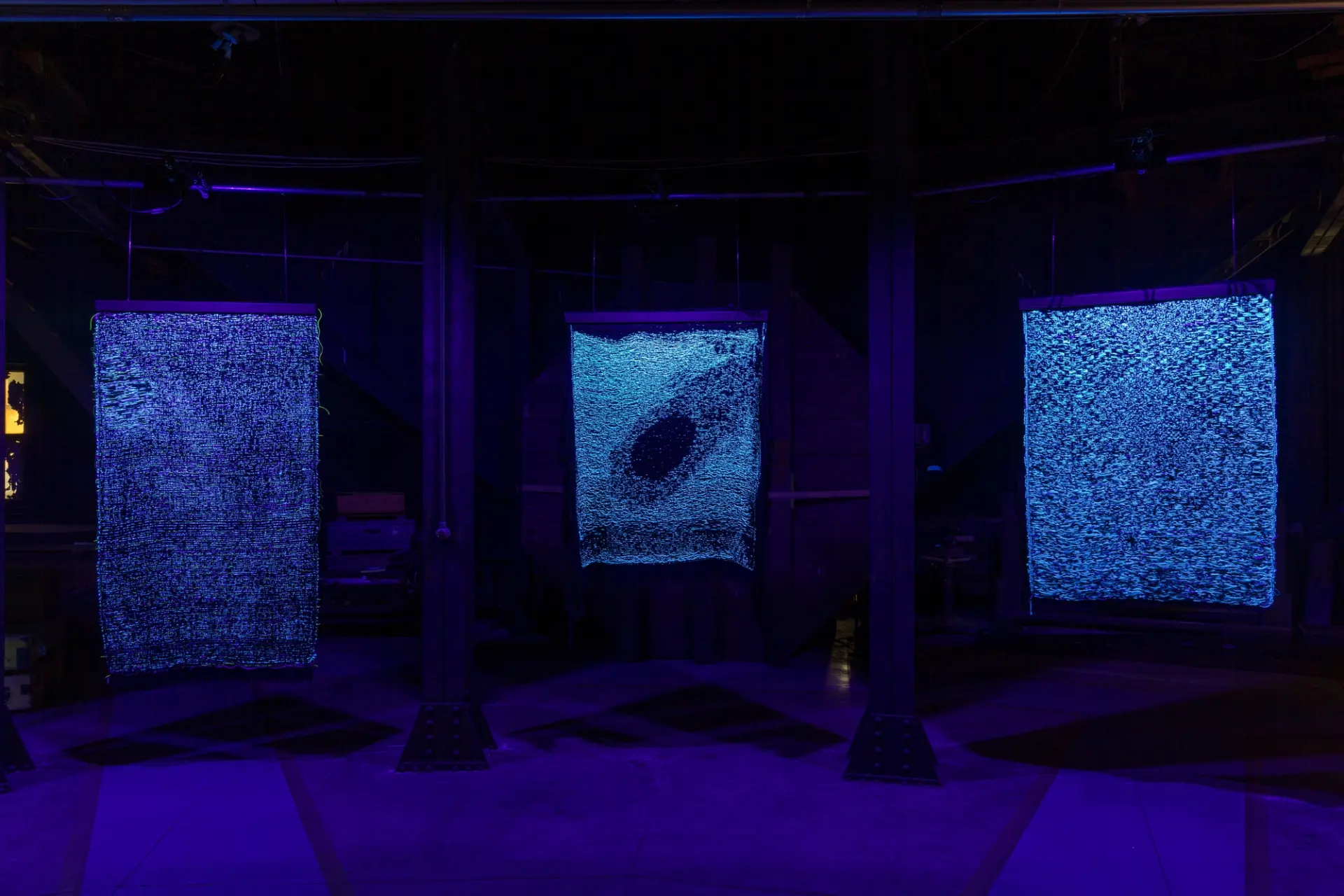
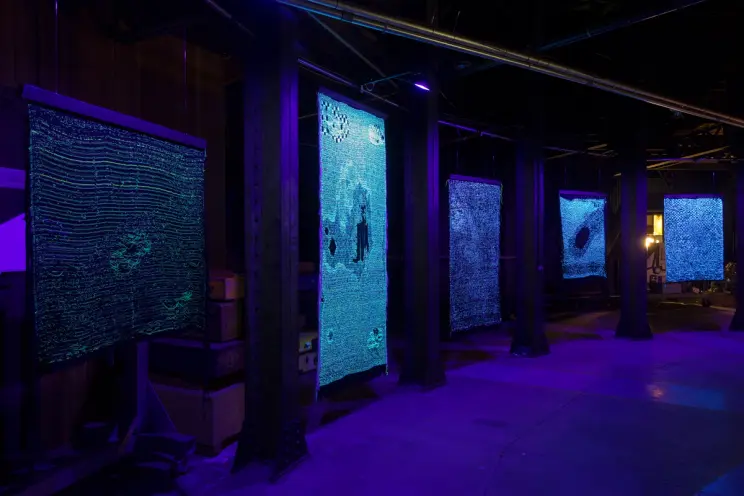
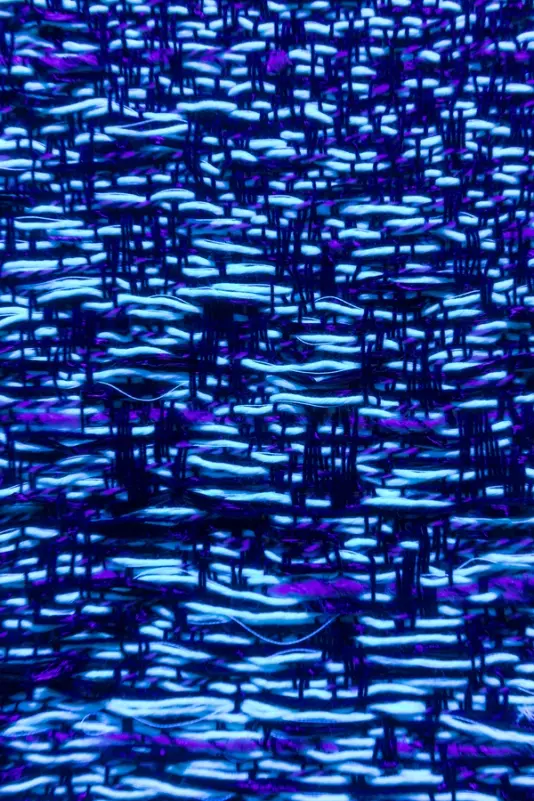
In addition to “Exit Points,” during the program, Sarah also produced “Above Below” (2020), a series of double-sided textiles which again employed Jacquard looms. This time, the looms were programmed to weave satellite reconnaissance images that projected and reshaped ice on Mars from a neural network inside Earth. The images reflect planetary changes in water and climate over millions of years captured from above and below, resulting in distorted and broken pixels and boundaries between the Blue (desertification) and the Red (exploitation) planets, a web of the past and future geographies.
These reconnaissance images evoke the same technology used to track illegal immigrants, refugees, and migrants on land, thus tying space extraction to histories of surveillance, which are often biased. The artist has described these works as “machines reimaging landscapes,” that is, anti-colonial landscapes with dissolved borders, as a redress to the ways in which technologies have been used in order to surveil and enact violence upon racialized and colonial subjects throughout history.
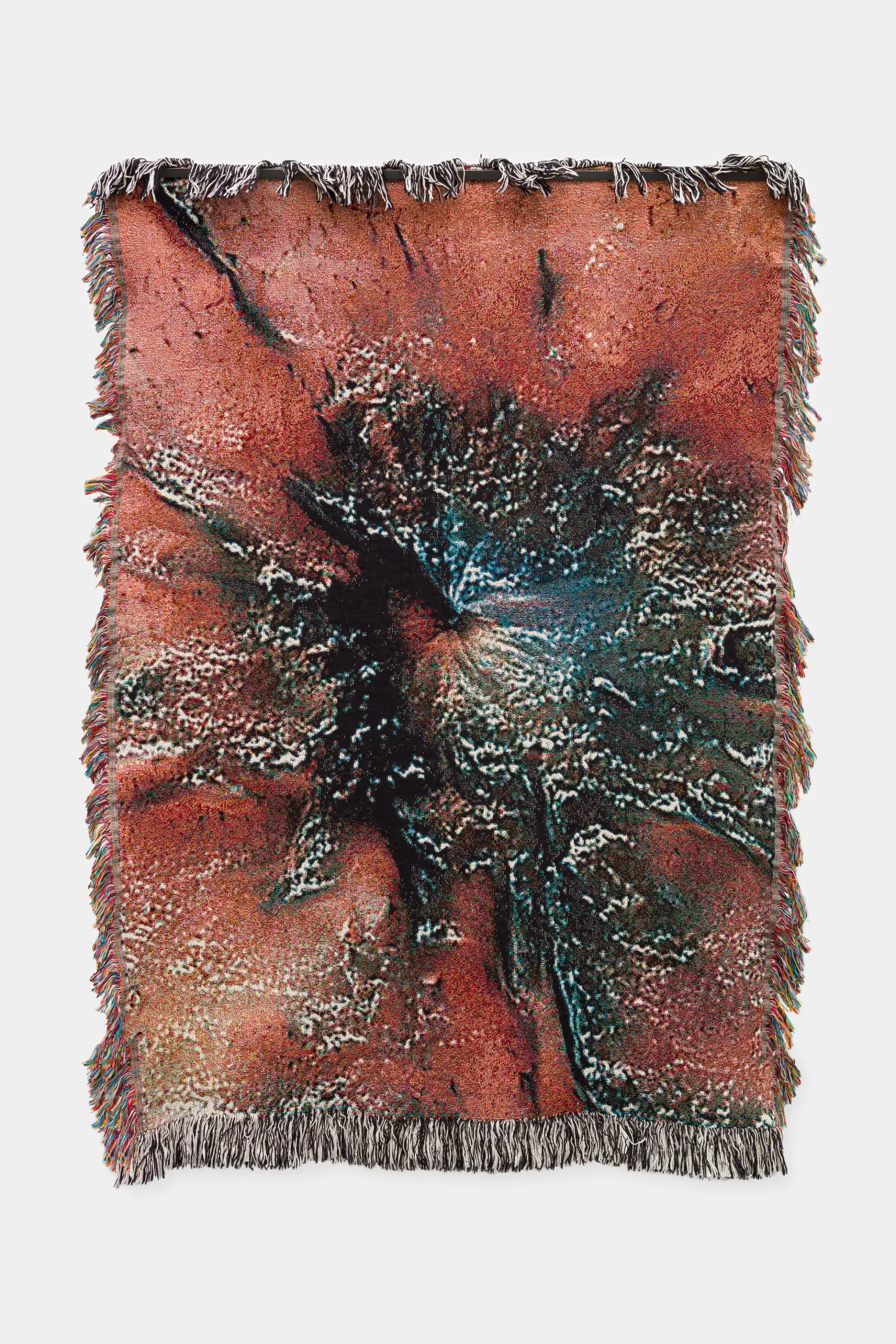
Sarah Rosalena, Above Below, 2020, AI-generated textile, cotton, training: Mars Reconnaissance Orbiter satellite images taken from High Resolution Imaging Science Experiment (HiRISE).
Photo: Jenalee Harmon.
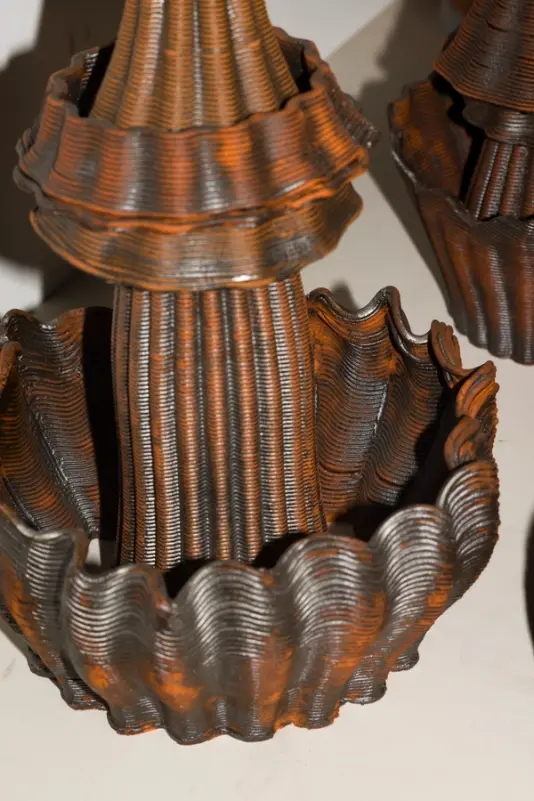
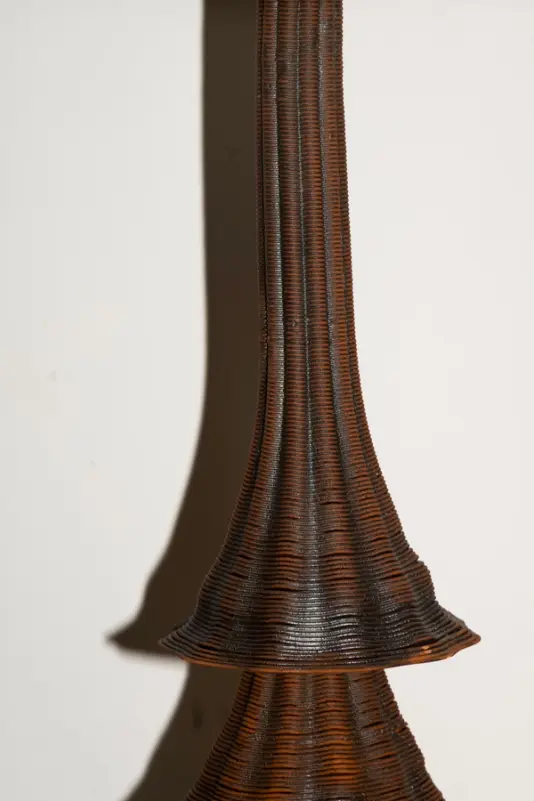
Outside of LACMA’s Art + Technology Lab, Sarah’s weavings have continued their stellar explorations. In January 2021, I invited Sarah to have a solo exhibition at BLUM (formerly Blum & Poe), which included double-sided textiles from “Above Below” as well as works from “Transposing a Form” (2020), a ceramic series that explore Indigenous coiling techniques and 3D printing using Enhanced Mojave Mars Simulant 2 (MMS-2), a chemically enriched blend of Mars regolith (Martian soil).
Minerals found in clay deposits on Mars reflect the presence of water—the essence of life and power—and the potential for microbial life. These potentials are heavily sought after by rovers and intelligent machines in search of future habitats; the next interpreter or mediator in the language of forms.
Sarah’s forms take inspiration from both black holes and Puebloan vessels that incorporate breakages known as “spirit lines,” where the spirit can enter and exit the object. Sarah’s works are living entities that reveal the passage of past, present, and future time as spiraling and continuous.
In conjunction with her exhibition at BLUM, Sarah and I conducted an Instagram Live conversation to coincide with the landings of the Perseverance rover and Ingenuity helicopter—the first powered aircrafts to land on Mars. Sarah and I talked about these arrivals, which aimed to search for signs of ancient life, characterize the planet's geology and climate, collect carefully selected and documented rock and sediment samples for possible return to Earth, and pave the way for human exploration beyond the moon.
Much anthropogenic activity including outer space exploration has resulted in an increase in global carbon emissions, which in turn has contributed to resource extraction in space. Inspired by Sarah’s conversations with geologist and data scientist Fred Calef at NASA’s JPL (Jet Propulsion Laboratories) as well as writings by anthropologist Lisa Messeri and geographer K. Maria D. Lane, our discussion focused on the potential presence of microbial life and water on Mars as incentives for space colonization in response to climate change.
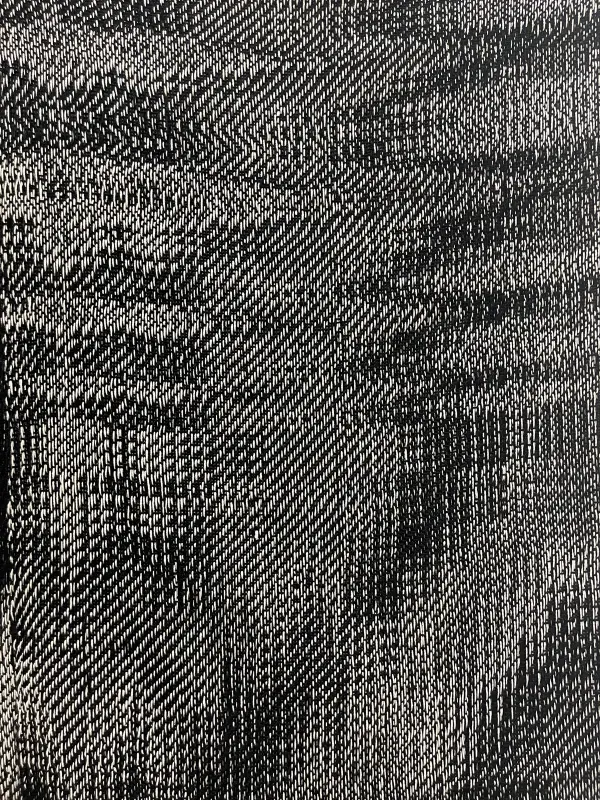
With the continued support of the LACMA Art + Technology Lab, Sarah’s 2023 exhibition, Standard Candle at Mount Wilson Observatory further developed her interest in astronomical phenomena and its legacies of human and material labor through Indigenous craft. This series of weaving and beaded works track the labor of the female mathematicians—known as “computers”—who were hired by NASA to calculate the measurement of distances between stars and earth based on the light variations.
Based on their algorithm, Sarah developed a weaving template and wove the patterns using a programmable loom. Black and white cotton and fine silk threads resulted in shimmering flickers of light that, like an optical illusion, vary and move based on the viewer’s vantage point.
“Indigenous cosmology directly goes against the divisions of how Western ideology, imperialism, science, technology, colonialism governs others,” said Sarah. “For me it is never hidden, revealing what’s underneath, removing the edges, reimagining the axis that anchors it in coordinates.”
By integrating machine learning with traditional fiber art, beadwork and indigenous ceramic techniques, Sarah’s hybrid objects expose critical gaps in space colonization, hidden labor, and climate justice. These material interventions deconstruct technology, dissolving the power structures that have enabled age-old scientific perceptions of the universe.
She turns the exacting science of measuring the universe on its head, her bead loom acting as an “anti-measuring machine” that reveals the hidden histories of women’s labor that allow us to calculate distances between galaxies.
Sarah also uses machine learning in speculative ways to create space for new perspectives on space colonization and extraction. The frays of her woven textiles are left deliberately unfinished, a gesture she explains “points toward the infinite, anchored in materials that you can reveal, power structures rooted in colonialism and reimagin[ing] things rooted in the earth.”
“I see my textiles as continuous and not resolved, as this potential for multidimensional expansion from the single point of origin,” she continues. Sarah’s work is quietly provocative, unbound, and subversive.
As she pioneers new epistemologies between Earth and Space, Sarah’s progressive philosophy and perspective on technology continues to be grounded in ancient knowledge. Her works open up fissures between human and nonhuman life. They question the locations of agency between the handmade and autonomous. And they probe temporal vectors that point in all directions.