LACMA
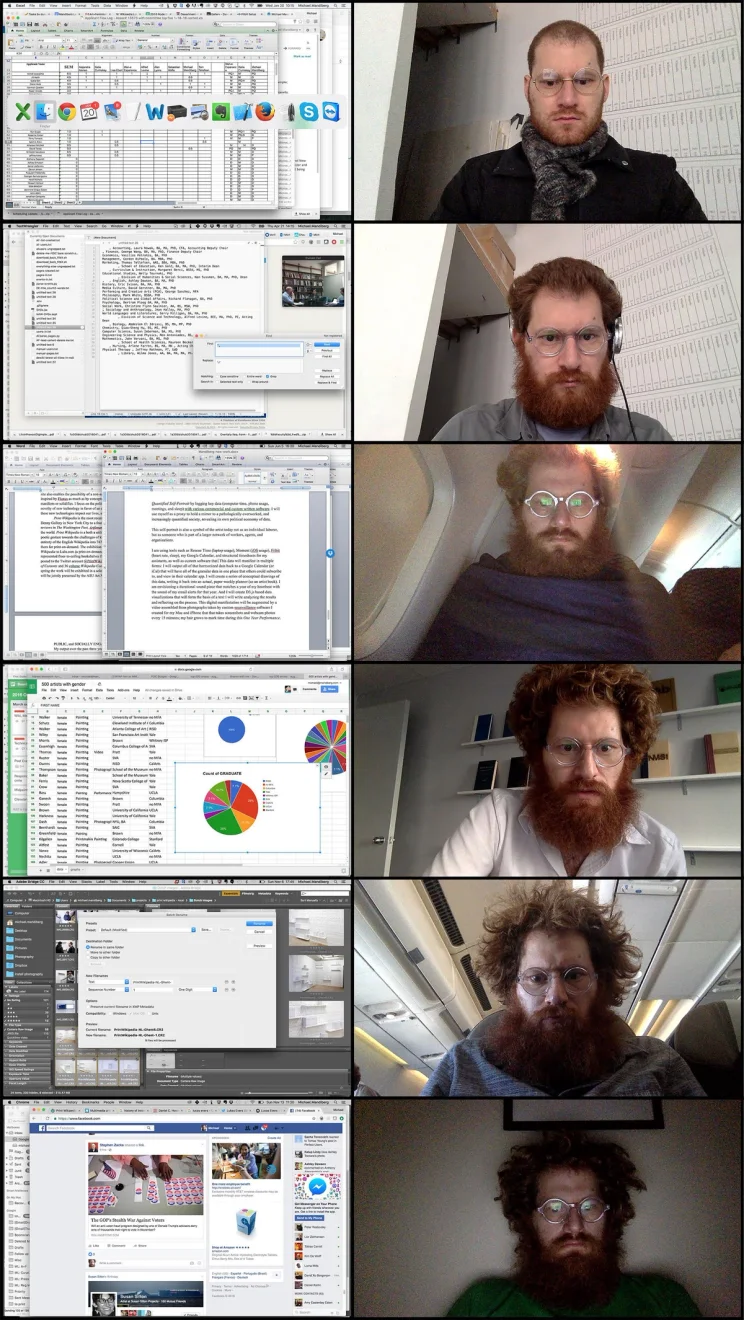
Courtesy Michael Mandiberg and Denny Gallery NYC
About the Exhibition
For his two-part Art + Technology Lab Grant project, Michael Mandiberg exhibited “Quantified Self Portrait (Rhythms)”, a sound installation in the Pritzker Parking Garage elevators which combined recordings of the artist’s heartbeat and digital media alerts. The piece played for one full year, each moment of the recording representing the data collected exactly a year before. Blending Mandiberg’s technical prowess and conceptual depth, the piece succeeds at documenting the artist’s literal labor, while pushing the aesthetic boundaries of his thinking into a more emotionally open space.
“Quantified Self Portrait (1 Year Performance)” serves as a video composite of a year’s worth of self-surveillance that creates an impression of an artist's daily work. Derived from his proposal for the Art + Technology Lab in 2016, the work was a year-long performance, in which the artist documented his own labor using pervasive custom surveillance software, which he then shared in his multimedia installation.
Using himself as a surrogate to examine a fast-paced, overworked, and quantified society, Mandiberg introduced a new type of self-portrait, revealing a personal economy of data and perhaps a deeply intimate version of himself. The self-portrait also worked as a symbol of the artist today—not an individual laborer, but a mere part of a larger network of workers, systems, and organizations.
About the Artist
Michael Mandiberg (b. 1977, Detroit, USA) is an interdisciplinary artist whose work manifests the poetics and politics of the information age. Mandiberg works within systems to make visible processes that are often hidden in plain sight, or on public web servers. While technically sophisticated, their projects exceed novelty to make propositions about how our lives are being shaped by these tools, and the ideologies underlying them. This non-binary approach crosses media and evades stable categorization: from large-scale installations like Print Wikipedia's 7,473 books, to custom software driven durational performance like Quantified Self Portrait, to socially engaged pedagogy like the New York Arts Practicum. They co-founded Art+Feminism, an international collaboration that takes place at The Museum of Modern Art, and hundreds of venues around the world.
Mandiberg received an MFA from California Institute of the Arts and a BA from Brown University. Their projects have been exhibited at the Whitney Museum of American Art, Los Angeles County Museum of Art, New Museum, Musée d'Art Moderne de la Ville de Paris, Arizona State University Museum and Library, Denny Dimin Gallery, NYC; Eyebeam, NYC and Transmediale, Berlin, amongst others, and are in the permanent collections of the Los Angeles County Museum of Art, Stedelijk Museum, Amsterdam and 21c Museum. Their work has been written about widely, including in Artforum, Art in America, ARTnews, The New York Times, The New Yorker, and The Wall Street Journal.
Mandiberg is the recipient of a LACMA Art + Technology Lab grant, three Eyebeam fellowships, a Mellon fellowship at the CUNY Graduate Center, several Wikimedia Foundation grants, and commissions from Rhizome, and Turbulence. Mandiberg has participated in residencies at Fonderie Darling, the Banff Centre, Eyebeam, the MacDowell Colony, and 18th Street Arts Center.
Mandiberg is Professor of Media Culture at the College of Staten Island/CUNY and Doctoral Faculty at the CUNY Graduate Center. Mandiberg's work lives at Mandiberg.com.
About the Program
LACMA Art + Technology Lab
The LACMA Art + Technology Lab supports experiments in design, creative entrepreneurship, adventures in art and industry, collaboration, and interdisciplinary dialogue. Inspired by LACMA’s seminal Art and Technology Program (1967–1971), which paired prominent artists such as Claes Oldenburg and Andy Warhol with the resources of major corporations, the program was revived in 2015 as part of The Hyundai Project at LACMA, our ten-year partnership with the museum. The Lab provides grants, in-kind support, and facilities at the museum to support the progress of artist projects that take purposeful risks, and to foster innovation and collaboration across disciplines.
Related Content

Project
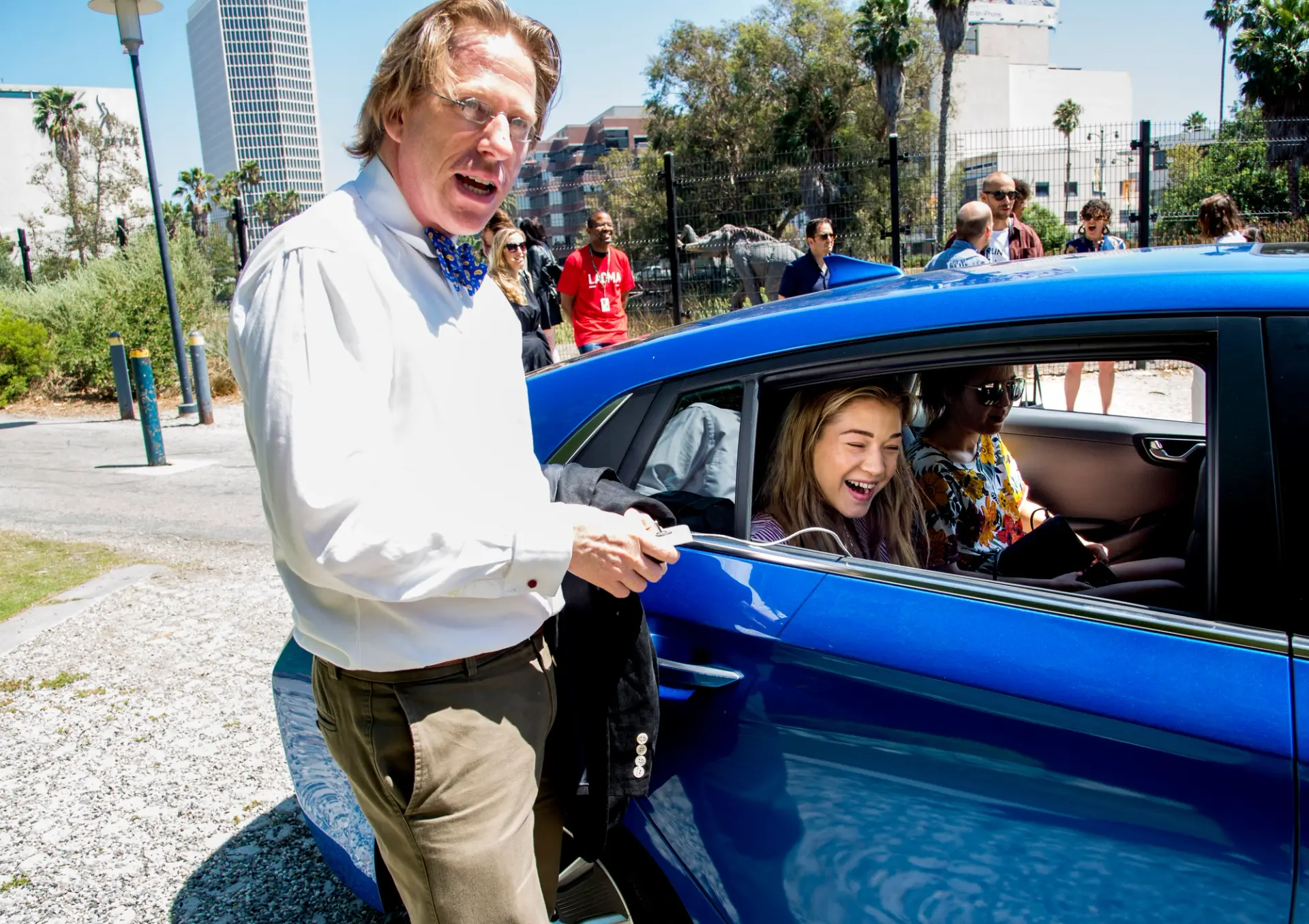
Jonathon Keats: Roadable Synapse
Project
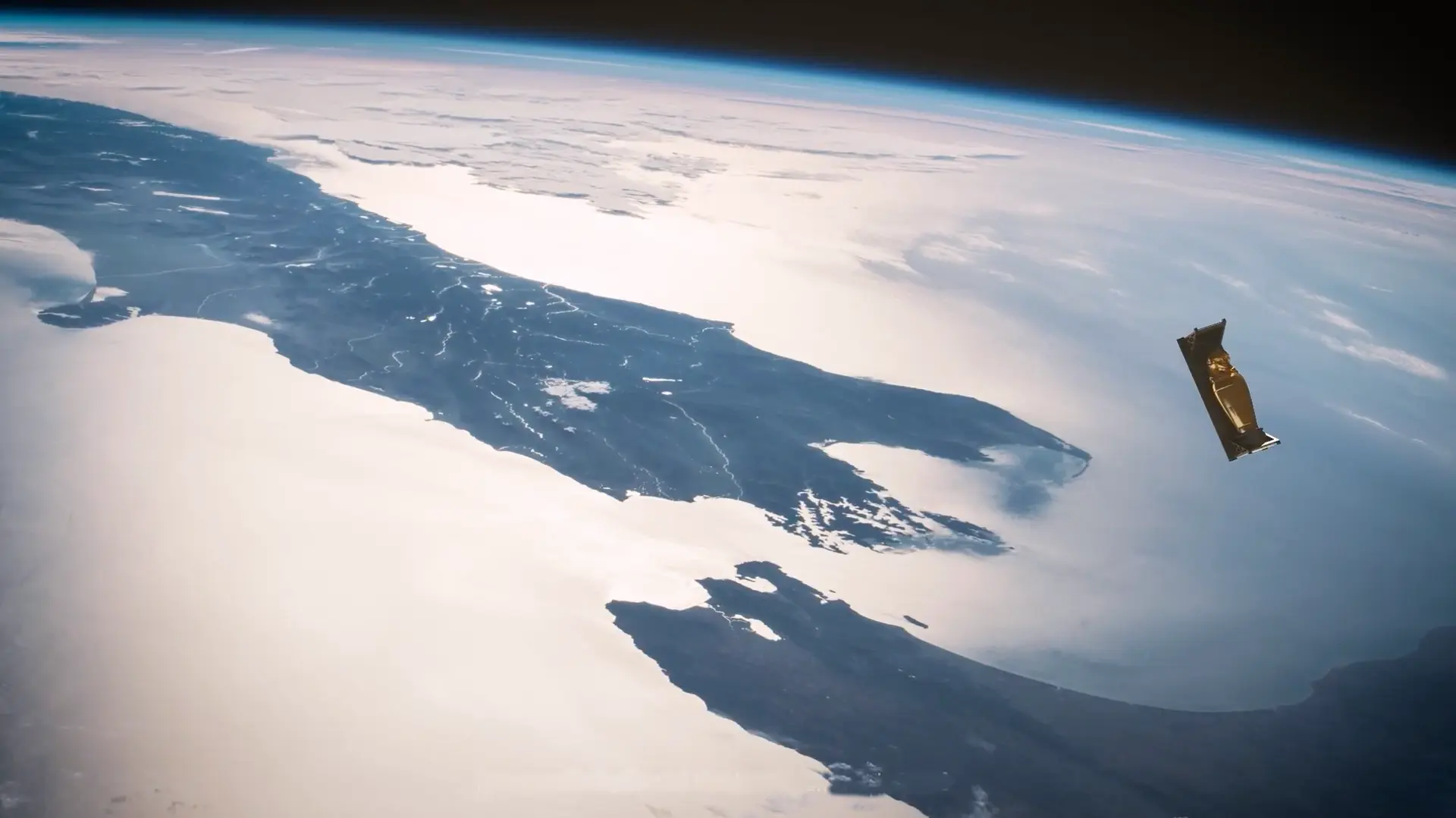
Tavares Strachan: ENOCH
Project
I.R. Bach: I Want to Know