Korean Pavilion


About the Exhibition
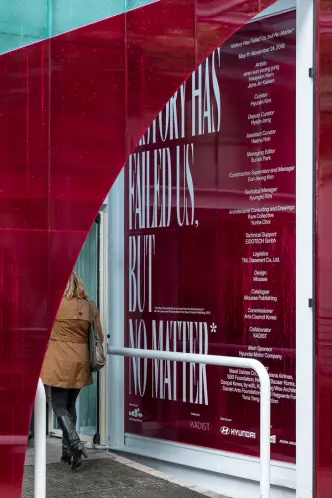
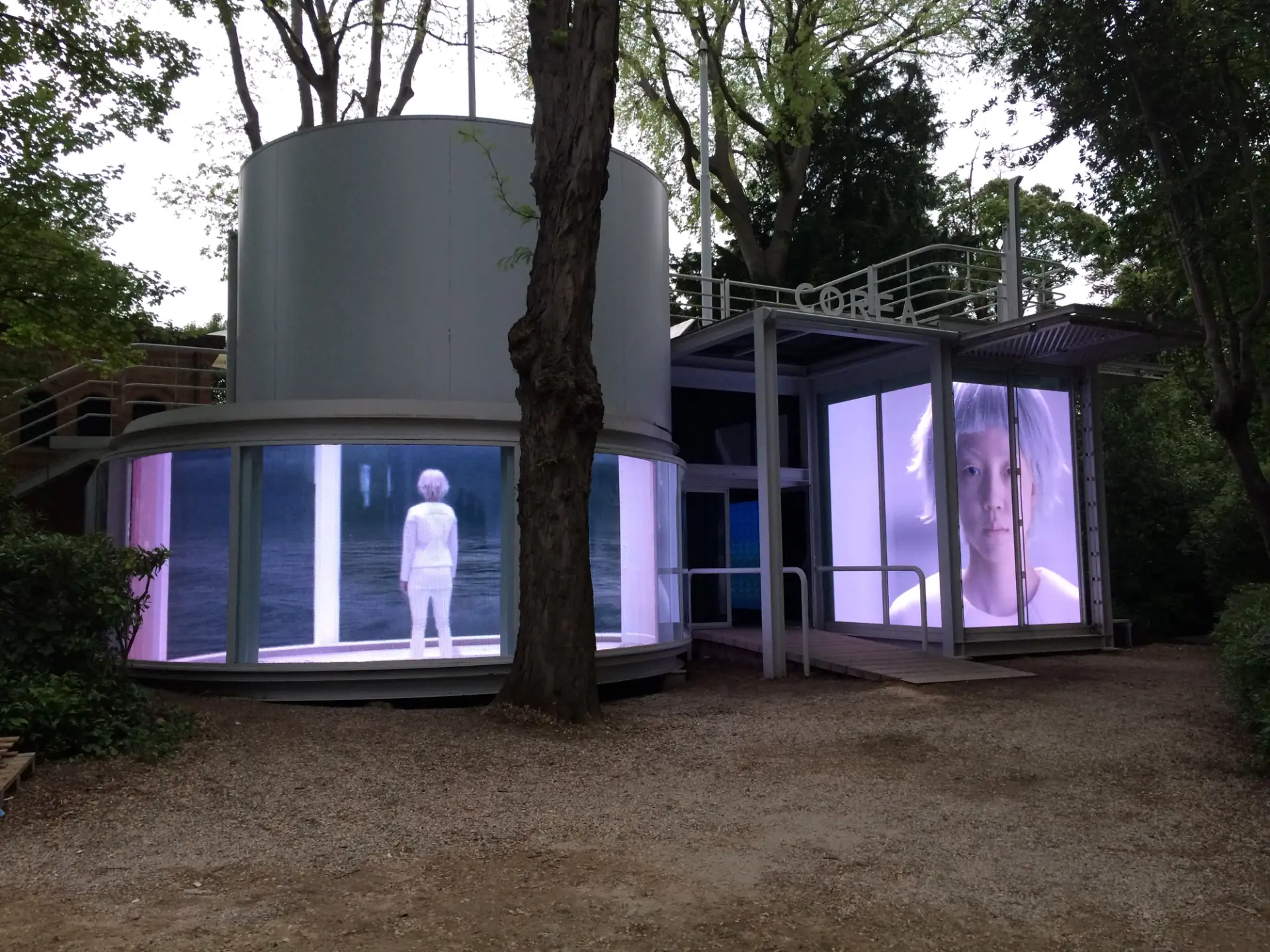
For the Korean Pavilion at the 2019 Venice Biennale, curated by Hyunjin Kim, the Korean Pavilion presented three artists investigating the formation of history through the lens of gender diversity. The works of siren eun young jung, Jane Jin Kaisen, and Hwayeon Nam looked at the ways in which modernization in Korea and East Asia is historicized in heterogeneous narratives, the ways in which traditions are invented, and the potential for Asian traditions to be a means of emancipation outside and beyond the gender paradigms of Western modernity.
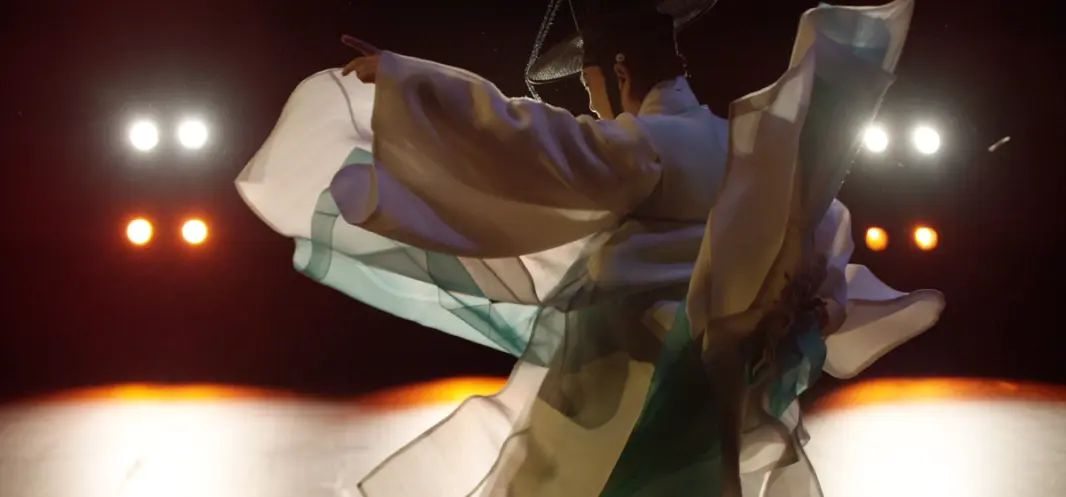
siren eun young jung’s “A Performing by Flash, Afterimage, Velocity and Noise” is a film documentation of yeoseong gukgeuk, a form of traditional Korean theater that features only women actors. Shown across three monitors, the film follows second-generation gukgeuk actor Lee Deung Woo (aka Lee Ok Chun) as she puts on makeup and performs in a theater, dressed in traditional men’s attire. Setting the film to electronic music and lighting brings in a subversive element, subtly illuminating the ways in which contemporary queer performance is not so different from this traditional form of theater.
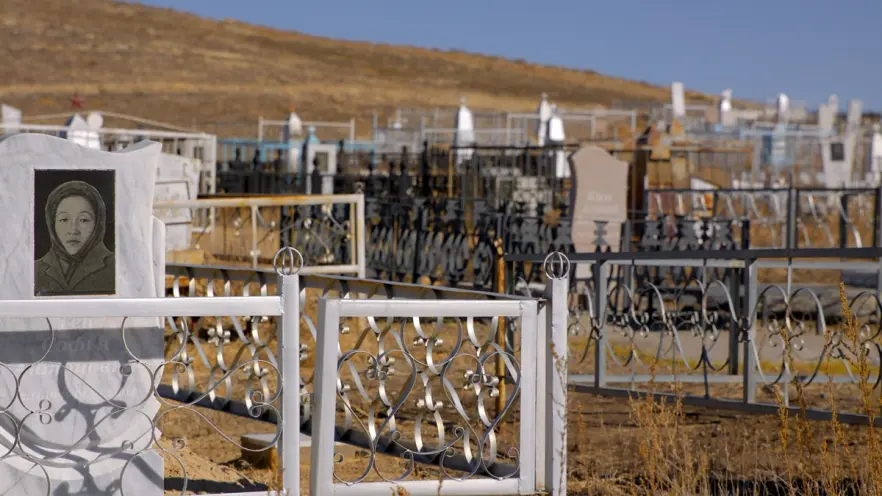
Jane Jin Kaisen’s film, “Community of Parting,” reinterprets the ancient Korean myth of Princess Bari, who was abandoned by her parents because of her sex, but later risks her life to save them. Bari then becomes a god, and rather than returning to the realm of the living, spends her time in the underworld mediating between life and death. Often understood as a parable of filial piety, Kaisen reframed the tale as one of one woman’s transgression, migration, and resilience. Rooted in the history of female shamanism in Korea, Community of Parting was filmed in various locations including Jeju Island, the DMZ, South Korea, North Korea, Kazakhstan, Japan, China, the United States, and Germany, coalescingr as a nonlinear montage of ritual performances, poetry, and soundscapes.
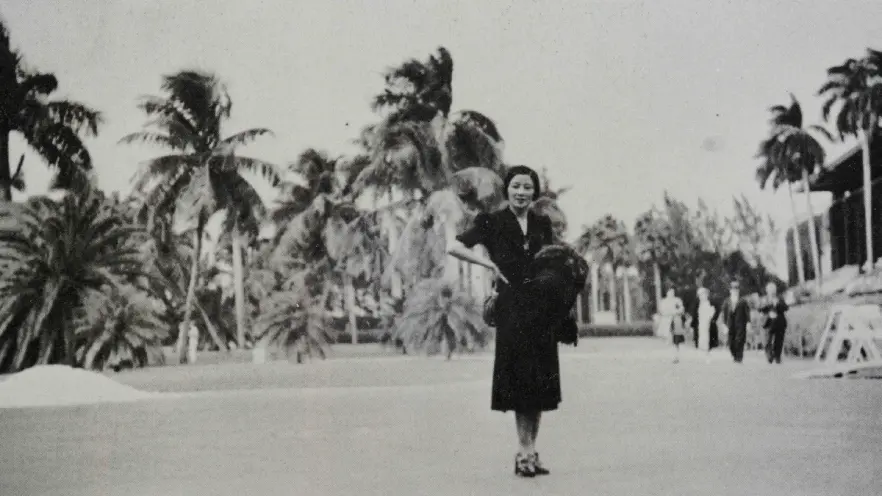
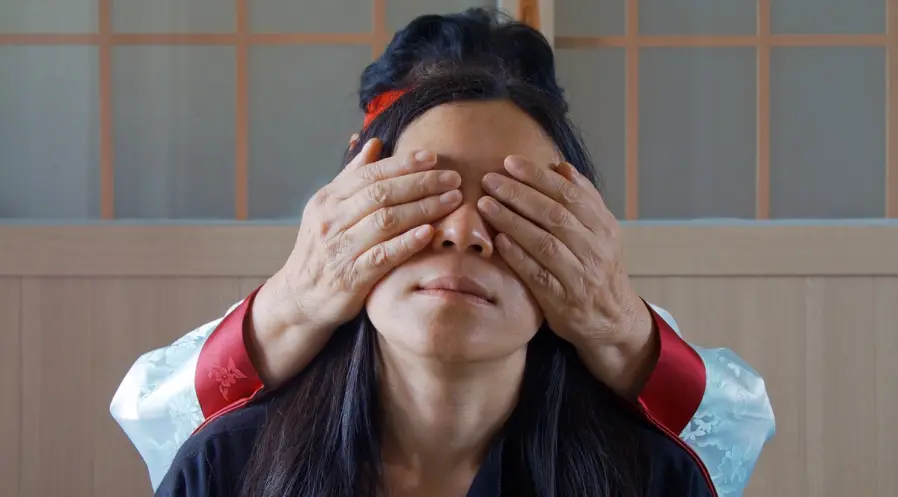
Prior to producing “Dancer from the Peninsula,” Hwayeon Nam spent years studying the work and archive of dancer and choreographer Choi Seung-hee, whose complex personal life often overshadows her artistic accomplishments. Nam’s film traces Choi’s life through the political tumult of her time, using found footage from her archive. The presentation here also included a sculpture and garden dedicated to Choi, who despite receiving global recognition for her work as a dancer, is still considered a controversial figure because of her relationship with Japan during the colonial era and later move to North Korea. Nam’s recontextualizing of Choi brings an essential human layer to both history and art, acknowledging the many complexities that intertwine within a single life.
About the Artists
Since 2008, multimedia artist siren eun young jung (b. 1974, Incheon, South Korea) has focused her practice on yeoseong gukgeuk, often undertaking deep archival research into the lives of the women who participated in this traditional form of theater. She was the recipient of the 2018 Korean Artist Prize and has presented her work in solo exhibitions at the NTU Centre for Contemporary Art Singapore (2017); d/p, Seoul (2018); and the Namsam Art Centre, Seoul (2016); among other venues.
Jane Jin Kaisen (b. 1980, Jeju Island, South Korea) lives in Copenhagen and is a professor at the School of Media Arts, The Royal Danish Academy of Fine Arts. Her research-driven experimental practice spans the mediums of film, photography, performance, and text and often includes engagement with diverse communities. She has had solo exhibitions at institutions including the Museum of Contemporary Art, Detroit (2021); Art Sonje Center, Seoul (2021); Kunsthal Charlottenborg (2020); and gallery damdam, Berlin (2020).
Hwayeon Nam (b. 1979, South Korea) explores choreography, the ways in which time passes through the body, and potential reroutings of archives, with a specific interest in the political and social complexities of the life of the late dancer and choreographer Seung-hee Choi. Nam has had solo exhibitions at Art Sonje Center, Seoul (2020); Audio Visual Pavilion, Seoul (2017); Arko Art Center, Seoul (2015); and Casco – Office for Art, Design and Theory, Utrecht (2009).
About the Program
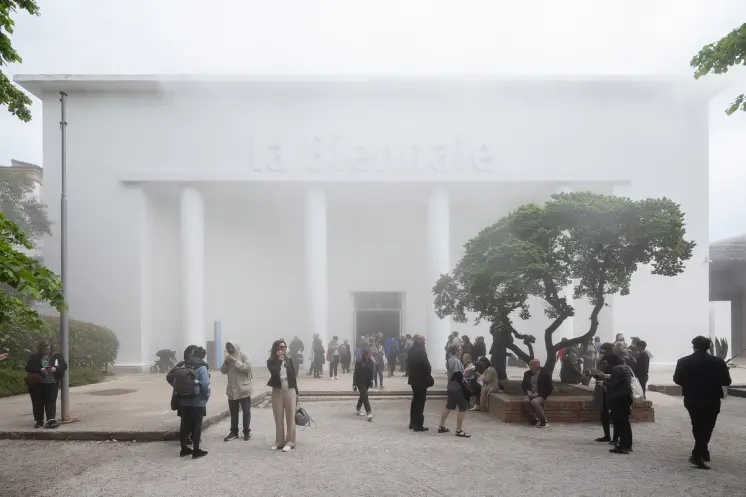
The Korean Pavilion at the Venice Biennale
Hyundai Motor continues to support the Korean Pavilion at the International Art Exhibition of La Biennale di Venezia as the lead supporter since 2015. By confirming the partnership through 2034, Hyundai Motor reaffirms our deep commitment to fostering a sustainable ecosystem for nurturing experimental artistic practices and critical discourses.Founded in 1895, the International Art Exhibition of La Biennale di Venezia is one of the world’s most important international art exhibitions, taking place in national pavilions throughout the city and the Central Pavilion every two years. Since its inception in 1995, the Korean Pavilion continues to receive honorable mentions for presenting outstanding works by artists from Korea and broadening perspectives on Korean art across the global landscape.
Related Content
Project
Gyre
Project
Hyundai Commission: Kara Walker