LACMA
Barbara Kruger: Thinking of You. I Mean Me. I Mean You
Barbara Kruger: Thinking of You. I Mean Me. I Mean You
LACMA

About the Exhibition
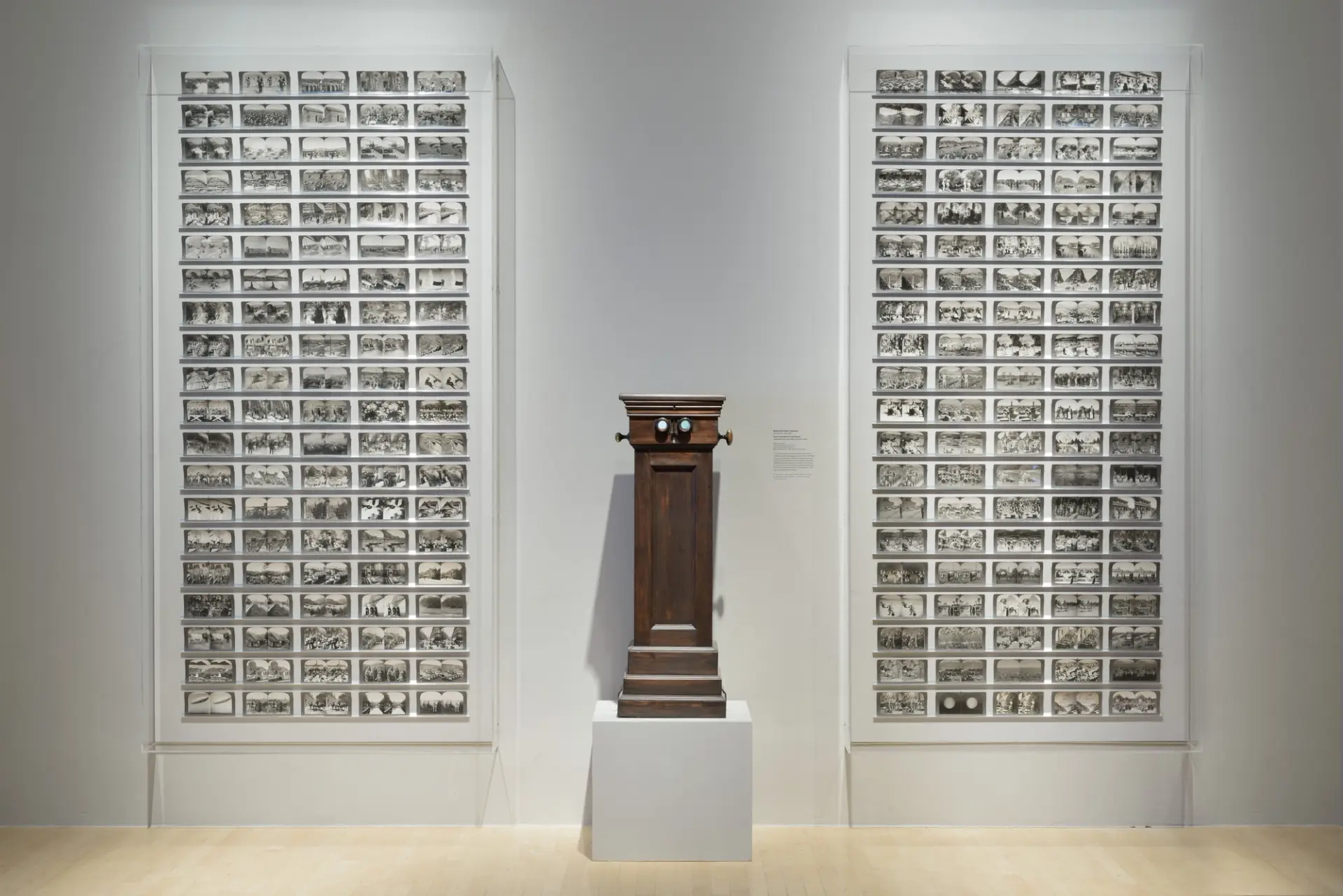
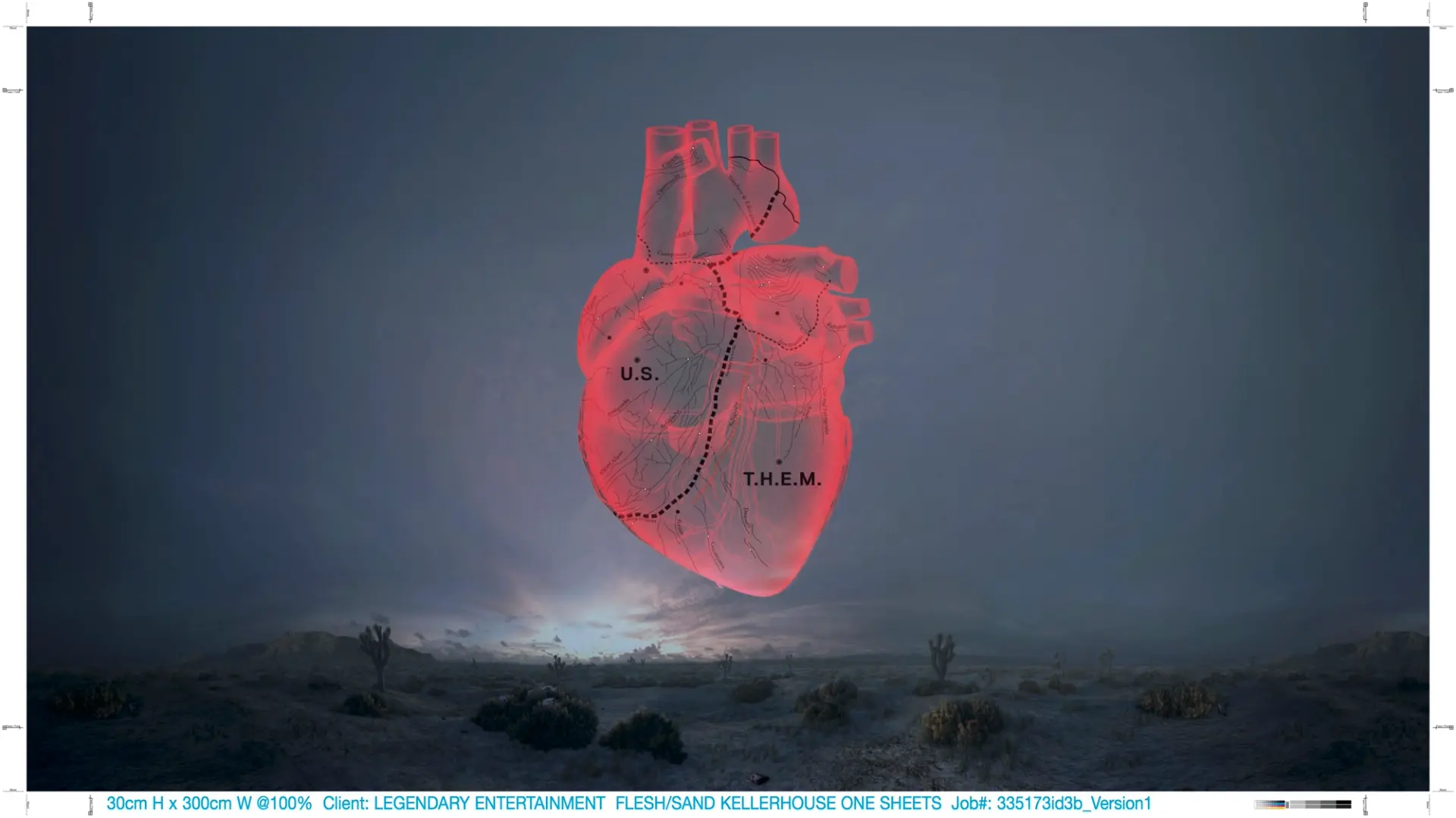
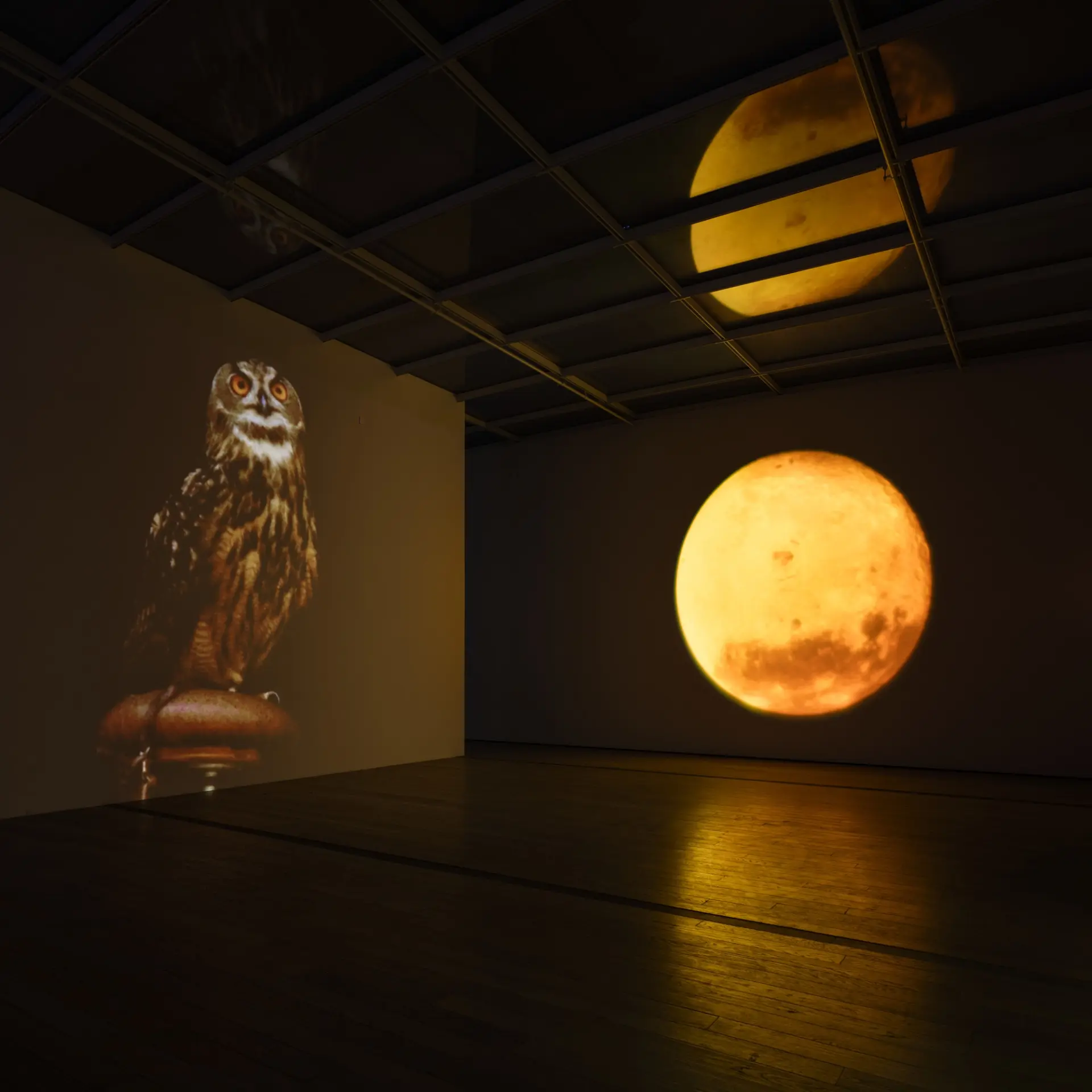
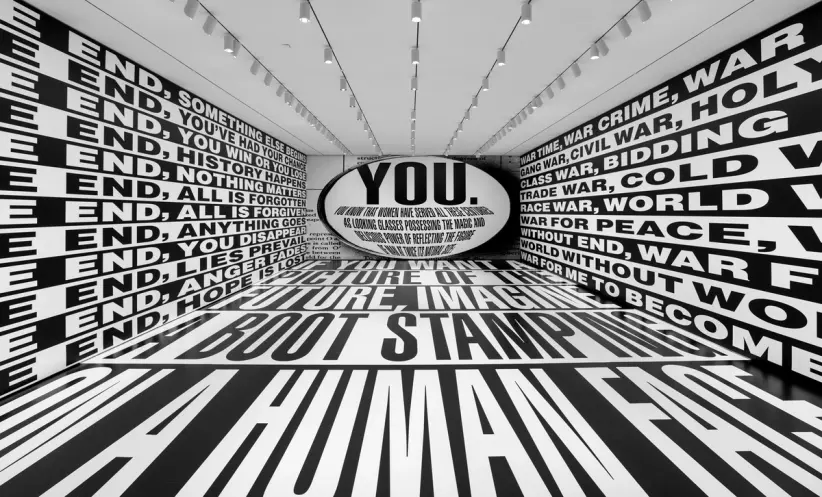
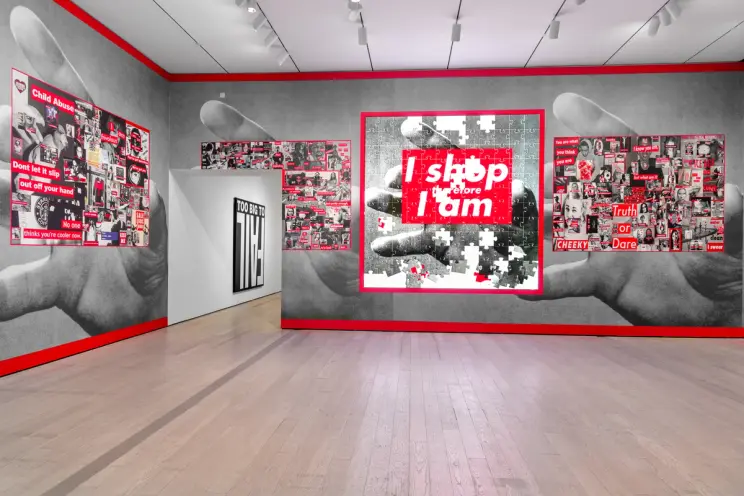
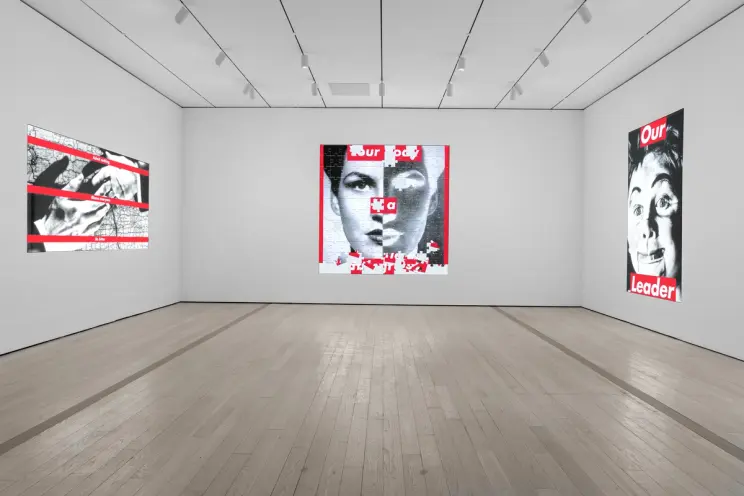
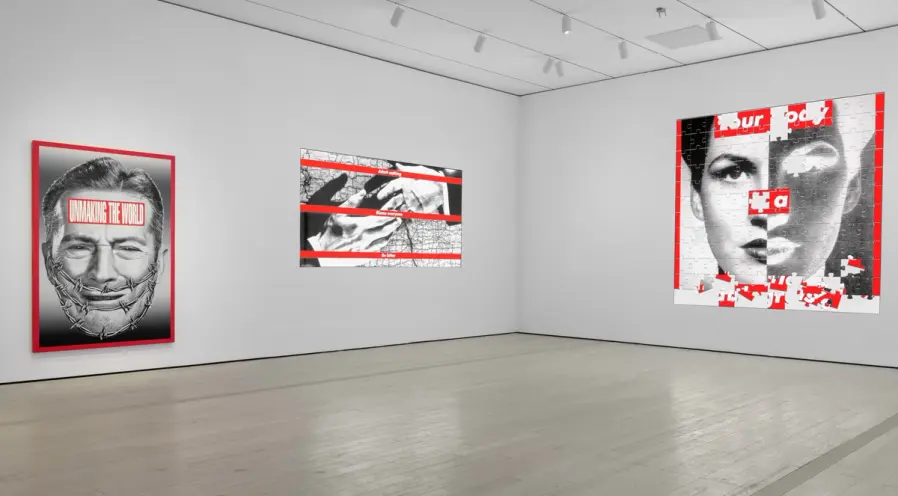
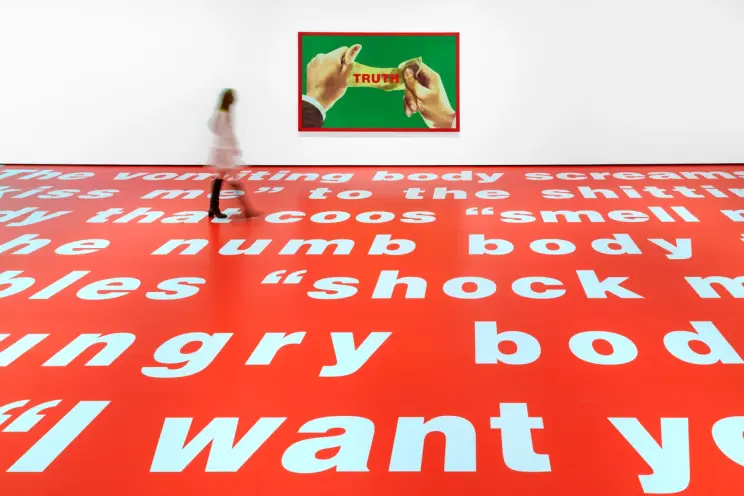
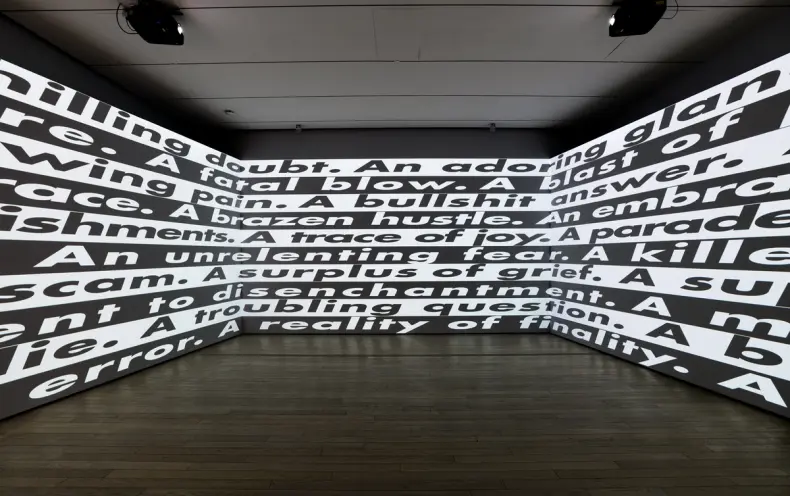
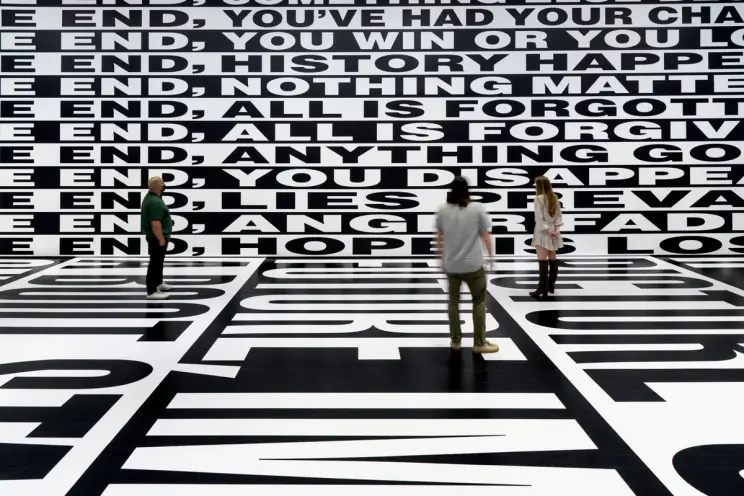
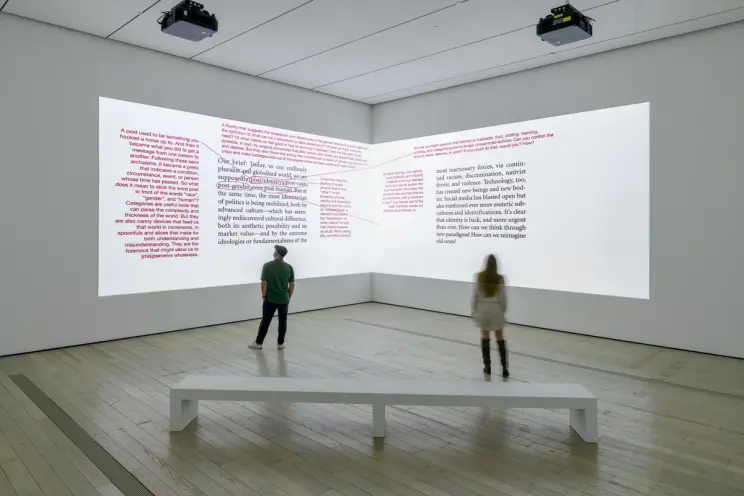
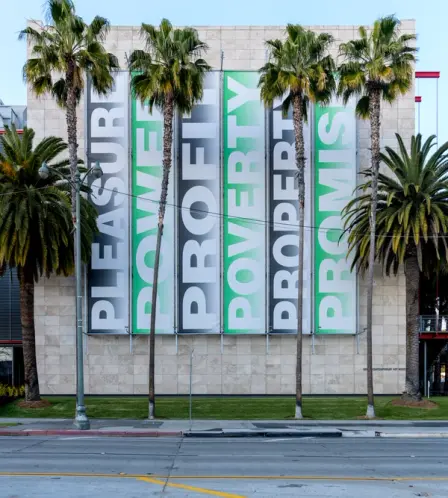
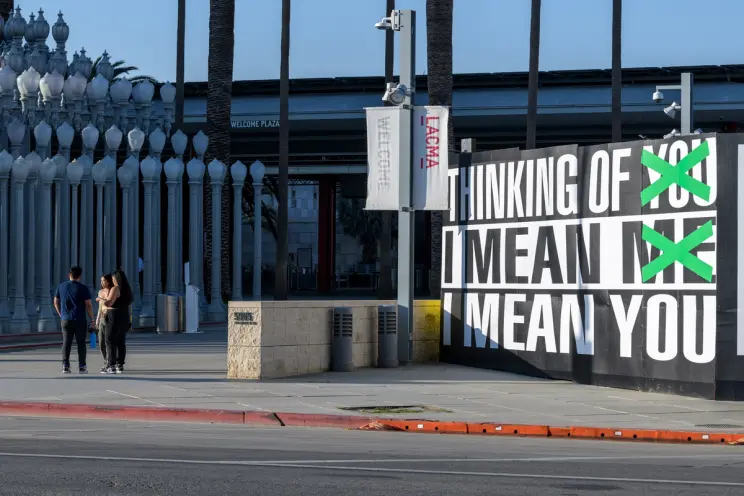
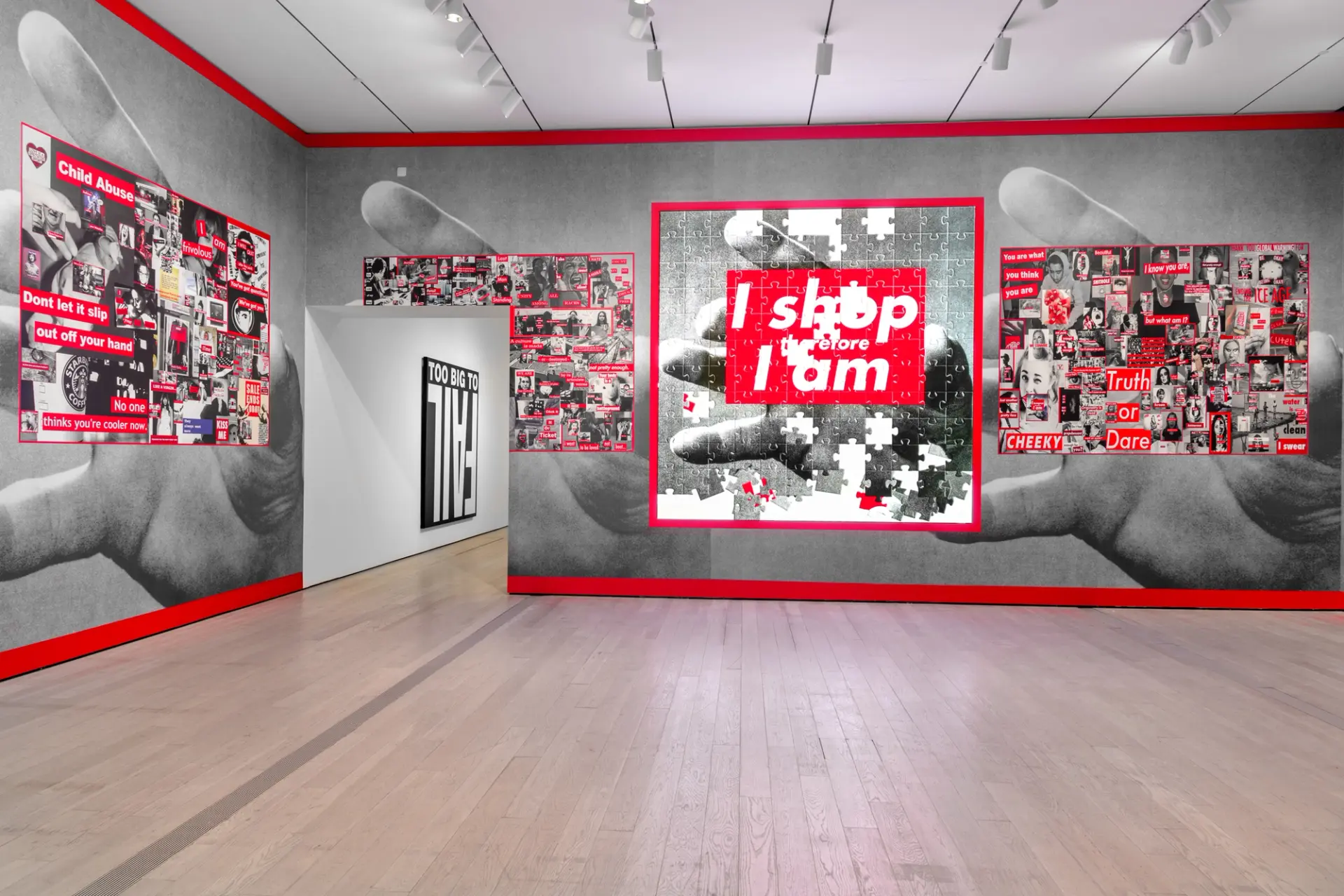
The most comprehensive presentation of Barbara Kruger’s work in a generation, Thinking of You. I Mean Me. I Mean You combined photography, sculpture, graphic design, architecture, and audio-visual installations created over the course of four decades. The exhibition extended beyond LACMA’s galleries, featuring outdoor murals along Wilshire Boulevard, audio soundscapes throughout LACMA’s campus, and one of Kruger’s signature vinyl wraps affixed to a Hyundai IONIQ 5, which was driven around Los Angeles over the course of the show. Rather than a traditional retrospective, Kruger’s exhibition was thematically chronologized, thereby recontextualizing works from the past in decisively present modes.
About the Artist
Barbara Kruger (b. 1945, Newark, USA) combines pictures with text to uncover and challenge socially ingrained assumptions about power dynamics, and their bearing on life and death, health and housing, visibility and exclusion, expression and suppression. With a distinctive style that juxtaposes black-and-white photographs with bold, declarative captions, Kruger’s work is direct yet impactful, a critical tool for exploring broader themes like capitalism, political systems, and gender roles, along with our personal roles, drives, and unchallenged convictions. As she has explained: “I work with pictures and words because I think they have the ability to tell us and remind us where we’ve come from and where we’re going.”
Kruger came into the spotlight alongside “Pictures Generation” peers like Louise Lawler, David Salle, and Richard Prince, whose work across photography, film, video and performance offered commentaries on the state of popular culture and the mass media. At the same time, her interest in themes of power and gender aligned her with the postmodern feminist movement. Throughout her career, Kruger has continued to experiment with new media and production techniques, incorporating LEDs, social media, and other tools of mass communication to expose the ways power structures are upheld and reinforced. Kruger’s prescience about pop culture and media consumption continue to leave an indelible mark on contemporary art and visual culture. Her work has only increased in power and scope over the years, as she takes on topics like the shortened attention spans, voyeurism, and narcissism that define contemporary life.
Solo exhibitions include AMOREPACIFIC Museum of Art, Seoul (2019), National Gallery of Art, Washington, DC (2016), High Line Art, New York (2016), Modern Art Oxford (2014), Kunsthaus Bregenz (2013), Pinakothek der Moderne, Munich (2011), Schirn Kunsthalle, Frankfurt (2010), Gallery of Modern Art, Glasgow (2005), Whitney Museum of American Art, New York (2000), Museum of Contemporary Art, Los Angeles (1999), Serpentine Gallery, London (1994) and Kunsthalle Basel (1984). Group shows include those at Fondazione Marz, Turin (2020), Hamburger Bahnhof, Berlin (2018), V-A-C Foundation, Palazzo delle Zattere, Venice (2017), Hammer Museum, Los Angeles (2014), Biennale of Sydney (2014), Museum Ludwig, Cologne (2013), Stedelijk Museum, Amsterdam (2010), Museum of Modern Art, New York (2010, 2009, 2007), Palazzo Grassi, Venice (2006), Tate Liverpool (2002), Centre Pompidou, Paris (1988), Solomon R. Guggenheim, New York (1987), and the Los Angeles County Museum of Art (1985).
About the Program
The Hyundai Project: Art + Technology
The Hyundai Project: Art + Technology at LACMA supports exhibitions and programs that spark dialogue, inspire empathy, and encourage collaboration beyond boundaries. As a first step towards this goal, we supported the museum’s acquisition of major works by Robert Irwin and James Turrell, two now legendary artists who were members of LACMA’s original Art and Technology Lab program (1967–1971). Continuing its mission, The Hyundai Project: Art + Technology at LACMA presents exhibitions that illuminate the profound interplay between art and technology, underscoring their pivotal role in comprehending humanity and shaping our encounters with the future.
Take a Closer Look
Editorial Article
Deflected Gaze: The Linguistic Legacy of Barbara Kruger
Editorial Video
Barbara Kruger: Thinking of You. I Mean Me. I Mean You